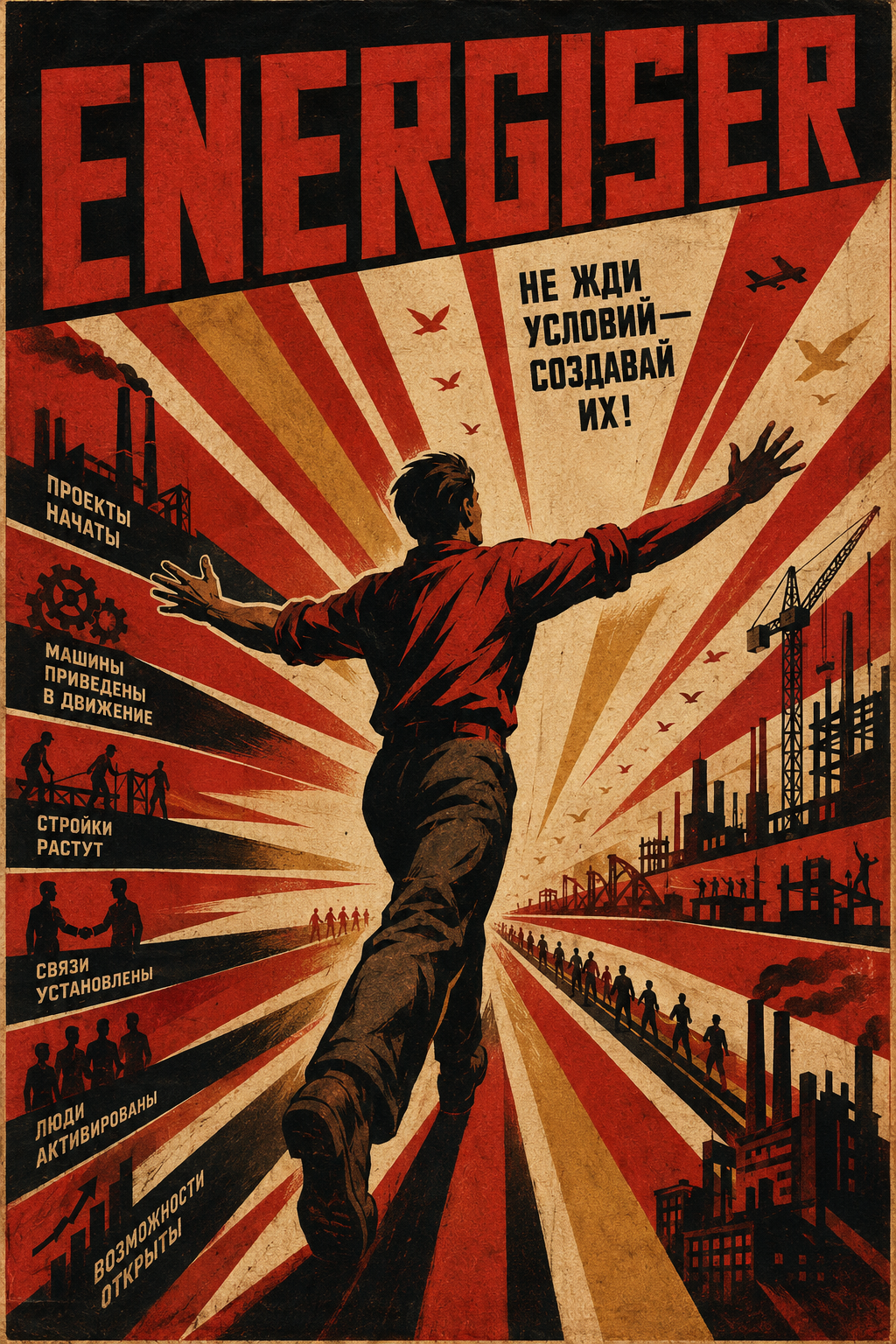
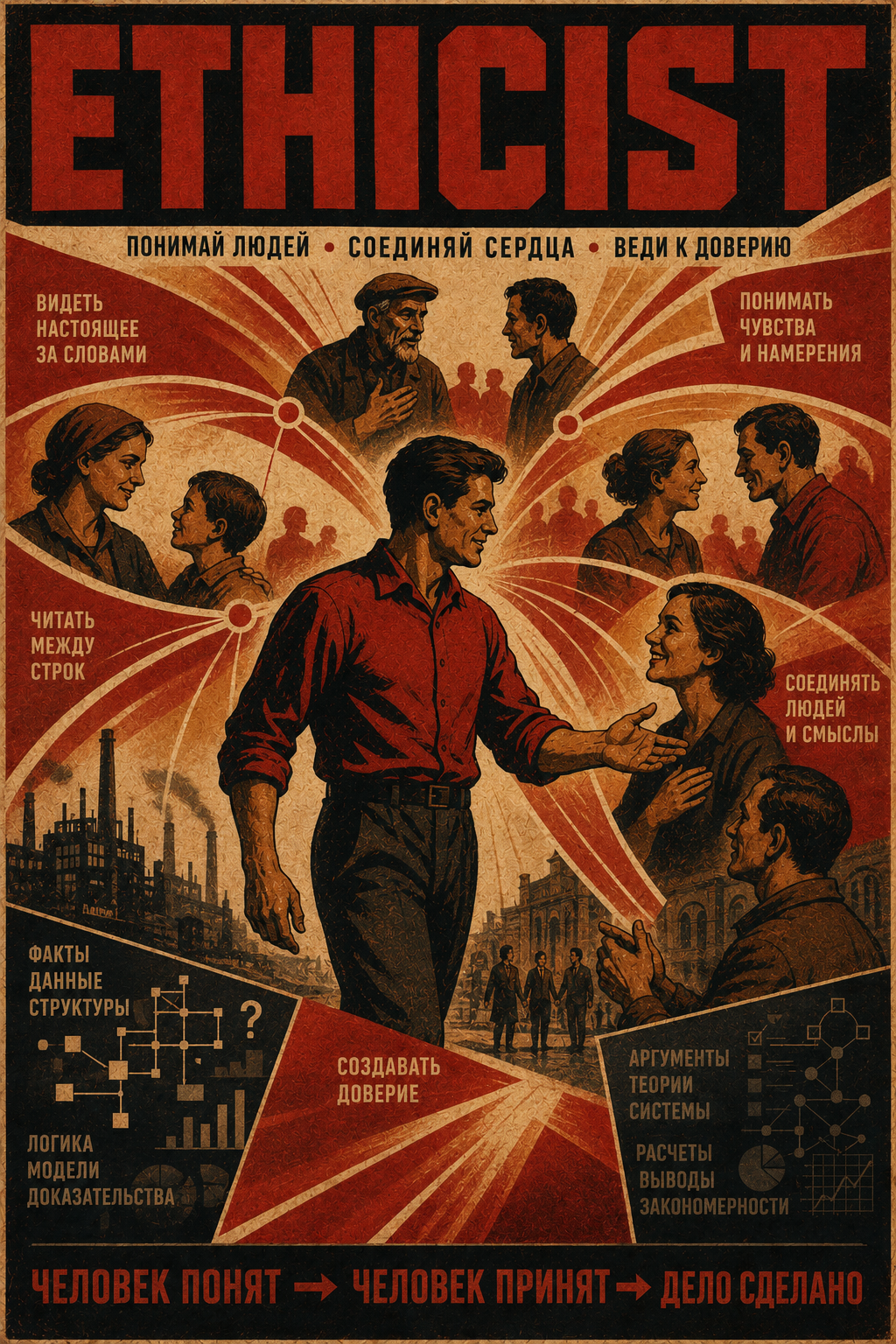
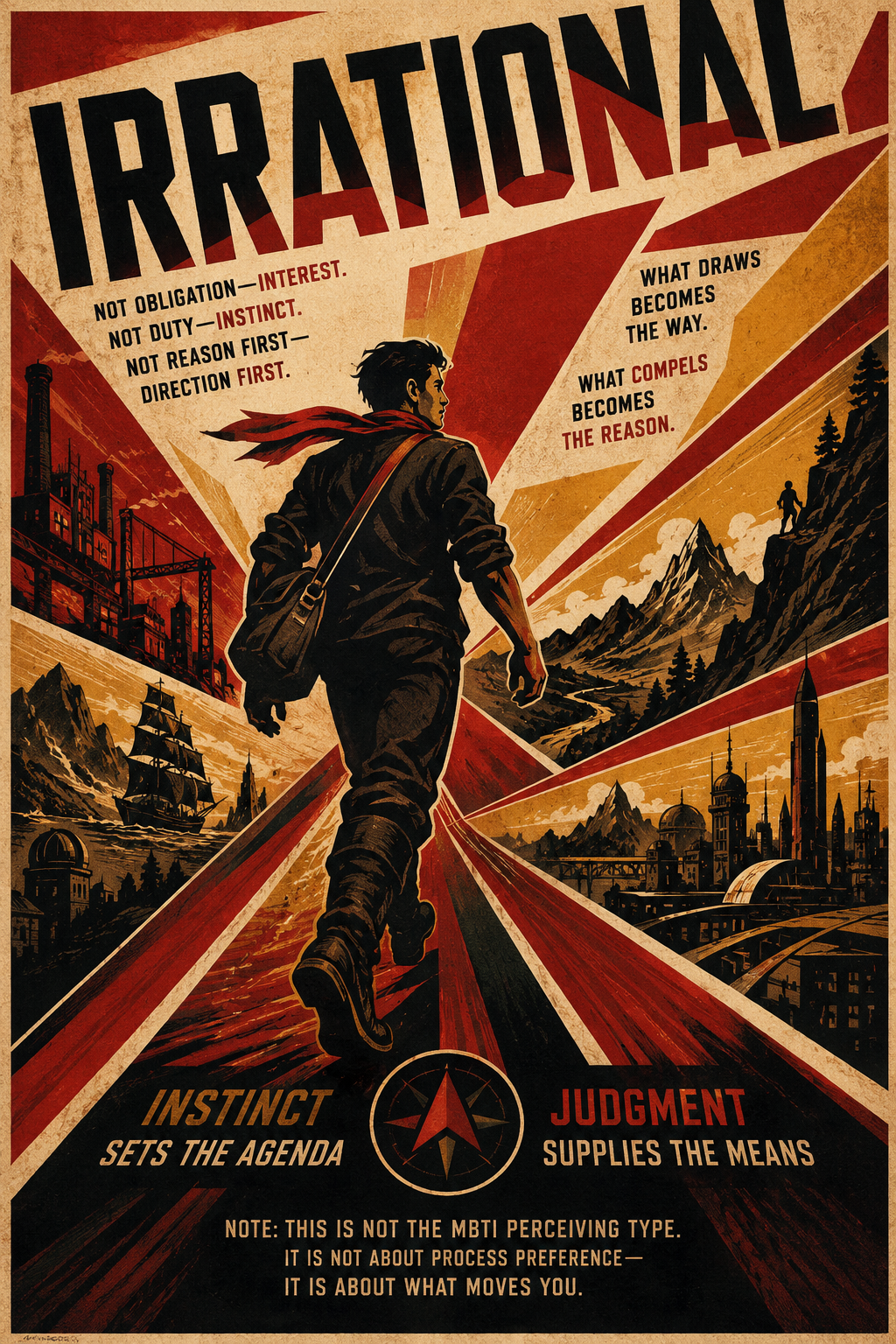
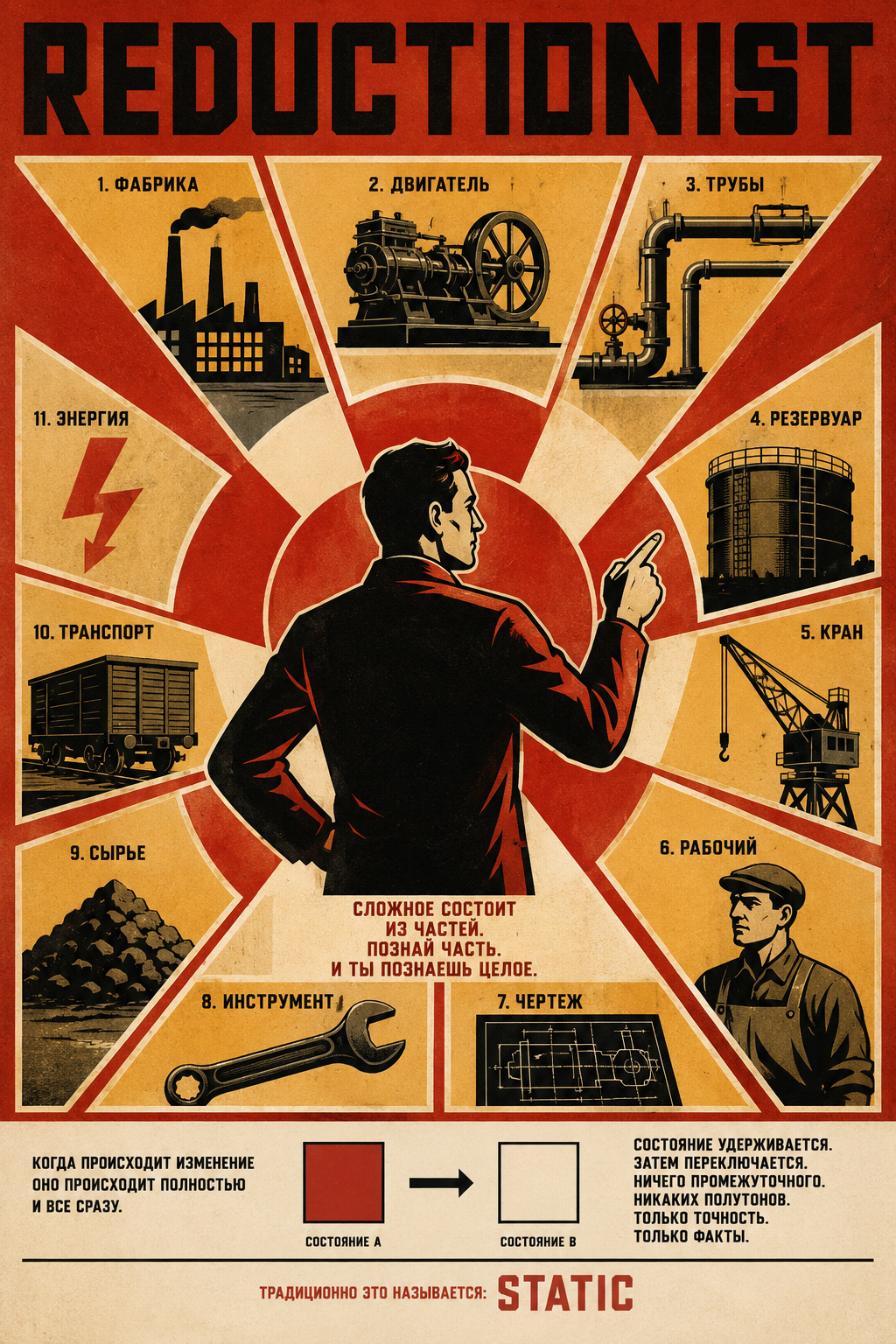
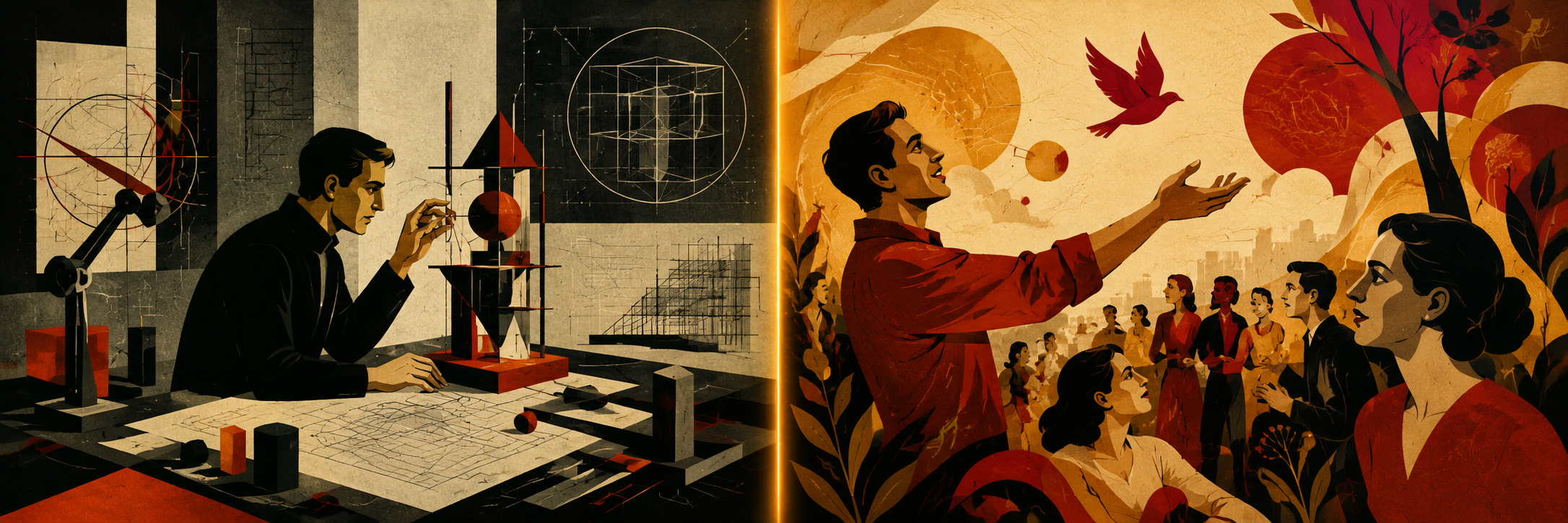
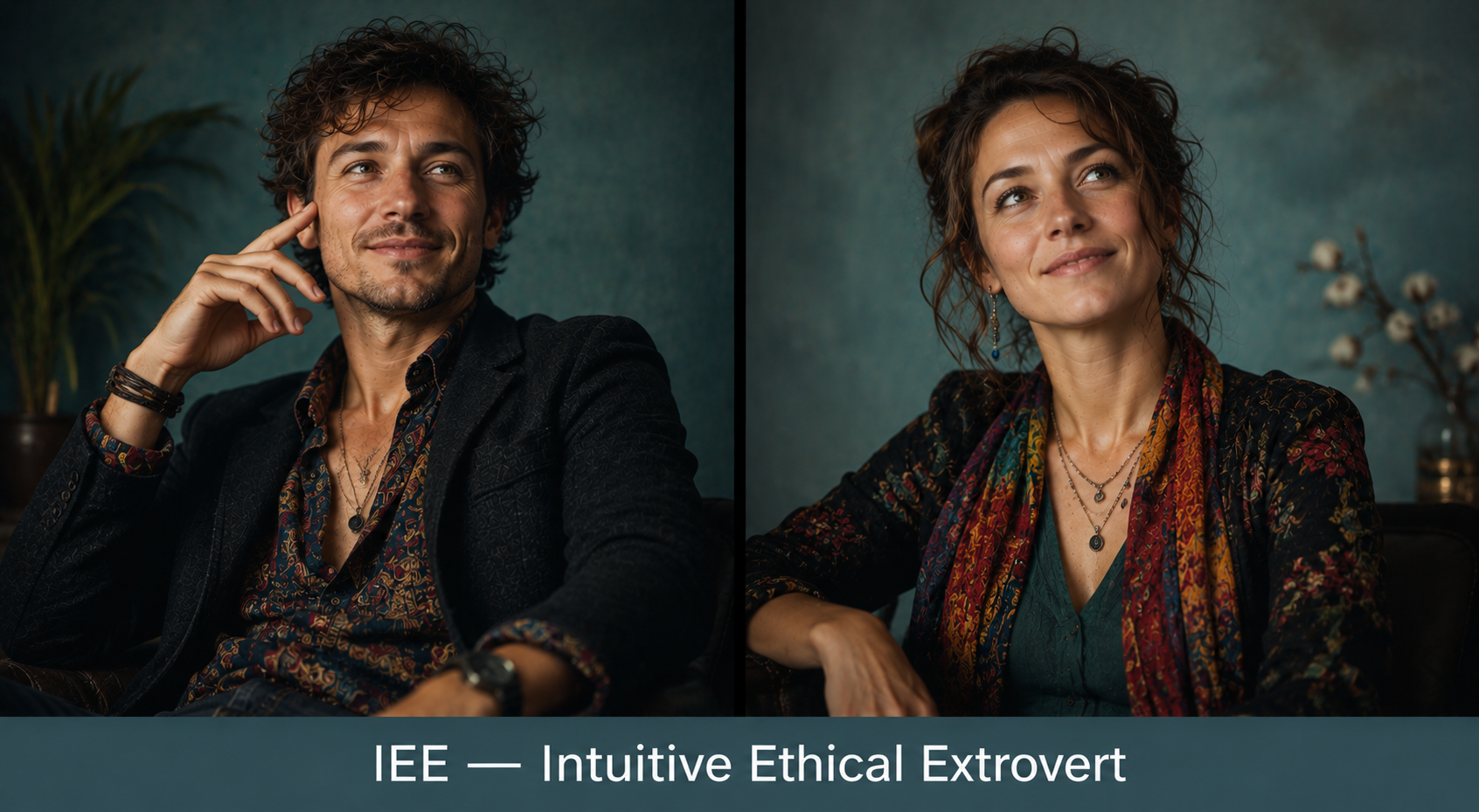
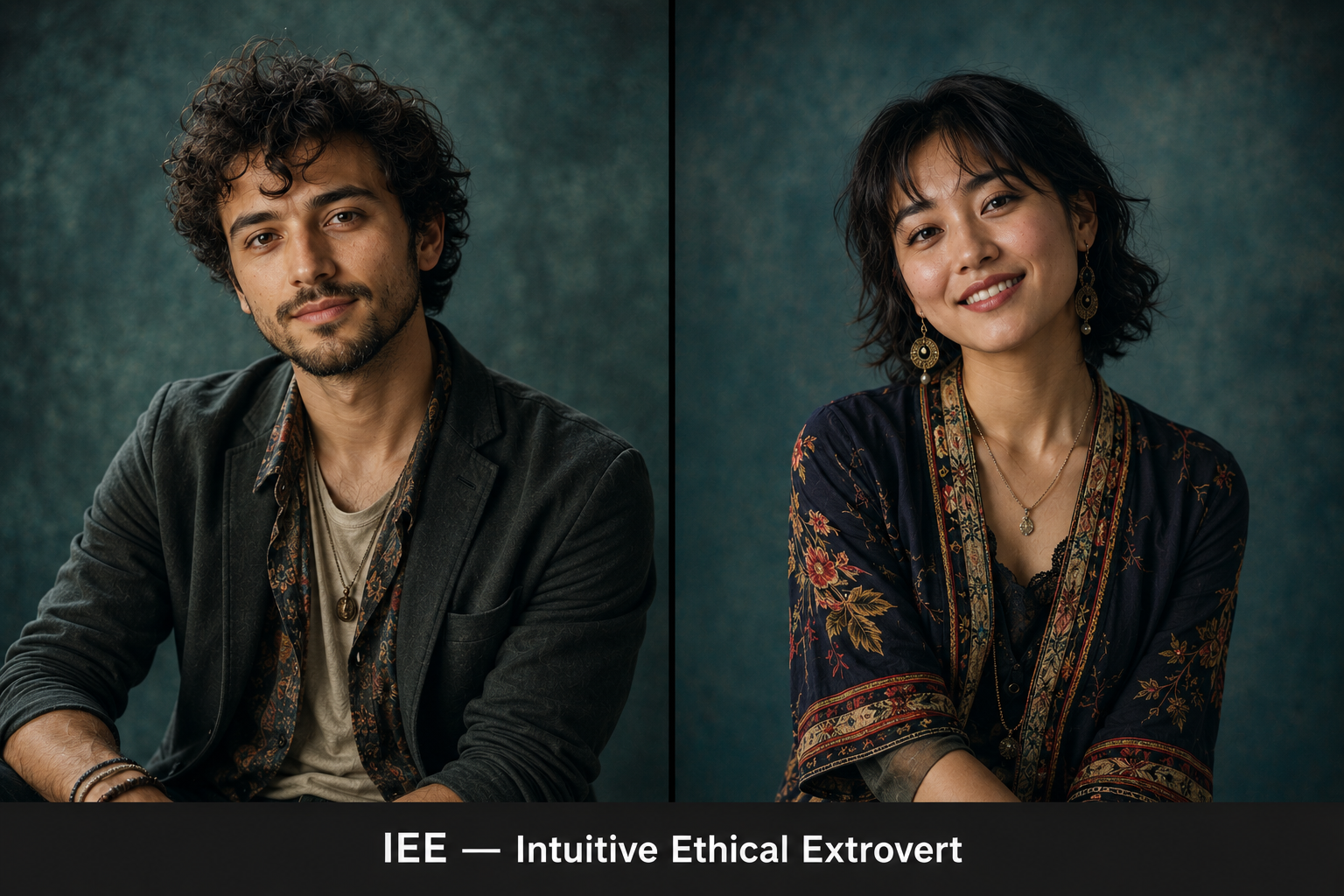
A fuller reading from the source profile, following the eight Model A positions and their Model L sub-variants.
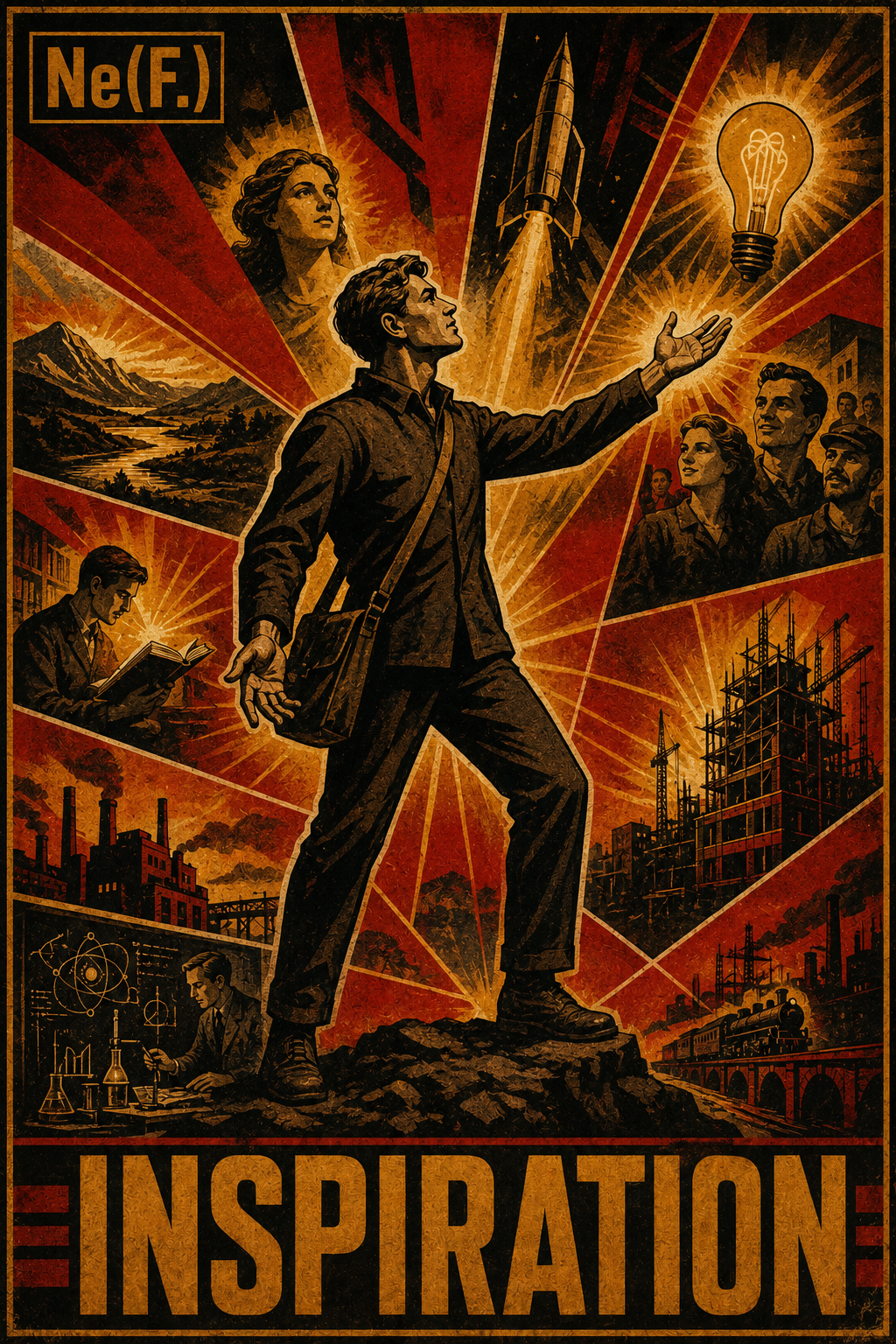
Position 1 — Base — Ne(F.) Inspiration
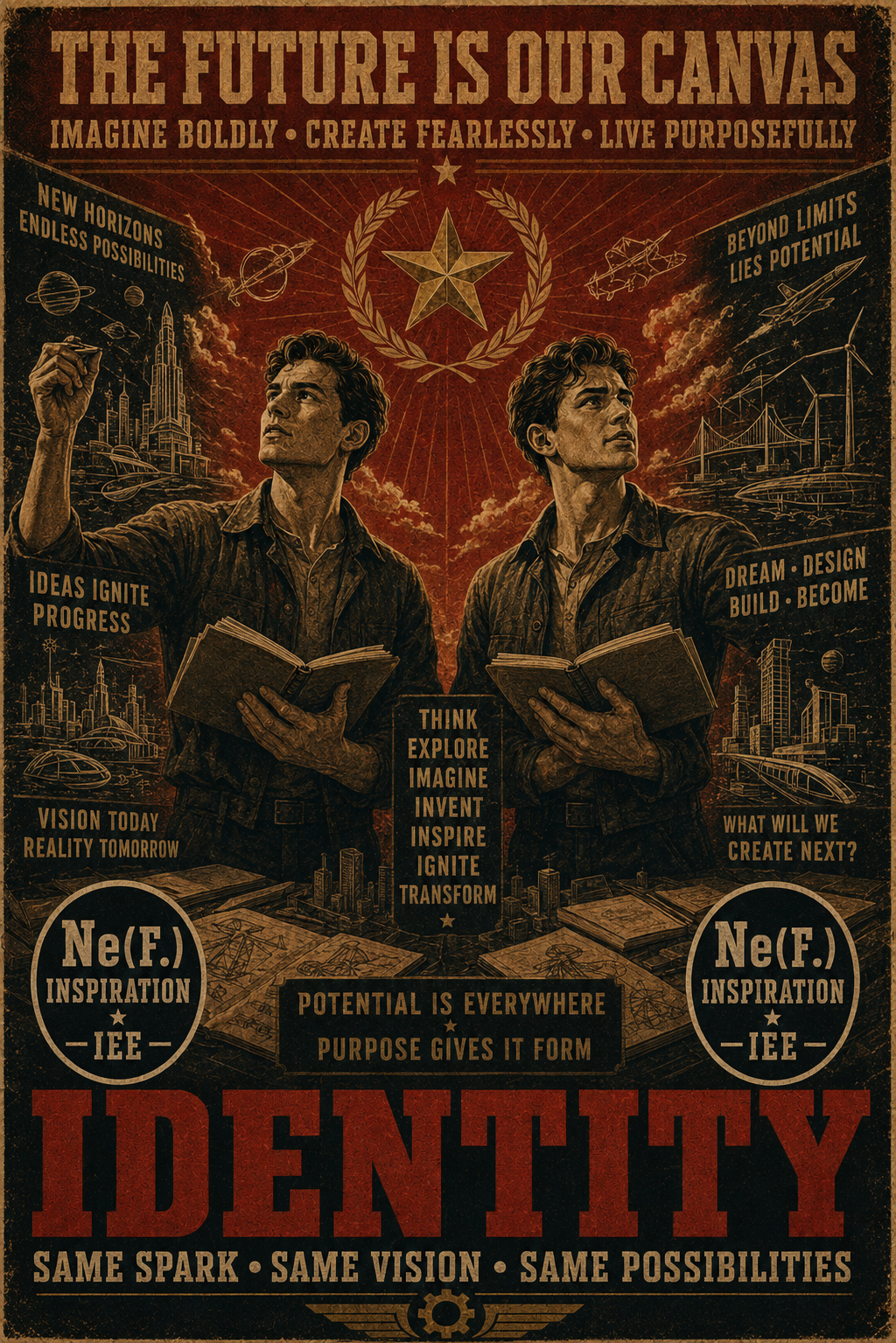
The IEE's fundamental mode of engaging with reality is through their inner sense of potentiality and spontaneous impulse for creative expression — drawing on experience to imagine novel ways of doing things, possibilities to explore, and opportunities for discovery and growth. Ne(F.) is not the architecturally directed conceptual generation of Ne(T.) in the ILE but possibility experienced from inside, personally vivid and felt, charged with a sense of meaning and excitement that is constitutively part of the engagement. The IEE does not evaluate possibilities from outside for their structural merit — they feel them from inside as alive or not alive, meaningful or not meaningful, worth pursuing or not. Inspiration is automatic and effortless — the IEE cannot help encountering the world as a field of personally charged possibilities. Crucially: this charge fires for any domain that feels genuinely alive — science, craft, systems, nature, art, ideas — whatever carries personal meaning in the moment.
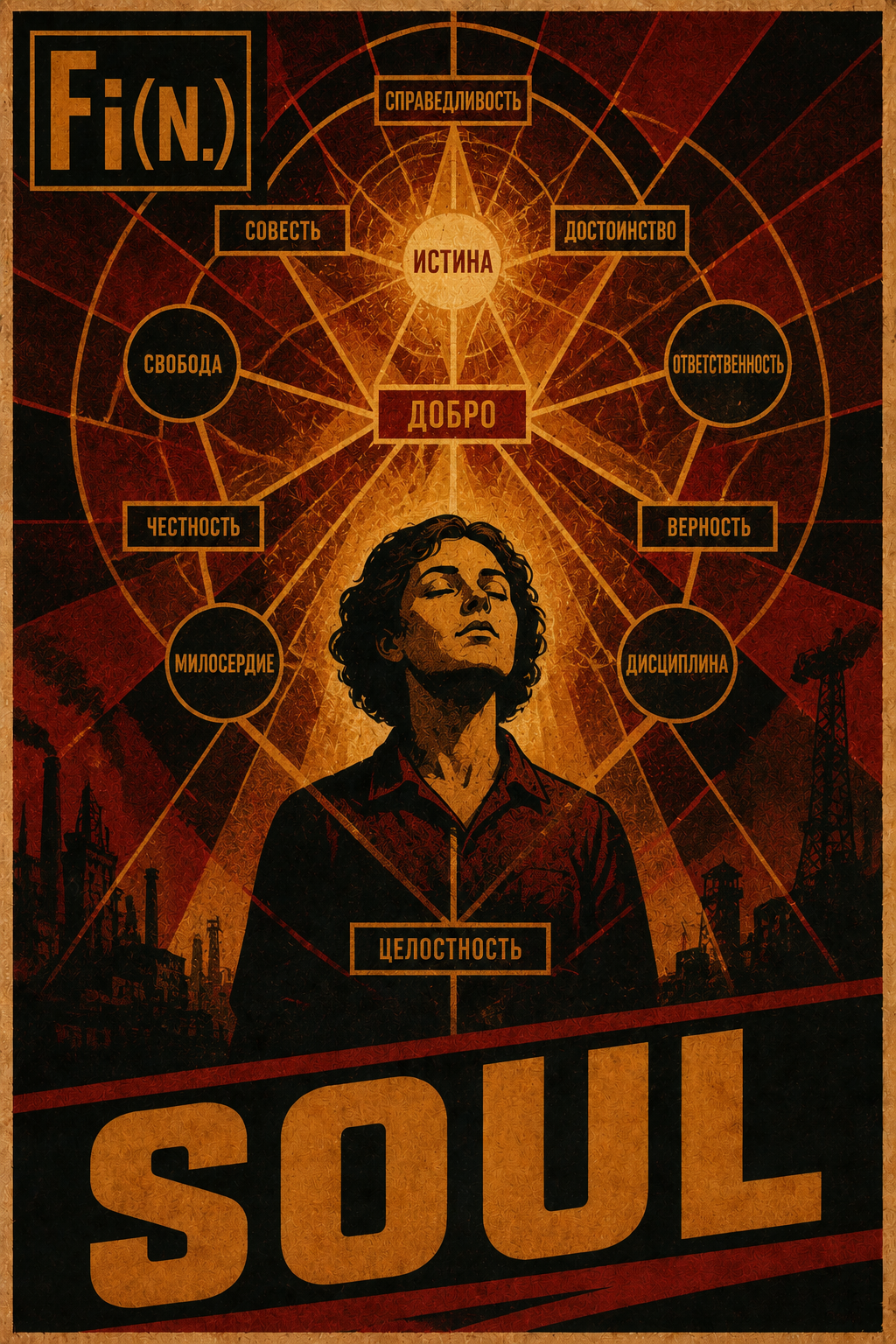
Position 2 — Creative — Fi(N.) Soul
In service of Inspiration, the IEE deploys their totality of foundational inner convictions — the abstract moral sense of what is inherently worthwhile, what truly matters, what is genuinely good. Fi(N.) is more subtly present than externally obvious but it guides every choice the IEE makes about which possibilities are worth pursuing and which are not — the inner moral compass that determines where the Inspiration is allowed to go. The Soul serves the Inspiration: the IEE explores possibility in the light of what genuinely matters, and the moral architecture beneath the enthusiastic surface is real and carefully maintained.
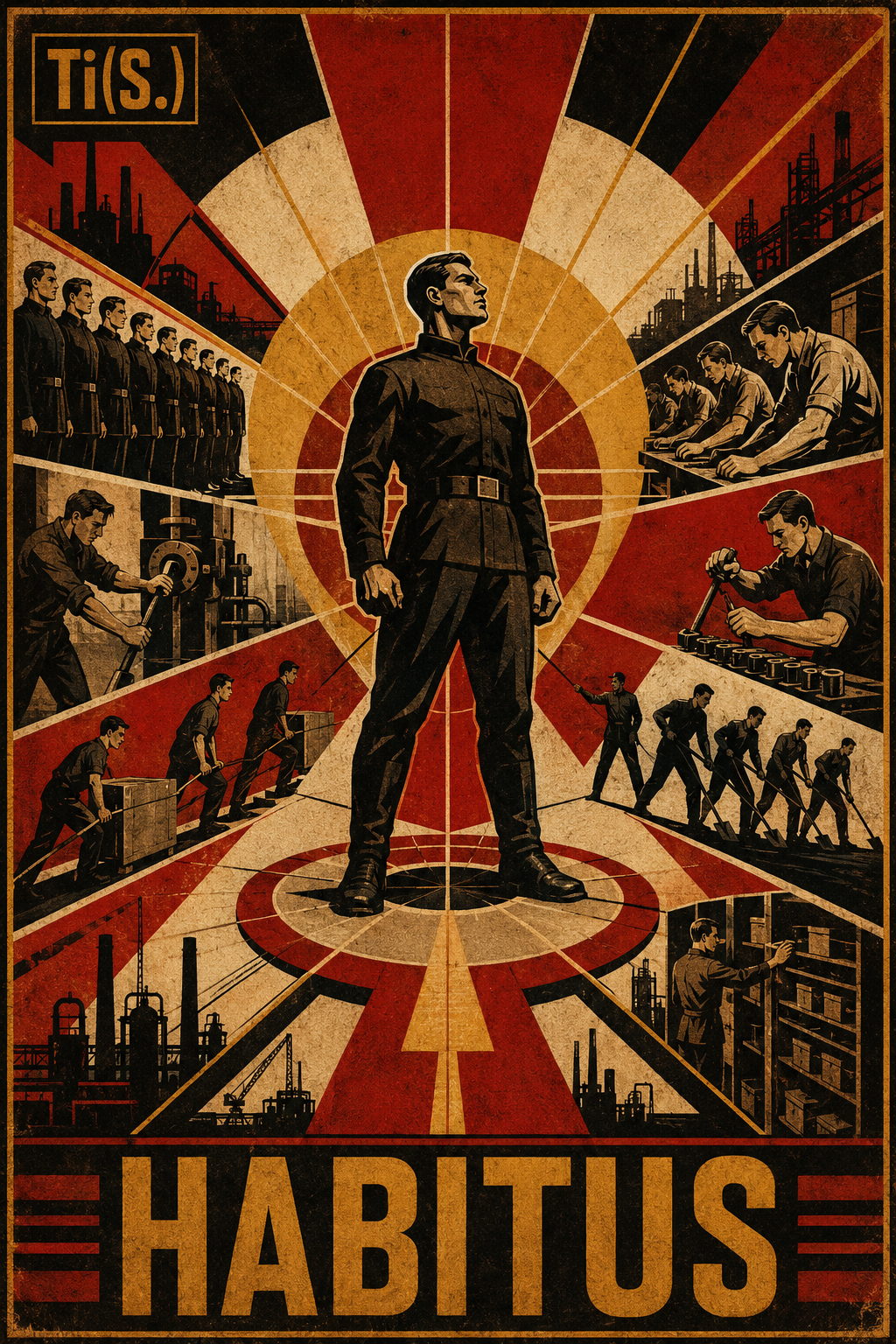
Position 4 — Vulnerable — Ti(S.) Habitus
The IEE's point of greatest sensitivity. Ti(S.) is the tangible codified structure of organised systems — proper procedures, formal hierarchies, the right way to do things as an embodied institutional reality. This is the furthest territory from the IEE's naturally fluid, possibility-oriented register. Being expected to operate within rigid formal structures, to submit to codified procedures, to justify their actions in terms of established institutional logic lands as a deeply uncomfortable constraint. Criticism of their structural reliability or procedural compliance hits hard; excessive pressure toward formal systematic adherence produces stress and defensiveness.
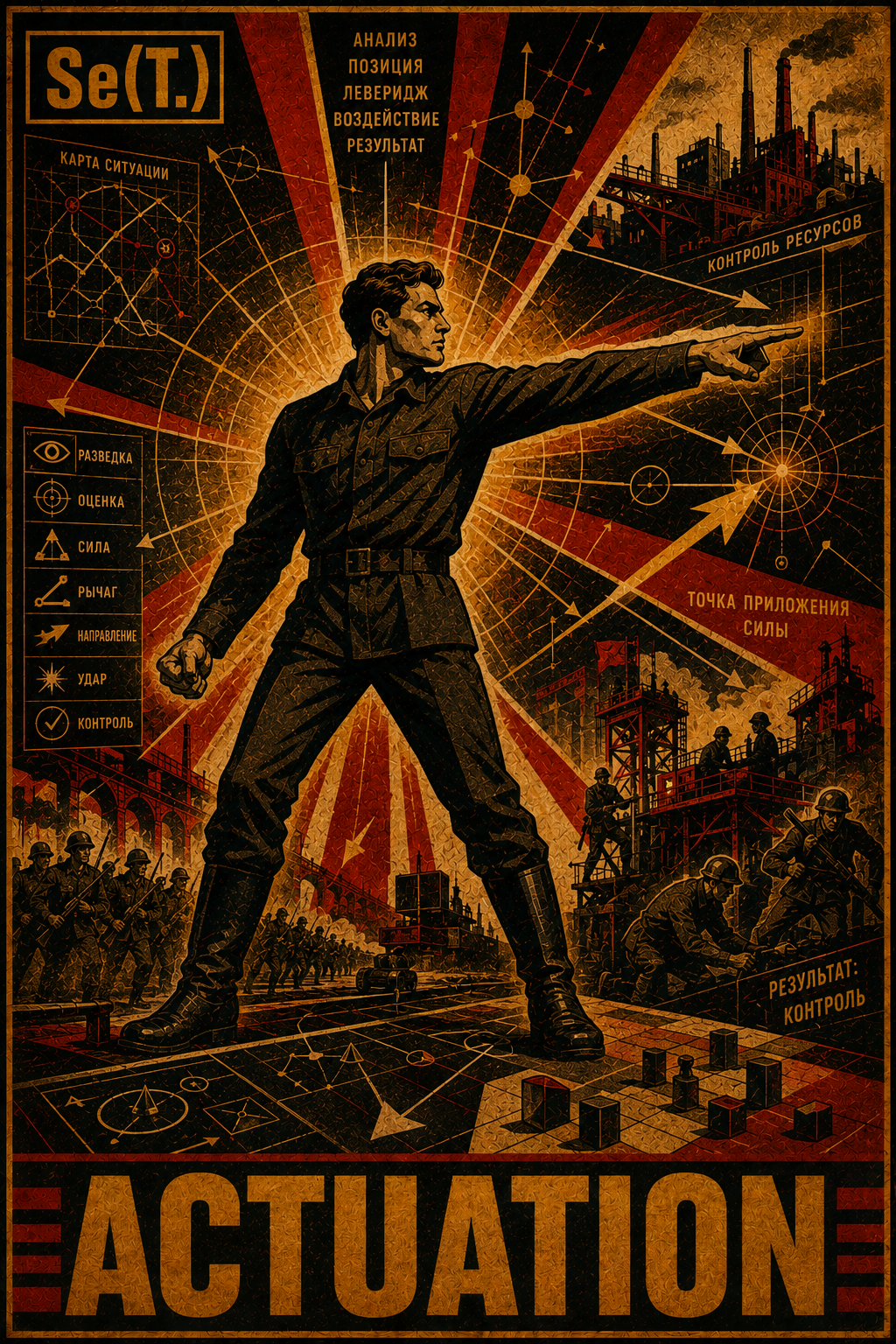
Position 3 — Role — Se(T.) Actuation
The IEE's performance function — the decisive tactical deployment of physical force and environmental control they are called upon to produce in certain contexts but find unnatural to sustain. Se(T.) sits uncomfortably against the IEE's open, exploratory, possibility-oriented register. They can assert themselves physically and impose their will on the environment when the situation demands it but the tactical force mode is effortful and temporary. The personally charged field of possibilities is what matters; the physical assertion is something they produce when necessary and set down when possible.
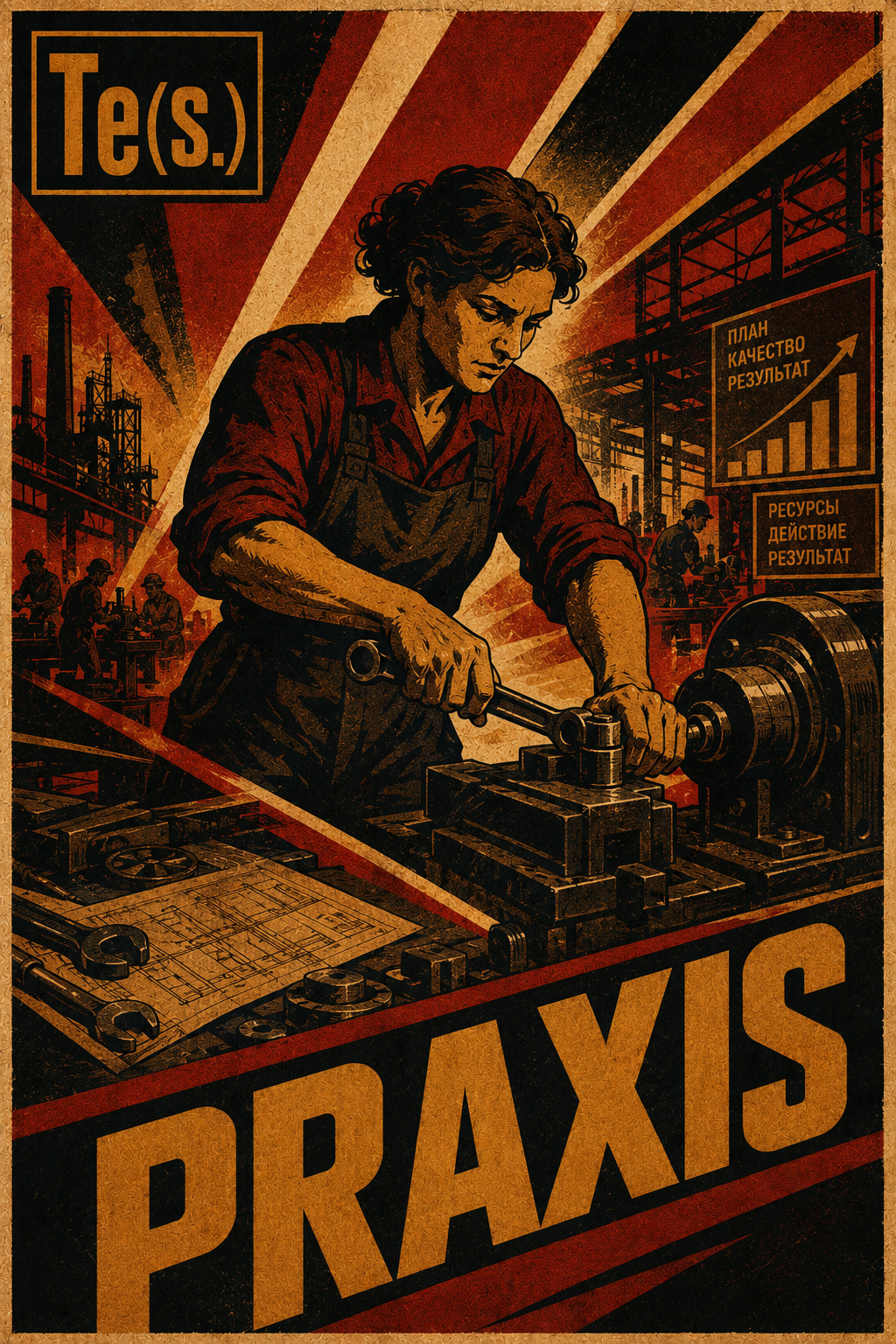
Position 6 — Mobilising — Te(S.) Praxis
Energising and uplifting when present in others. Te(S.) — Praxis — is the flexible use of hands-on techniques and material resources to make things work efficiently in the physical environment. The IEE cannot easily generate this themselves but responds with energy and animation when they encounter it — the practical operational competence giving their inspirational vision a concrete working reality it would not otherwise have. Together with the Suggestive it defines the IEE's interpersonal chemistry.
Position 5 — Suggestive — Si(T.) Observation
What the IEE most wants and responds to most positively in others. Si(T.) — Observation — is the careful discriminating assessment of the actual sensory condition of things — the precise attentive noticing of physical quality, the accurate registration of how things really are in the present moment. The IEE cannot easily produce this themselves — their attention is absorbed in the felt field of possibility rather than the grounded assessment of present physical reality — but they experience it as genuinely nourishing when it appears in others. Their dual SLI leads with exactly this element: the SLI's natural Observation is precisely what the IEE's Inspiration yearns to be grounded by. Where the IEE feels what could be, the SLI sees what actually is.
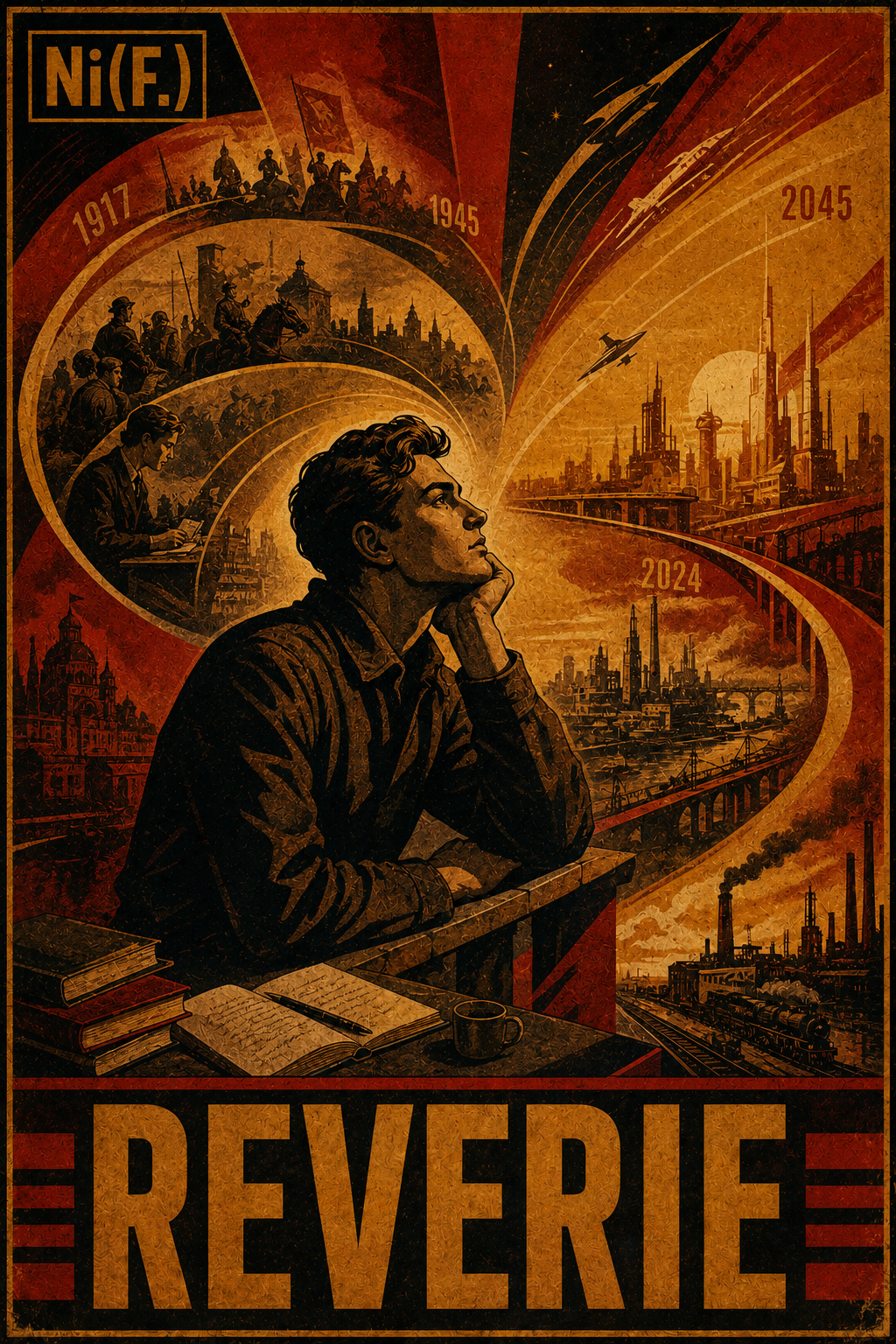
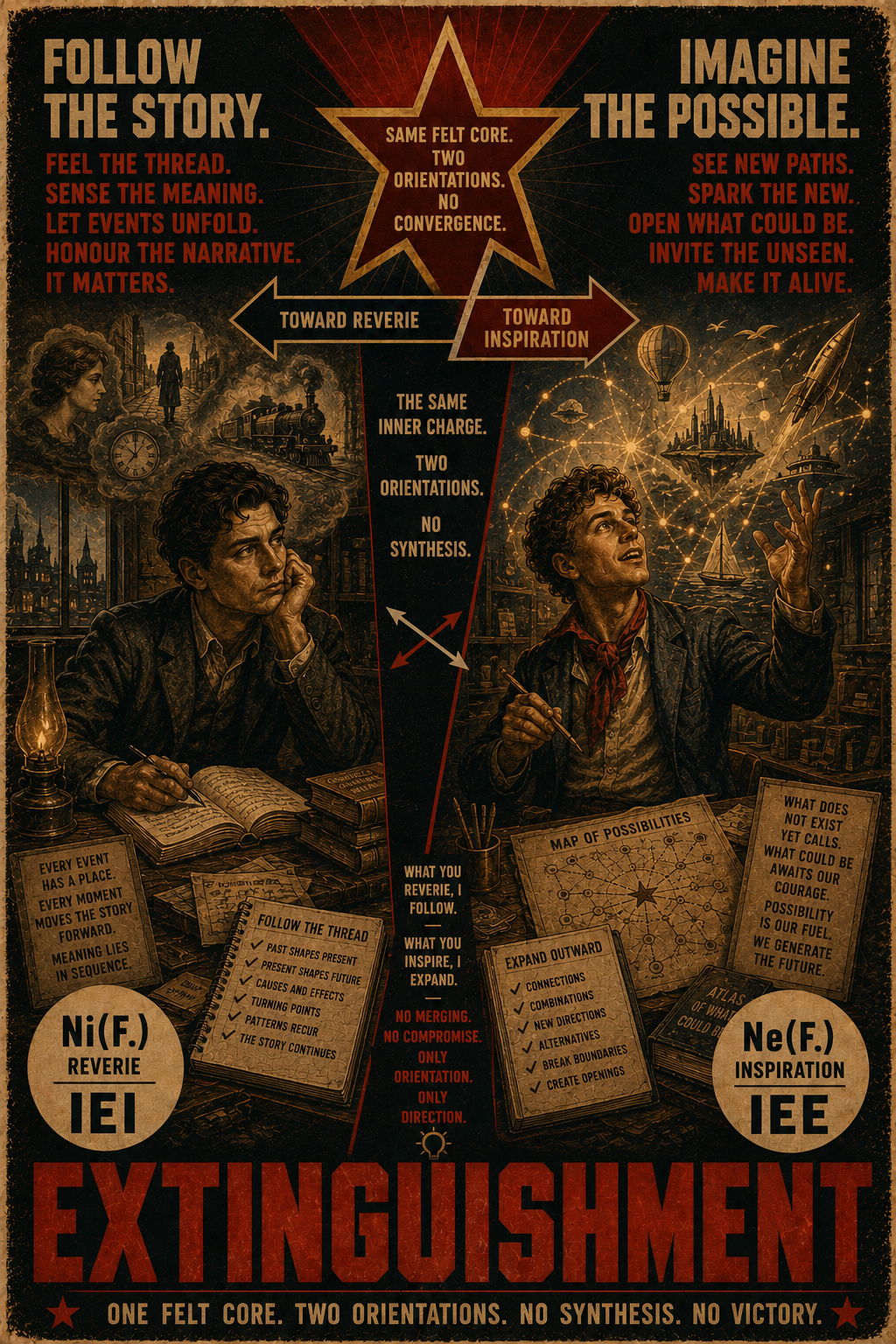
Position 7 — Ignoring — Ni(F.) Reverie
Capable but uninteresting. Ni(F.) — the inner reflection on narrative significance and temporal meaning — is something the IEE can access but finds less compelling than the outwardly exploring Inspiration of Ne(F.). Both are internal irrational functions but they move in different registers: Ne(F.) opens outward toward what could be felt as alive; Ni(F.) turns inward toward what is already unfolding with personal significance. The IEE can inhabit the temporal narrative stream when the base has genuine need of it but does not seek this territory as its own domain.
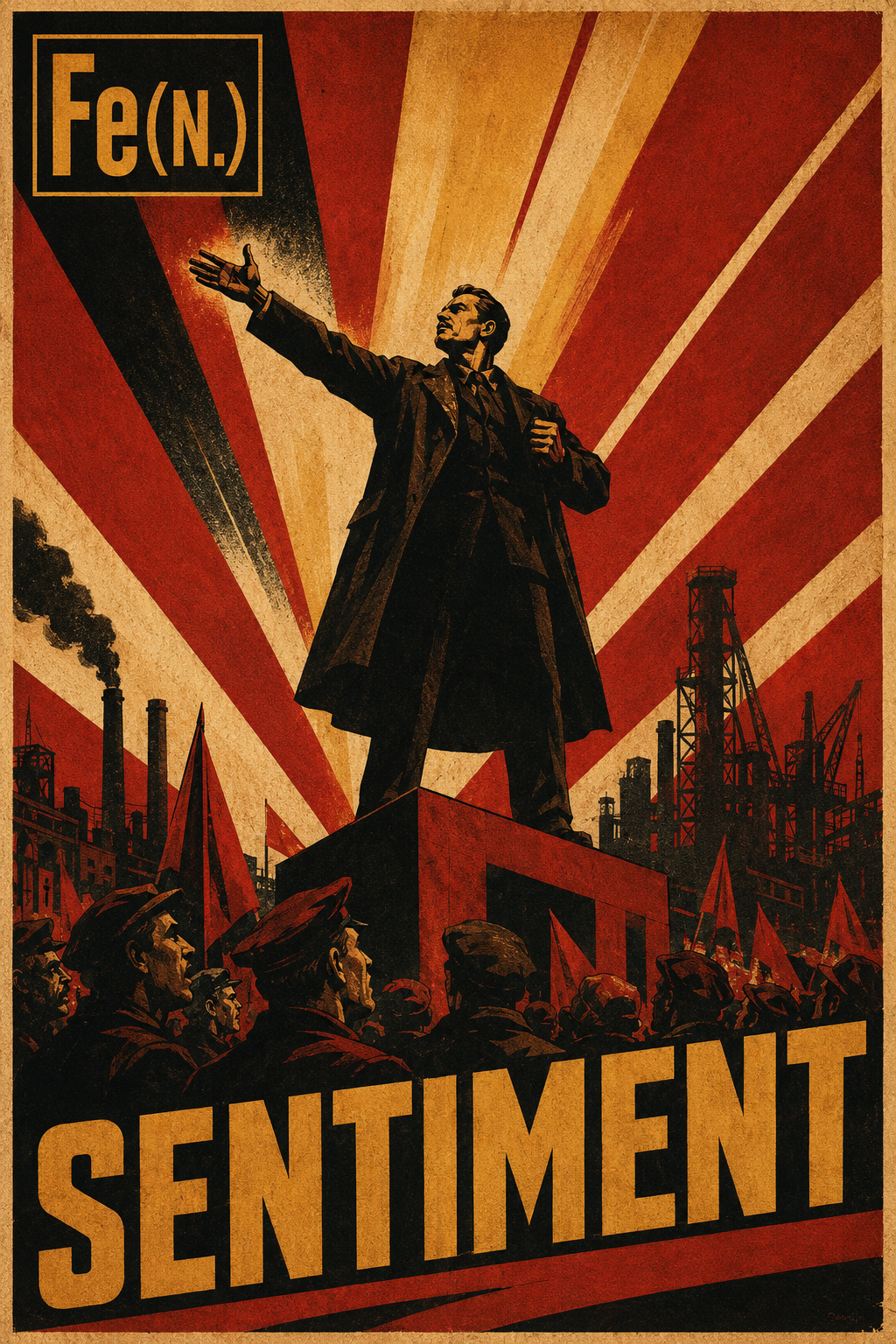
Position 8 — Demonstrative — Fe(N.) Sentiment
The IEE's strong background competence — deeply felt emotion expressed through dramatic rhetoric and symbolic gesture operating automatically without the type fully registering it. Fe(N.) — Sentiment — runs quietly in the background giving the IEE a natural capacity for passionate emotional expression that others may experience as charming or moving before the IEE has consciously deployed it. The IEE often communicates with more emotional charge than they intend simply because the background Sentiment is always running.
Overall Character
The IEE is the type most naturally oriented toward possibility as a personally felt reality — the world experienced as a field of things that could be explored, discovered, expressed and grown into, each one carrying or failing to carry a genuine inner charge of meaning and aliveness. At their best they are the person whose enthusiasm is genuinely infectious because it is genuinely felt, whose moral seriousness beneath the exploratory surface is real and carefully considered, and whose capacity to find personal meaning in almost any domain makes them unusually alive to the richness of what exists.
Their Delta quadra membership means they value sincerity, earnestness, the desire to understand things on their own terms, and the patient developmental perspective of those who know that genuine growth takes time. The IEE's exploration of possibility is not frivolous — it is guided by a deep and genuine moral sense of what is worth pursuing. Their EP temperament makes them flexible and rapidly responsive — the IEE does not commit to fixed structures but follows the living charge of what feels genuinely alive with immediate intuitive intelligence.
The IEE-SLI dual captures something essential about both types. The SLI provides the grounded present reality — the accurate observation of how things actually are, the practical operational competence, the sensory precision that gives the IEE's inspired vision a concrete world to inhabit. The IEE provides the inspired possibility space — the felt sense of what could be, the personal charge of creative vision — that the SLI's present-focused Observation yearns to be pointed toward. Each makes the other's contribution complete.
Dual Relationship
IEE and SLI
Si(T.) - Observation
Suggestive element
Ne(F.) - Inspiration
Suggestive element
IEE's dual is SLI — The Craftsman. IEE's Suggestive is Si(T.) — Observation: selective intake of external sensory data and attention to functional detail. SLI leads with exactly this mode of perception.
SLI's Suggestive is Ne(F.) — Inspiration: inner potentiality, spontaneous creative impulse, and imagined paths for growth. IEE leads with that mode effortlessly. One opens the field; the other grounds it in what is actually there.
Intertype Relations
IEE In Relation
Each card uses the Model L relation image as a concrete scene: how IEE appears when its structure is doubled, completed, strained, supervised, benefited, or set beside another type.
Duality · with SLI — The Craftsman
IEE and SLI
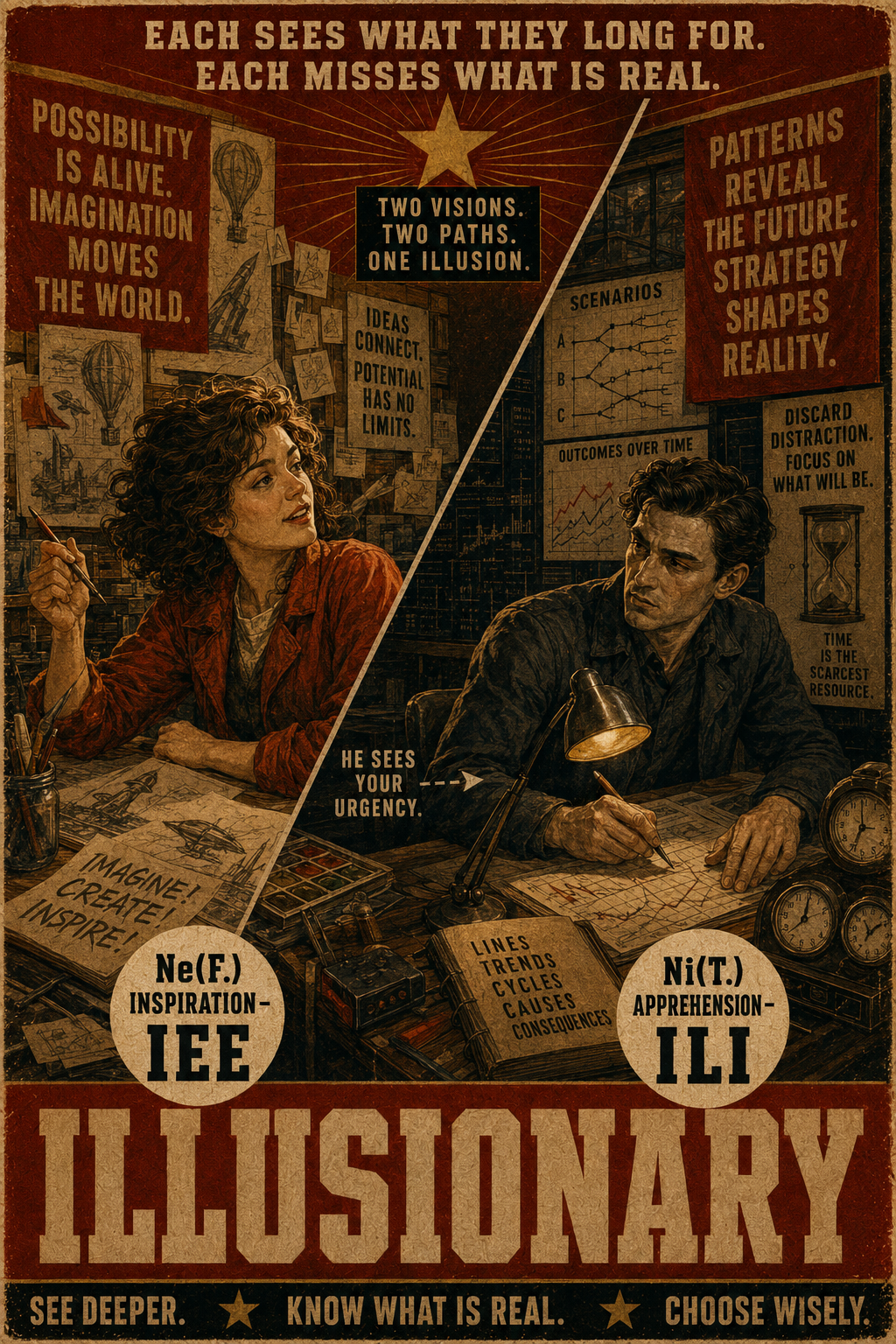
The IEE figure is doing Ne(F.) — Inspiration. Possibilities arrive with a personal felt charge of significance and excitement rather than being deliberately constructed. The creative impulse is spontaneous — animated, gestural, the ideas experienced as personally vivid and meaningful from the inside rather than built as conceptual architecture from the outside. The IEE is not generating a systematic map of possibilities. They are feeling the aliveness of what could be, and that felt charge is genuine information about what is worth pursuing. The inspiration is real. What it lacks, on its own, is a precise account of what is actually present to work with.
Without that account the IEE's felt possibilities remain personally vivid but practically unanchored — charged with significance but not yet in contact with the specific functional reality of the situation. The inspiration points somewhere. It needs to know what is actually there when it arrives.
Two IEE types encounter in each other a felt imaginative aliveness that amplifies. Every expression of personally-charged felt possibility by one is immediately recognised and matched by the other — the inspiration resonates in both directions, each radiating the same quality of inner personal charge toward what could be.
What doubles: Ne(F.) felt imaginative inspiration, personal aliveness to possibility, the inner sense of what could be charged with personal significance. Fi(N.) principled conviction — the moral grounding that gives inspiration its felt significance — also doubles. Two instances of the same personally-charged imaginative mode generating mutual inspiration.
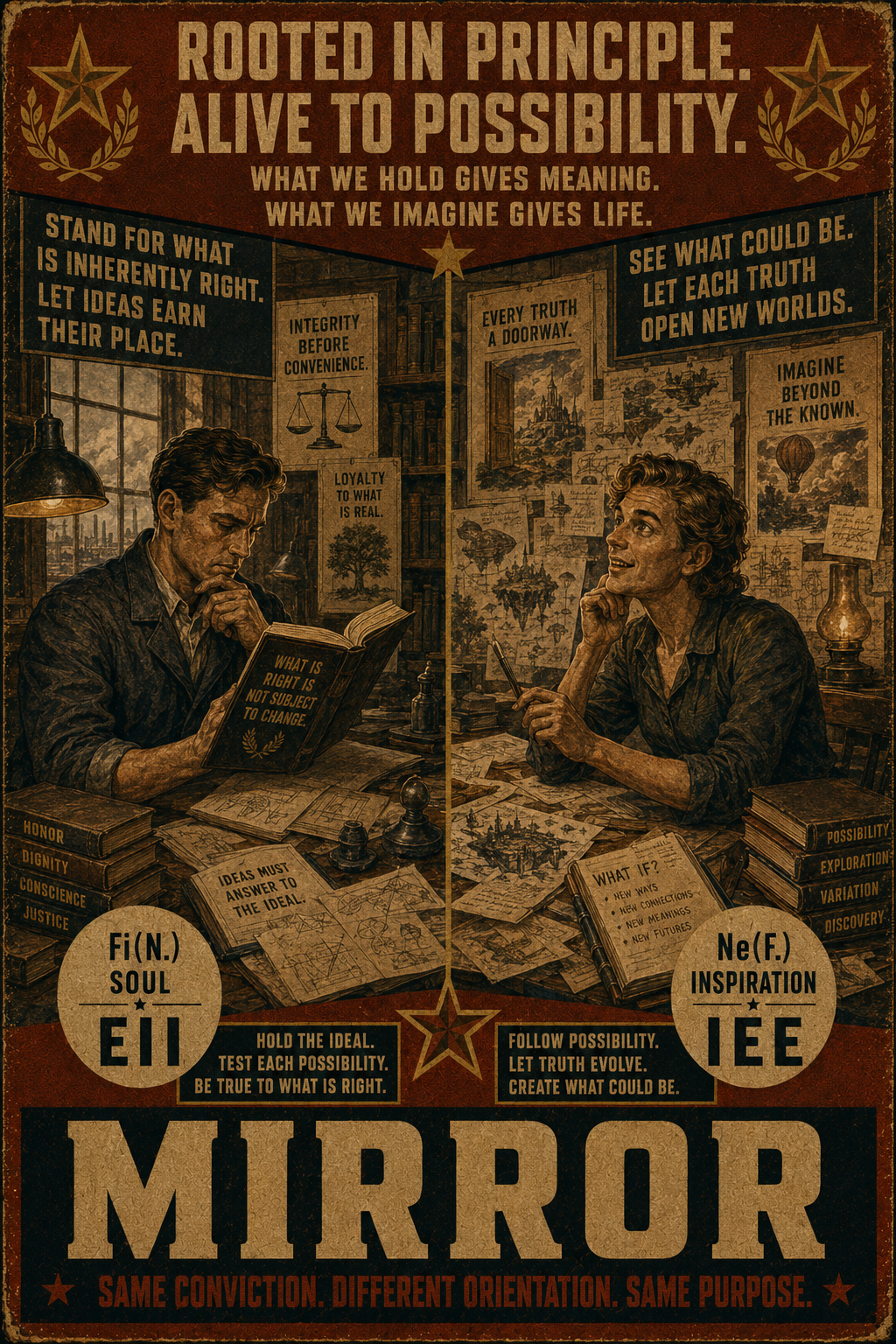
Same structural rule. EII leads with Fi(N.) and creates with Ne(F.). IEE leads with Ne(F.) and creates with Fi(N.). Same two functions, same N./F. sub-variant, reversed priority.
EII leads with Fi(N.) Soul and creates with Ne(F.) Inspiration. The EII draws on felt aliveness to possibility in service of abstract foundational moral conviction — imaginative exploration as the instrument by which principled ideals are tested, deepened, and given personal felt weight. The Ne(F.) opens up what could be; the Fi(N.) evaluates it against what is inherently right. Possibility is the instrument. Conviction is the point.
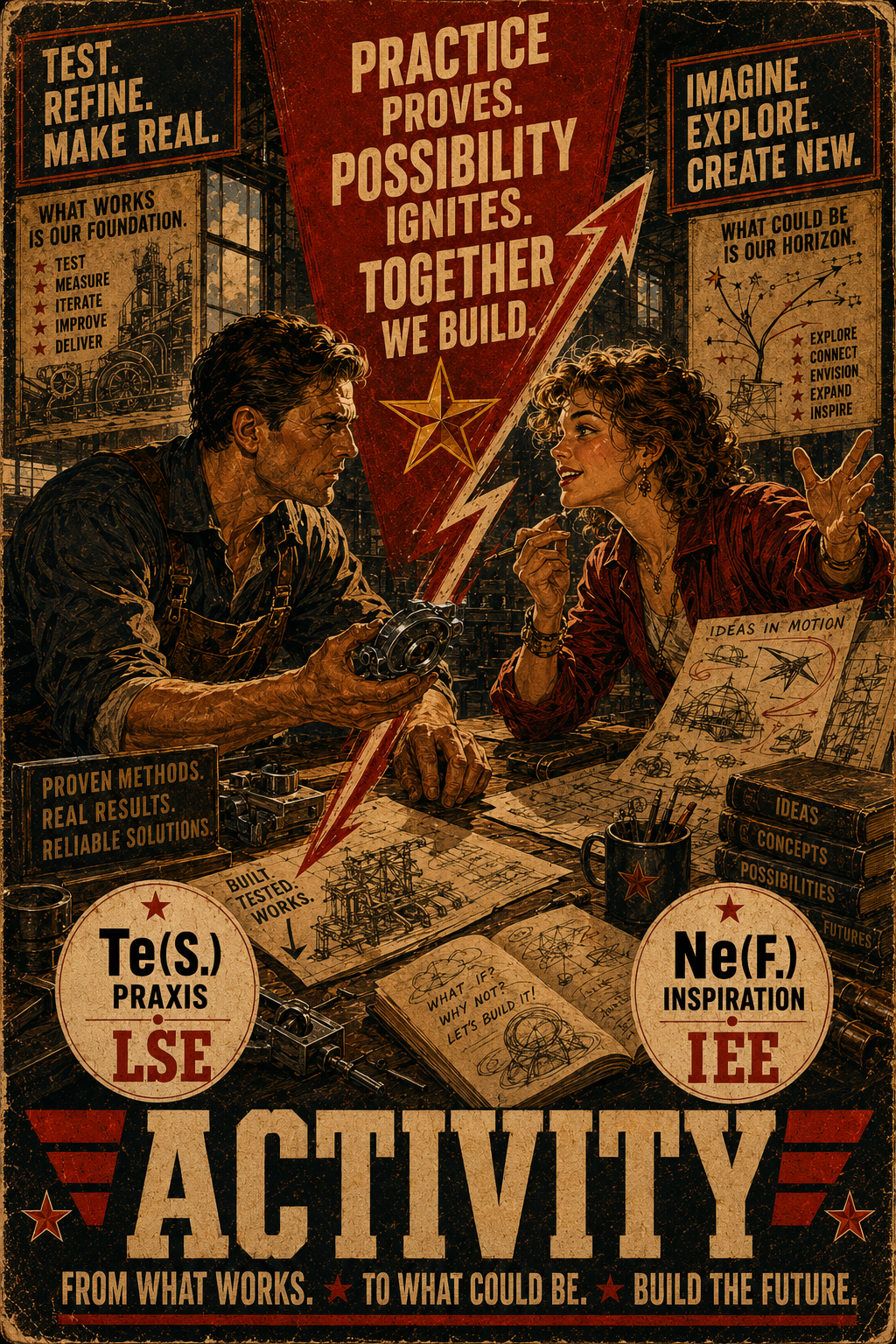
Same structural rule. LSE's Ego fills IEE's Super-Id with inverted priority; IEE's Ego fills LSE's Super-Id with inverted priority.
LSE leads with Te(S.) Praxis and creates with Si(T.) Observation. The IEE's Super-Id seeks Si(T.) as Suggestive — what IEE most deeply wants — and Te(S.) as Activating. LSE's hands-on practical effectiveness energises the IEE, giving the felt inspiration concrete material grounding and the evidence that something can actually be built; the controlled selective sensory observation that flows from LSE's practical experimentation is what the IEE most wants — it gives the imaginative possibility precise physical reality and the discipline to follow through.
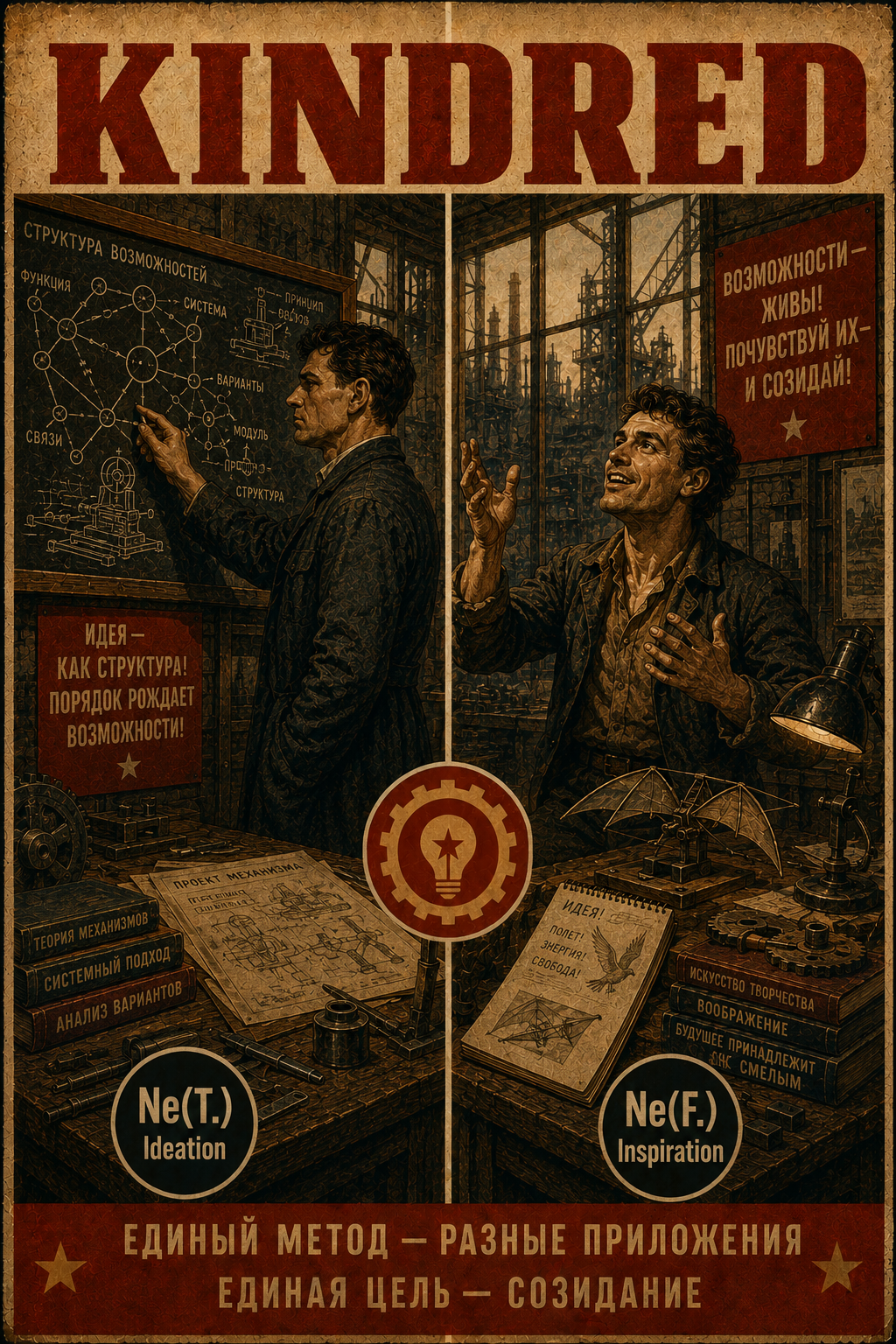
The ILE and IEE are both doing Ne. Both are generative, both energised by possibility, both inhabit the domain of what could be with genuine aliveness. The Kindred recognition between them is one of the most immediately visible in the system — both light up in each other's presence, both recognise the other as someone who sees what is possible rather than only what is. The ILE/IEE distinction is also one of the most discussed in WSS typing practice, and the T./F. split provides the structural account that practice has long needed.
The ILE's Ne(T.) is the rational/detached deployment of an irrational element — imagination as the active deliberate generation and manipulation of concepts from the outside. Ideas are built architecturally: conceptual structures constructed, semantic possibilities explored, the imagination operating as intellectual craft directed at conceptual form. The ILE is working with possibilities as external objects to be examined and connected.
Same structural rule. Each type's leading function provides the right element, wrong sub-variant for the other's Suggestive.
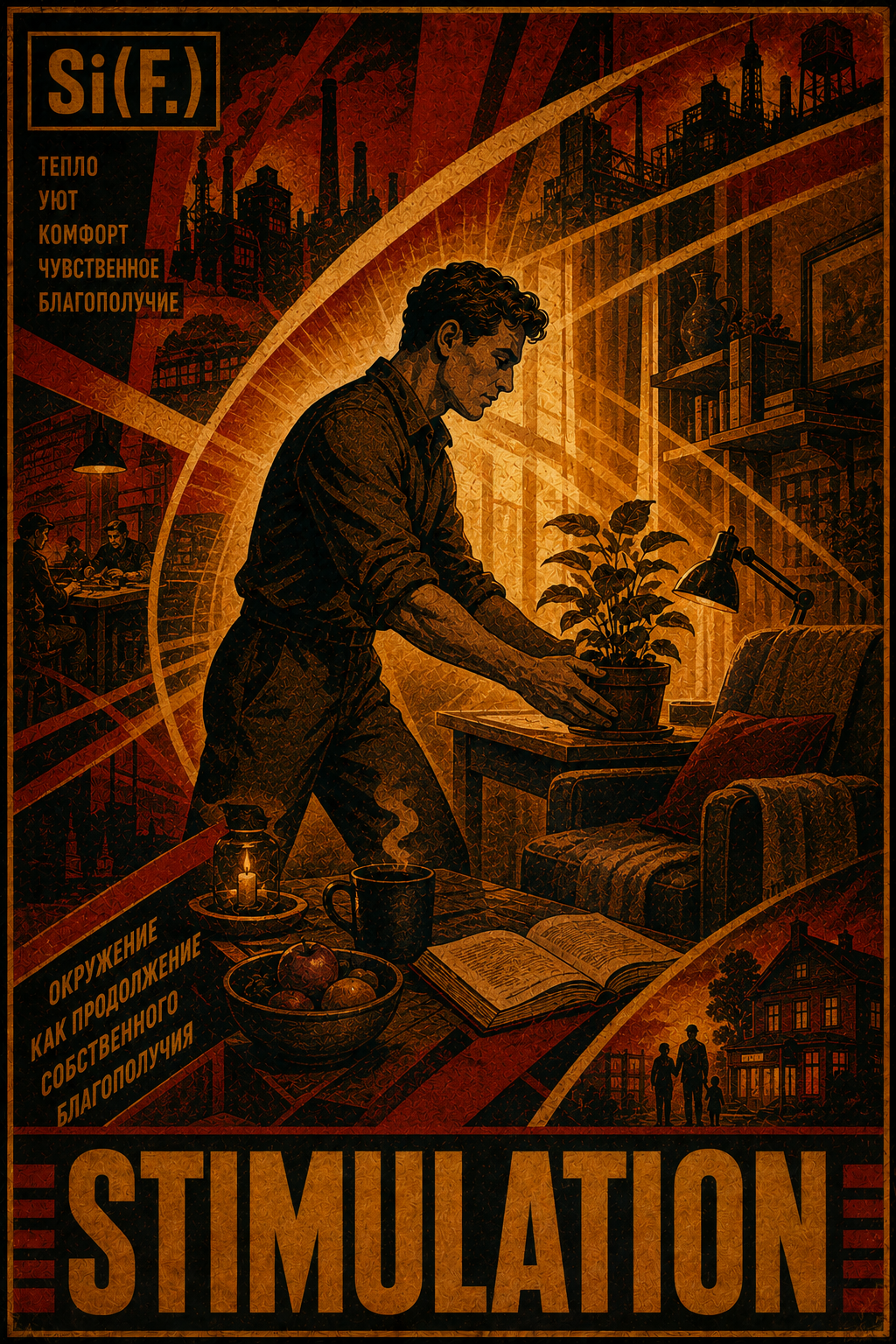
SEI leads with Si(F.) Stimulation — subjective immersion in immediate bodily experience, somatic ease and sensory comfort experienced from within. The IEE's Suggestive is Si(T.) — controlled selective external sensory attention, precise disciplined focus on functional physical detail. SEI provides Si(F.) instead: the felt charge of somatic ease, the warmth of immediate bodily comfort, sensory experience inhabited from inside. The element is right — the IEE genuinely values and seeks Si — but the IEE most deeply wants the precise sensory grounding that gives felt inspiration definite physical form, and what arrives is sensory experience that is warm and subjectively rich but without the disciplined precision most deeply sought. Genuine and comforting. Slightly too diffuse to provide the definite sensory anchor most wanted.
The IEE and SEE recognise each other immediately as types who operate from genuine inner felt charge. Both are energetic. Both are personally engaged. Both are driven from the inside rather than governed from the outside. The shared F. sub-variant means both are in the involved register — neither detached, neither cool and architectural, neither applying force or generating possibilities from a calculated external remove. From the outside they can appear to be similarly driven, similarly alive, similarly committed to what they are doing. This surface resemblance is real and creates the Business/Lookalike quality. They can work alongside each other, recognise each other as genuinely engaged, and function in the same environment without the immediate register alienation the full Conflict versions produce.
The IEE figure is doing Ne(F.) — Inspiration. Possibilities arrive as personally vivid and significant from the inside — the creative impulse spontaneous and charged with felt meaning, each possibility experienced as alive rather than constructed as external architecture. The IEE is not building the possibility space from the outside with detached precision. They are feeling the aliveness of what could be from within, and that felt charge is genuine information about what is worth pursuing. Multiple possibilities remain open because each one carries its own felt significance that has not yet been exhausted. Premature closure is a real loss — not a logical failure but a felt one.
IEE leads with Ne(F.) Inspiration — felt aliveness to possibility, personally vivid imaginative potentiality. In ILI's Model L stack, Ne(F.) sits at the A3 Ignoring position. ILI finds it uninteresting and unrewarding to engage directly.
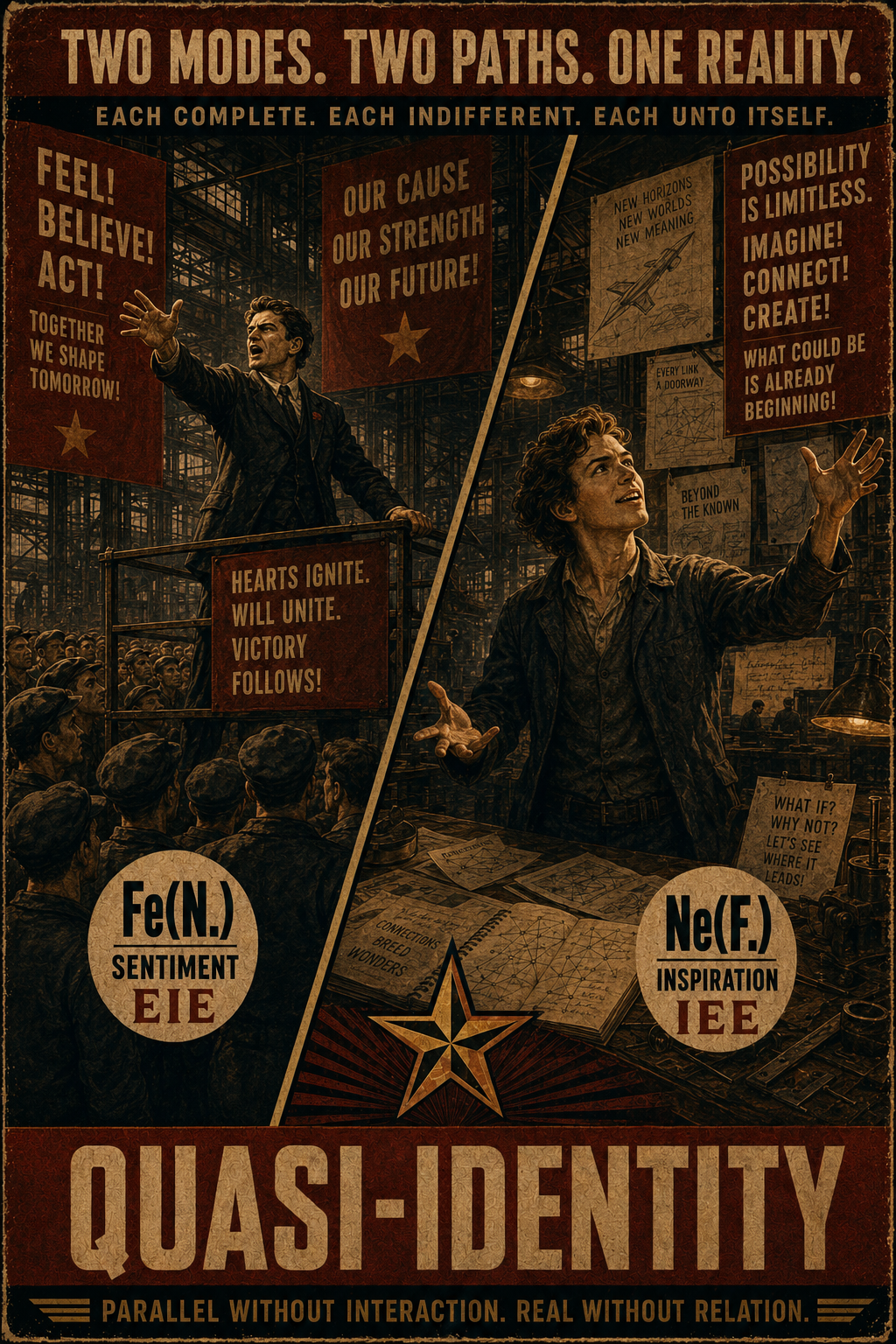
Same structural rule. EIE's Ne sits at position 8 — naturally used, present in background operation, not what EIE orients toward as primary. IEE's Fe sits at position 8 — equally natural, equally present, equally not oriented toward.
Both types are outward-broadcasting and expressively energised. Both share the N./F. sub-variant — inwardly sourced, personally charged, non-somatic, non-abstractly detached. Both generate felt output that moves into shared space and affects those around them. Both are Dynamic and extroverted. The surface resemblance is emotional-creative expressiveness, and it is sufficiently convincing that this pair generates persistent typing confusion.
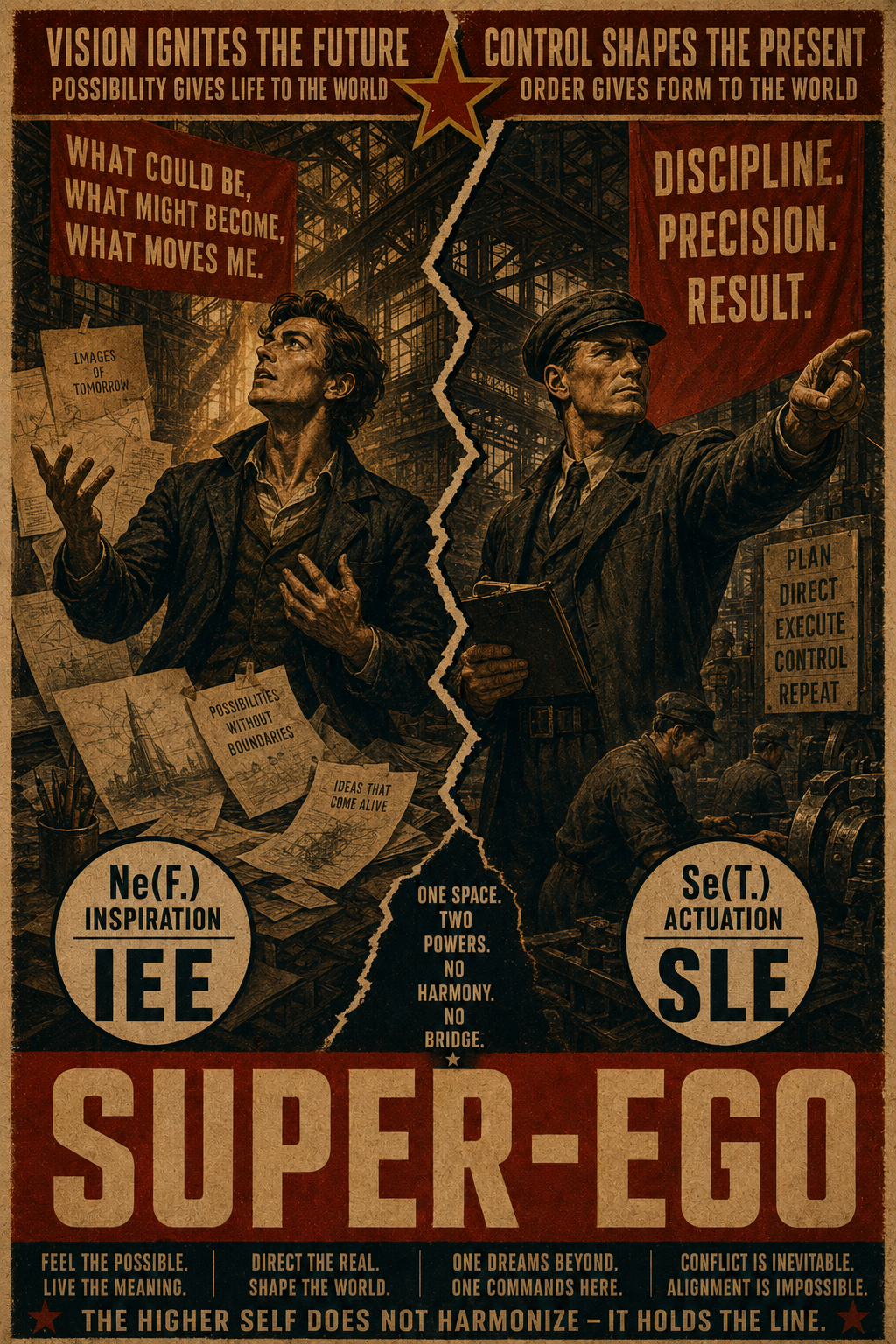
Same structure. IEE's Ne sits at SLE's Role position. SLE's Se sits at IEE's Role position. Full strength on both sides, landing where the other strains most.
IEE leads with Ne(F.) Inspiration — involved imaginative possibility. The IEE experiences potentiality from within: a felt sense of aliveness to what could be, personally charged, spontaneously generative. This is not the ILE's detached concept architecture built from outside its material. The IEE feels possibility as personally significant and immediate, drawing on experience to sense novel directions, activities, openings. The engagement is inward and inflected with felt meaning.
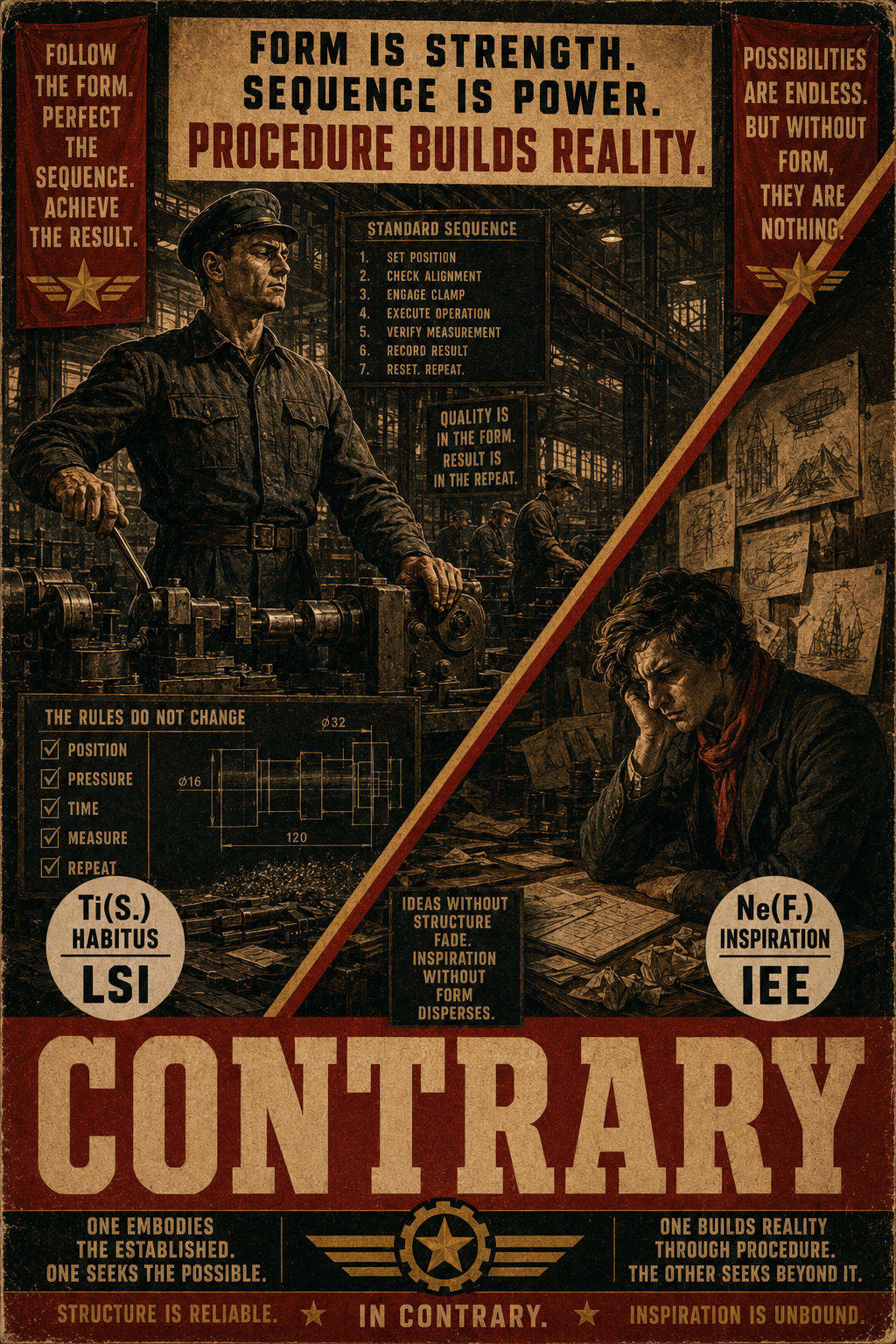
Same structural rule. LSI's base Ti(S.) sits exactly at IEE's D2 Vulnerable. IEE's base Ne(F.) sits exactly at LSI's D2 Vulnerable.
LSI leads with Ti(S.) Habitus — embodied structural logic, codified procedure enacted through the body with physical authority. In IEE's Model L stack, Ti(S.) sits at the Vulnerable position. IEE is genuinely inept with embodied procedural structure, treats it with careless indifference. When LSI's codified physical authority fills the shared space — the correct sequence demonstrated, the established form enacted with trained precision — IEE has no functional register to receive it. The procedural structure does not translate into anything the IEE's imaginative mode can inhabit.
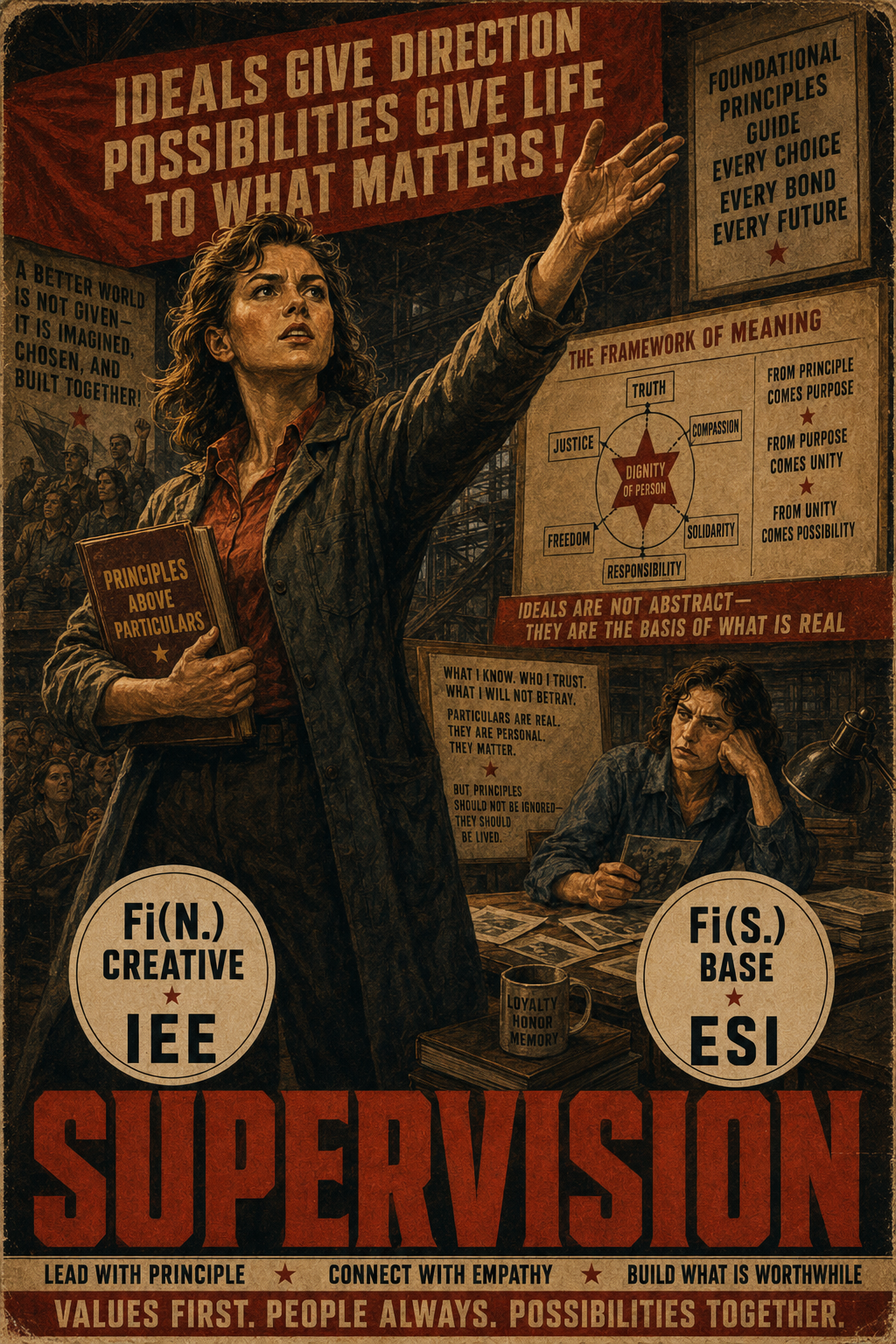
IEE leads with Ne(F.) Inspiration and creates with Fi(N.) Soul. The Fi(N.) creative flows naturally as the principled conviction that gives IEE's inspiration its moral charge and felt significance — abstract foundational idealism in service of imaginative aliveness. The IEE is not trying to correct ESI's relational judgements. The principled conviction serves the inspirational orientation, not relational governance.
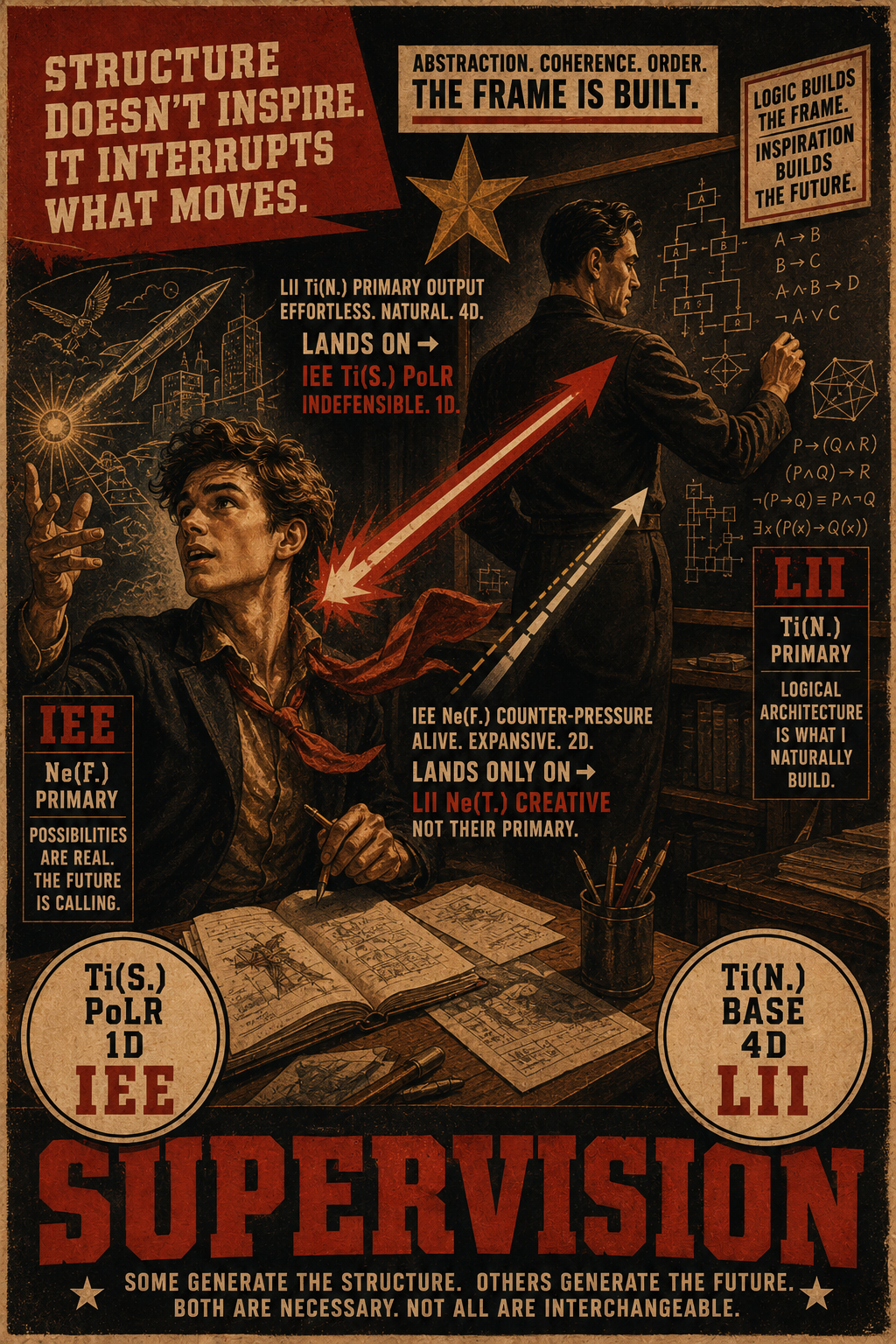
IEE leads with Ne(F.) Inspiration — 4d, 4p, felt aliveness to possibility at maximum strength. Against LII's Ne(T.) creative this lands on a 3d position. The IEE's inspired felt possibility genuinely adjusts LII's conceptual architecture. But this is the lesser pressure.
IEE leads with Ne(F.) Inspiration — felt aliveness to possibility as primary mode. The Fi(N.) Soul creative flows naturally as the principled conviction that gives that inspiration its moral charge and felt significance: abstract foundational idealism in service of imaginative openness. The IEE is not trying to give LIE relational direction. The principled conviction simply charges the inspiration.
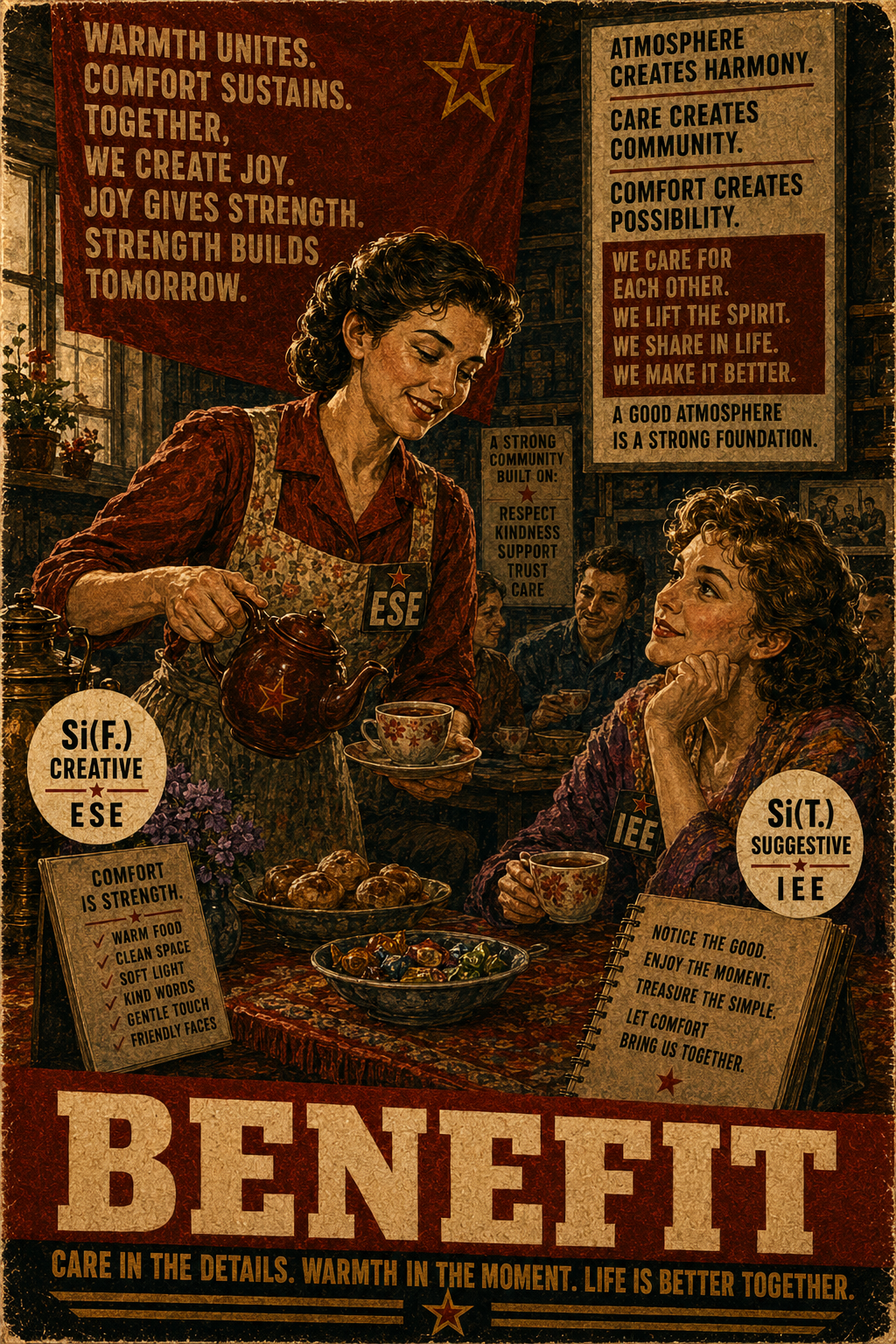
ESE leads with Fe(S.) Affect — collective atmospheric warmth as primary mode. The Si(F.) Stimulation creative flows naturally as the somatic sensory comfort that sustains that atmosphere: subjective bodily ease in service of collective mood generation. The ESE is not trying to provide precise sensory grounding for the IEE. The somatic comfort simply sustains the atmospheric warmth.
Model A identifies IEE as Ne-leading with Fi Creative. Model-L specifies that this is Ne(F.) — Inspiration, the internal and personally vivid mode of possibility, supported by Fi(N.) — Soul.
This distinction matters when separating IEE from ILE. Both lead with Ne in Model A terms, but IEE's Ne(F.) is inspirational, personal, and growth-oriented. ILE's Ne(T.) treats possibilities as conceptual objects to test, recombine, and systematise.
For IEE, Model-L clarifies why curiosity so often arrives with personal significance: possibility is not just interesting, but meaningful for people.
Attribution: Model-L is Kimani White's original framework. This interpretation is the author's own.
B Radial Group
Supported Same-Club Positions
B positions share the A capacity's rational or irrational club orientation. They are radial, foreground, and resistant: available as conscious support, but not as effortless as the central A cross.
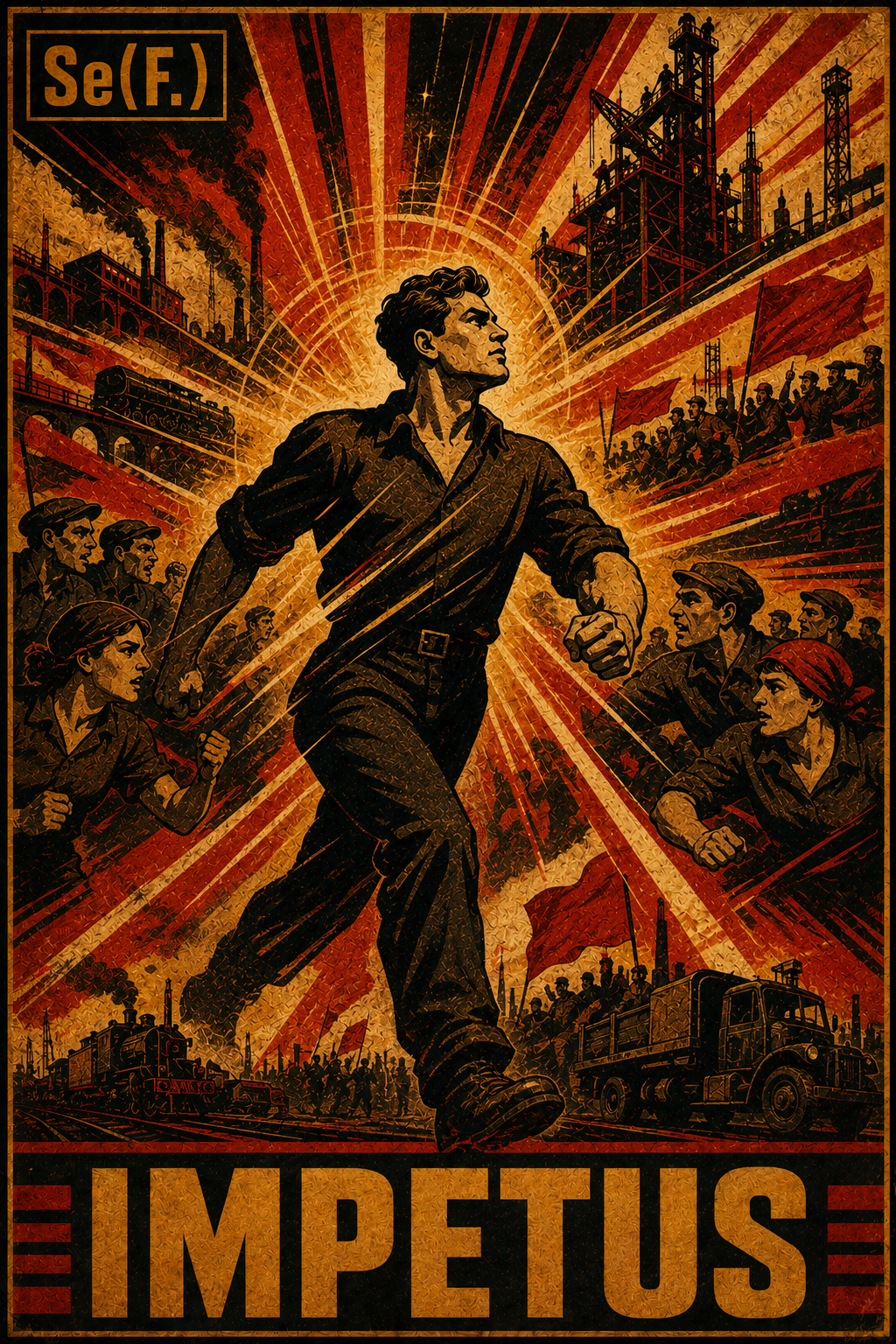
B1 — Correspondent
Se(F.) — Impetus
Derivation: radial + foreground + resistant · 3D / 2P
Conscious support that can correspond with the A region. It is capable enough to be useful, but it asks for deliberate handling rather than automatic expression.
A visible support position that collaborates with the type's central orientation. It receives attention and can help the profile work outwardly, but it is less dimensionally equipped than the A positions.
A compensating support position. It helps cover less central areas of the cross while still requiring conscious effort and structural management.
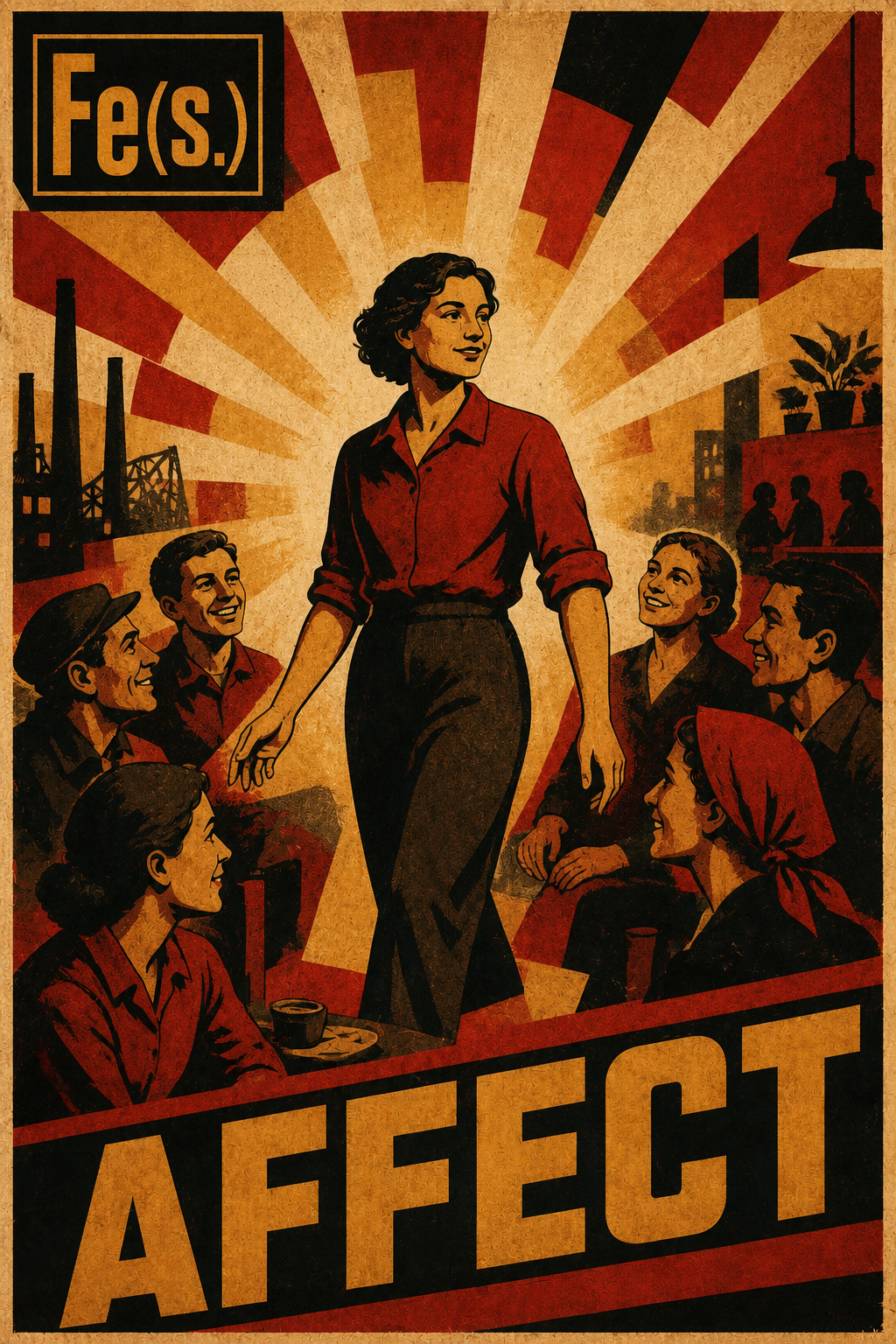
B4 — Instrumental
Fe(S.) — Affect
Derivation: radial + foreground + resistant · 3D / 2P
A workable instrument. It can be applied when needed as practical support, without becoming the type's main orientation.
C Radial Group
Contrasting Opposite-Club Positions
C positions take the opposite club orientation from A. They are radial, background, and facile: indirect resources that complement the type's main cross from the contrasting axis.
C1 — Subsidiary
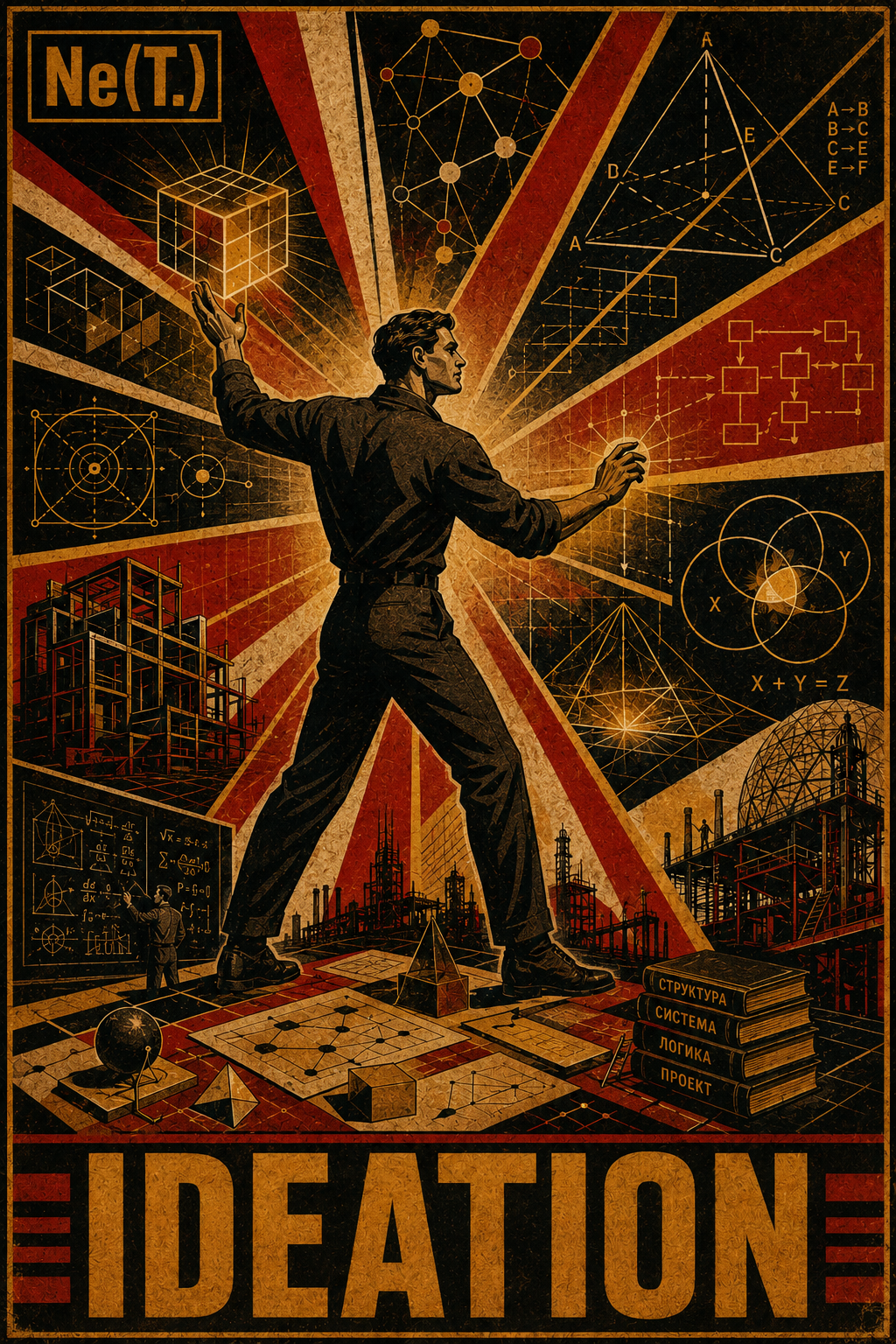
Ne(T.) — Ideation
Derivation: radial + background + facile · 3D / 2P
Quiet background support from the contrasting club orientation. It works as a subsidiary resource rather than a leading concern.
C2 — Negligent
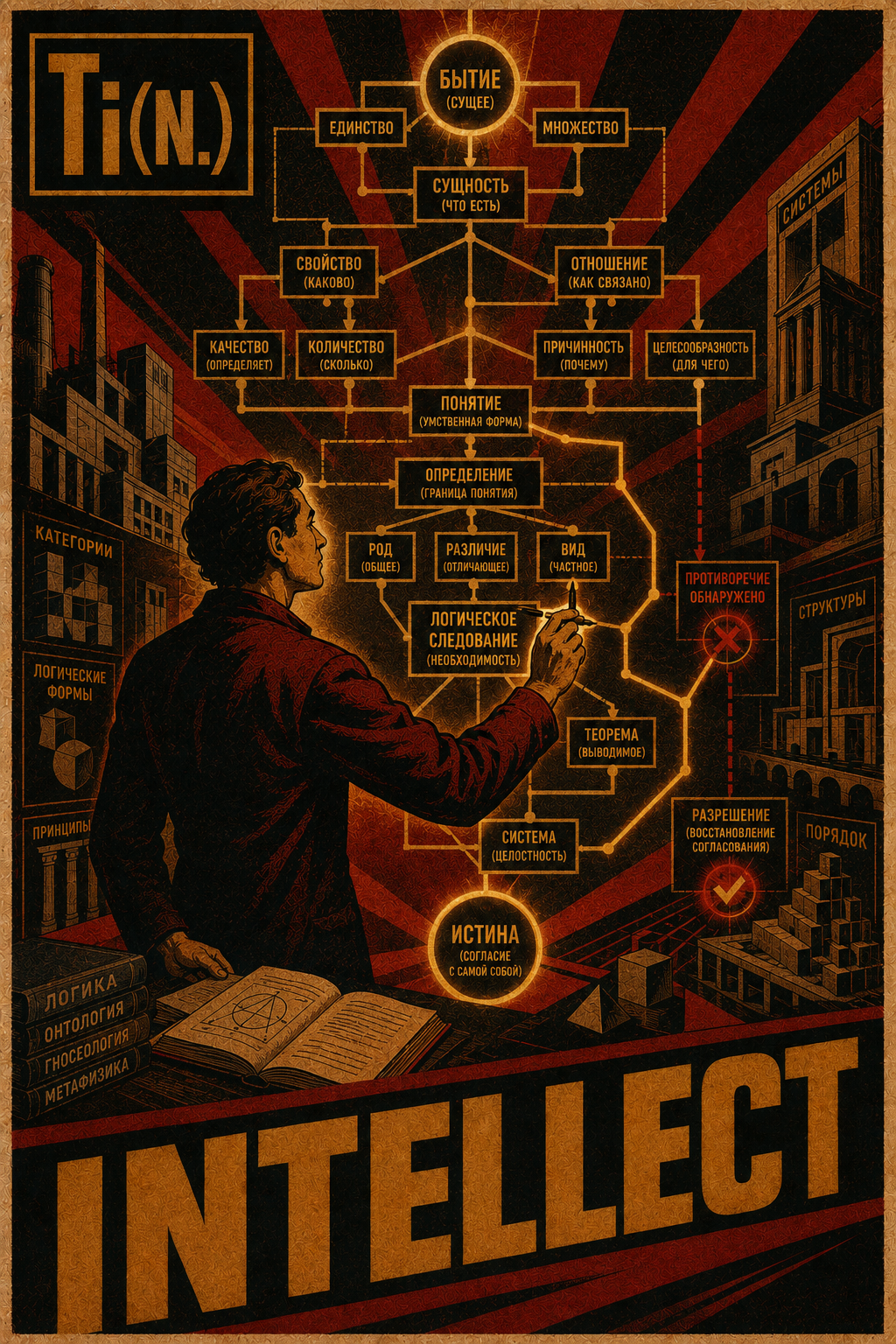
Ti(N.) — Intellect
Derivation: radial + background + facile · 2D / 3P
Indirect background material that may be psychologically noticeable but is easy to neglect. It colours the profile without becoming a central task.
C3 — Prompting
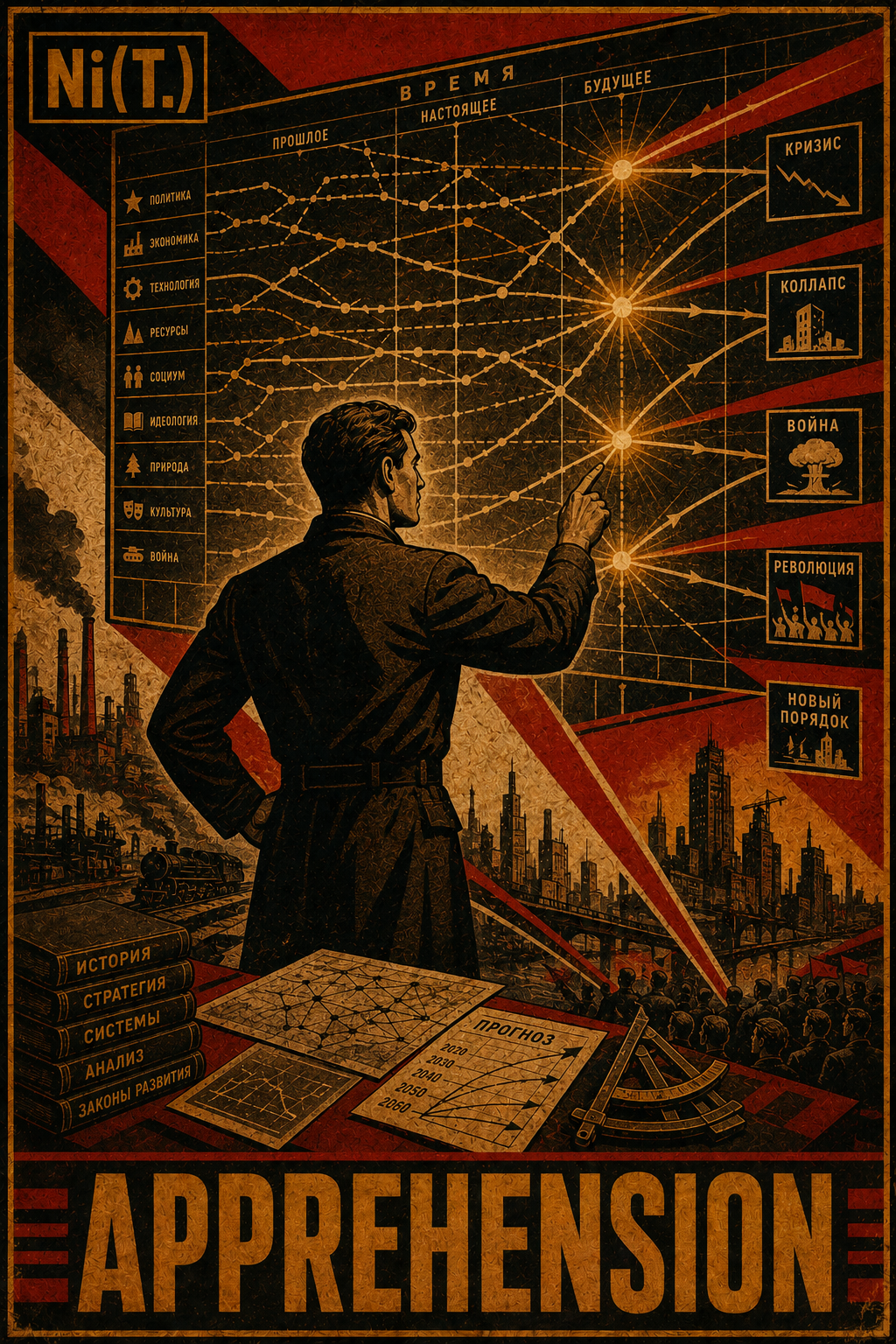
Ni(T.) — Apprehension
Derivation: radial + background + facile · 2D / 3P
A prompting support position. It nudges the type toward material that complements the A capacity from the opposing axis.
C4 — Galvanizing
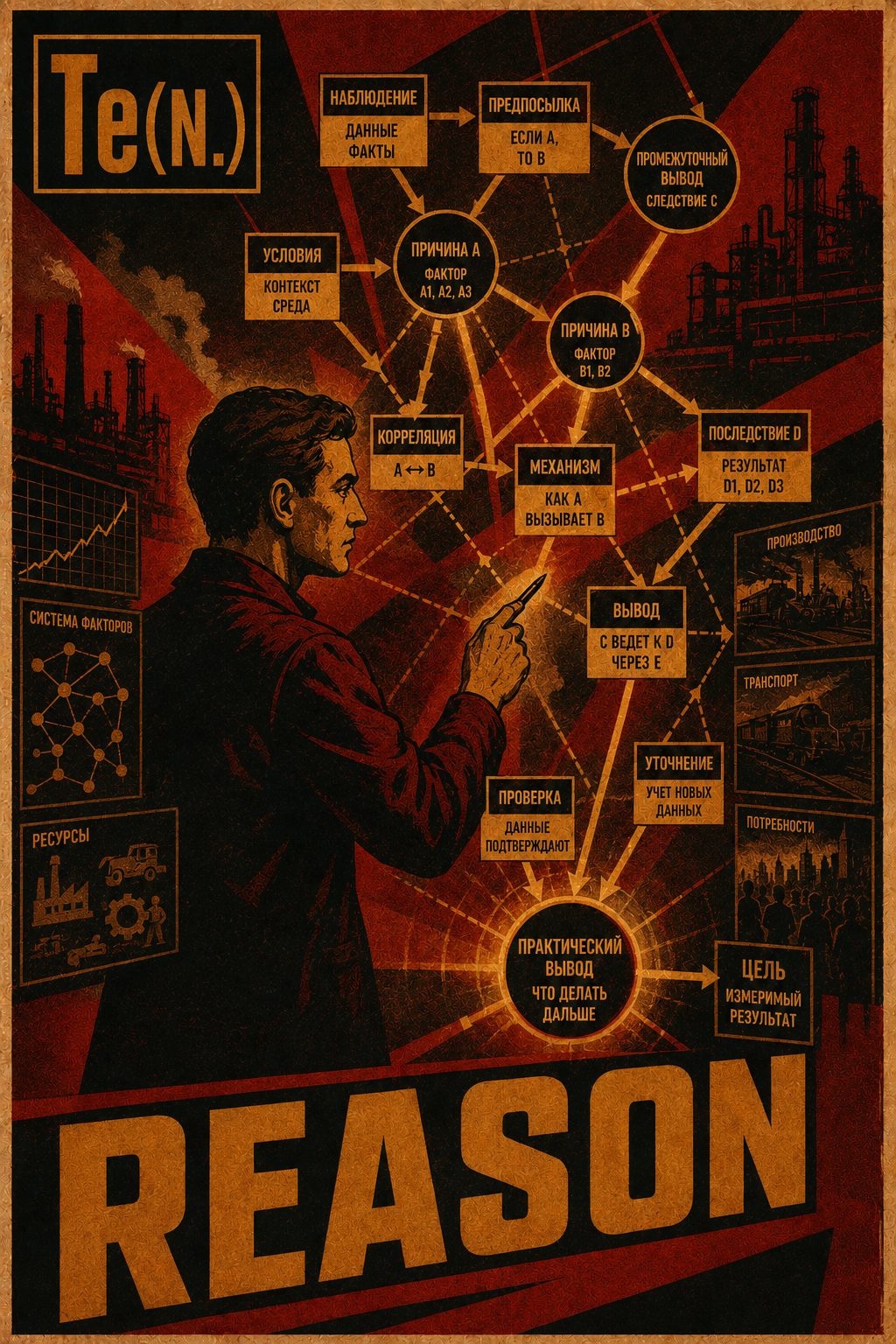
Te(N.) — Reason
Derivation: radial + background + facile · 3D / 2P
A galvanizing support position. It shapes output from the contrasting axis, adding momentum without becoming a direct Model A anchor.
The Type In Life
The Explorer
Male story
Dayo
Dayo became fascinated with the history of cartography at 2pm on a Tuesday and by Thursday had read four books and sent eleven messages. He moves between enthusiasms at speed, but the speed is not shallowness — each enthusiasm is genuinely felt, fully inhabited, charged with a personal sense of significance that others find either exhausting or electrifying. He is good with people in the way that means he is interested in them, specifically, as opposed to generically. He remembers what mattered to you. He asks about it. He means it. He collects people the way other people collect books: for their hidden possibilities, odd gifts, and half-buried stories. A casual conversation with him can become an invitation, a new project, or a sudden reimagining of what someone thought their life allowed.
Female story
Zara
Zara has a list of things she wants to try and the list grows faster than she depletes it, which she finds encouraging rather than overwhelming. She is not a dabbler — she goes deep, quickly, on whatever has caught her — but the object of the depth keeps changing, and that is the point. She connects possibilities across contexts that have no obvious bridge. This shows up in her work, in her relationships, in the way she finds the unusual angle without looking for it. She talks too much when she is excited. She is excited quite often. She spots the unlived version of a person before they do and speaks to it with disarming enthusiasm. Her attention jumps, but it is not shallow; she is following sparks of character, looking for the door through which someone might become more fully themselves.
Male story
Jide
Jide is a youth worker in Manchester who became interested in urban planning at thirty-two, then in community radio at thirty-three, then in the relationship between them — the built environment as a signal of who is considered to belong — and is now, at thirty-five, writing a proposal to redesign two streets in his neighbourhood around this idea. Each enthusiasm fed the next; each was completely, genuinely felt while it lasted. He collects people the way he collects interests: with full attention, with an eye for the unusual quality in them, with a retention that other people find surprising and that he finds entirely natural. He is forever introducing two people who did not know they needed each other. His optimism has a restless moral curiosity, a sense that identity is not fixed but waiting to be discovered through the right encounter, story, or risk.
Female story
Indira
Indira works in Chennai as a product designer and is good at her job for a reason that resists the performance review format: she finds the actual humans who will use the thing genuinely interesting, and genuine interest produces better design than methodology alone can supply. She will prototype six versions not because she is indecisive but because each version is a question and she wants to ask all the questions. She is enthusiastic in a way that gets edited out of professional settings and that she has stopped editing. It turns out enthusiasm is infectious. It turns out this is useful. She moves through the world alert to symbols, talents, odd coincidences, and emotional openings. Her friends come away from conversations with her carrying three new possibilities and the uncomfortable feeling that their excuses have become less convincing.