Model L · Intertype Relations

Extinguishment Relations — Model L

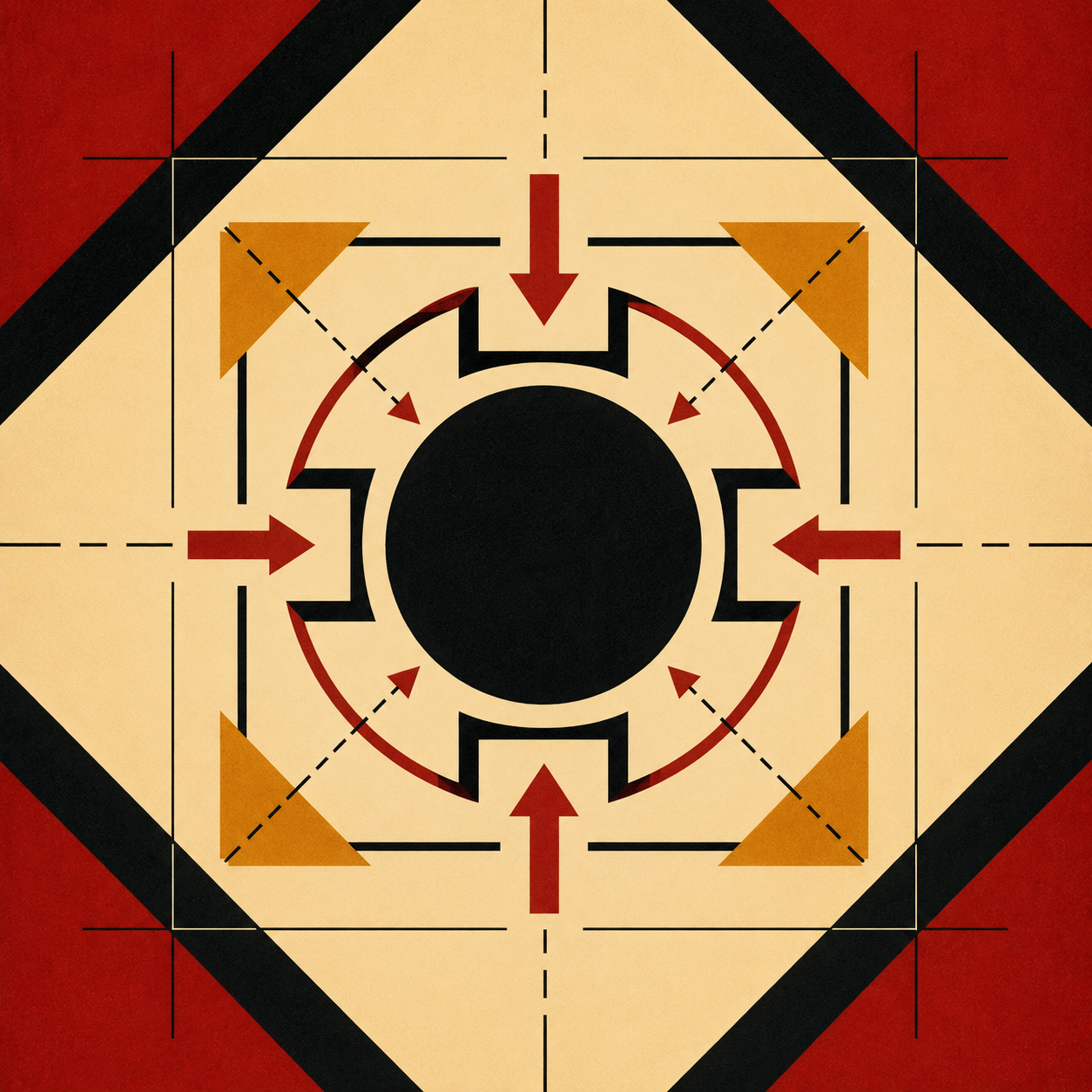
Recognition absorbed before it can stand.Each partner's Ego output is received as Contributive material and co-opted into the other's base orientation.

Model A To Model L

Where Extinguishment Absorbs

Model L defines Extinguishment by co-option: each type's Ego block lands in the other's Contributive capacity, where it is capable and easy to use but subordinated to the receiving type's base operation.

The partner's output is not rejected as alien. It is recognised, received, and redirected before it can survive as an independent output.

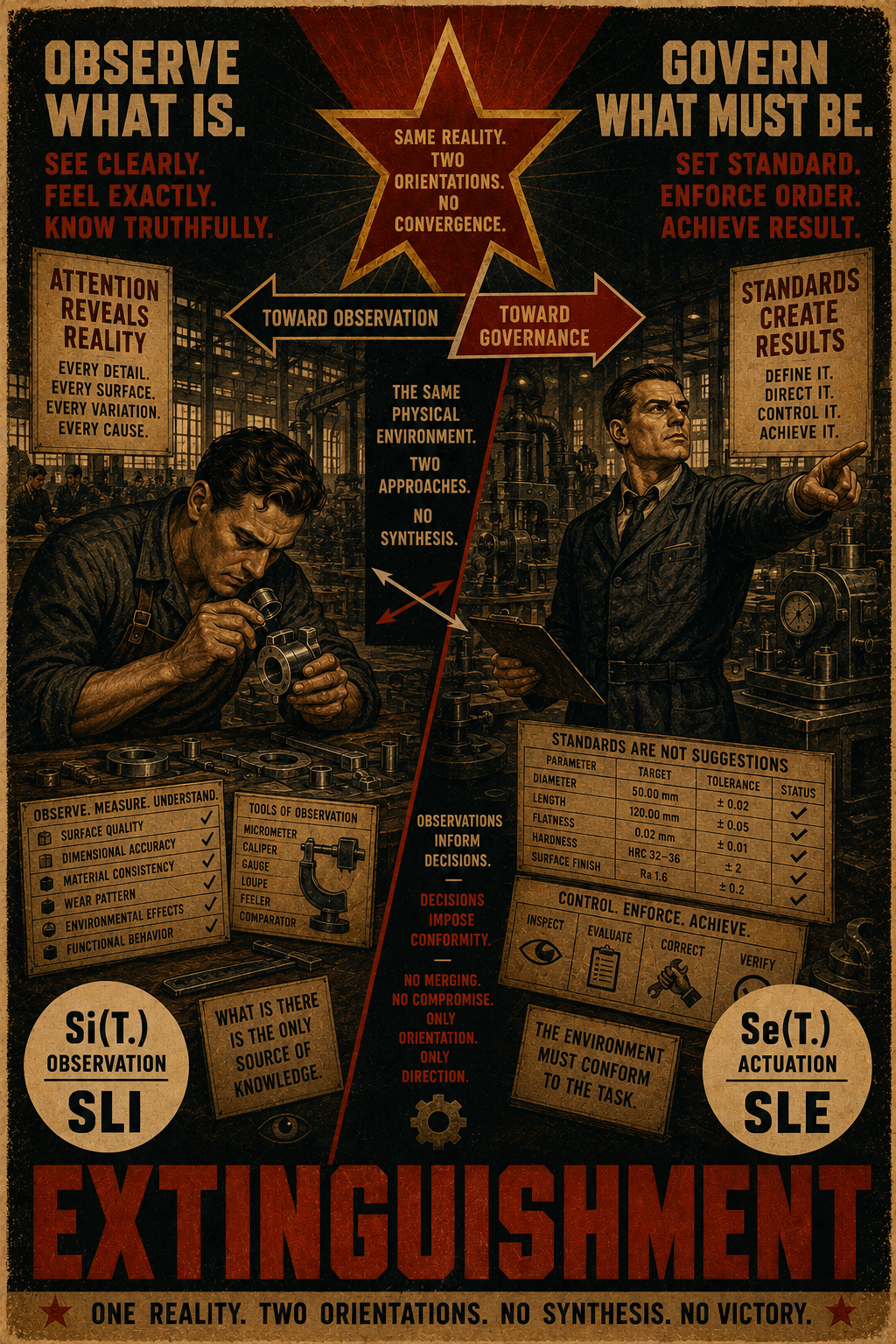
Extinguishment relation poster

Extinguishment Pair Menu

Same Register, Opposite Orientation

This page presents the Model L Extinguishment series: pairs where each type's primary output is absorbed into the other's Contributive support system and redirected toward the receiving base.

Intellect element illustration
Ti(N.) Intellect · LII
Reason element illustration
Te(N.) Reason · LIE

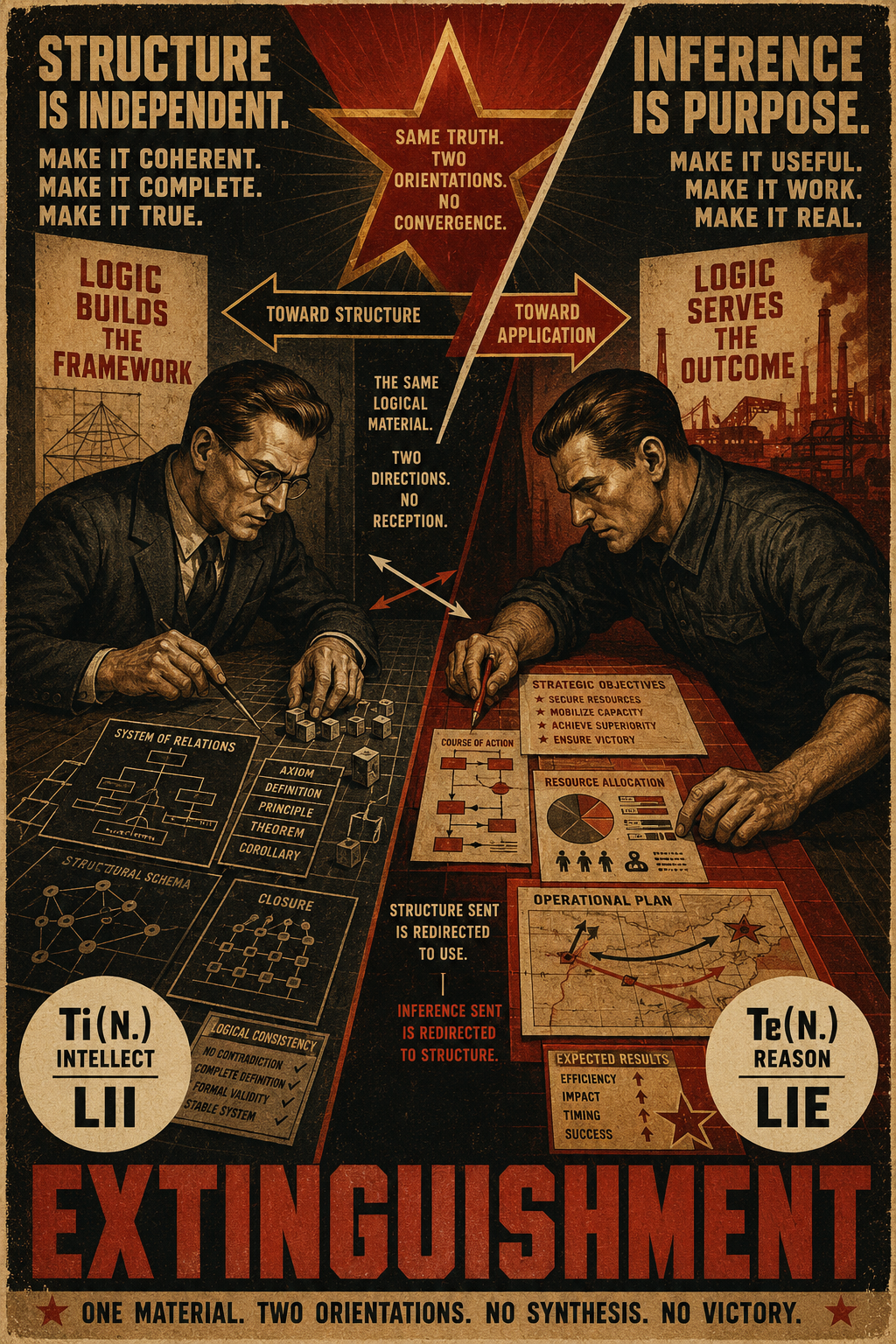
Ti(N.) Intellect / Te(N.) Reason — LII and LIE

In Model L, the Extinguishment relationship has a precise structural definition: each type's full Ego block — base (A1) and creative (A2) — sits exactly in the other's Contributive capacity, occupying the C1 Subsidiary and C4 Galvanizing positions. The Contributive capacity is Background/Facile: these functions are 3d capable, easy to focus on for extended periods, but of menial value and overwhelmingly co-opted in service of the type's own base operation.

Extinguishment relation illustration comparing LII × LIE
Habitus element illustration
Ti(S.) Habitus · LSI
Praxis element illustration
Te(S.) Praxis · LSE

Ti(S.) Habitus / Te(S.) Praxis — LSI and LSE

Same structural rule. LSI's Ego block Ti(S.)/Se(T.) sits exactly in LSE's Contributive capacity. LSE's Ego block Te(S.)/Si(T.) sits exactly in LSI's Contributive capacity.

Extinguishment relation illustration comparing LSI × LSE
Soul element illustration
Fi(N.) Soul · EII
Sentiment element illustration
Fe(N.) Sentiment · EIE

Fi(N.) Soul / Fe(N.) Sentiment — EII and EIE

Same structural rule. EII's Ego block Fi(N.)/Ne(F.) sits exactly in EIE's Contributive capacity. EIE's Ego block Fe(N.)/Ni(F.) sits exactly in EII's Contributive capacity.

Extinguishment relation illustration comparing EII × EIE
Animus element illustration
Fi(S.) Animus · ESI
Affect element illustration
Fe(S.) Affect · ESE

Fi(S.) Animus / Fe(S.) Affect — ESI and ESE

Same structural rule. ESI's Ego block Fi(S.)/Se(F.) sits exactly in ESE's Contributive capacity. ESE's Ego block Fe(S.)/Si(F.) sits exactly in ESI's Contributive capacity.

Extinguishment relation illustration comparing ESI × ESE
Observation element illustration
Si(T.) Observation · SLI
Actuation element illustration
Se(T.) Actuation · SLE

Si(T.) Observation / Se(T.) Actuation — SLI and SLE

Same structural rule. SLI's Ego block Si(T.)/Te(S.) sits exactly in SLE's Contributive capacity. SLE's Ego block Se(T.)/Ti(S.) sits exactly in SLI's Contributive capacity.

Extinguishment relation illustration comparing SLI × SLE
Stimulation element illustration
Si(F.) Stimulation · SEI
Impetus element illustration
Se(F.) Impetus · SEE

Si(F.) Stimulation / Se(F.) Impetus — SEI and SEE

Same structural rule. SEI's Ego block Si(F.)/Fe(S.) sits exactly in SEE's Contributive capacity. SEE's Ego block Se(F.)/Fi(S.) sits exactly in SEI's Contributive capacity.

Extinguishment relation illustration comparing SEI × SEE
Apprehension element illustration
Ni(T.) Apprehension · ILI
Ideation element illustration
Ne(T.) Ideation · ILE

Ni(T.) Apprehension / Ne(T.) Ideation — ILI and ILE

Same structural rule. ILI's Ego block Ni(T.)/Te(N.) sits exactly in ILE's Contributive capacity. ILE's Ego block Ne(T.)/Ti(N.) sits exactly in ILI's Contributive capacity.

Extinguishment relation illustration comparing ILI × ILE
Reverie element illustration
Ni(F.) Reverie · IEI
Inspiration element illustration
Ne(F.) Inspiration · IEE

Ni(F.) Reverie / Ne(F.) Inspiration — IEI and IEE

Same structural rule. IEI's Ego block Ni(F.)/Fe(N.) sits exactly in IEE's Contributive capacity. IEE's Ego block Ne(F.)/Fi(N.) sits exactly in IEI's Contributive capacity.

Extinguishment relation illustration comparing IEI × IEE

Extinguishment Summary

Output Consumed Through Absorption

File namePairShared sub-variantsMechanism
extinguish-lii-lieLII × LIEN./T.Structure absorbed into strategy / Strategy absorbed into structure
extinguish-lsi-lseLSI × LSES./T.Procedure absorbed into method / Method absorbed into procedure
extinguish-eii-eieEII × EIEN./F.Conviction absorbed into incitement / Incitement absorbed into conviction
extinguish-esi-eseESI × ESES./F.Particular bond absorbed into atmosphere / Atmosphere absorbed into particular verdict
extinguish-sli-sleSLI × SLET./S.Observation absorbed into governance / Governance absorbed into observation
extinguish-sei-seeSEI × SEEF./S.Ease absorbed into momentum / Force absorbed into sensation
extinguish-ili-ileILI × ILET./N.Pattern absorbed into concept / Concept absorbed into pattern
extinguish-iei-ieeIEI × IEEF./N.Narrative absorbed into possibility / Possibility absorbed into narrative

The structural pattern is identical across all eight. Each type's full Ego block sits exactly in the other's Contributive capacity — 3d capable, Background/Facile, but co-opted in service of the receiving type's own base. The match is same domain, same sub-variant, opposite orientation: the most similar pairing possible while still being structurally distinct.

This is what distinguishes Extinguishment from every other relation type. The partner's output is not alien (Contrary), not strained (Super-Ego), not misread (Illusionary), not bypassed (Quasi-identity). It is recognised, received, and consumed — redirected into the receiving type's primary orientation without the intended output surviving intact. Each type produces something real. Nothing produced arrives on its own terms. The output is extinguished through absorption, not opposition.

Model A has no framework for this relation. The distinction between same-sub-variant and opposite-sub-variant pairings sharing domain and orientation does not exist at the 8-element level — both would appear as similar types engaging with overlapping elements. Model L makes the structural difference precise: same sub-variant produces Extinguishment; opposite sub-variant produces Illusionary. The register is the mechanism.