Visual Typing Covers Different Claims
A static photograph, a face in motion, a person's posture, their clothing, their speech, and their behaviour during an interview do not provide the same kind of evidence. Speech content and interaction can reveal interests, habits, values, and strategies. Voice, expression, gesture, and response timing are behaviour too, although their interpretation remains vulnerable to culture, situation, disability, masking, mood, and observer expectation.
The strongest and least defensible version of visual typing is morphological: the claim that a stable Socionics type can be read from facial structure, body proportions, eyes, or resemblance to previously typed people. That is physiognomic reasoning. It should be separated from the more modest claim that a long video supplies behavioural information.
Who Has Promoted It?
Sergei Ganin's socionics.com calls visual identification the fastest and most reliable typing method and explicitly claims that people of the same type share facial and bodily features. The site also advises combining it with functional analysis, but its celebrity galleries and physical descriptions helped make single-image typing highly visible in the English-speaking community.
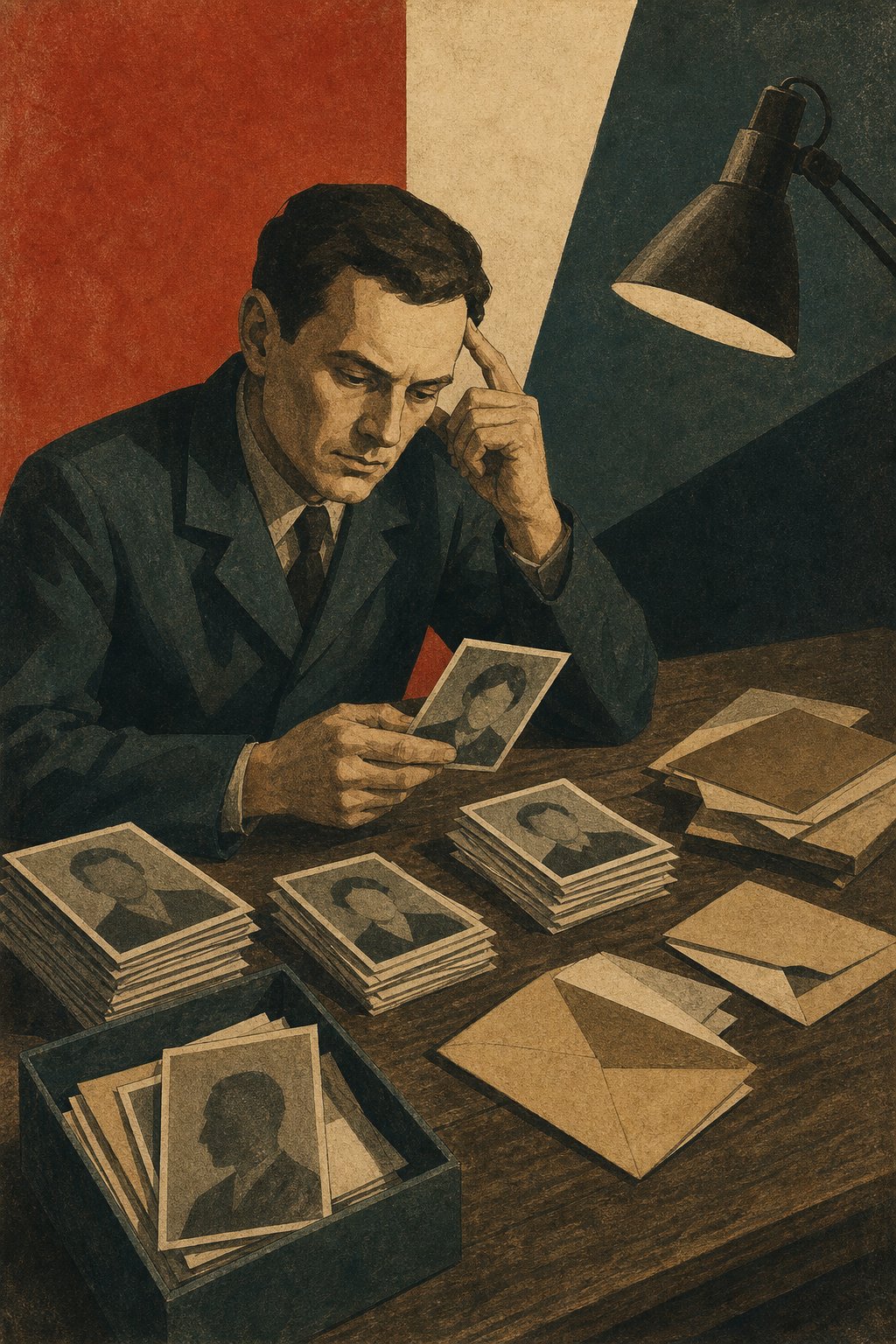
Ekaterina Filatova assembled more than a thousand portraits of people she had already typed and reported apparent "twin" series. The Lytovs' Socioniko account is notably more cautious: it says that no valid visual-identification methodology existed and that Filatova photographed people only after diagnosis. The archive may generate hypotheses; it does not validate a classifier.
Viktor Talanov has published a visual-identification approach. Viktor Gulenko's Humanitarian Socionics also uses what it calls analog or non-verbal data. Its current remote procedure, however, asks for spoken self-presentations, follow-up answers, gestures, facial expressions, eye movement, and voice. That is a broad video interview, not simply a claim that skull or face shape reveals type, though appearance-based inference remains part of the advertised method.
Practitioner sources: Ganin, "V.I. (Visual Identification)" and identification methods; Socioniko on Filatova and the absence of a validated method; Talanov's visual-identification article; Humanitarian Socionics, remote diagnostic procedure.
Why A Gallery Cannot Prove The Claim
The first problem is circularity. If a practitioner assigns the types and then learns what each type "looks like" from those same assignments, the labels provide no independent ground truth. A mistaken prototype reinforces itself: new faces are accepted when they resemble the learned examples, while discordant cases are retyped, called unusual subtypes, or forgotten.
Selection and confirmation bias deepen the circle. A large archive offers countless opportunities to find striking pairs while ignoring equally striking cross-type resemblances. Flexible prototypes make almost any face fit one of several "looks" for a type. Celebrity galleries add uncertain biographies, curated photographs, makeup, lens effects, ageing, and no consent or opportunity for diagnostic correction.
Facial-impression research shows why the method can feel persuasive. People rapidly agree that some faces look trustworthy, dominant, warm, or extraverted. Agreement about an impression is not accuracy about the person. Much of the effect follows resemblance to emotional expressions, broad approachability and dominance impressions, or perceiver-specific associations. Age, sex, ancestry, weight, health, attractiveness, occupation, fashion, subculture, expression, and photographic conditions can all become hidden predictors.
Some studies find small above-chance signals for selected broad traits, especially extraversion, under particular conditions. Even if those effects replicate, they do not establish sixteen discrete Socionics types, the ordering of eight information elements, or the validity of a practitioner's visual prototypes. A weak correlation with one broad trait cannot carry that much theoretical structure.
Research context: APA Dictionary entry on physiognomy; Todorov and colleagues, face evaluation and emotional overgeneralisation; Sutherland and colleagues, personality judgements from everyday face images; recent review of face-evaluation findings and challenges.
What A Real Test Would Require
A meaningful test would define the visual rules before examining the test set; establish type labels independently of appearance; use a large held-out sample; balance age, sex, ancestry, and other visible variables; compare accuracy with type base rates and simpler trait models; measure agreement between independent visual typists; and replicate across cultures and schools. The method must be allowed to fail without retyping the targets after the fact.
The same discipline applies to other seductive shortcuts: typing celebrities from curated fragments, treating disagreement as proof of another person's weak self-knowledge, inferring relations from whether two people seem to get along, explaining every counterexample with subtype, and turning probabilistic type descriptions into destiny. These moves protect a theory from correction by making every outcome compatible with it.
The Ethical Cost Of Looking Certain
Appearance-based diagnosis is not harmless entertainment when it influences hiring, relationships, education, or judgements of character. It can launder stereotypes about ethnicity, sex, disability, age, class, attractiveness, and body shape through technical vocabulary. A responsible Socionics practice should explain its evidence, report uncertainty, seek consent where people are identified publicly, and never treat a face as a transparent display of an inner type.