Carl Gustav Jung
Psychological Types and the quaternary symbolism that runs through the typological foundations.
About The Project
“Science must begin with myths, and with the criticism of myths.”Karl Popper, Conjectures and Refutations
An independent attempt to make the fourfold architecture of socionics visible through reference pages, type portraits, and interactive tools.
The Project
TetraTypes is an independent socionics reference built around the fourfold architecture that runs through the whole system — four quadras, four clubs, four temperaments, sixteen types arranged in a four-by-four grid. The name comes from that structure. Tetra, from the Greek — four patterns, four natures, the quaternary skeleton that holds the system upright.
The site presents socionics at two levels of resolution: Model A, following World Socionics Society conventions as taught by Jack Oliver Aaron; and Model L, the extension developed by Kimani White and Aleesha Lowry, which subdivides the eight classical elements into sixteen monadic sub-variants and introduces a capacity group architecture that cuts across Model A's block structure. The Bridge page connects the two frameworks and explains the relationship between them.
TetraTypes carries no institutional endorsement. It is not affiliated with the World Socionics Society, with Kimani White, or with any related institution. It is one person's attempt to make the invisible structure visible — to build tools and write descriptions that do justice to the strange, precise, genuinely illuminating system that Aušra Augustinavičiūtė raised on Carl Gustav Jung's foundations.
The Presence Cube animation on the right is based on Ibrahim Tencer's Presence Cube ideas.
On The Name
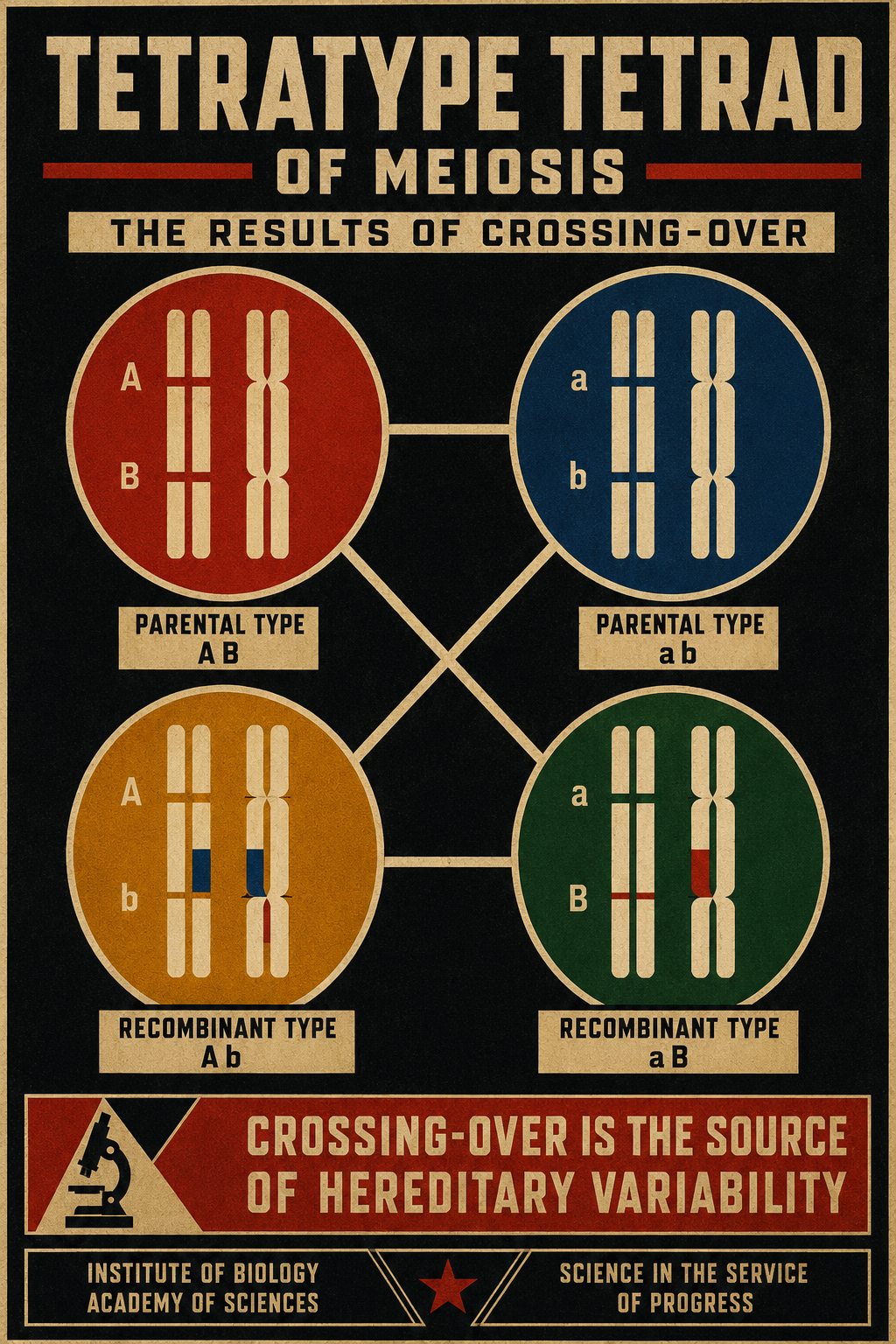
In genetics, a tetratype is the meiotic tetrad in which recombination has occurred between two loci — the result that is most informationally rich precisely because two distinct systems have crossed over. The name is a happy accident. This site exists at the intersection of two frameworks, Model A and Model L, and holds all four quadral lines of the type system simultaneously. The crossing-over is the point.
The runner-up was Hexadecology — sixteen types, one system — but the ground had already been claimed by Sedecology, which arrived at the same idea by the same Latin root. The alliteration was the appeal, and TetraTypes turned out to have that too — and to be the better name anyway.
Foundational Figures
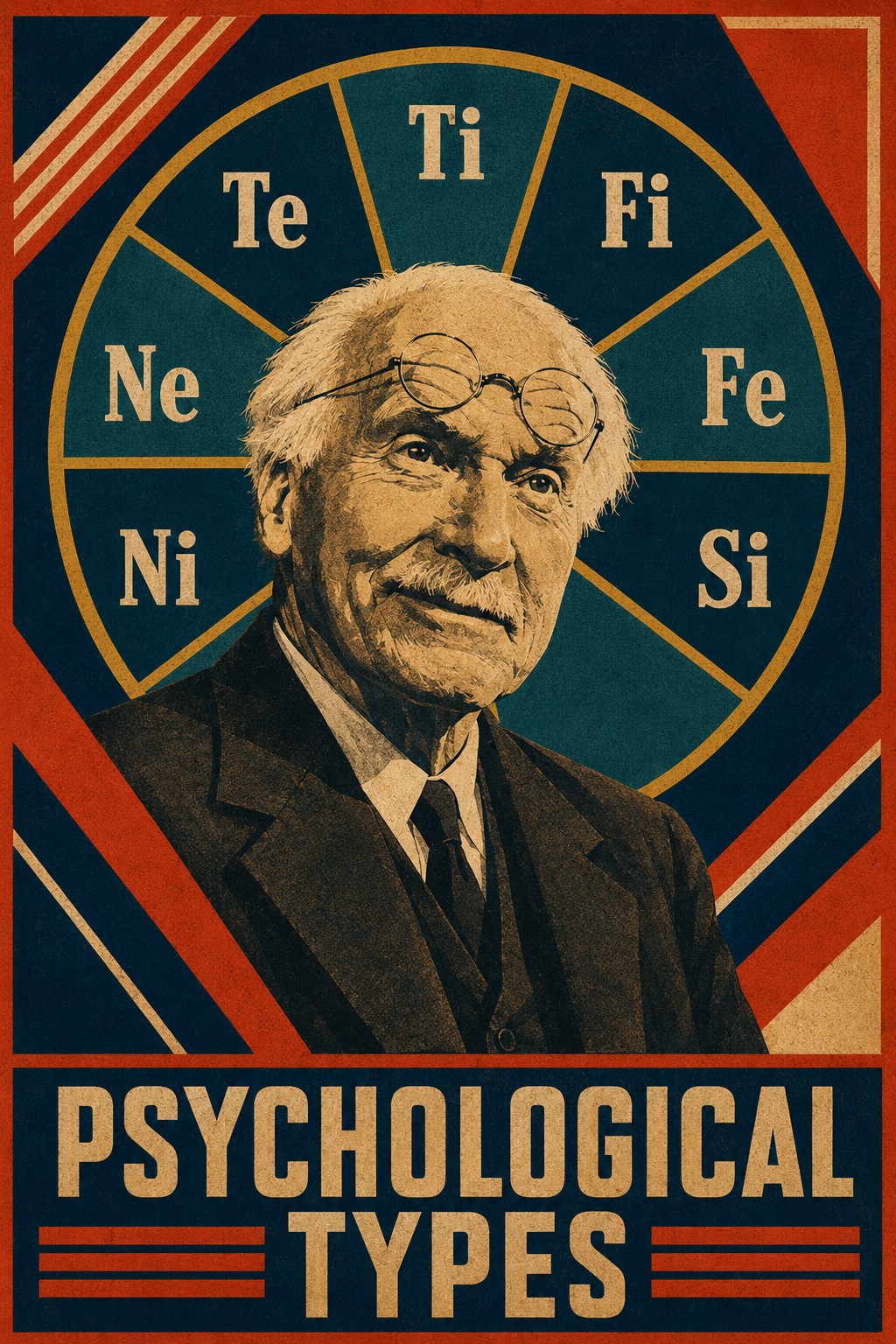
Carl Gustav Jung (1875–1961) was a Swiss psychiatrist and founder of analytical psychology. In his 1921 work Psychological Types he proposed that human consciousness is structured by two fundamental attitudes — introversion and extraversion — and four functional orientations: thinking, feeling, sensation, and intuition. Each person, he argued, has a dominant function and attitude that shapes how they engage with the world. Jung did not systematise these into a formal typology himself, but the architecture he laid down became the foundation on which every serious personality type system since has been built, socionics included.
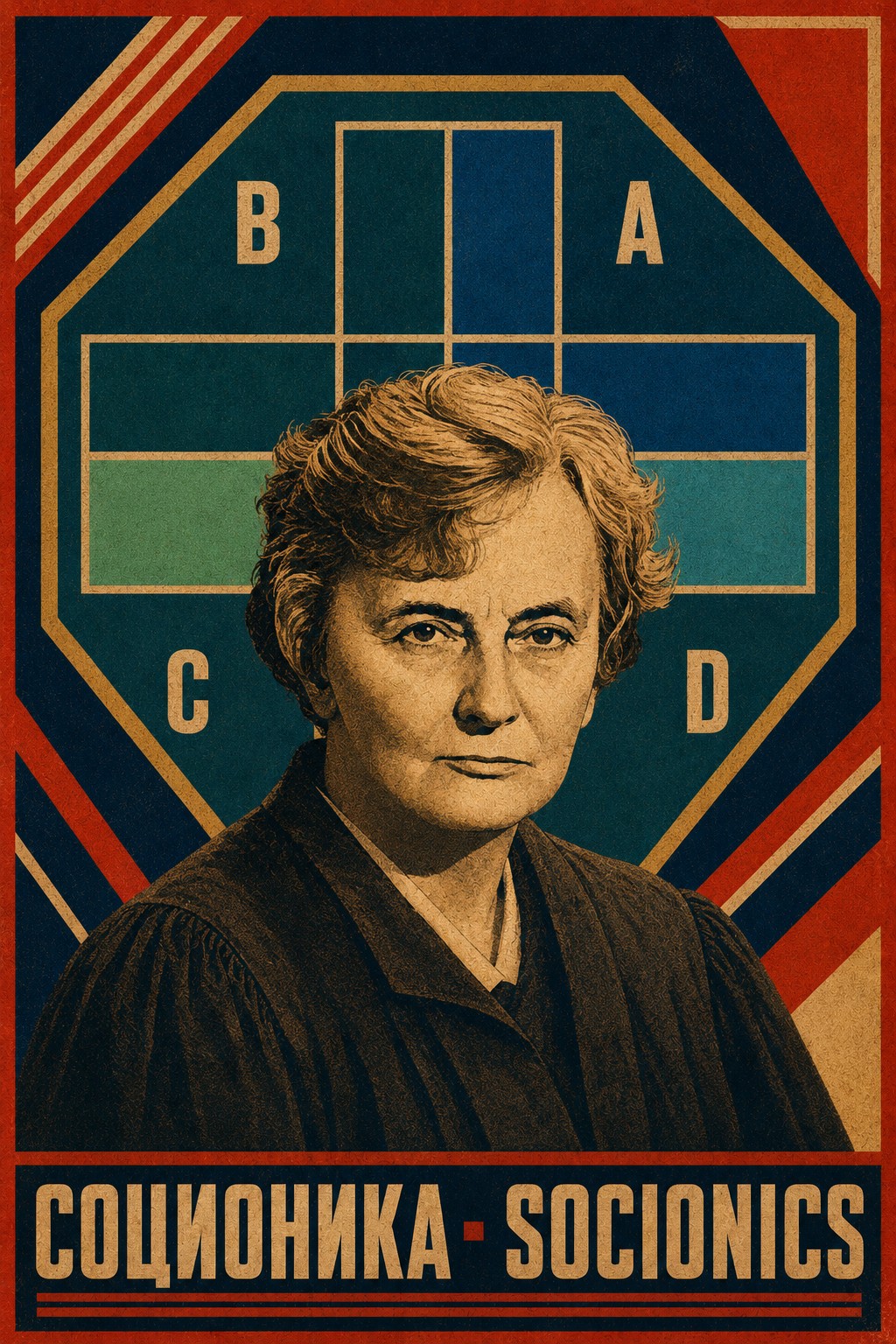
Aušra Augustinavičiūtė (1927–2005) was a Lithuanian economist, sociologist, and theorist who founded socionics in the 1970s. Taking Jung's four functions and two attitudes as her starting point, she developed a far more rigorous structural system: sixteen distinct types, each defined by an eight-position model of information metabolism, arranged into an interconnected social whole she called the socion. Her key insight was that types do not exist in isolation — they stand in precise, predictable relationships to one another, with consequences for attraction, collaboration, conflict, and understanding that can be mapped and studied.
Author
I first encountered the work of Carl Jung while at university, but it wasn't until around 2008 that I began seriously reading about Jungian personality theories and typology systems. Although I explored personality theory for many years, I only discovered socionics around 2022. What immediately drew me to it was the structural depth of the model — the sense that it was attempting to describe patterns of cognition and interaction with a level of internal logic that went beyond most personality systems.
My background is in systems analysis, and I've always been drawn to frameworks that attempt to explain complex structures coherently. Over time I found that reading in philosophy — particularly the work of Karl Popper and David Deutsch — gave me a clearer sense of what socionics actually is: not a pseudoscience to be dismissed, but a conjecture to be held carefully and falsified by argument. TetraTypes grew out of a desire to explore socionics in a more systematic, visual, and analytical way — not simply as a catalogue of personality descriptions, but as an interconnected structure of relationships and informational patterns.
I am now building the TetraTypes YouTube channel, which explores socionics theory through visual explanation and structural analysis. The channel and site both focus on socionics theory, intertype relations, model structure, tetrads and quadras, visual models, and philosophical discussions around typology. A major aim of the project is to make difficult or abstract ideas easier to grasp through diagrams, symbolic imagery, and careful analytical explanation.
The visual language of the site draws on Soviet constructivist poster art — an aesthetic I find genuinely striking in its geometry, boldness, and sense of intellectual seriousness. It also felt like a deliberate nod to the origins of socionics itself, which was developed in Soviet Lithuania in the 1970s. I should be clear that this is purely an aesthetic choice. My own political commitments sit firmly within the Enlightenment liberal tradition: reason, individual liberty, and open inquiry. The irony is not lost on me. The style outlasted the ideology.
I am trained in WSS conventions but have no formal affiliation with the World Socionics Society, Jack Oliver Aaron, Kimani White, or any related institution. The interpretations on this site are my own. Errors belong to the site.
Attribution
The main intellectual lineages and source traditions used across TetraTypes.
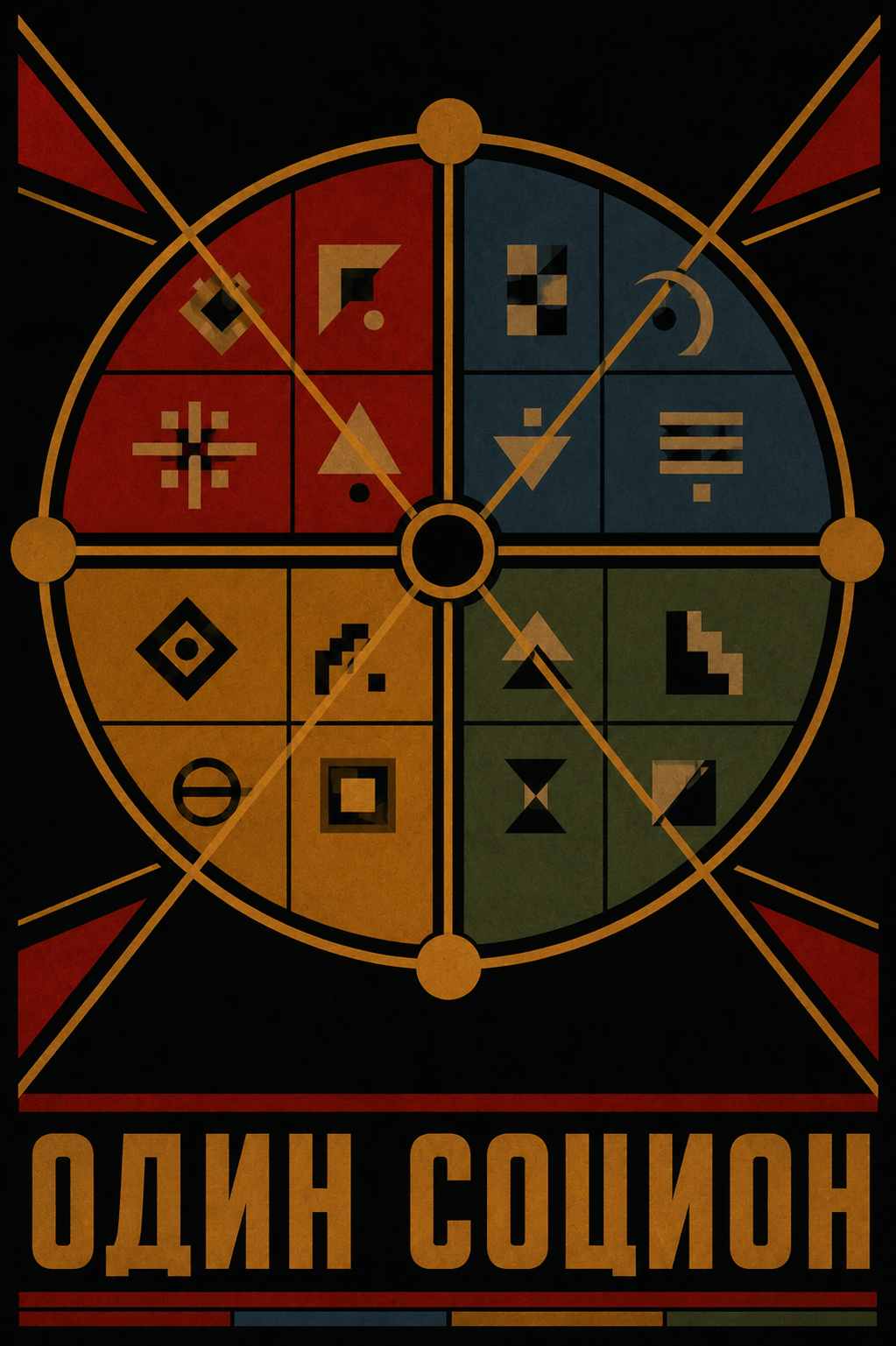
Psychological Types and the quaternary symbolism that runs through the typological foundations.
The formation of socionics, the socion, quadras, information metabolism, and intertype relations.
Model A content follows World Socionics Society conventions as taught by Jack Oliver Aaron. Thanks also to everyone in the WSS Facebook group for the conversations, examples, and corrections that have deepened my understanding of socionics over the past couple of years.
Model L is the original framework of Kimani White and Aleesha Lowry and is presented here independently for educational purposes.
Credited for WSS teaching conventions used in the Model A framing across the site.
Sedecology and the Presence Cube are referenced in the interactive Model L tool attribution.
ChatGPT Store
Five socionics tools built for the ChatGPT store, each approaching typing from a different angle.

New
A conversational guide for exploring possible socionics type through Model A, Model L, everyday patterns, and relationships. It keeps hypotheses open, asks reflective questions, and treats typing as a process rather than a quick label.
Open in ChatGPTA rigorous socionics typer inspired by the World Socionics Society, focused on fixed Model A structure and concrete evidence. Enter the name of a famous person to get started.
Open in ChatGPTAn experimental socionics tool that treats typings as hypotheses, applying Model A constraints, dimensionality, and intertype logic to analyse and test claims.
Open in ChatGPTA reflective conversation that uncovers how your mind works. No quizzes. No labels. Just insight that feels uncannily accurate.
Open in ChatGPTA TetraTypes typing assistant focused on Model L structure, using the site's dichotomies, codes, and type architecture to explore TIM hypotheses.
Open in ChatGPTFurther Reading
A curated list of reputable socionics sites, communities, and channels.
First TetraTypes video:
Introduction To TetraTypesLatest TetraTypes video:
TetraTypes: Constructing Model AA good starting point for Model A dichotomies:
WSS - Model A DichotomiesChannels worth following:
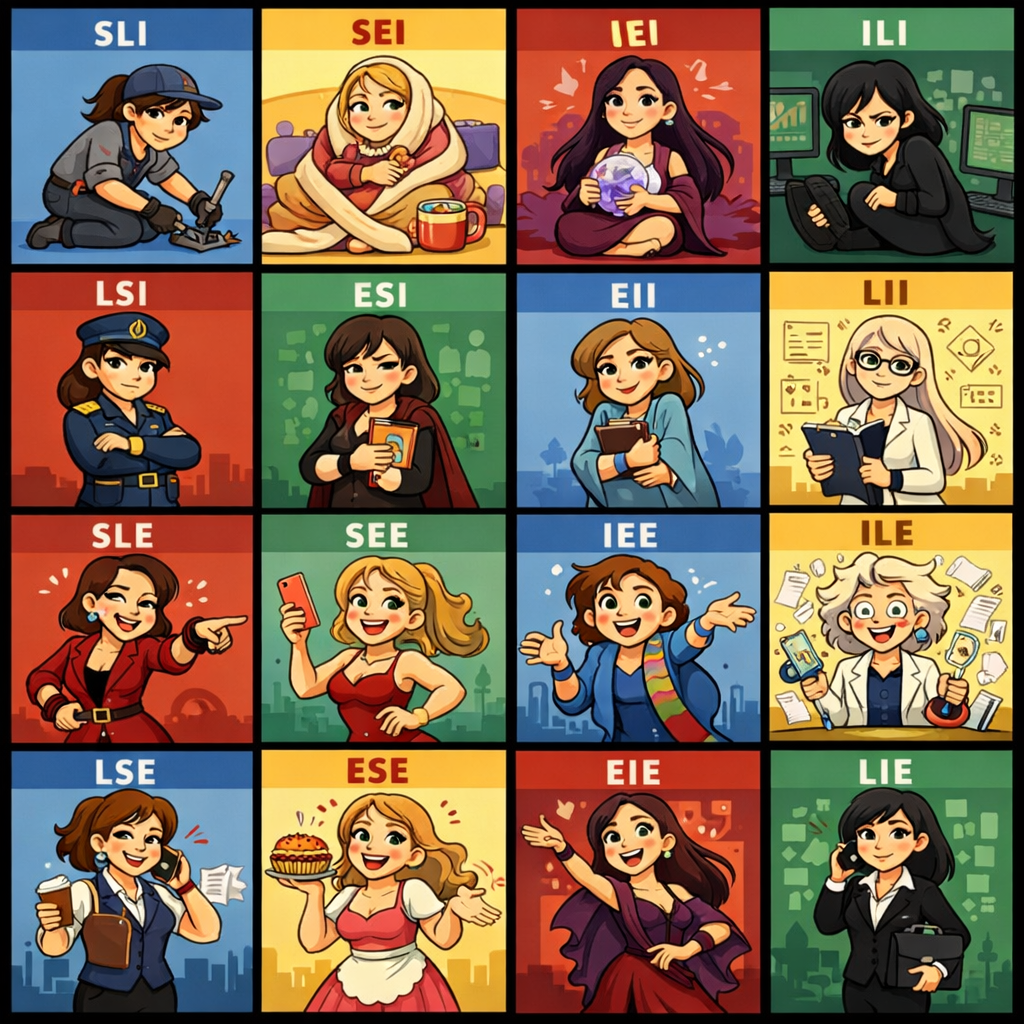
These illustrations were created as rough entry points — a quick visual shorthand for behavioural tendencies associated with each type. They have genuine value for that purpose: socionics is an abstract framework and concrete images help newcomers get their bearings. But they carry risks worth acknowledging directly.
Stereotyping in the pejorative sense moves from category to person — it assumes the individual in front of you must conform to the group template. Socionics used well moves in the opposite direction: it uses observed behaviour in a specific person to form a hypothesis about their information metabolism, then tests that hypothesis against further observation. The type description is a lens, not a verdict. These images sit uncomfortably close to the first kind of stereotyping. They train the eye to type on surface appearance — profession, lifestyle, presentation — before any actual observation has occurred. That is the Adler problem in visual form: the conclusion arrived at before the evidence has been examined.
Type descriptions don't change with gender. Information metabolism is not gendered. And yet the visual shorthand shifts when the figure changes — the same type rendered male and female picks up different cultural associations, different levels of agency, different social contexts. Compare directly: the male ESE carries drinks as a waiter — social, public, active. The female ESE stands in a red dress holding a pie. The type hasn't changed. The cultural loading has. That drift is not in the framework. It's in the imagery, and it is worth naming rather than overlooking.
These images are a starting point, not a verdict. The framework insists on the person in front of you. The illustrations can only gesture toward them.