

Model A Was Drawn Between People
The history of Model A shows that the individual type and the relation system were constructed together.
Read the postSocionics Essays
Dated notes on theory, evidence, and the shape of the system.
Longer reflections on Model A, Model L, typing, intertype relations, and the philosophical questions around typology.
Latest Posts
Recent dated essays on Model A, Model L, energy-information metabolism, and intertype structure.
The history of Model A shows that the individual type and the relation system were constructed together.
Read the post
LII and SEE show how a Conflict relation can begin with two incompatible definitions of the problem itself.
Read the post
LSE and IEE show how Model L Ensemble gives a decision its frame, its next act, and its route into reality.
Read the post
LSI and ESI show how a method becomes answerable through different structural routes.
Read the post
LII and EIE show how Model G names public contribution without assigning a career fate.
Read the post
LII and EIE show how Model L Vergence and Interest alter the same planning-room problem.
Read the post
Jane Austen on social initiative, relational judgement, and the attachment a clever arrangement fails to see.
Read the post
Henry James on the catastrophe of waiting for a future that keeps life at a distance.
Read the post
George Eliot’s heroine shows conviction seeking a form of life large enough to serve it.
Read the post
Cervantes’s knight shows why possibility needs a world that can be acted upon.
Read the post
Raymond Williams on the historical atmosphere that a type cannot explain alone.
Read the post
Isaiah Berlin and Tolstoy on the evidence a self-description can leave out.
Read the post
Why a good type reading resembles criticism and biography more than a personality measurement.
Read the post
Recognition can be real without producing the same next move.
Read the post
What a recurring demand for explanatory structure can reveal—and what it cannot.
Read the post
Two Ni-leading types can read the same unfolding through different primary concerns.
Read the post
Why an offer can be genuinely relevant without quite being what another person was waiting for.
Read the post
A shared public sensitivity can still organise a room toward different ends.
Read the post
Agreement is sometimes real; the route to it may still matter.
Read the post
Recognition is not always reception on its own terms.
Read the post
A useful relation need not be asked to become everything else.
Read the post
How a shared value field can hold different ways of making life workable.
Read the post
A lively shared world can be real without becoming a prediction.
Read the post
Why a changing label calls for a structural check, not a guessing game.
Read the post
Why shared Ego functions can still disagree about what should lead.
Read the post
Read a source-led quadra complex as a shared pressure, not a diagnosis.
Read the post
The same Model A base element can organise work through two different Model L modes.
Read the post


An appealing label deserves more scrutiny, not less.
Read the post
A good typing impression earns another look before it earns belief.
Read the post
Look for the concern that survives a change of task, mood, and audience.
Read the post
A strong second function does not set the agenda. It makes the agenda workable.
Read the post
An absence in an interview, post, or conversation may be interesting. It is not yet a clue.
Read the post
Why correction can feel disproportionately exposing, and why better typing begins with restraint.
Read the post
Why the right kind of support can feel clarifying rather than controlling.
Read the post
Why a socially recognisable competence can still feel like work.
Read the post
The most memorable story is not always the most informative one.
Read the post
A clear guide to Jared Vaughan's radial-priority question, through the LII case.
Read the post
A typing hypothesis earns its place by meeting the awkward facts as well as the convenient ones.
Read the post
Why a real capacity can remain outside the part of life a person wants to lead with.
Read the post
A disagreement can reveal what a typing hypothesis is actually resting on.
Read the post
A type can make a pattern clearer. It should not make the person smaller.
Read the post
Why responsible Socionics typing needs evidence from several contexts, not one convincing performance.
Read the post
Why Model A position 7 can be genuinely capable without becoming the information a person wants to lead with.
Read the post
A practical Model A essay on position 6: why the Mobilising function is weak, valued, aspirational, touchy, and easily mistaken for strength.
Read the post
A Model L follow-up to the Super-Ego and Super-Id essays: how the exact monadic element changes what a type resists, seeks, or receives.
Read the post
A follow-up to the Super-Ego firewall essay: how Suggestive and Mobilising functions receive valued support and recharge the psyche.
Read the post
A clearer Model A account of the Role and Vulnerable functions as defensive filtering, not simply weakness or failure.
Read the post
What a public Socionics database can teach, and what it must never pretend to know.
Read the post
Why Ethics and Logic are information domains, not kindness versus intelligence.
Read the post
Type descriptions are useful, but they are not verdicts. Read them as structured hypotheses about information metabolism.
Read the post
How Ego strengths meet Super-Id demand across all eight dual pairs, and why quadra values make complementarity feel like a shared world.
Read the post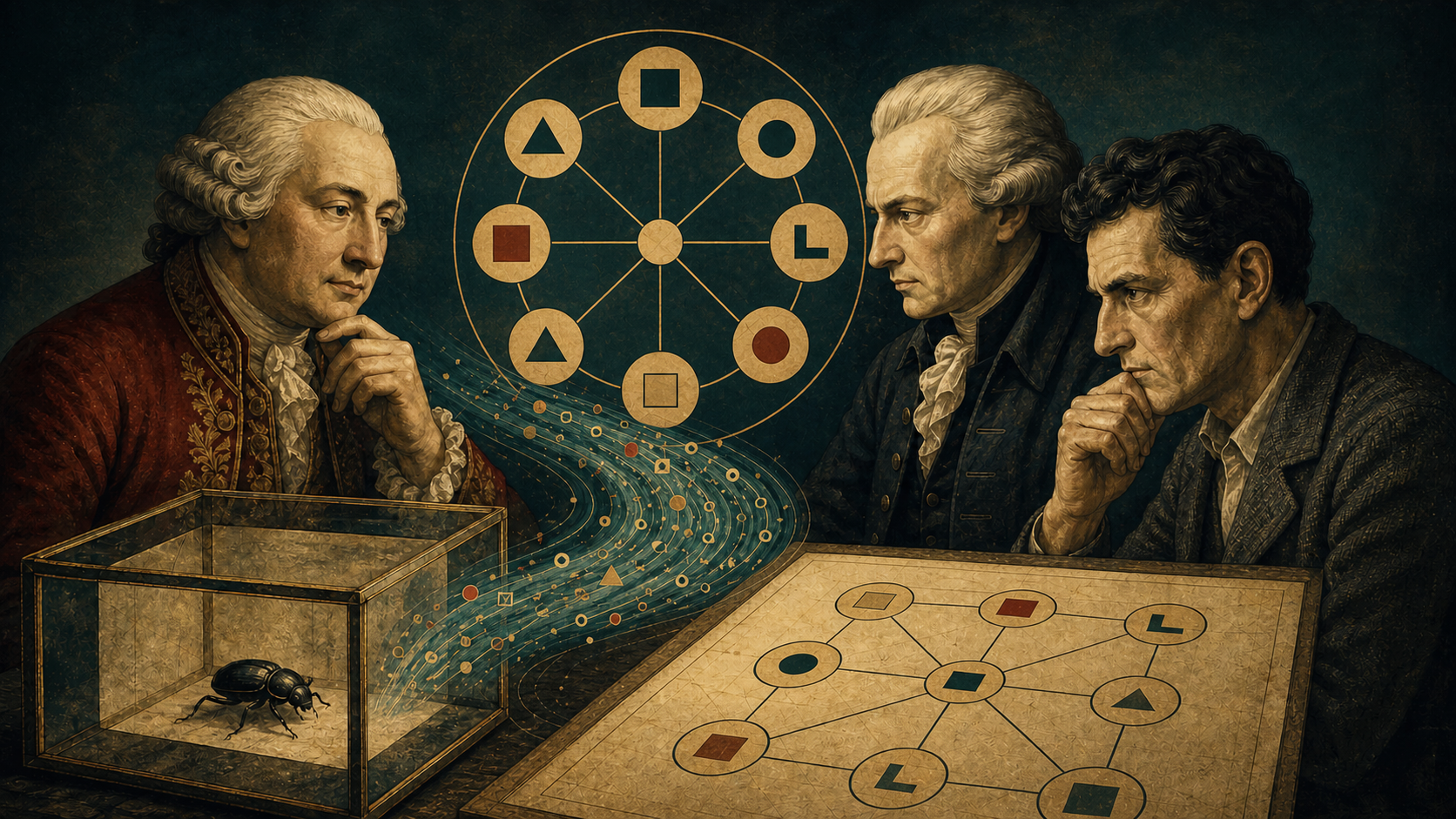
Hume, Kant, Wittgenstein, and the aspect dichotomies as a way of asking what counts as information for a mind.
Read the post
Husserl, Merleau-Ponty, and Schutz offer a careful way to read Socionics as patterned differences in how a shared world becomes meaningful.
Read the post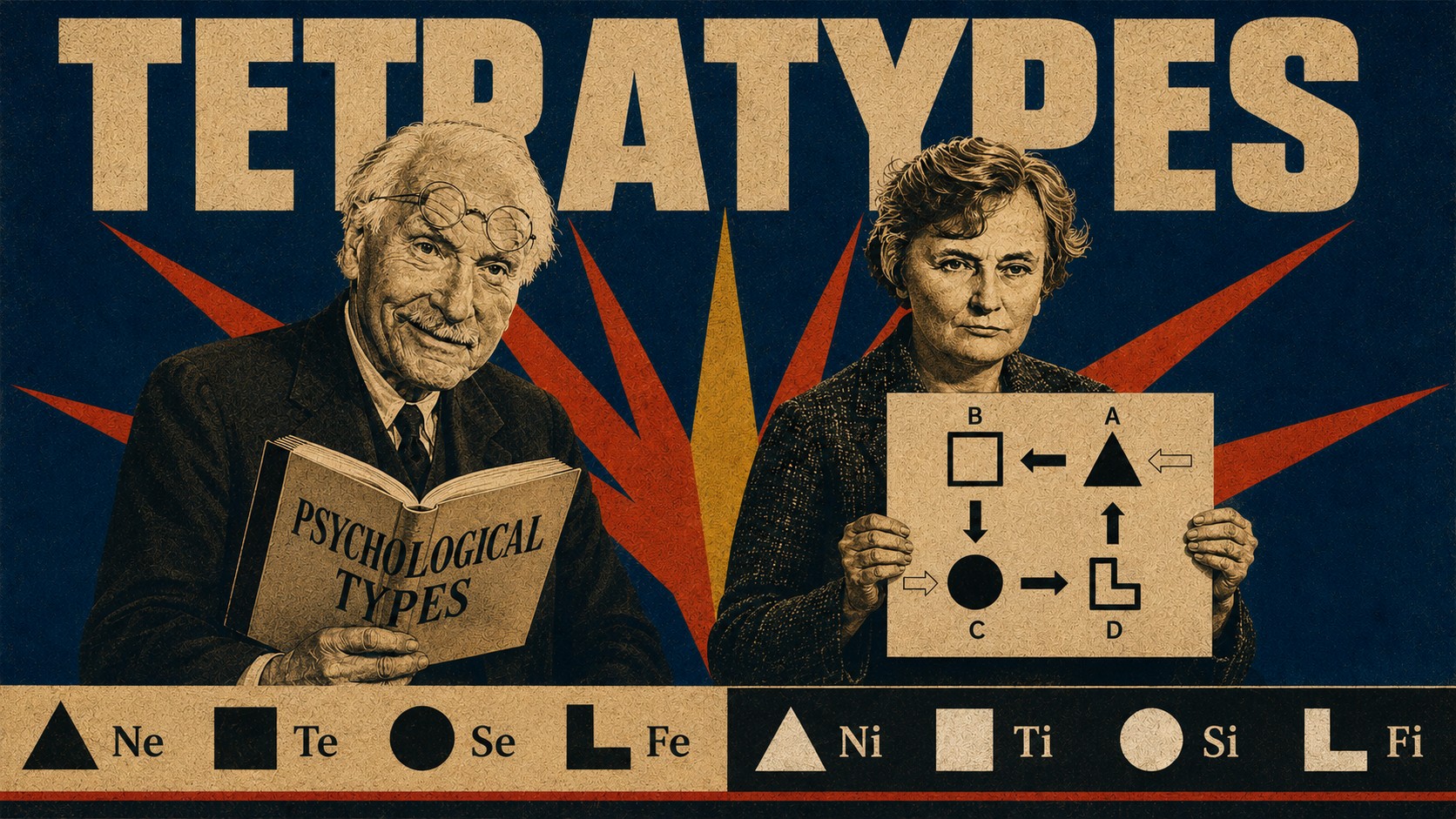
A slow, source-led reading of the TetraTypes image: the ILE mental ring, Aushra's energy-metabolism metaphor, blockings, and duality.
Read the post
A philosophical essay on agentic AI, Joscha Bach's simulation view, and whether future artificial minds could have structured phenomenal worlds.
Read the post
A Model-L essay on why behaviour is evidence rather than verdict: the visible act has to be routed through the metabolism that produced it.
Read the post
A Model-L essay on why fluency is not devotion: strong functions can be low-priority, and valued functions may matter even when they are hard to use.
Read the post
A Model-L essay on quadras as adaptive environmental logics: peace, pressure, density, and self-reliance.
Read the post
A Model-L essay on elemental overlap: why certain functions resemble one another without becoming the same thing.
Read the post
A conceptual bridge explaining how A and D preserve Model A, while B and C complete the full sixteen-position Model L layout.
Read the post
A Model-L essay on priority, dimensionality, and why the functions we need most are not always the ones we use best.
Read the post
A theory-level companion to the completed Model L group video series: Capacity, Vergence, Current, Ensemble, Array, Interest, and Occupation as one repeated architecture.
Read the post
A source-text review of what Jung's 1921 book actually licenses, and where later socionics and MBTI architectures begin doing their own theoretical work.
Read the post
A comparison of ESE and ESI through Affect Fe(S), Animus Fi(S), Stimulation Si(F), and Impetus Se(F) within the Involved SF field.
Read the post
A Model L note clarifying that Ne(F.) Inspiration is personally involved imagination, not simply people-focused Ne.
Read the post
A careful note on the original socionics claim that EIM is foundational, and how that differs in emphasis from WSS and Model L framing.
Read the post
A revised Model L account of Benefit: at sixteen-function resolution the Model A asymmetric relation dissolves into two symmetric relations, Augmenting and Galvanizing.
Read the post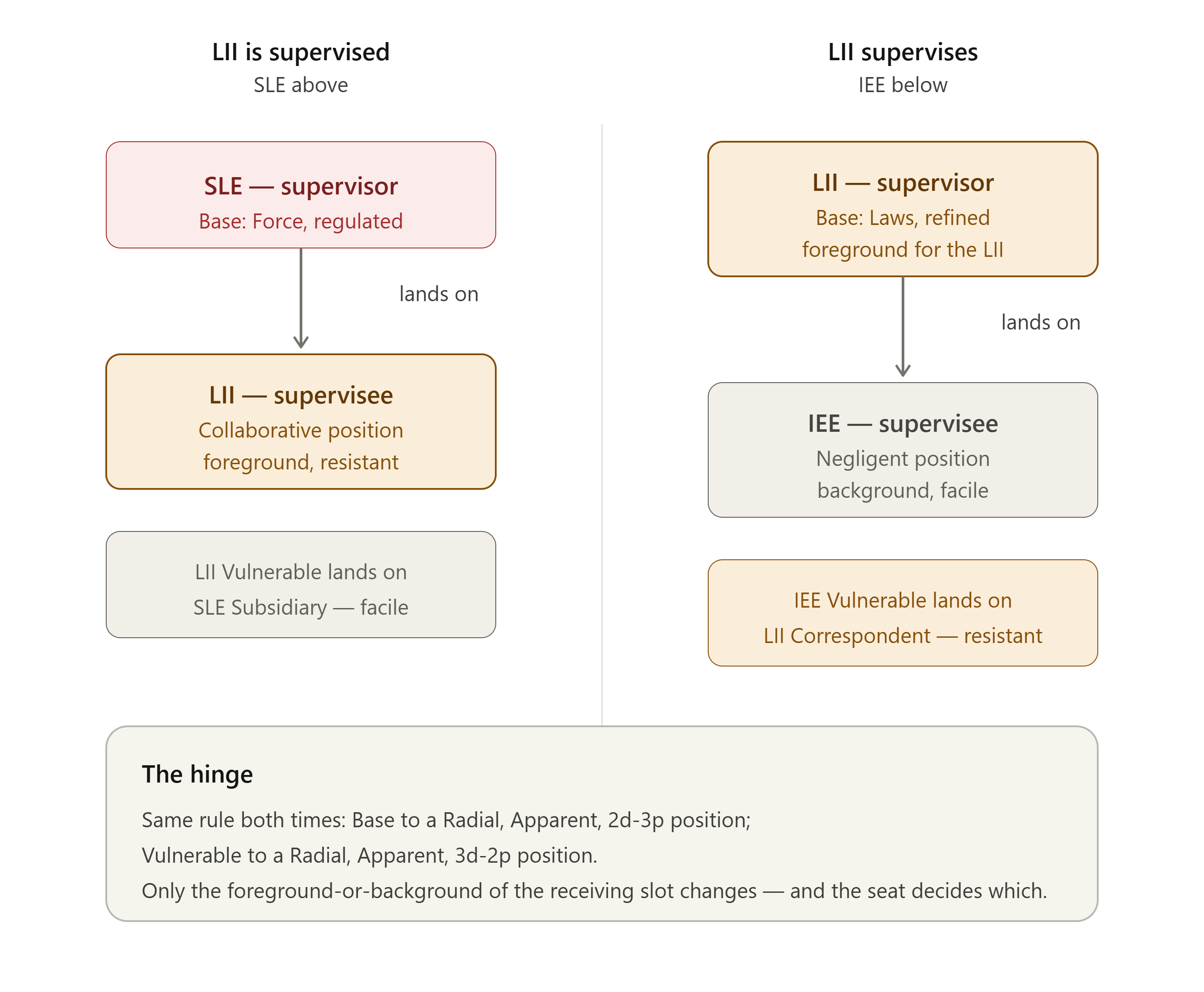
This older post is retained as an archive item, but the current Model L account treats intertype relations as symmetric 4-code relations.
Read the postArchive
Earlier posts on Model L structure, Socionics concepts, and the wider TetraTypes project.

A TetraTypes guide to the logic behind Model L's dichotomy names: OD and CD, G/U/R/I, and the numbered levels from G1 to I4.
Read the post
A satirical TetraTypes town hall on the sixteen socionics types, care work, power, community, and critical map-reading.
Read the post
A satirical TetraTypes field guide to the sixteen socionics types, intertype relations, Model A, and Model L.
Read the post
Comparing Model A2 and Model L: two independent routes from eight aspects to sixteen elements organised as Kindred pairs.
Read the post