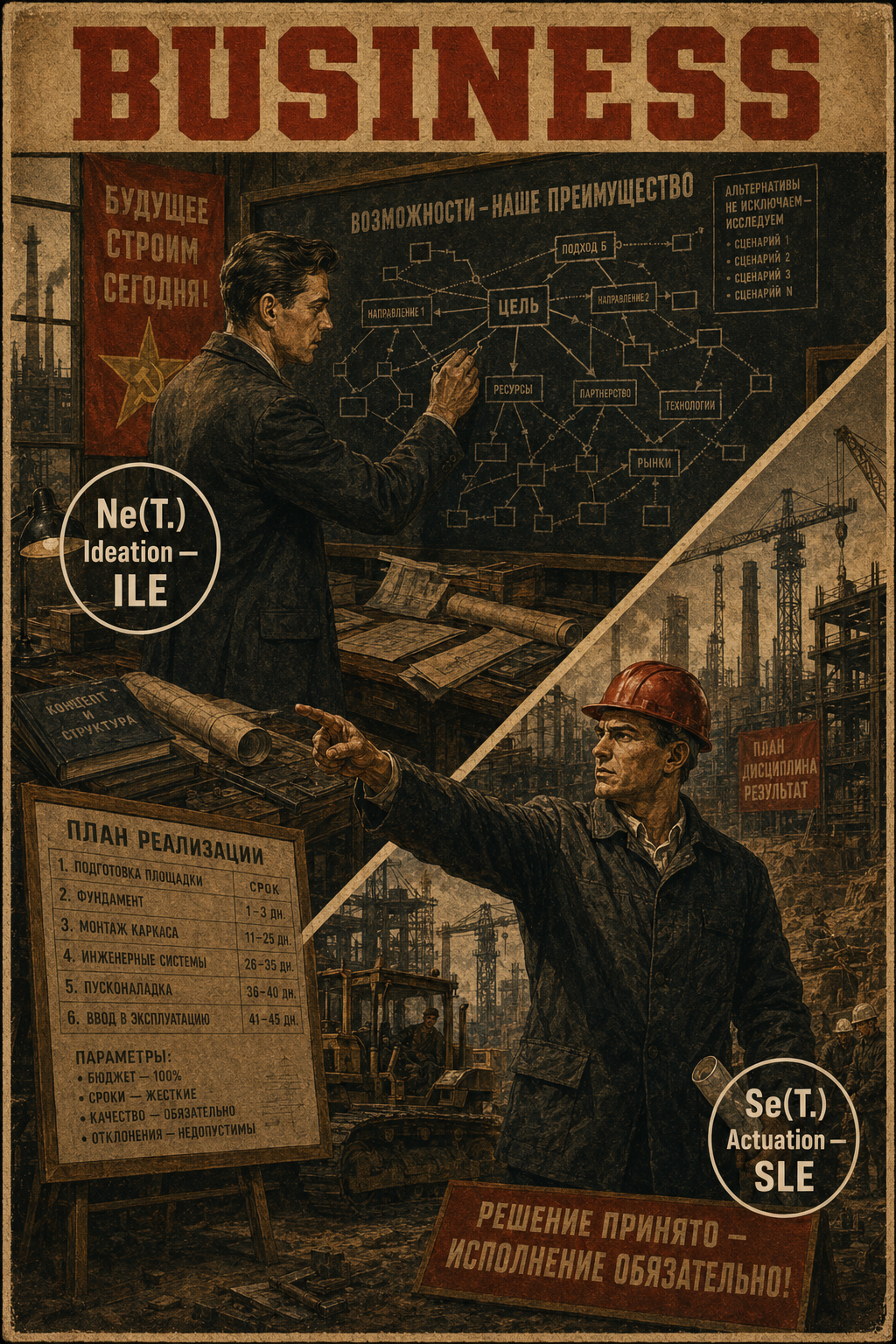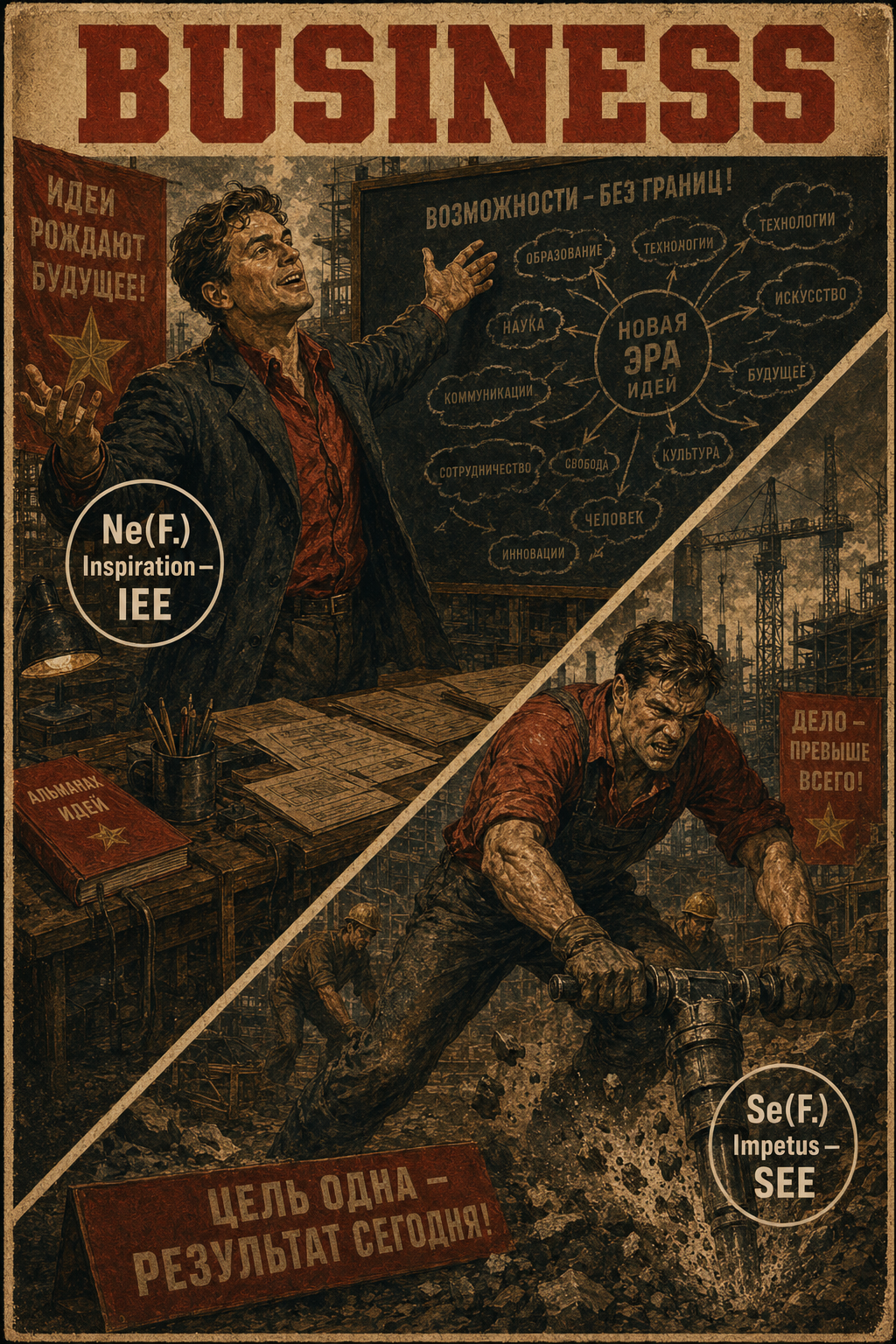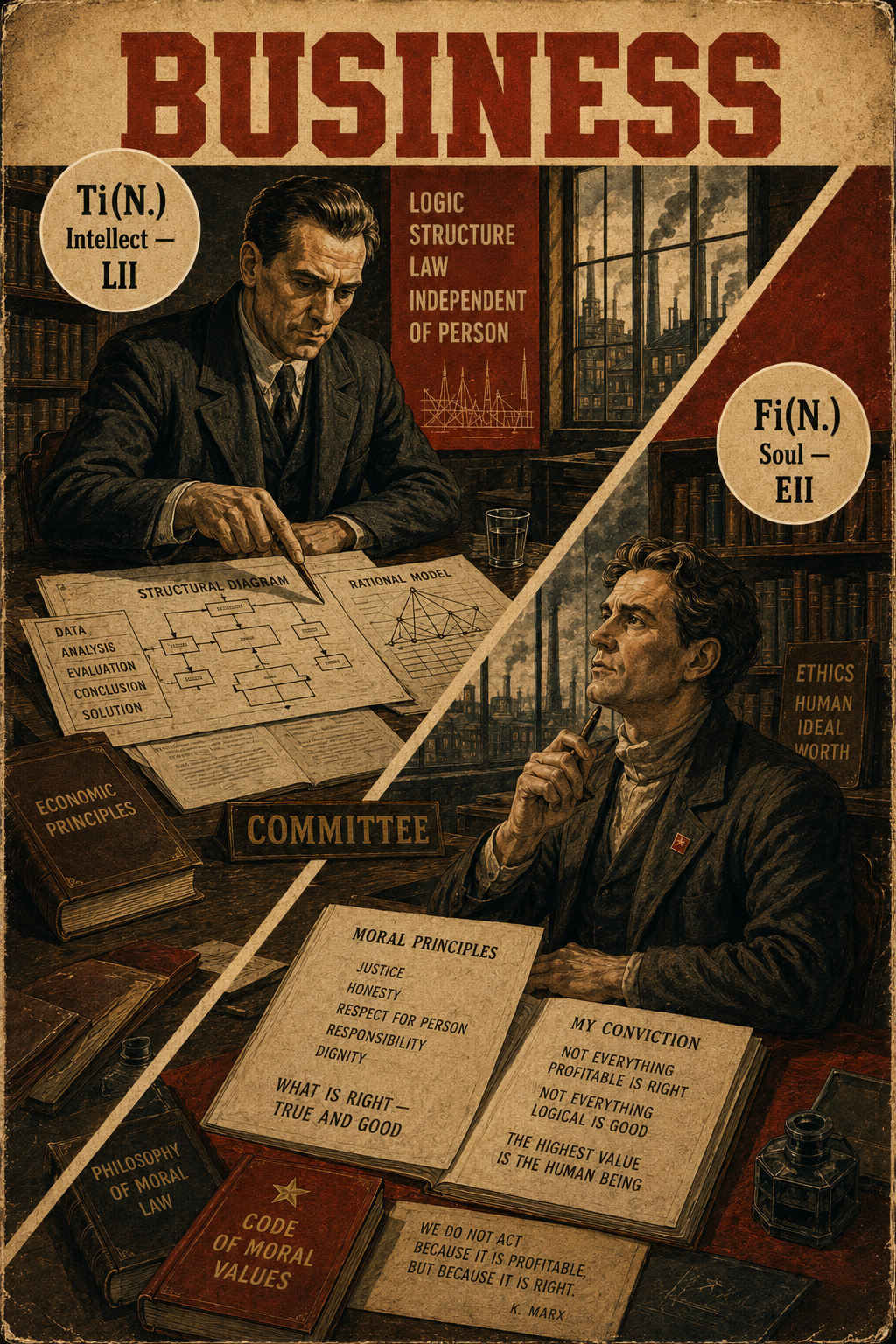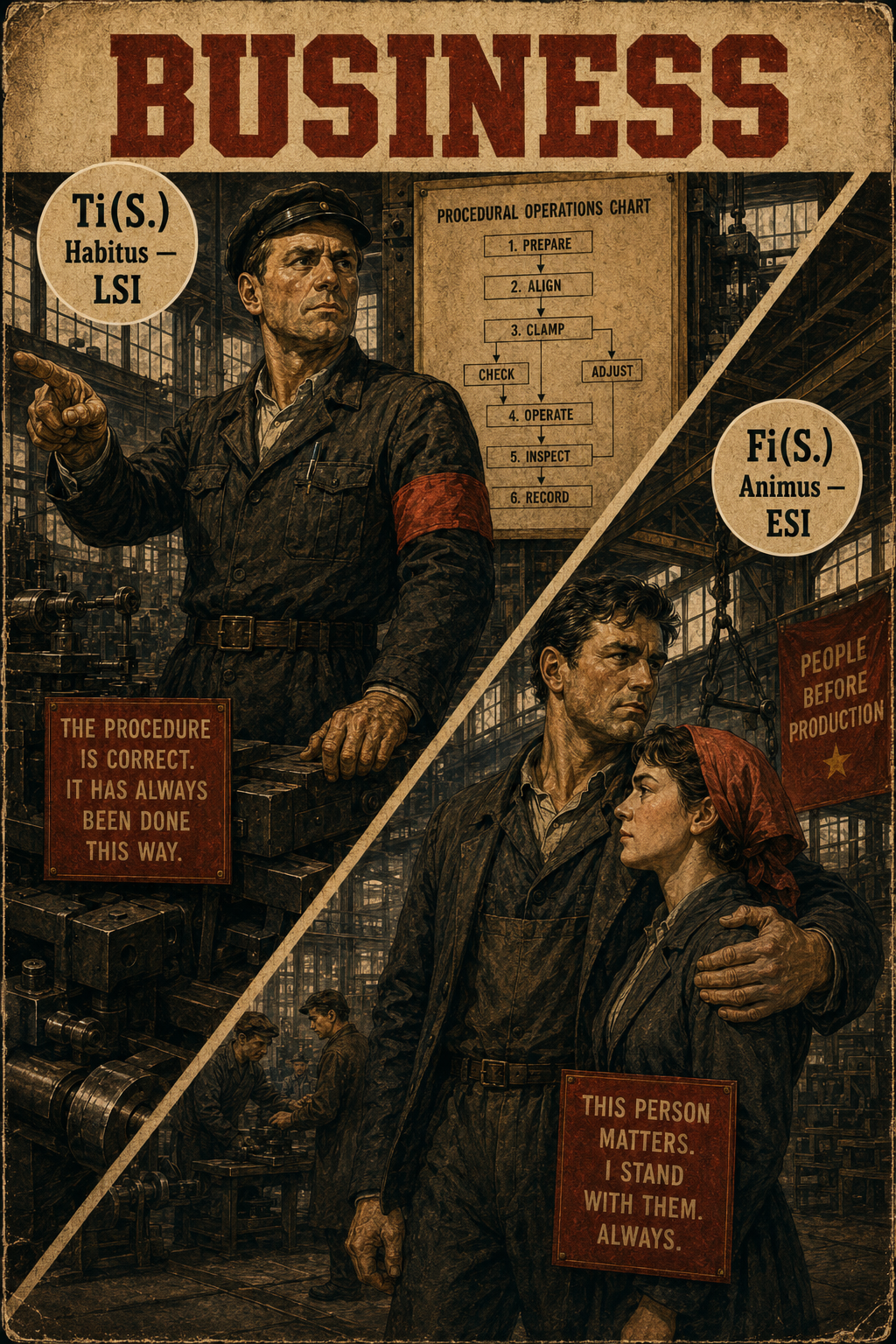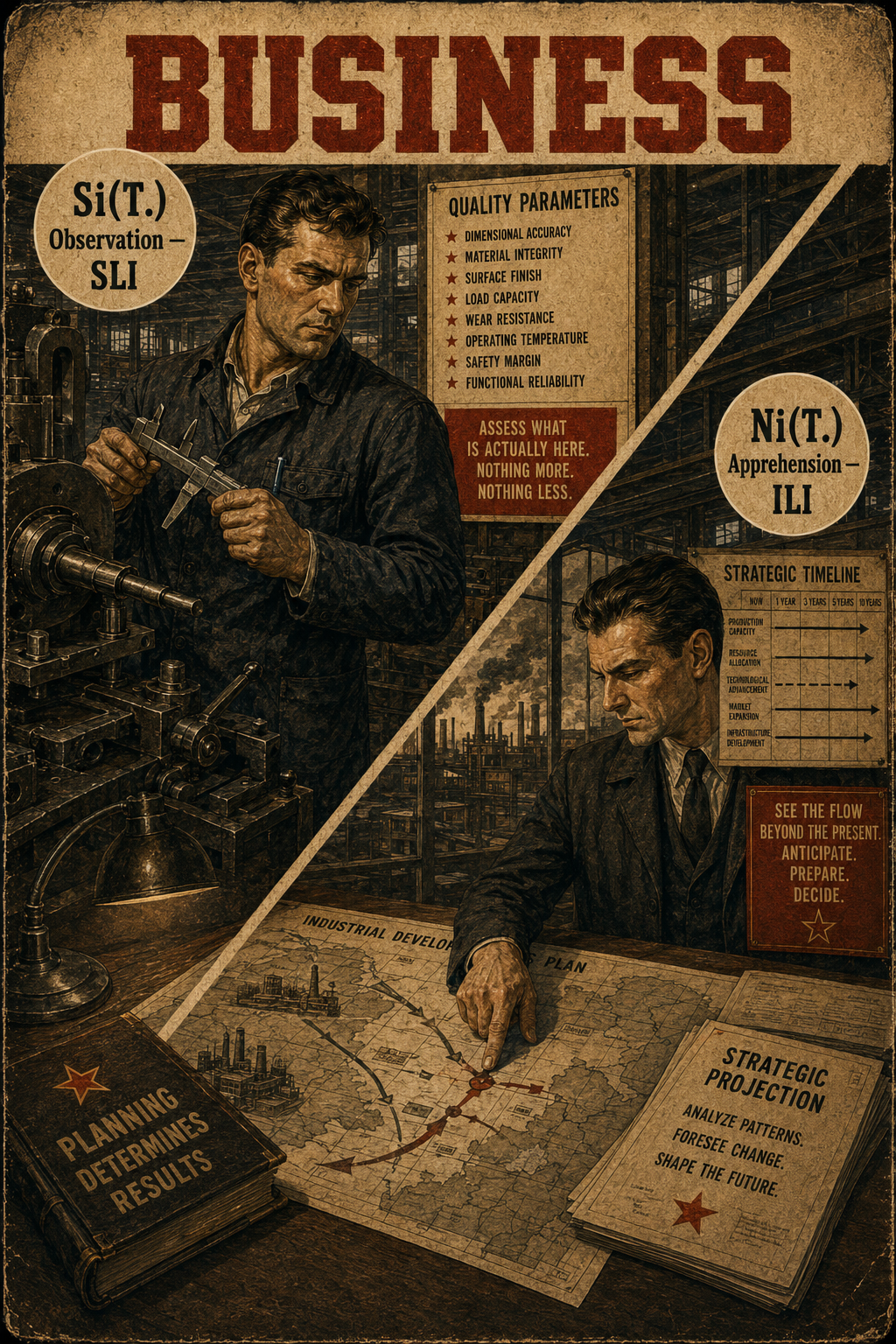



Fe(N.) Sentiment vs Te(N.) Reason — EIE and LIE
Both types operate in the N. register: articulated, abstract, verbal, and confident in complex reasoning. This is what makes the relation look workable. The difference is that the EIE is moving through expressive conviction, while the LIE is moving through strategic inference from data.
At Model A resolution this is a Business or Lookalike relation: useful, cooperative, and recognisable without becoming complementary. At Model L resolution the mechanism becomes sharper: the same abstract register helps the interaction function, while the Fe/Te divide means each person's output fails to satisfy the other's deeper criterion.
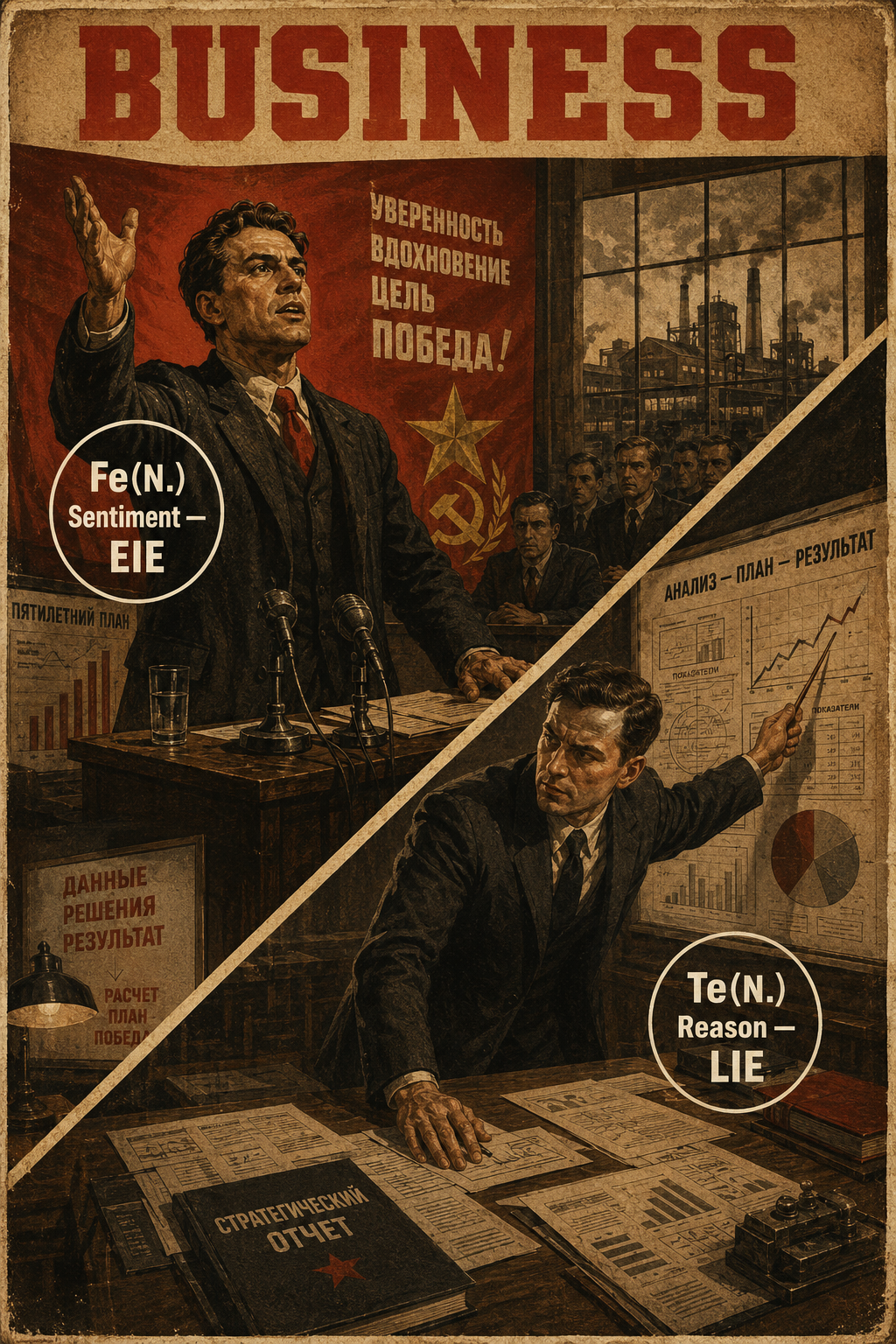
Business In Practice
The EIE and LIE can work together. Both are articulate. Both operate through language and abstract reasoning. Both are confident in their assessments and capable of complex verbal engagement. From the outside they look like they should complement each other — passionate conviction and strategic reasoning appearing to occupy compatible roles. This surface resemblance is what makes them Business/Lookalike in Model L. The shared N. sub-variant means both are operating in the abstract articulated register despite being on opposite sides of the Fe/Te divide.
The EIE figure is doing Fe(N.) — Sentiment. The inner passion is real and deeply felt — a genuine conviction expressed outward through dramatic rhetoric and symbolic gesture. The EIE is not creating somatic physical atmosphere. The feeling operates as inner fire carried through articulated language. The conviction should be persuasive. It is experienced as genuinely important and the force of its expression should settle the matter.
The LIE figure is doing Te(N.) — Reason. The strategic assessment is assembled from available data — facts read for what they mean, conclusions derived through logical inference, the workable position identified through reasoning rather than felt. The LIE is not following conviction. They are following what the data says. The analysis is honest. The conclusion is correct as far as the evidence allows.
The conflict is that neither satisfies the other in the way each expects. The EIE's passionate conviction arrives in the LIE's space as something that needs to be verified against data rather than accepted on its own rhetorical weight — and it cannot always survive that verification. The LIE's cold strategic inference arrives in the EIE's space as something that has no felt significance, no inner conviction driving it, no sense that it matters beyond its logical correctness — and that feels hollow. Both are articulating in the N. register, both appear to be speaking the same language, and each one keeps finding that what the other is saying doesn't quite reach them. The Business relationship functions. The gap beneath the surface never closes.