

Model L · Intertype Relations

Conflict Relations — Model L

Primary strength striking exact blind spot.Each base function lands directly on the other's D2 Vulnerable position.

Model A To Model L

Where Conflict Strikes

Model A observes Conflict as a difficult relation of mutual non-reception. Model L specifies the mechanism: each type's base function lands exactly on the other's Vulnerable position.

The strike is not merely domain-level. It is sub-variant precise: the same element and same register as the blind spot, delivered as the partner's strongest and most effortless output.

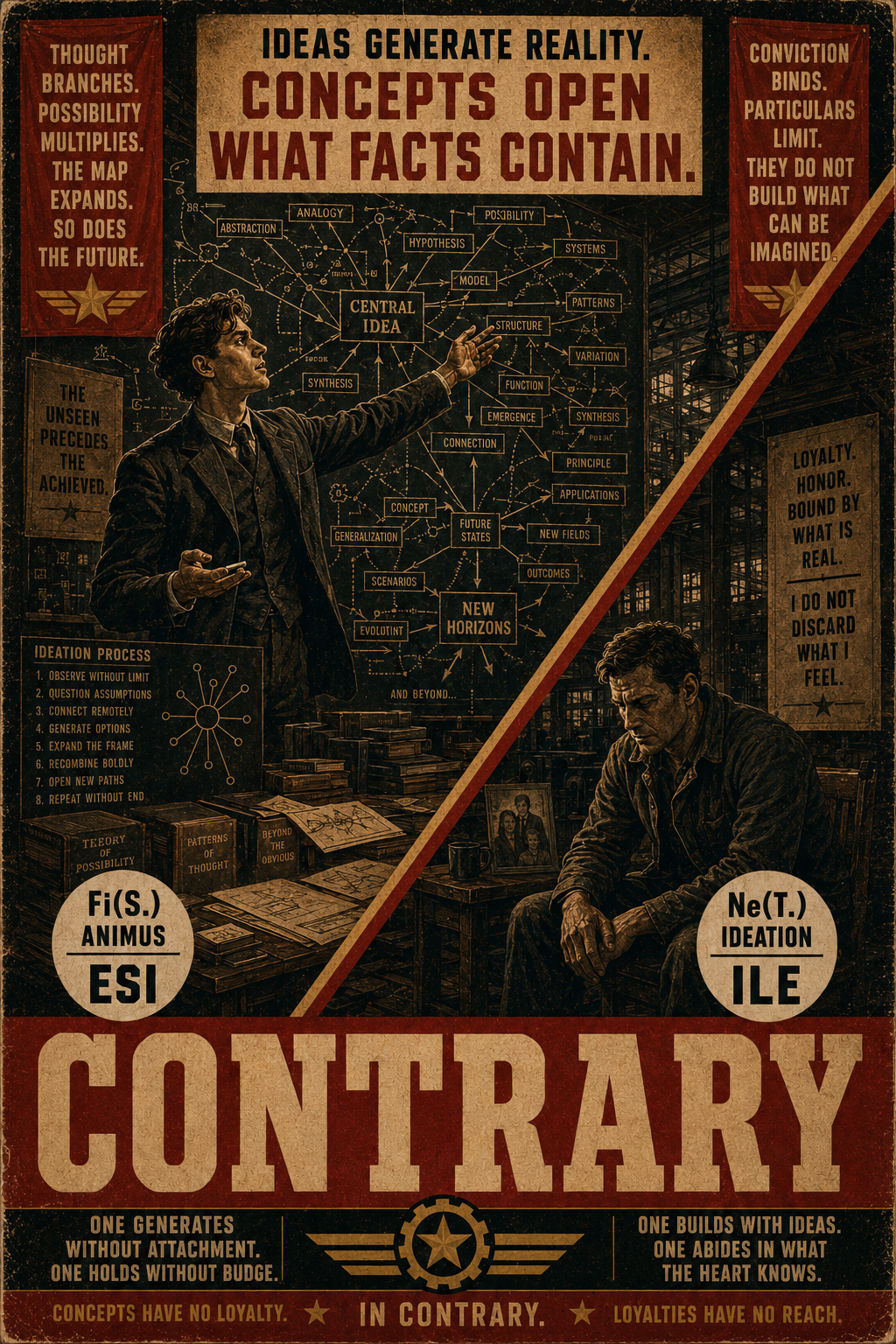
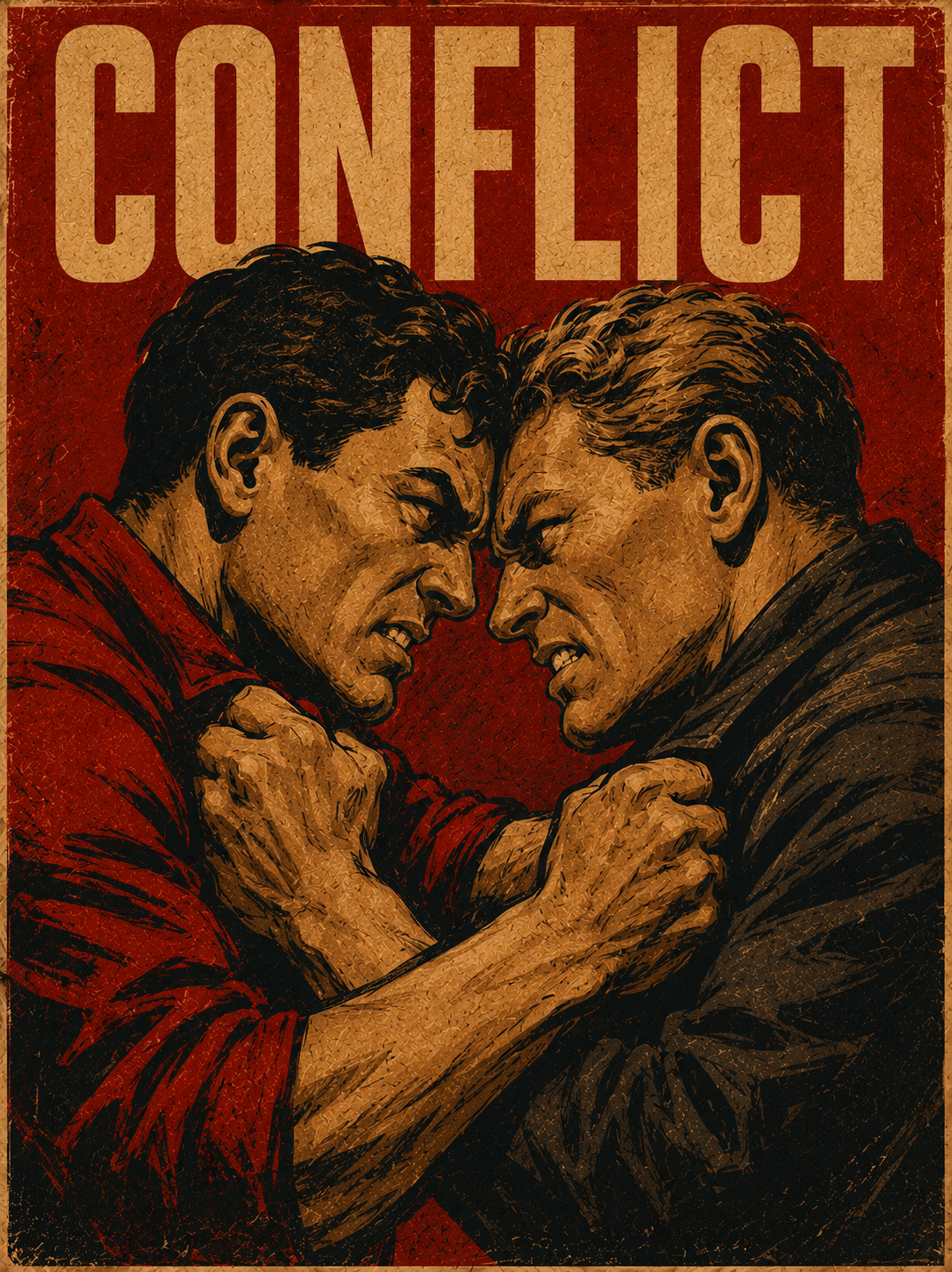
Conflict relation poster
Intellect element illustration
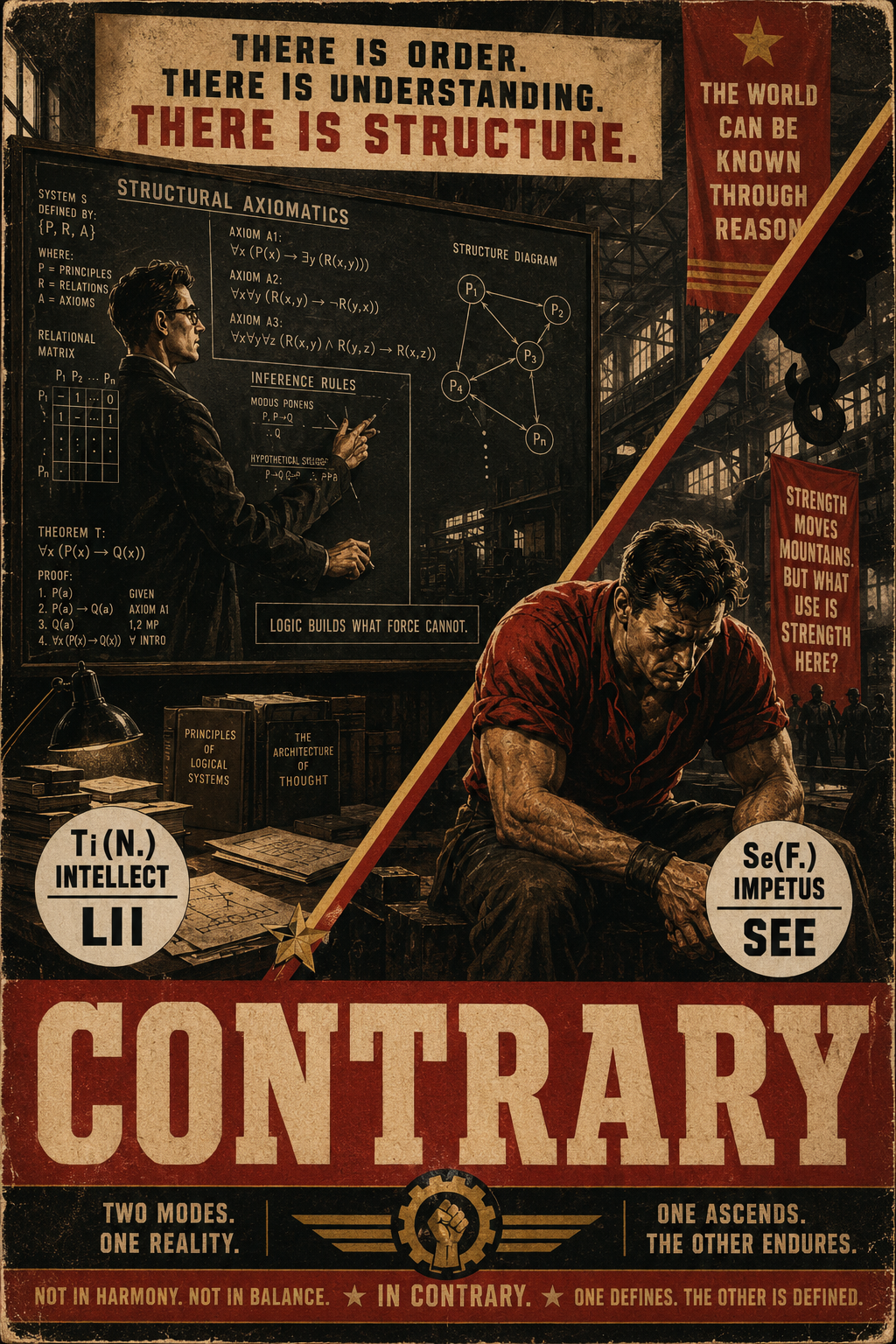
Ti(N.) Intellect · LII
Impetus element illustration
Se(F.) Impetus · SEE

Ti(N.) Intellect / Se(F.) Impetus — LII and SEE

In Model L, the Conflict relationship has a precise structural definition: each type's base function sits exactly at the other's D2 Vulnerable position — the PoLR, Point of Least Resistance. Not the Role (2d, aspirational, strained), not the Ignoring (3d, competent but unrewarding), but the absolute weakest position in the functional stack: 1d, 1p, treated with careless indifference, the position where a type is genuinely inept and finds direct engagement both draining and largely irrelevant to their natural operation.

The match is exact. Same element, same sub-variant. Each type's most natural, most effortless primary output strikes the other's blind spot with full force — not out of intent, not through incompatibility of domain alone, but because what flows most naturally from each is precisely what the other has the least capacity to process.

LII leads with Ti(N.) Intellect — detached abstract structural logic. In SEE's Model L stack, Ti(N.) sits at the D2 Vulnerable position. SEE is genuinely inept with it, finds it careless to engage, treats it as largely irrelevant to their natural operation. When LII's abstract logical architecture fills the space — schemas articulated, concepts mapped, frameworks built into communicable form — SEE has no functional register to receive it. The precision of the structure is not alien to SEE in the way an opposed domain might be; it is more fundamentally inaccessible than that. It lands with nowhere to go.

SEE leads with Se(F.) Impetus — visceral mobilising drive, full-body somatic exertion toward concrete aims. In LII's Model L stack, Se(F.) sits at the D2 Vulnerable position. LII is genuinely inept with it, finds direct engagement with it draining and largely irrelevant. When SEE's visceral physical force fills the space — mobilising, urgent, converting vital reserves into explosive directed action — LII has no functional register to receive it. The force is not merely foreign; it activates LII's most undefended position.

Neither type is attacking the other. Both are simply operating from their most natural, most effortless mode. The damage is structural and default.

The dynamic is not symmetric in any given interaction. Whichever mode asserts itself first tends to dominate the shared space, because what it produces lands directly on the other type's blind spot — which, being treated with careless indifference, offers no defence. The LII's structural logic fills the space and SEE cannot find purchase; SEE's visceral force fills the space and LII cannot find purchase. The dominant/backgrounded quality reverses when the context shifts, but the underlying structural collision remains.

Model L makes the specific collision visible. It is not Ti against Se in general — it is Ti(N.) against the exact sub-variant of Se sitting at the PoLR, and Se(F.) against the exact sub-variant of Ti sitting at LII's PoLR. The precision of the strike is sub-variant specific. A different Se against the same Ti, or the same Se against a different Ti, would produce a different relation. This pairing finds exact register match at the most vulnerable point on both sides.
Conflict relation illustration comparing LII × SEE
Soul element illustration
Fi(N.) Soul · EII
Actuation element illustration
Se(T.) Actuation · SLE

Fi(N.) Soul / Se(T.) Actuation — EII and SLE

Same structural rule. EII's base Fi(N.) sits exactly at SLE's D2 Vulnerable. SLE's base Se(T.) sits exactly at EII's D2 Vulnerable.

EII leads with Fi(N.) Soul — abstract foundational moral conviction, principled ideals held independently of any particular person. In SLE's Model L stack, Fi(N.) sits at the Vulnerable position. SLE is genuinely inept with abstract principled conviction, treats it with careless indifference, finds sustained engagement with it draining. When EII's free-floating moral idealism fills the shared space — the principled sense of what is inherently right asserted with quiet certainty — SLE has no functional register to receive it. The conviction does not translate into anything the SLE's mode can organise or govern.

SLE leads with Se(T.) Actuation — regulatory external force, measured governance of the physical environment. In EII's Model L stack, Se(T.) sits at the Vulnerable position. EII is genuinely inept with regulatory physical governance, treats it with careless indifference. When SLE's measured force organises the shared space — the environment brought into conformity with defined parameters through circumscribed physical authority — EII has no functional register to receive it. The governance activates EII's most undefended position without the SLE intending any pressure at all.

The specific character of this collision: abstract principled idealism meeting physical regulatory authority. Neither mode has any natural translation into the other's register. EII's moral conviction requires a type of abstract engagement the SLE's Vulnerable position cannot sustain. SLE's physical governance requires a type of concrete externally-directed engagement the EII's Vulnerable position cannot sustain.

The dominant/backgrounded quality is context-dependent. In a physically organised industrial or institutional space, the SLE's regulatory mode naturally asserts itself and the EII's moral idealism is backgrounded — present but without purchase. In a principled deliberative context, the EII's conviction can assert itself and the SLE finds no grip. The structural collision is constant; which mode finds the context depends on circumstance.

Conflict relation illustration comparing EII × SLE
Habitus element illustration
Ti(S.) Habitus · LSI
Inspiration element illustration
Ne(F.) Inspiration · IEE

Ti(S.) Habitus / Ne(F.) Inspiration — LSI and IEE

Same structural rule. LSI's base Ti(S.) sits exactly at IEE's D2 Vulnerable. IEE's base Ne(F.) sits exactly at LSI's D2 Vulnerable.

LSI leads with Ti(S.) Habitus — embodied structural logic, codified procedure enacted through the body with physical authority. In IEE's Model L stack, Ti(S.) sits at the Vulnerable position. IEE is genuinely inept with embodied procedural structure, treats it with careless indifference. When LSI's codified physical authority fills the shared space — the correct sequence demonstrated, the established form enacted with trained precision — IEE has no functional register to receive it. The procedural structure does not translate into anything the IEE's imaginative mode can inhabit.

IEE leads with Ne(F.) Inspiration — felt aliveness to possibility, personally vivid imaginative potentiality. In LSI's Model L stack, Ne(F.) sits at the Vulnerable position. LSI is genuinely inept with felt imaginative inspiration, treats it with careless indifference. When IEE's personal creative charge fills the shared space — possibilities opening outward with inner felt significance — LSI has no functional register to receive it. The inspiration activates LSI's most undefended position without IEE intending any disruption.

The specific character: physical procedural authority meeting felt imaginative openness. Codified structure closes down and defines; felt inspiration opens and proliferates. Each is the precise opposite of what the other can receive — not merely different domain or orientation but exact sub-variant precision at the most vulnerable point. LSI's Ti(S.) is the specific embodied particular form of structure that lands hardest on IEE; IEE's Ne(F.) is the specific personally-charged imaginative form of possibility that lands hardest on LSI.

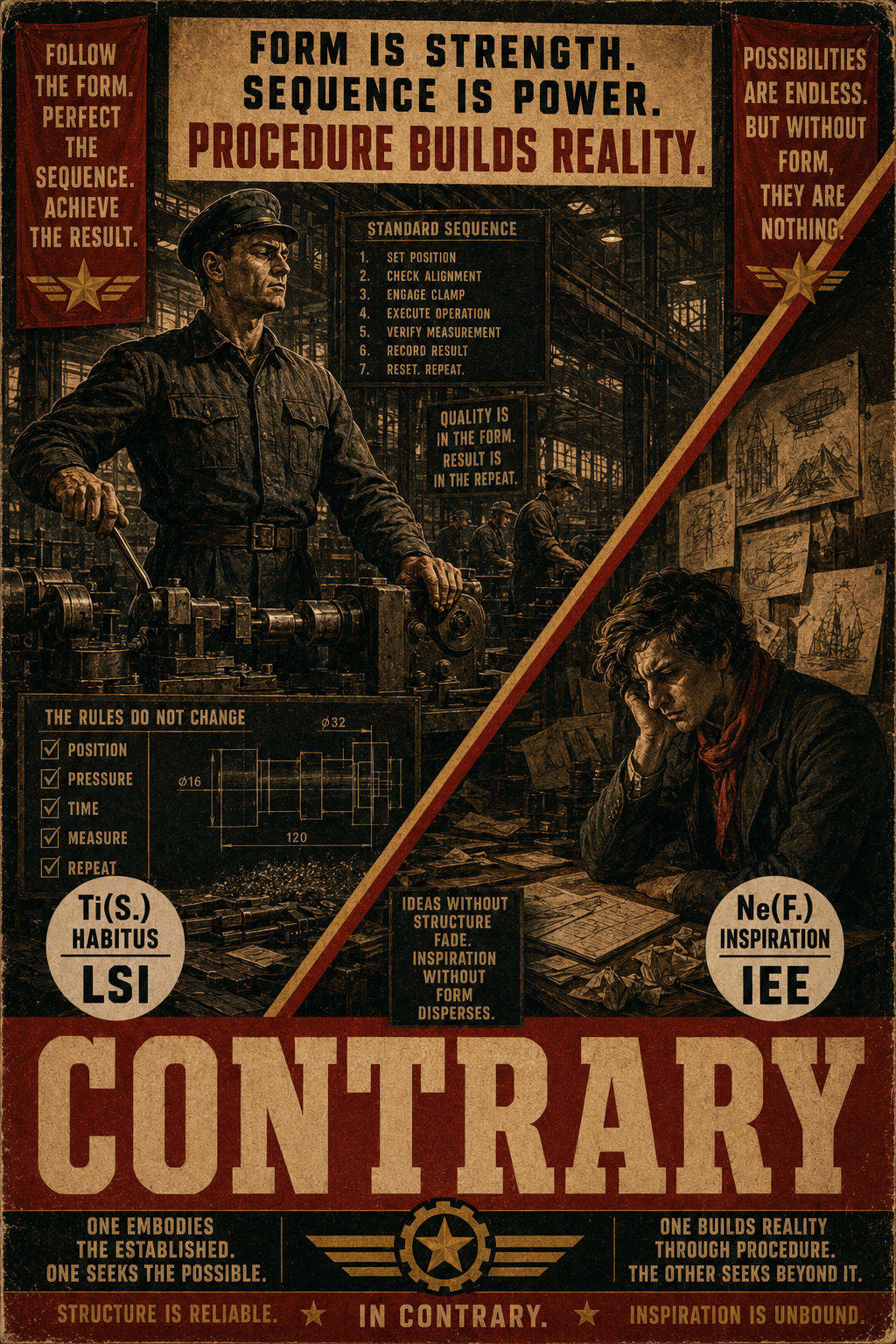
Conflict relation illustration comparing LSI × IEE
Animus element illustration
Fi(S.) Animus · ESI
Ideation element illustration
Ne(T.) Ideation · ILE

Fi(S.) Animus / Ne(T.) Ideation — ESI and ILE

Same structural rule. ESI's base Fi(S.) sits exactly at ILE's D2 Vulnerable. ILE's base Ne(T.) sits exactly at ESI's D2 Vulnerable.

ESI leads with Fi(S.) Animus — visceral particular bonds, settled felt verdicts about specific persons and objects. In ILE's Model L stack, Fi(S.) sits at the Vulnerable position. ILE is genuinely inept with visceral particular relational conviction, treats it with careless indifference. When ESI's particular felt bonds fill the shared space — settled aversions and affinities asserted with the weight of constitutive relational certainty — ILE has no functional register to receive it. The particular conviction does not translate into anything the ILE's conceptual architecture can map or engage.

ILE leads with Ne(T.) Ideation — detached conceptual imagination, architectural generation of concept space. In ESI's Model L stack, Ne(T.) sits at the Vulnerable position. ESI is genuinely inept with detached conceptual generation, treats it with careless indifference. When ILE's proliferating concept space fills the shared environment — possibilities mapped architecturally, connections branching outward into semantic structure — ESI has no functional register to receive it. The abstraction activates ESI's most undefended position without ILE intending any displacement.

The specific character: visceral particular relational conviction meeting detached impersonal conceptual generation. ESI's Fi(S.) is maximally particular, constitutively tied to specific persons and objects; ILE's Ne(T.) is maximally impersonal and general, building structure independent of any particular person. Each is the precise register that lands hardest on the other's most vulnerable point. The ESI finds the conceptual expansion both alien and activating at the PoLR; the ILE finds the particular visceral conviction both alien and activating at the PoLR.

Conflict relation illustration comparing ESI × ILE
Apprehension element illustration
Ni(T.) Apprehension · ILI
Affect element illustration
Fe(S.) Affect · ESE

Ni(T.) Apprehension / Fe(S.) Affect — ILI and ESE

Same structural rule. ILI's base Ni(T.) sits exactly at ESE's D2 Vulnerable. ESE's base Fe(S.) sits exactly at ILI's D2 Vulnerable.

ILI leads with Ni(T.) Apprehension — detached strategic tracking of temporal patterns, nonverbal comprehension of how things are likely to unfold. In ESE's Model L stack, Ni(T.) sits at the Vulnerable position. ESE is genuinely inept with detached temporal pattern tracking, treats it with careless indifference. When ILI's quiet strategic intelligence fills the shared space — patterns read, implications followed, the temporal shape of what is becoming mapped without announcement — ESE has no functional register to receive it. The strategic apprehension does not translate into anything the ESE's atmospheric mode can broadcast or sustain.

ESE leads with Fe(S.) Affect — somatic atmospheric emotion broadcast through physical presence, collective mood suffusing the shared environment. In ILI's Model L stack, Fe(S.) sits at the Vulnerable position. ILI is genuinely inept with somatic atmospheric emotion, treats it with careless indifference. When ESE's collective warmth fills the shared space — mood conveyed through body and aesthetic signal, atmospheric feeling enveloping the environment — ILI has no functional register to receive it. The atmospheric charge activates ILI's most undefended position without ESE intending any intrusion.

The specific character: detached inward strategic intelligence meeting outward somatic collective warmth. ILI's Ni(T.) withdraws from the immediate physical-atmospheric present to track temporal implications; ESE's Fe(S.) saturates that same present with collective felt charge. Each is the precise register the other cannot defend against — not through intent but through the simple assertion of their most natural mode.

Conflict relation illustration comparing ILI × ESE
Reverie element illustration
Ni(F.) Reverie · IEI
Praxis element illustration
Te(S.) Praxis · LSE

Ni(F.) Reverie / Te(S.) Praxis — IEI and LSE

Same structural rule. IEI's base Ni(F.) sits exactly at LSE's D2 Vulnerable. LSE's base Te(S.) sits exactly at IEI's D2 Vulnerable.

IEI leads with Ni(F.) Reverie — inner narrative aspiration, felt immersion in how events unfold through imagined time with personal resonance. In LSE's Model L stack, Ni(F.) sits at the Vulnerable position. LSE is genuinely inept with inner narrative aspiration, treats it with careless indifference. When IEI's felt temporal vision fills the shared space — scenarios followed with inner felt significance, the narrative thread of how things unfold attended to with personal absorption — LSE has no functional register to receive it. The narrative vision does not translate into anything the LSE's practical mode can test or apply.

LSE leads with Te(S.) Praxis — embodied practical application, hands-on experimental method that finds what works through direct material contact. In IEI's Model L stack, Te(S.) sits at the Vulnerable position. IEI is genuinely inept with practical hands-on material effectiveness, treats it with careless indifference. When LSE's practical intelligence fills the shared space — methods compared, techniques tested against material reality, workflow optimised through direct physical engagement — IEI has no functional register to receive it. The practical activity activates IEI's most undefended position without LSE intending any displacement.

The specific character: inner felt narrative vision meeting outward practical material competence. IEI's Ni(F.) follows the felt story of how things unfold; LSE's Te(S.) tests what actually works against material reality. The story and the test occupy entirely incommensurable registers — and each is precisely calibrated to land on the other's blind spot.

Conflict relation illustration comparing IEI × LSE
Reason element illustration
Te(N.) Reason · LIE
Stimulation element illustration
Si(F.) Stimulation · SEI

Te(N.) Reason / Si(F.) Stimulation — LIE and SEI

Same structural rule. LIE's base Te(N.) sits exactly at SEI's D2 Vulnerable. SEI's base Si(F.) sits exactly at LIE's D2 Vulnerable.

LIE leads with Te(N.) Reason — detached applied logic, informal reasoning toward productive outcomes using available data to formulate workable strategy. In SEI's Model L stack, Te(N.) sits at the Vulnerable position. SEI is genuinely inept with detached applied strategic reasoning, treats it with careless indifference. When LIE's analytical intelligence fills the shared space — evidence processed toward workable conclusions, strategy assembled from available data — SEI has no functional register to receive it. The applied reasoning does not translate into anything the SEI's somatic mode can inhabit or generate.

SEI leads with Si(F.) Stimulation — subjective immersion in immediate bodily experience, somatic ease and sensory comfort experienced from within. In LIE's Model L stack, Si(F.) sits at the Vulnerable position. LIE is genuinely inept with subjective somatic immersion, treats it with careless indifference. When SEI's bodily warmth and somatic ease fills the shared space — the immediate felt charge of physical comfort attended to with absorbed presence — LIE has no functional register to receive it. The somatic warmth activates LIE's most undefended position without SEI intending any disruption.

The specific character: detached productive strategic reasoning meeting subjective somatic bodily ease. LIE extracts applicable conclusions from information; SEI inhabits the immediate physical present. Each is operating from their most effortless mode and producing exactly what the other's blind spot cannot process.

Conflict relation illustration comparing LIE × SEI
Sentiment element illustration
Fe(N.) Sentiment · EIE
Observation element illustration
Si(T.) Observation · SLI

Fe(N.) Sentiment / Si(T.) Observation — EIE and SLI

Same structural rule. EIE's base Fe(N.) sits exactly at SLI's D2 Vulnerable. SLI's base Si(T.) sits exactly at EIE's D2 Vulnerable.

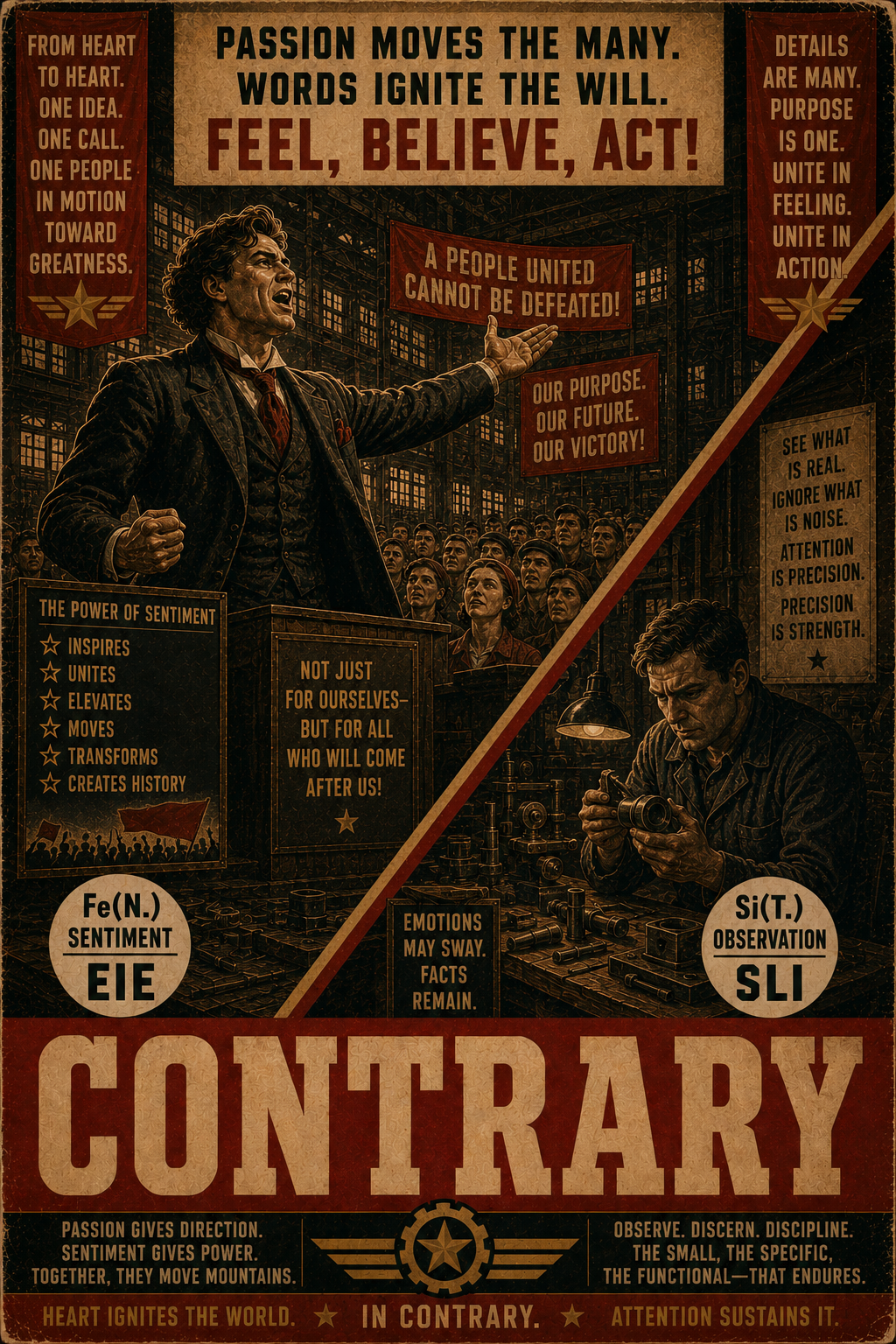
EIE leads with Fe(N.) Sentiment — inner passion expressed through dramatic rhetorical address, deeply felt conviction conveyed through symbolic gesture aimed at inciting others to feel and act. In SLI's Model L stack, Fe(N.) sits at the Vulnerable position. SLI is genuinely inept with inner emotional rhetoric, treats it with careless indifference. When EIE's dramatic address fills the shared space — passion shaped into inciting symbolic form, the rhetorical charge impossible to ignore — SLI has no functional register to receive it. The emotional incitement does not translate into anything the SLI's sensory mode can attend to or ground.

SLI leads with Si(T.) Observation — controlled selective external sensory attention, disciplined receptive focus on functional physical detail. In EIE's Model L stack, Si(T.) sits at the Vulnerable position. EIE is genuinely inept with controlled external sensory observation, treats it with careless indifference. When SLI's precise sensory attention fills the shared space — the functional qualities of physical material attended to with disciplined receptive focus — EIE has no functional register to receive it. The sensory precision activates EIE's most undefended position without SLI intending any suppression.

The specific character: dramatic inner rhetorical passion meeting controlled precise external sensory attention. EIE incites through symbolic form aimed at producing felt response; SLI attends to functional physical detail through disciplined receptive focus. One fills the space with directed emotional charge; the other withdraws into careful material attention. Each is precisely what the other cannot process — and each is produced effortlessly, without intent to overwhelm.

Conflict relation illustration comparing EIE × SLI

Conflict Summary

Base Function, Exact Blind Spot

File namePairA base / B PoLRB base / A PoLR
conflict-lii-seeLII × SEETi(N.)Se(F.)
conflict-eii-sleEII × SLEFi(N.)Se(T.)
conflict-lsi-ieeLSI × IEETi(S.)Ne(F.)
conflict-esi-ileESI × ILEFi(S.)Ne(T.)
conflict-ili-eseILI × ESENi(T.)Fe(S.)
conflict-iei-lseIEI × LSENi(F.)Te(S.)
conflict-lie-seiLIE × SEITe(N.)Si(F.)
conflict-eie-sliEIE × SLIFe(N.)Si(T.)

The structural pattern is identical across all eight. Each type's base — their 4d, 4p, most natural and effortless primary function — sits exactly at the other's D2 Vulnerable: 1d, 1p, weakest position in the stack, treated with careless indifference, genuinely inept. The match is exact: same element, same sub-variant. No approximation, no domain-only match. Precise register striking precise blind spot.

Neither type is attacking the other. Both are simply operating from their most natural mode. The collision is structural and default. The dominant/backgrounded quality observed in any specific interaction depends on which mode the context enables; the underlying structural collision is constant regardless of which direction the dynamic runs.

Model A observes the difficulty of Conflict relationships without fully explaining why they are so specifically overwhelming. Model L makes it precise: the PoLR is not just weak — it is the exact inversion of the base, treated with careless indifference, without even the partial defences the Role's aspiration or the Ignoring's competence provide. When the partner's greatest strength lands there with full force, it lands on the most open, least prepared position in the entire stack. The strike is exact. The match is complete.