





















Ego Block Summary
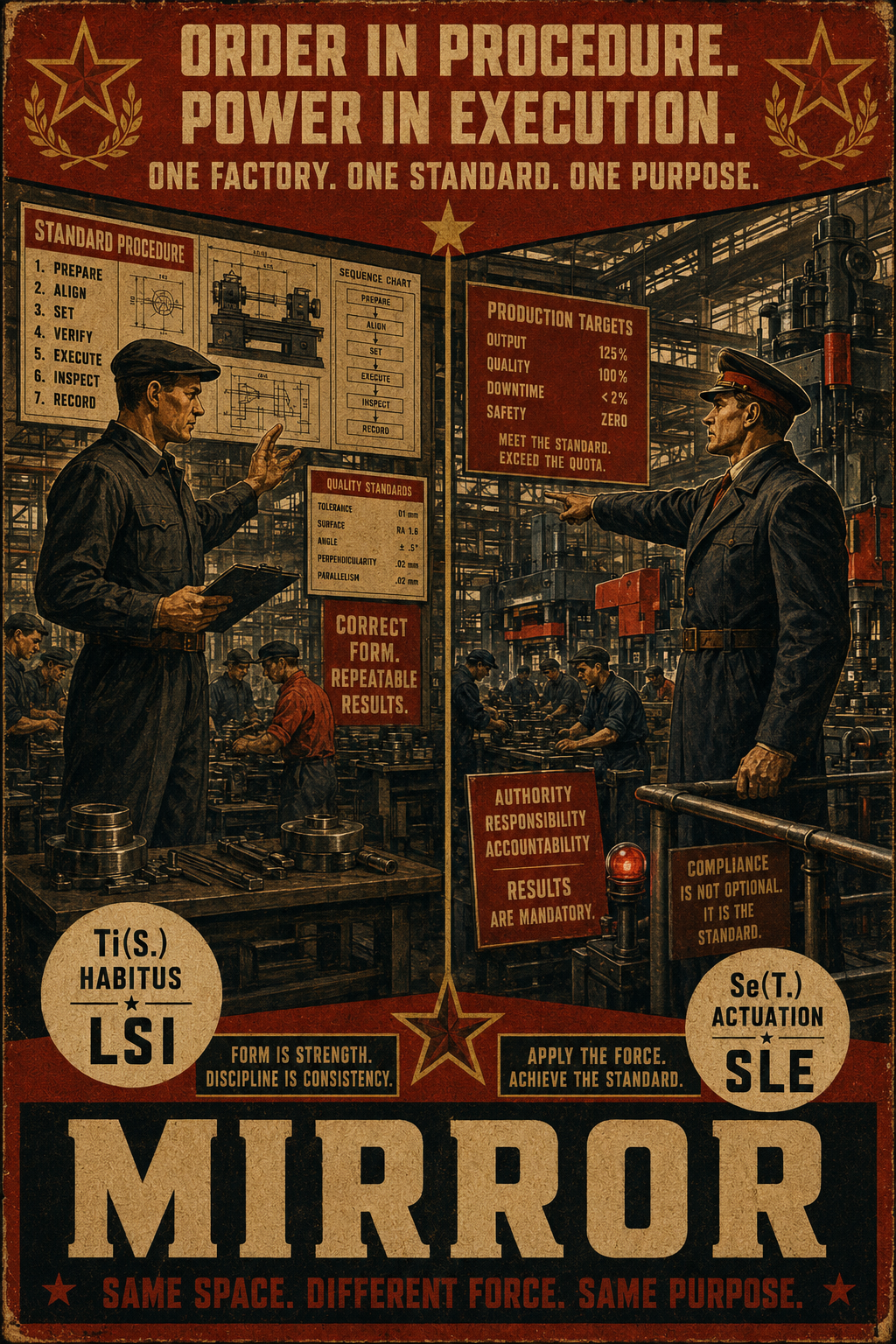
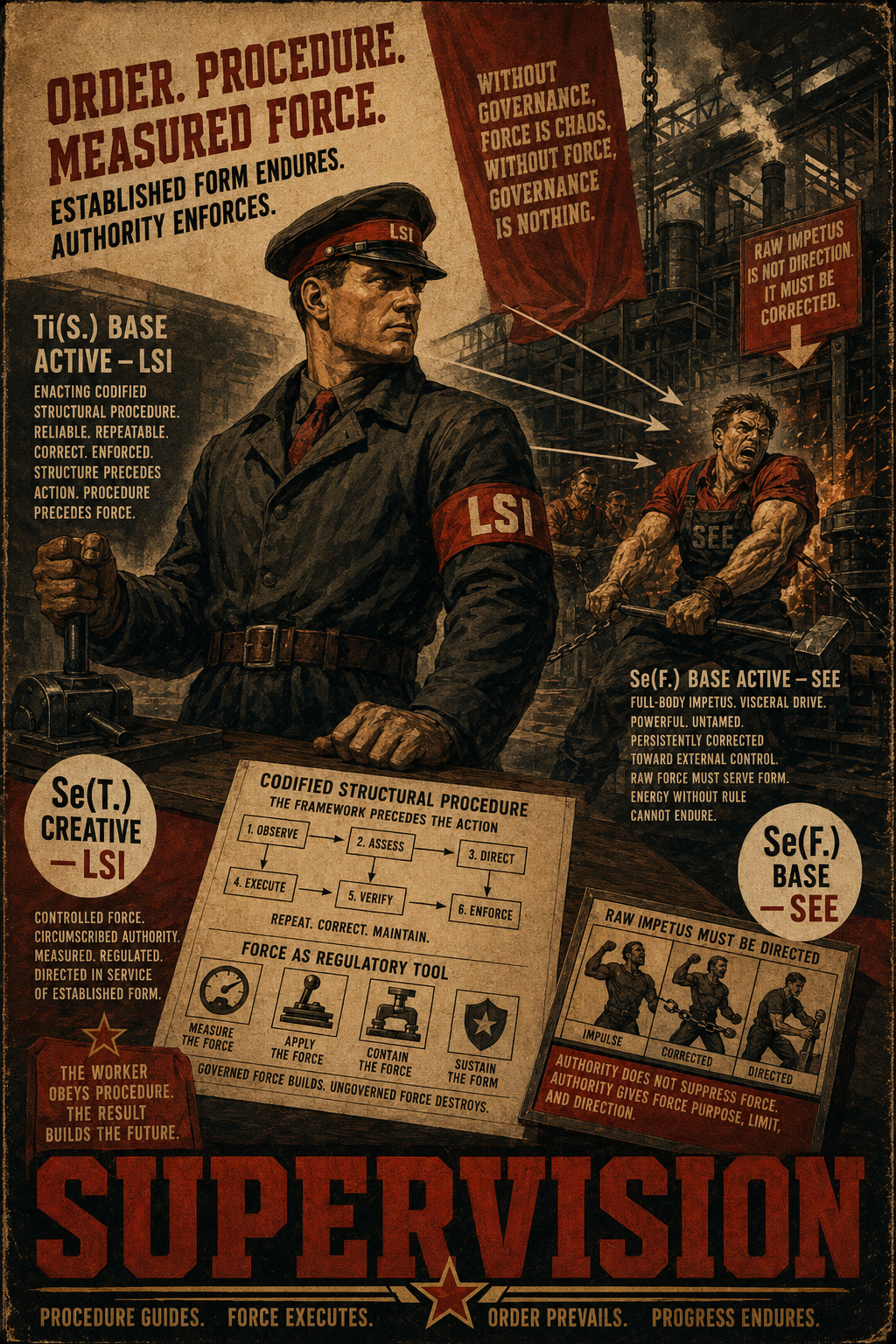
LSI leads with Ti ? Laws: structure, definition, hierarchy, and the concrete order of systems. Se ? Force serves as the Creative function, applying that structure through pressure, boundaries, discipline, and controlled action.
Beta Quadra · Logical Sensory Introvert
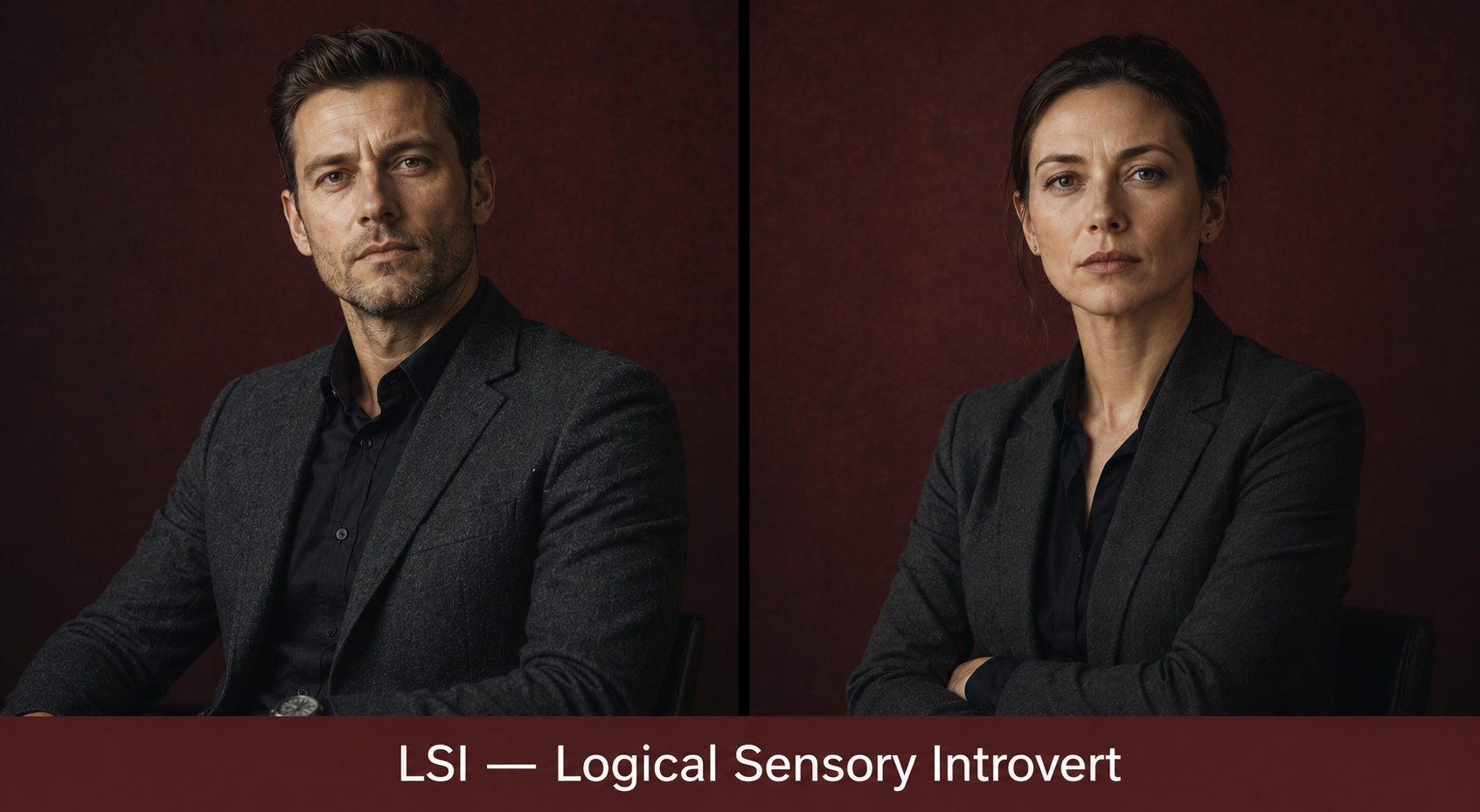
The Inspector
Type code: LSI
The Inspector
Model A · WSS
LSI leads with Ti ? Laws: structure, definition, hierarchy, and the concrete order of systems. Se ? Force serves as the Creative function, applying that structure through pressure, boundaries, discipline, and controlled action.
Valued elements: Ti ? Se ? Fe ? Ni
These are the Beta elements LSI finds most meaningful: structural order, decisive force, emotional conviction, and temporal direction.
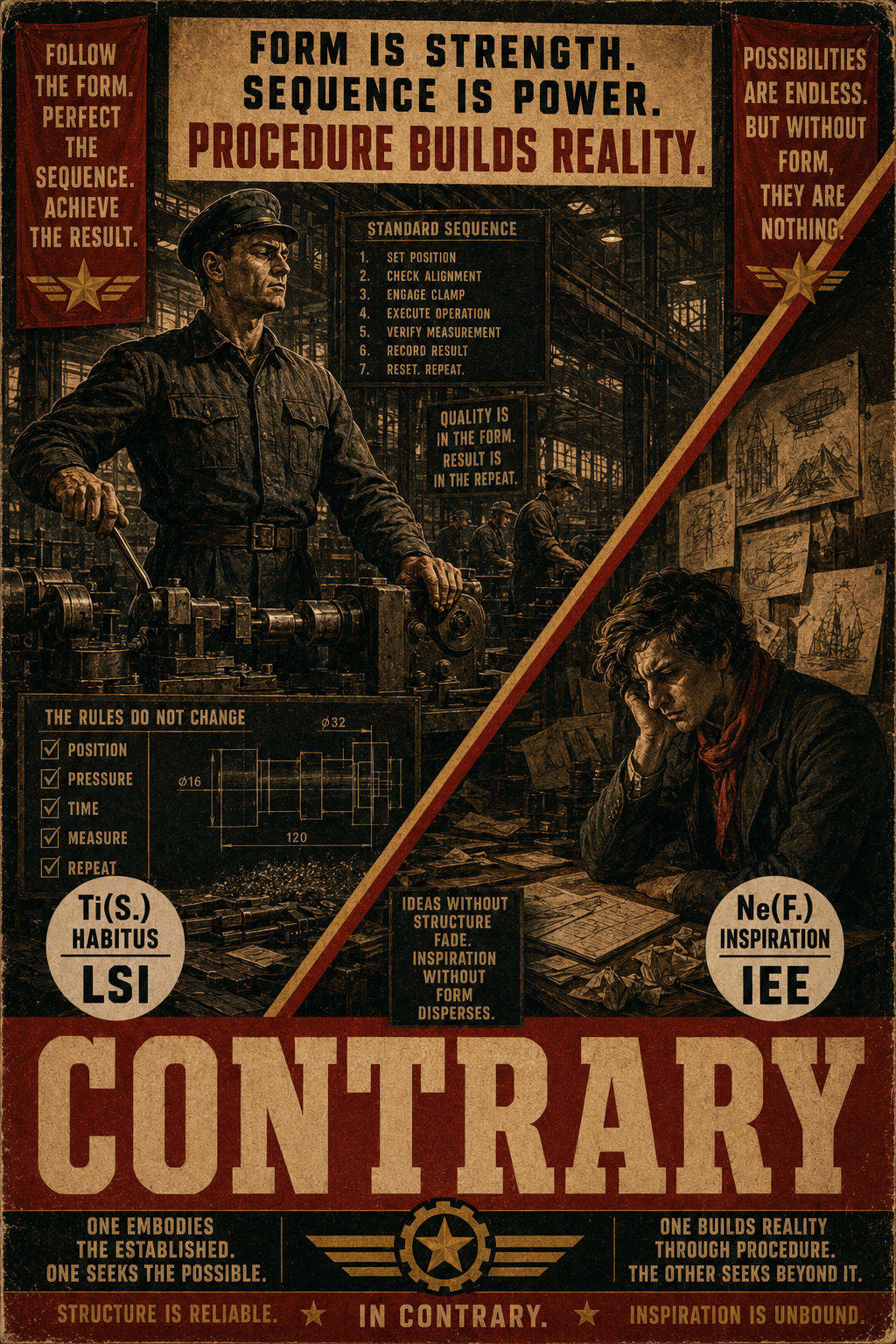
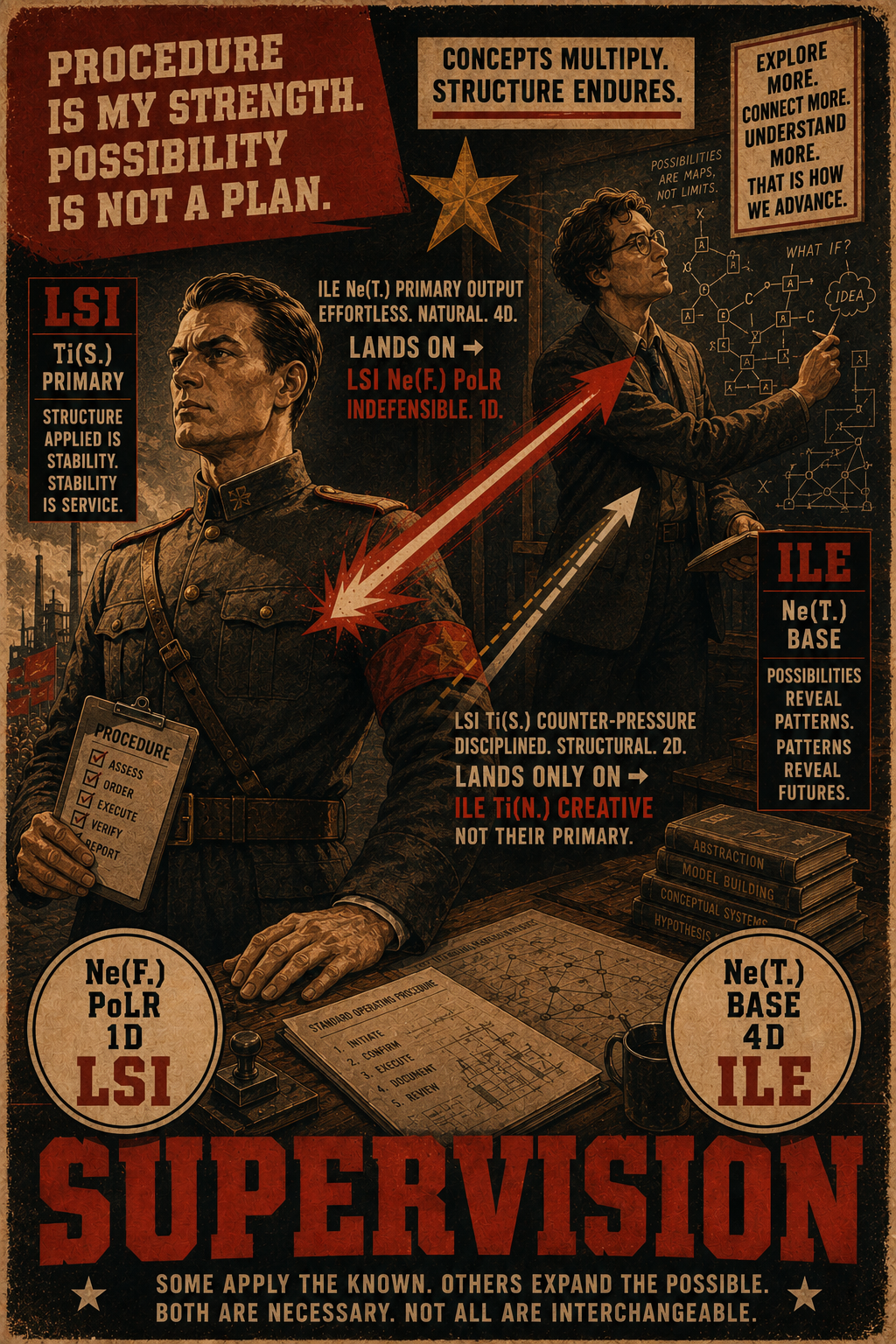
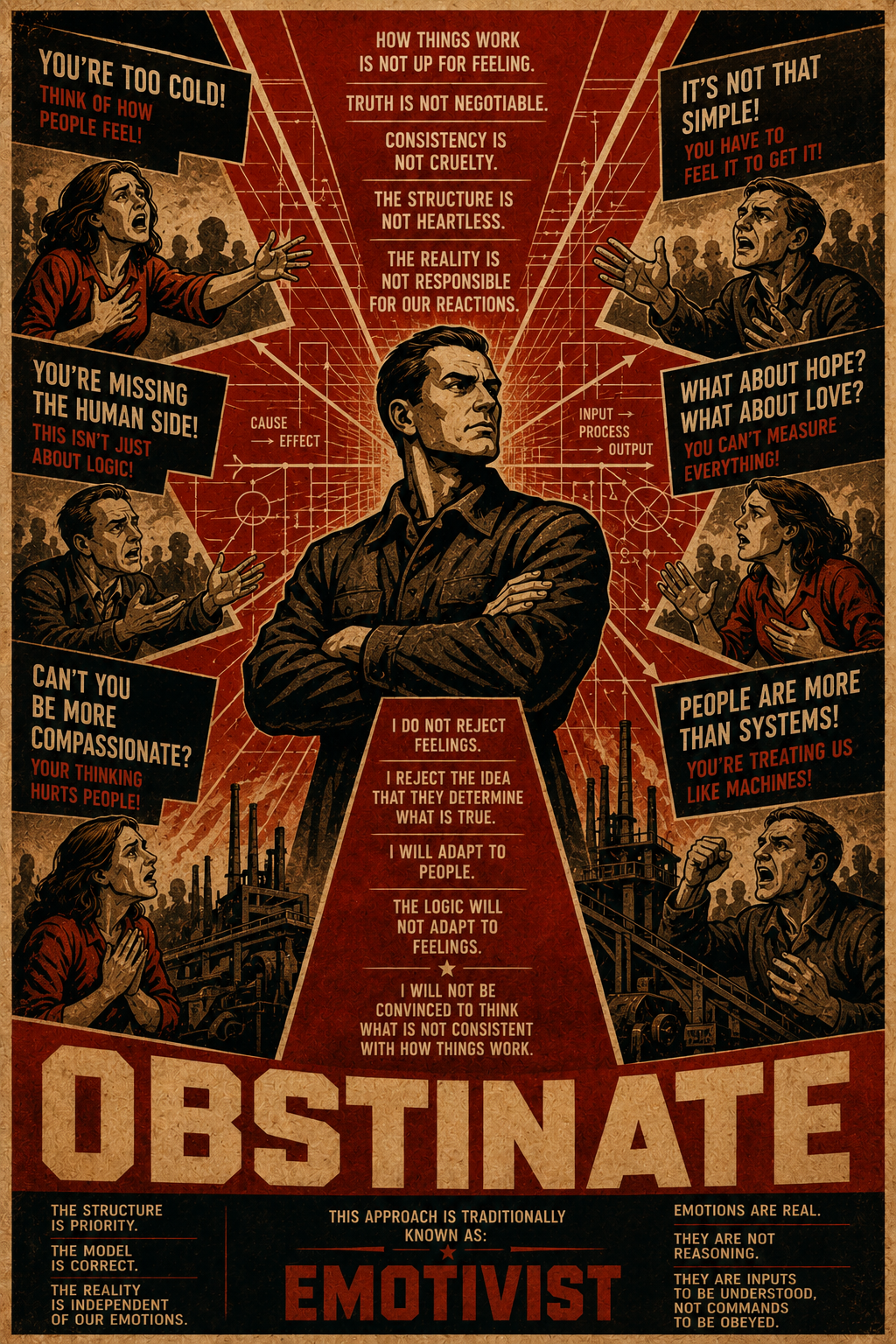
Ne ? Ideas sits at position 4, the Vulnerable. Open-ended possibility, uncontrolled reframing, or speculative proliferation can feel destabilising here, especially when it weakens a settled structure.
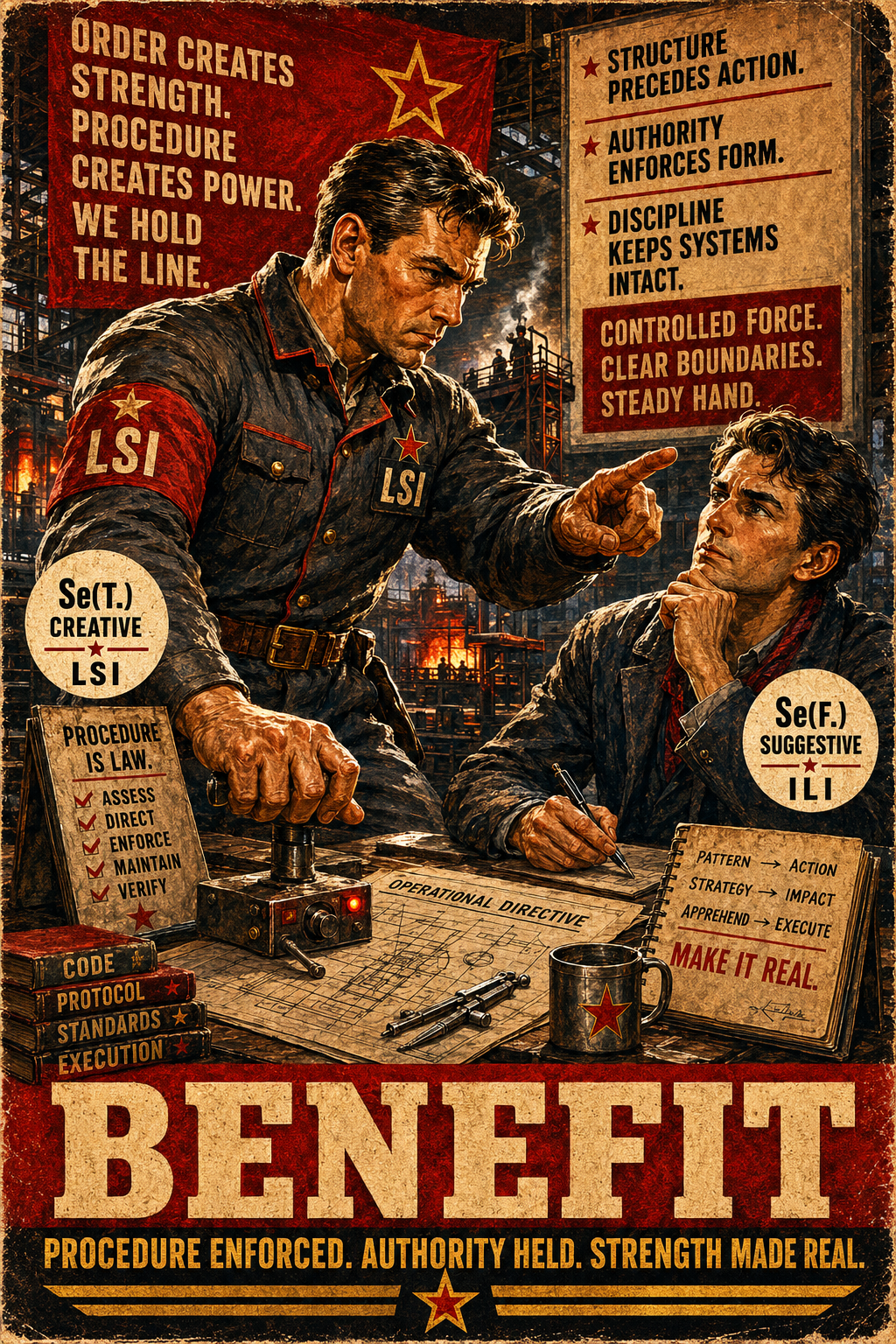
Fe ? Emotions sits at position 5, the Suggestive. LSI responds strongly to expressive conviction, atmosphere, and meaningful emotional charge. This is what the EIE dual provides naturally.
Model L · Kimani White
Model-L specifies each of LSI's sixteen element positions to the sub-variant level. The four capacity groups — A, B, C, D — organise these positions by the type's psychological relationship with each.
LSI's most natural region: embodied structure, regulated force, practical method, and sensory observation held in a stable system of control.
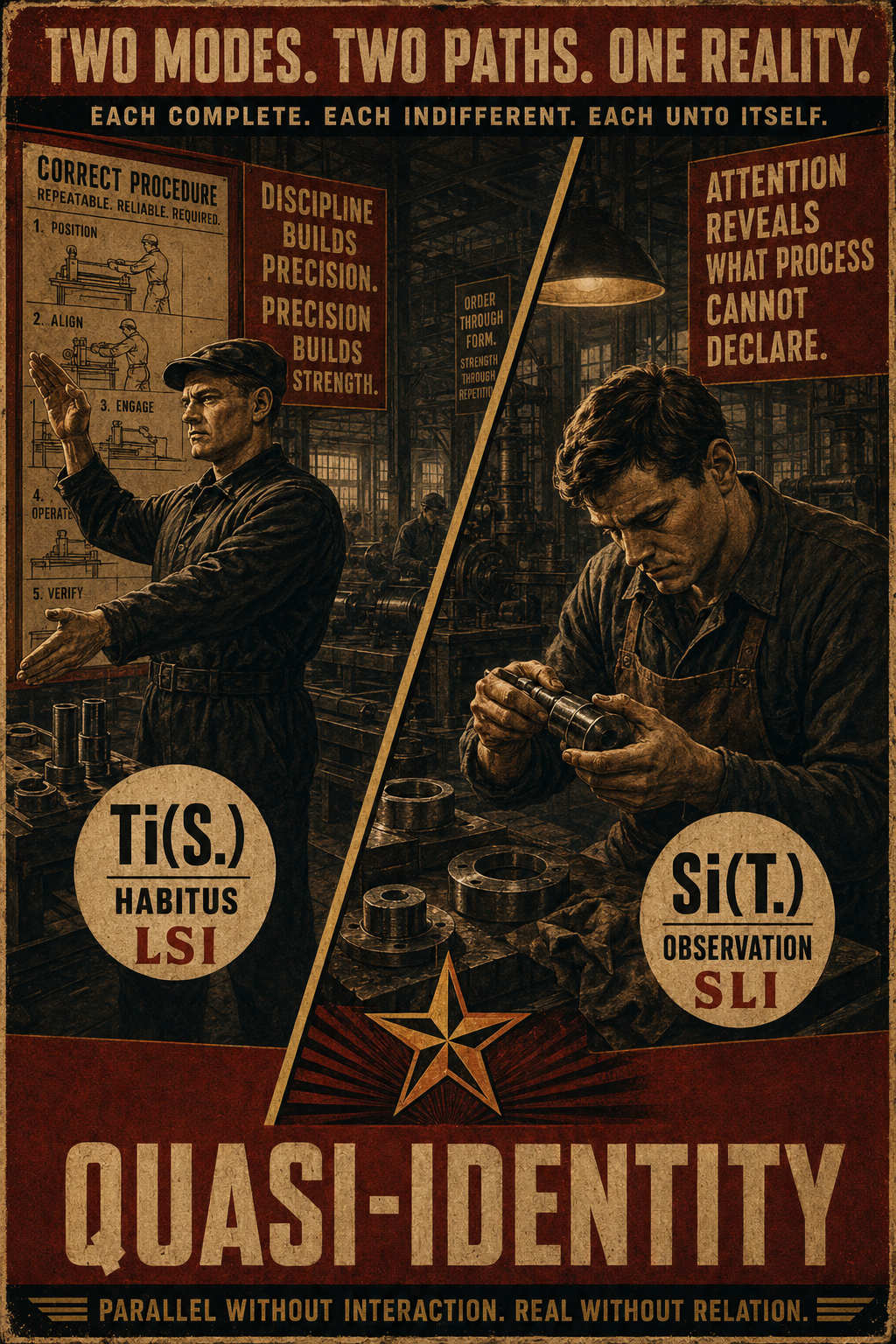
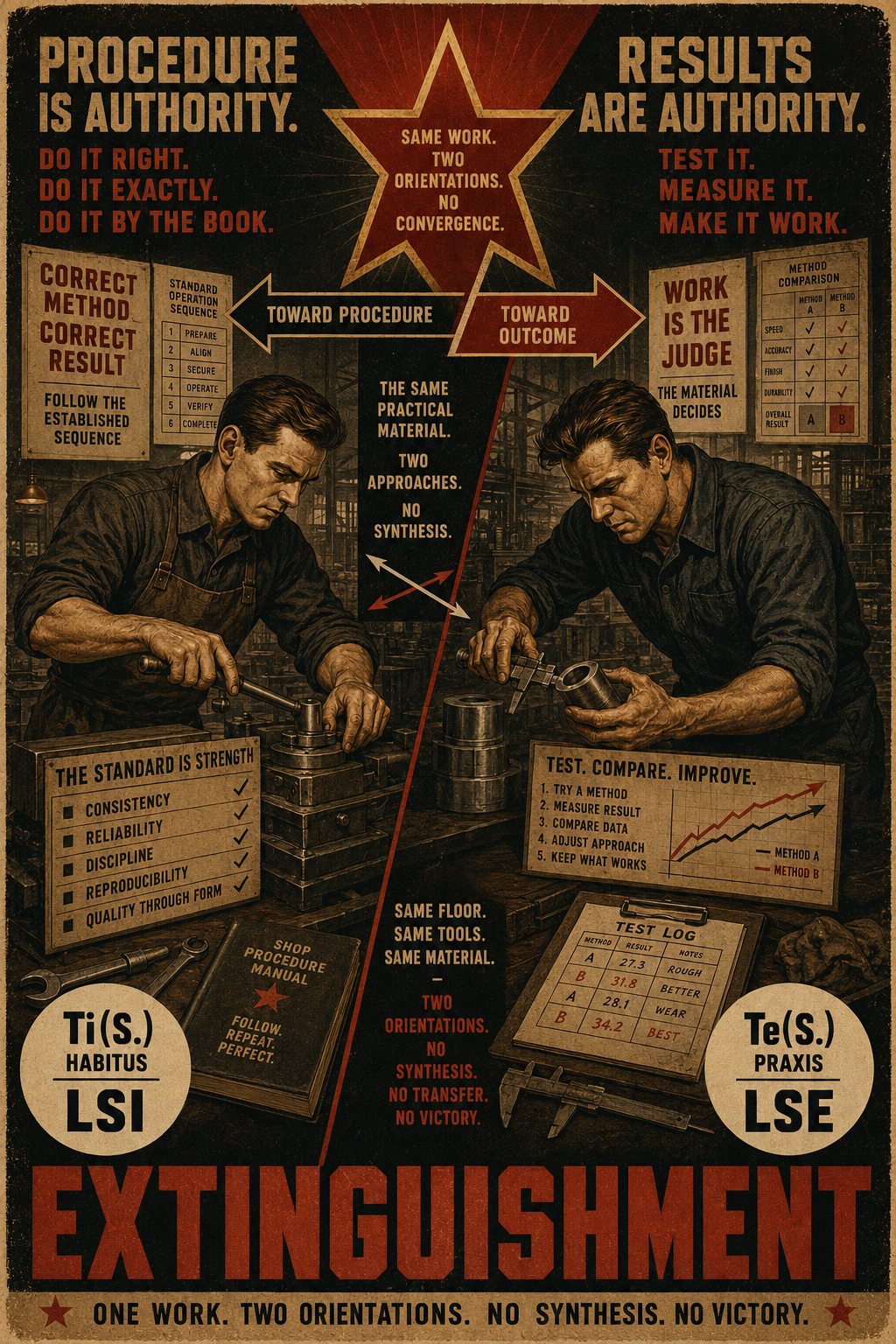
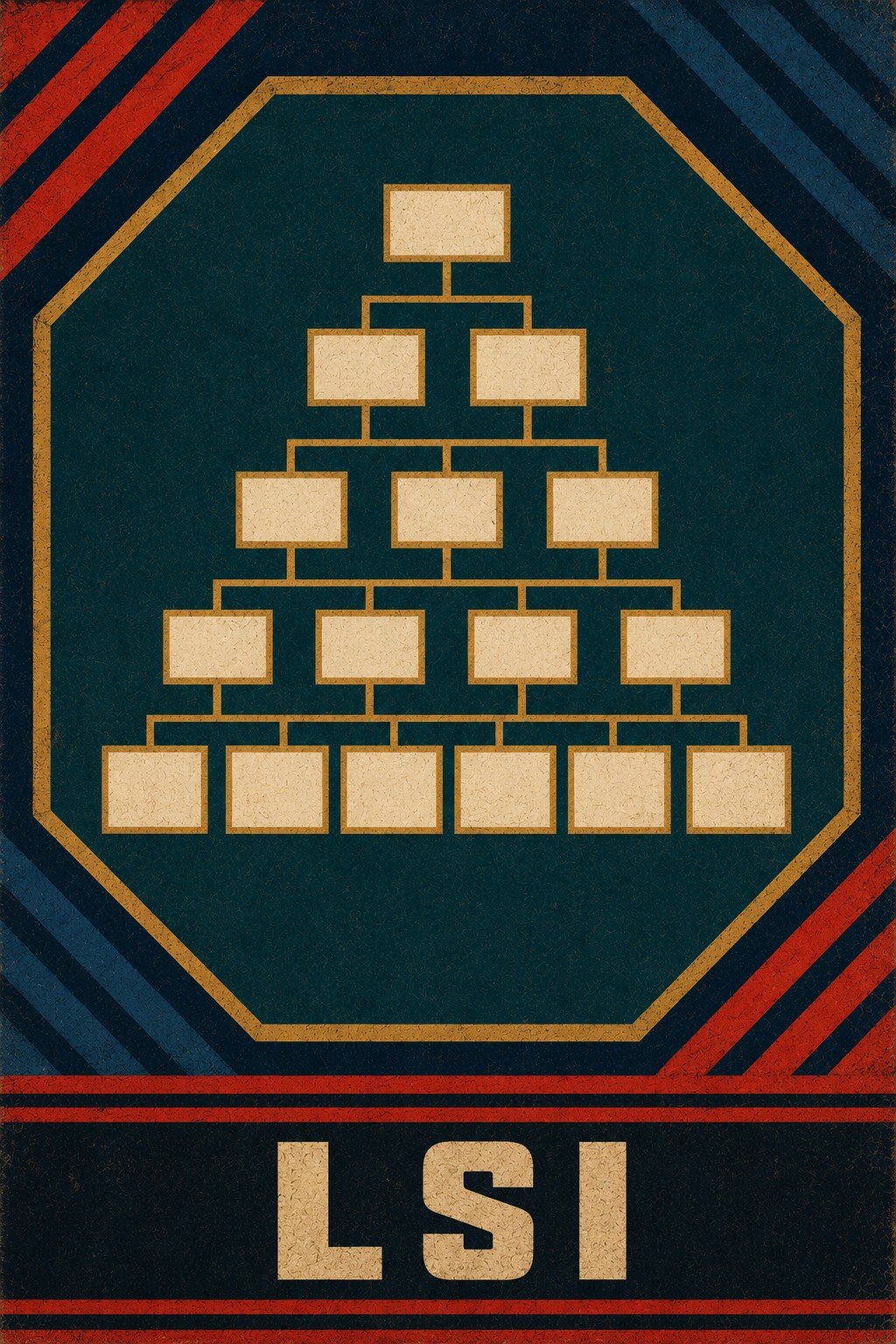
LSI Base: Ti(S.) Habitus. Embodied forms, codified habits, and the tangible structure of subjects, groups, or systems. This is the central point of the type's confidence.
LSI Creative: Se(T.) Actuation. Regulatory force applied to shape the physical environment within concrete parameters. This is the tool the type uses to express and support the Base.
LSI Ignoring: Te(S.) Praxis. Hands-on methods, practical experimentation, resources, and material workflow improvement. Capable but not treated as the main point.
LSI Demonstrative: Si(T.) Observation. Selective intake of external sensory data, attending to functional details in the physical field. Strong and often automatic in the background.
Supported positions that add detached structure, conceptual possibility, impersonal reasoning, and strategic timing around LSI's concrete order.
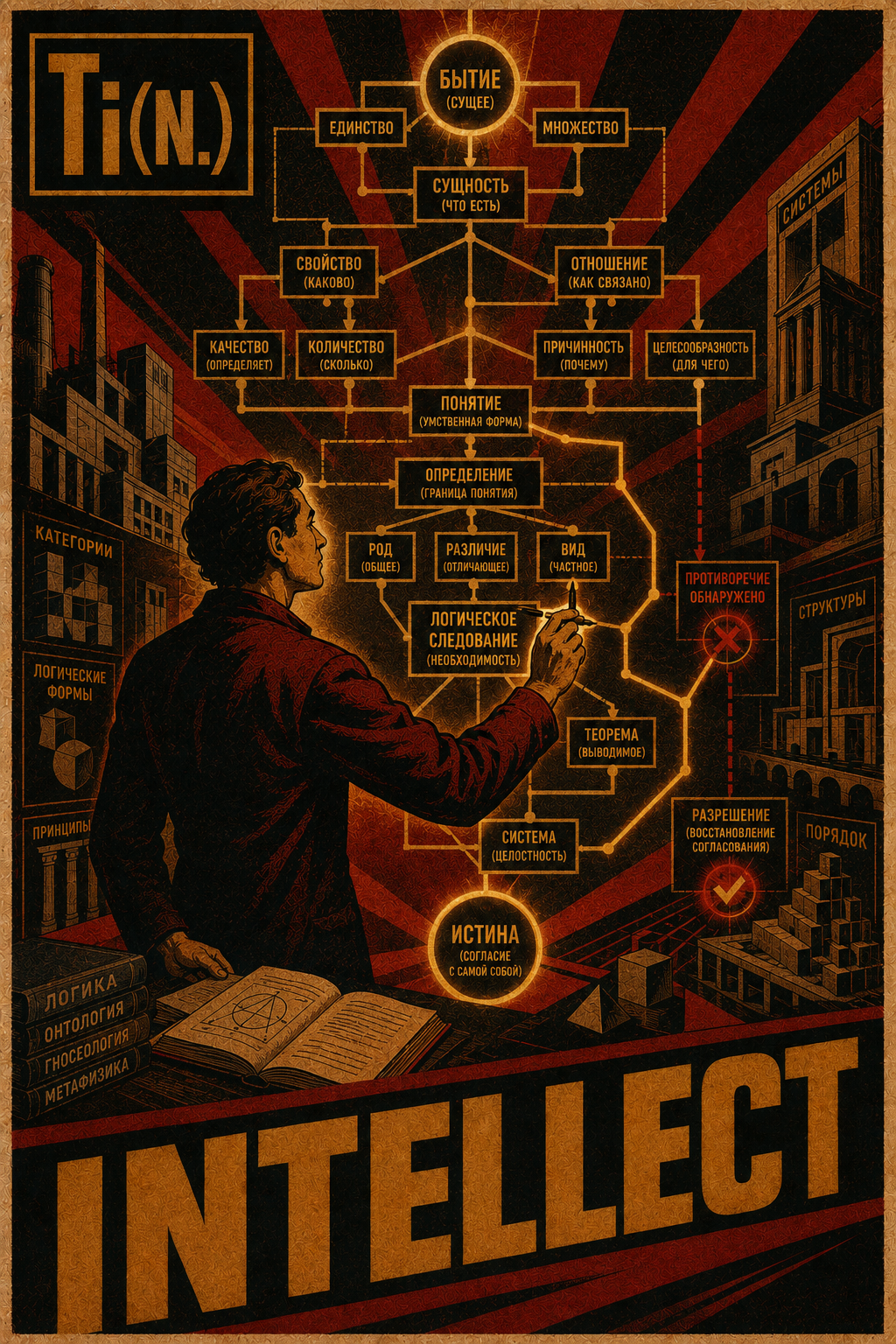
LSI Correspondent: Ti(N.) Intellect. Linguistic framing, interpretive schema, and coherent articulation of concepts. Available as a conscious support, but less central than the A positions.
LSI Collaborative: Ne(T.) Ideation. Active conceptual generation, brainstorming, and manipulation of semantic possibilities. Works as a deliberate auxiliary route.
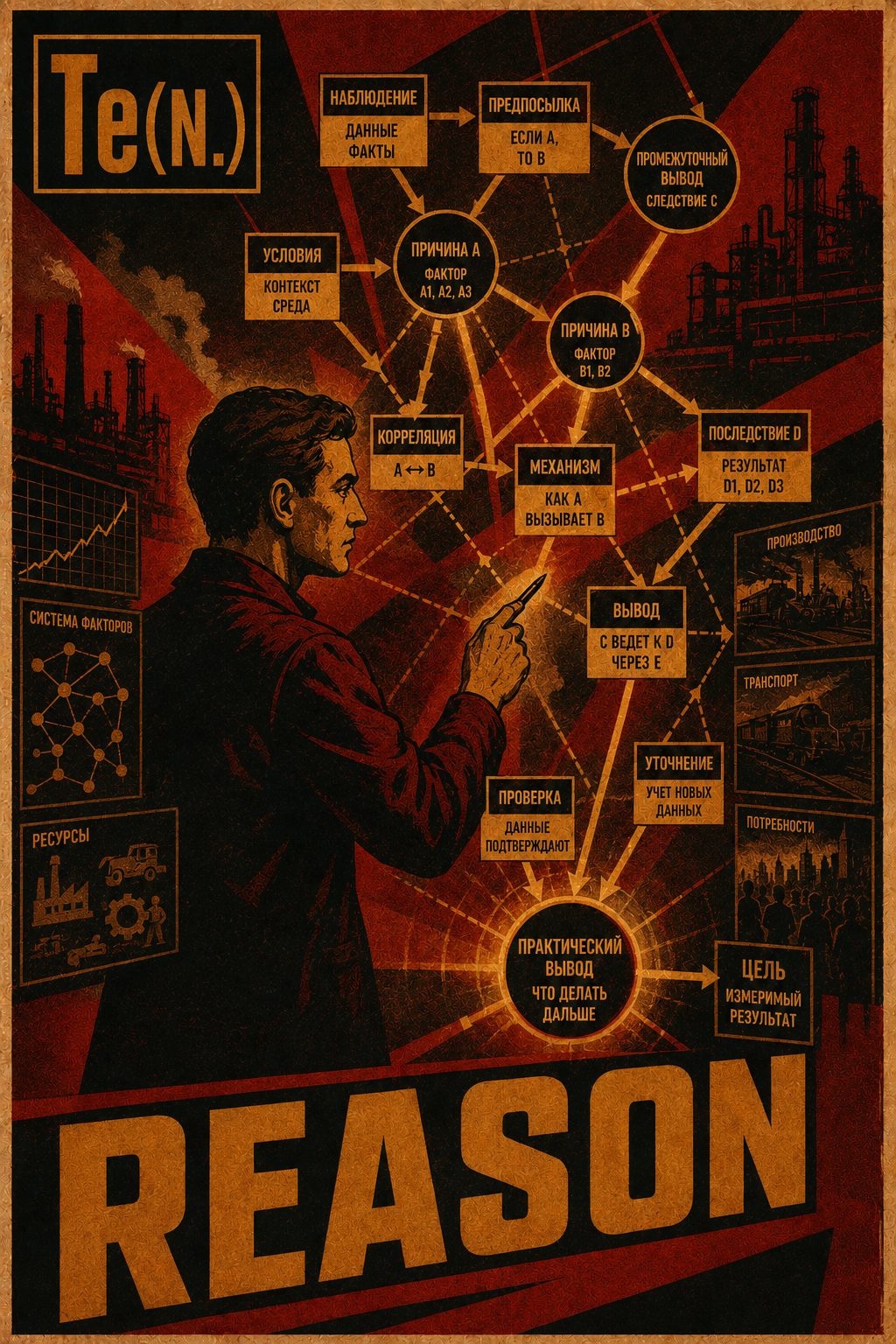
LSI Compensatory: Te(N.) Reason. Fact propositions, informal logic, productive aims, and workable strategic formulations. Helps cover practical or structural gaps when needed.
LSI Instrumental: Ni(T.) Apprehension. Strategic and temporal understanding of how events are likely to unfold over time. Useful and deployable, especially in service of stronger aims.
Contrasting positions that bring visceral relation, mobilising impulse, sensory mood, and expressive affect into the profile.
LSI Subsidiary: Fi(S.) Animus. Stable visceral attitudes of affinity or aversion toward people and concrete objects. A secondary shading of the profile rather than the lead voice.
LSI Negligent: Se(F.) Impetus. Visceral mobilizing impulse, turning stored energy toward concrete aims and exertion. Present but not normally prioritised.
LSI Prompting: Fe(S.) Affect. Physiological mood, expressive atmosphere, aesthetic signals, and shared sensory feeling tone. Can be activated by context or by other people.
LSI Galvanizing: Si(F.) Stimulation. Subjective bodily stimulus, vitality, comfort, and the felt charge of physical experience. A background primer that can energise the type indirectly.
The lower-capacity region: inner values, personal inspiration, symbolic emotion, and reflective imagination as the heart of complementarity with EIE.
LSI Role: Fi(N.) Soul. Inner values, ideals, convictions, and abstract notions of what is inherently worthwhile. Performed consciously when the situation asks for it.
LSI Vulnerable: Ne(F.) Inspiration. Inner potentiality, spontaneous creative impulse, and imagined paths for growth or novelty. A sensitive point where pressure can land hard.
LSI Suggestive: Fe(N.) Sentiment. Inner opinions and passions conveyed through dramatic rhetoric, symbolism, and emotional meaning. A receptive point: what the type most welcomes from others.
LSI Mobilizing: Ni(F.) Reverie. Inner scenarios, narrative significance, symbolic subtext, and reflective imagination around events. A low-capacity but energising point that responds to encouragement.
The Type In Life
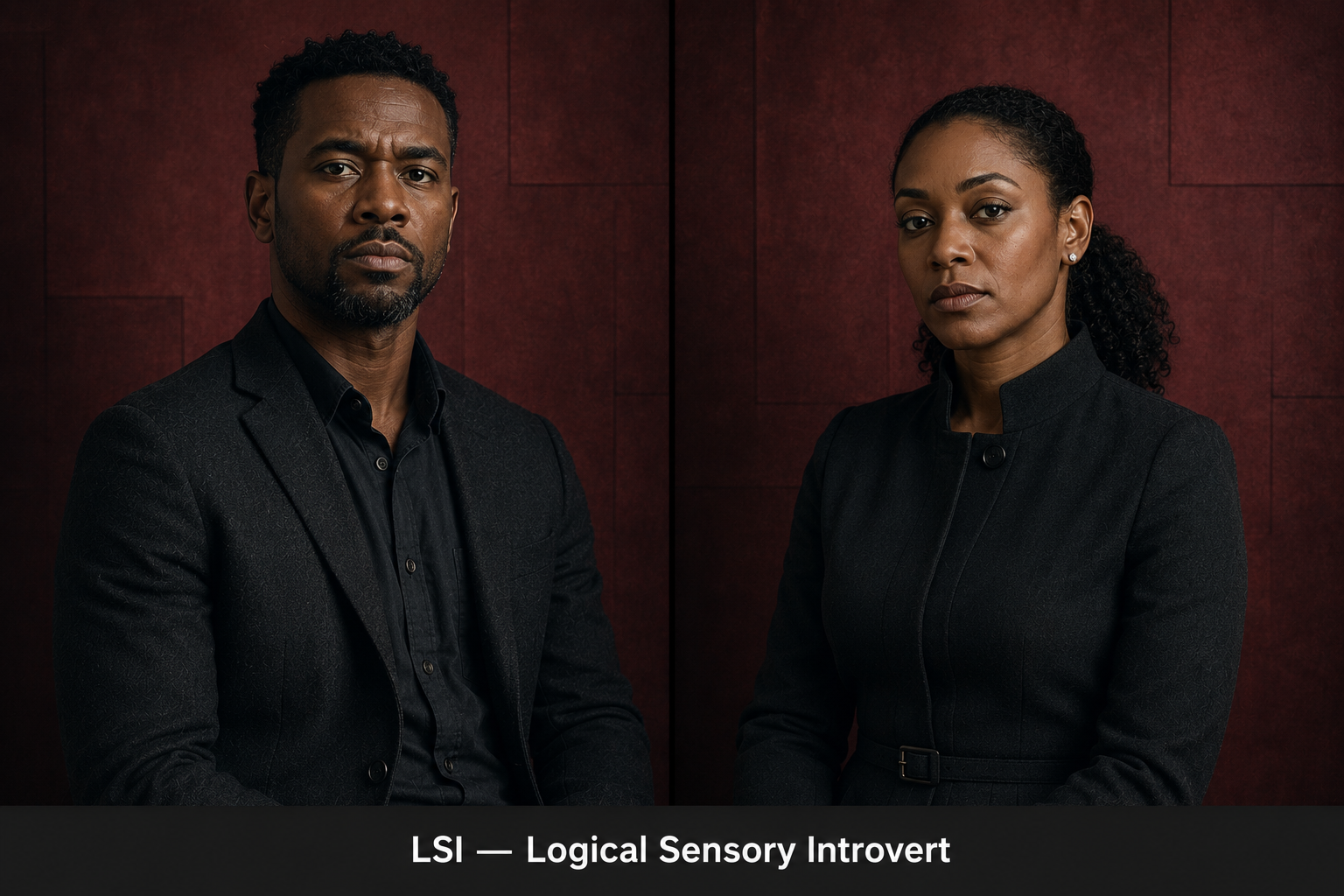
Viktor does not improvise when procedure will serve. He has a way of moving through institutions — bureaucracies, organisations, physical environments — that suggests intimate knowledge of their actual structure, not their stated structure. He is patient in a way that has weight to it: he will wait until the correct moment and then act, without drama. He expects competence and is disappointed, regularly, by its absence. He will not say so directly. He will find the correct person to route the task through and the task will get done. He does this without acknowledgment. The acknowledgment is not the point.
Sonja handles the practical architecture of the household with a quiet authority that only becomes visible when it breaks down. She knows where things are, which things matter, how the systems hold. She does not need recognition for this, but she needs it not to be undermined. She has strong views about how things should be done — not preferences, views. She will listen to an alternative method once. If it holds up to scrutiny she will adopt it without sentimentality. She does not hold on to things that don't work. What she holds on to is the standard.
Dual Relationship
LSI's dual is EIE — The Icon. LSI's Suggestive is Fe(N.) — Sentiment: symbolic emotion, conviction, rhetoric, and charged meaning. EIE leads with exactly this mode of expression.
EIE's Suggestive is Ti(S.) — Habitus: embodied structure, codified form, and the tangible order of systems. LSI leads with that mode effortlessly. Each type supplies what the other most needs without having to translate it into a foreign language.
A Note on This Type
Model A identifies LSI as Ti-leading with Se Creative. Model-L specifies that this is Ti(S.) — Habitus, the embodied and codified mode of structure, supported by Se(T.) — Actuation.
This distinction matters when separating LSI from LII. Both lead with Ti in Model A terms, but LSI's Ti(S.) is concrete, procedural, and institutionally embodied. LII's Ti(N.) is detached, linguistic, and conceptually analytic.
For LSI, Model-L shows why order is not only theoretical. It is enacted through rules, standards, spaces, systems, and the disciplined use of force.
Attribution: Model-L is Kimani White's original framework. This interpretation is the author's own.