Ego Block Summary
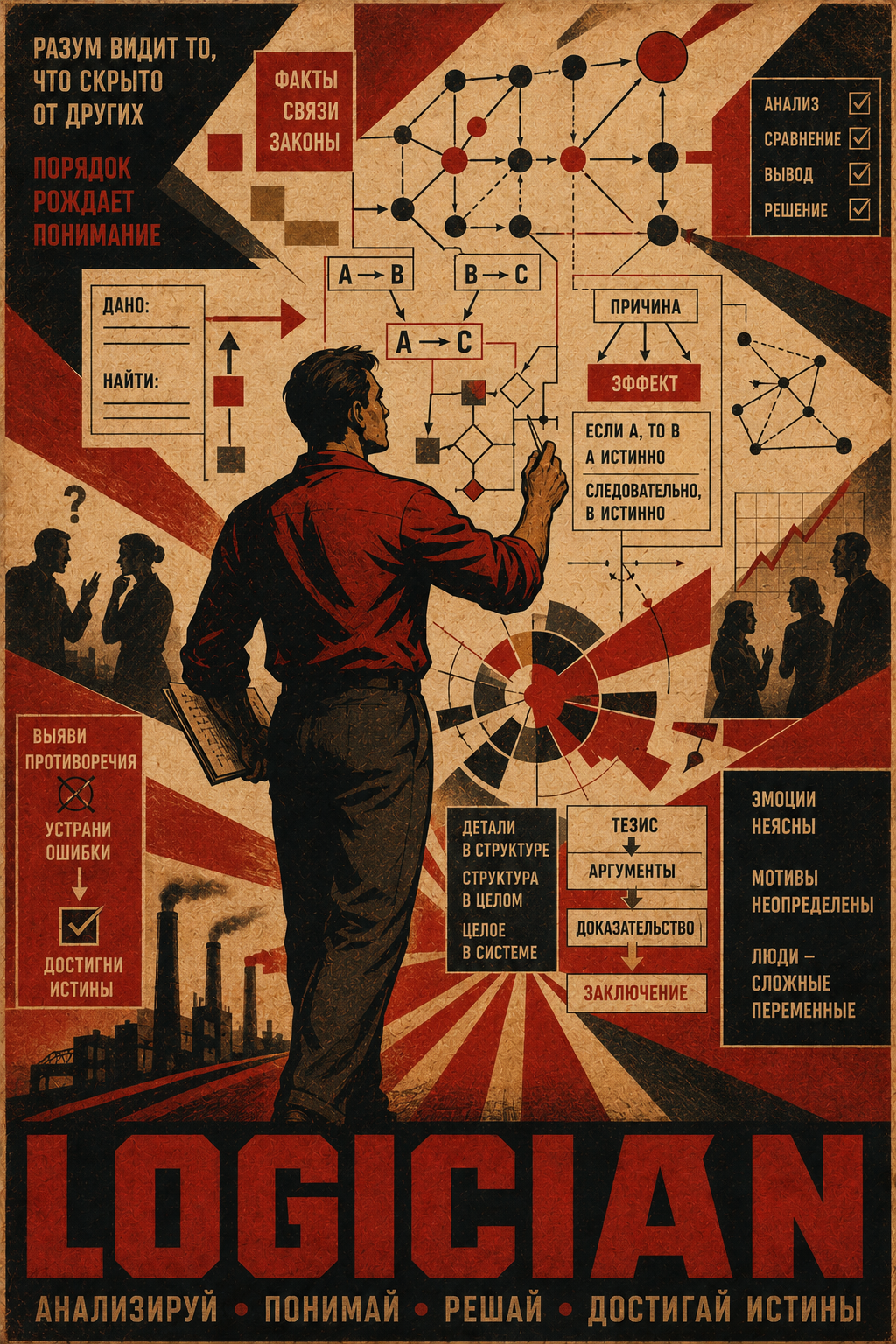
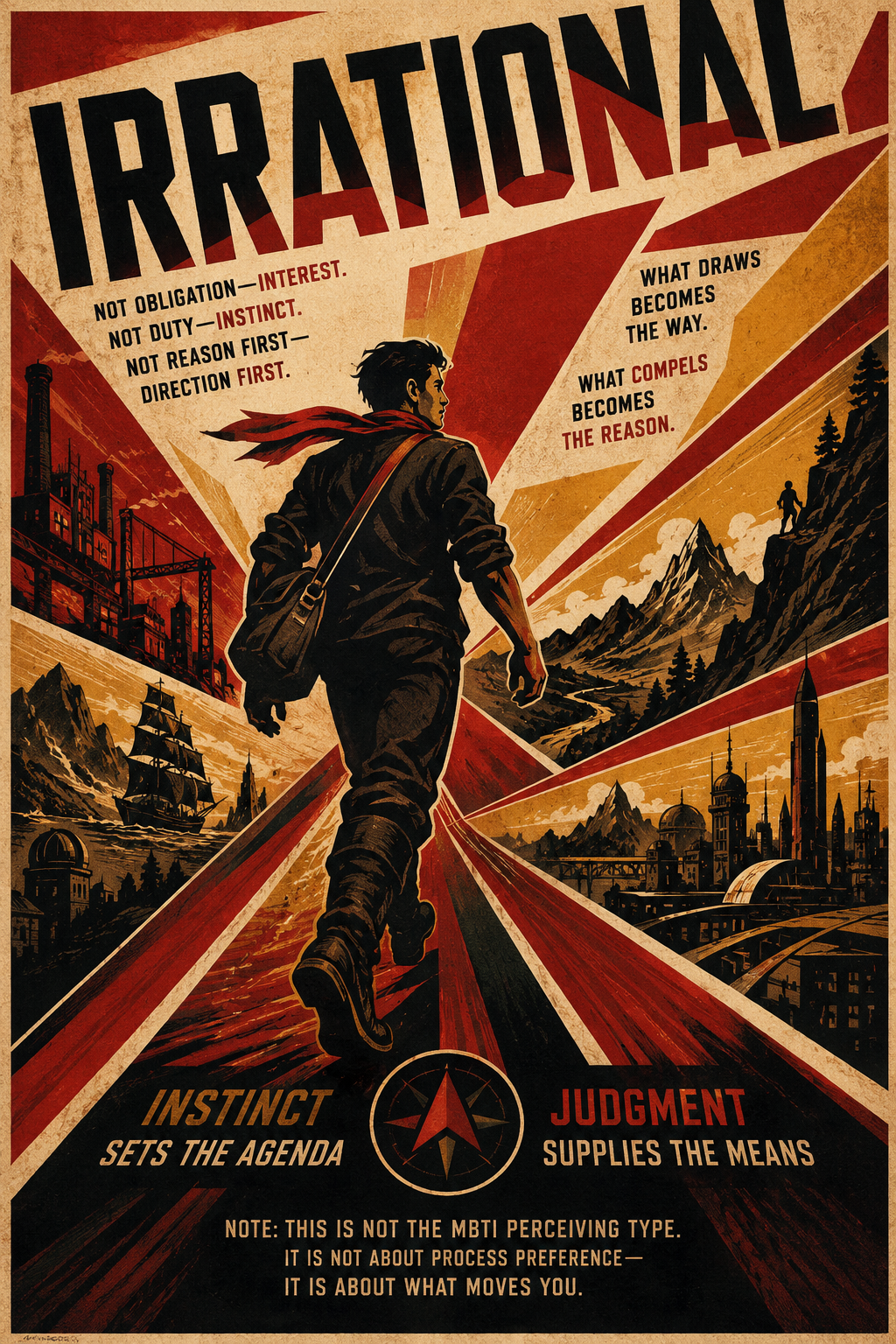
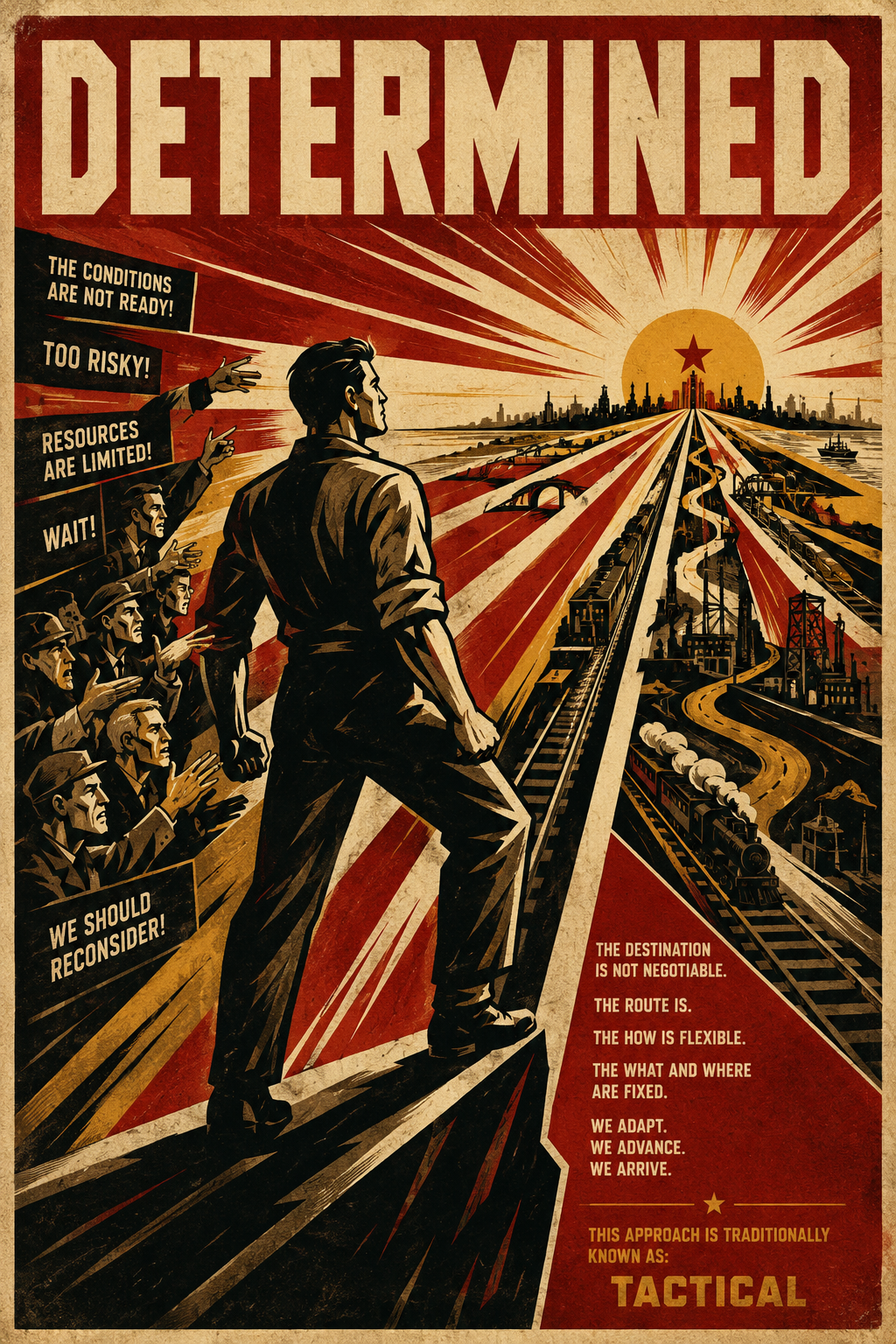
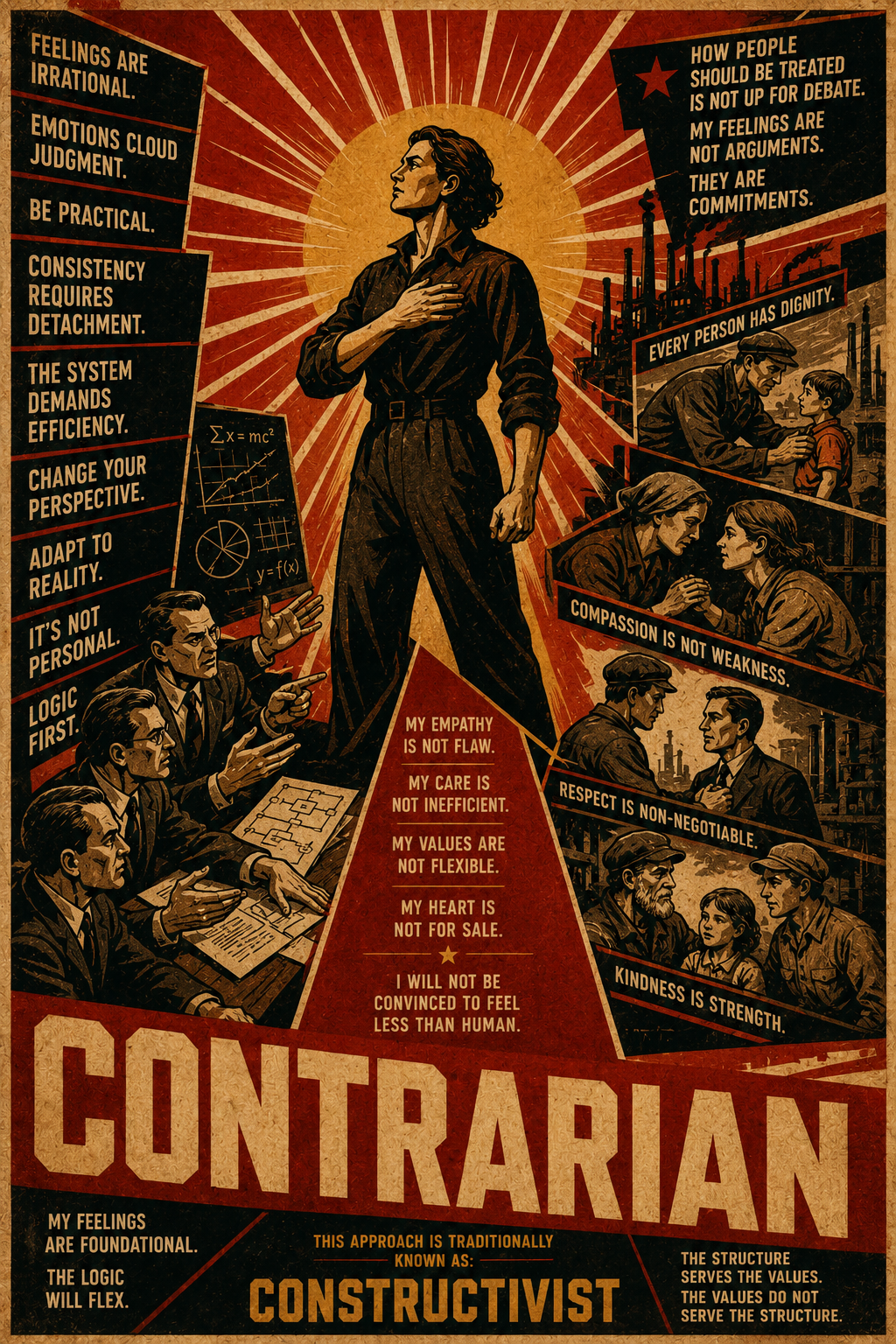
SLE leads with Se ? Force: direct action, pressure, terrain-reading, and the ability to seize or redirect momentum. Ti ? Laws serves as the Creative function, giving that force tactical structure, clear rules, and an ordered frame.
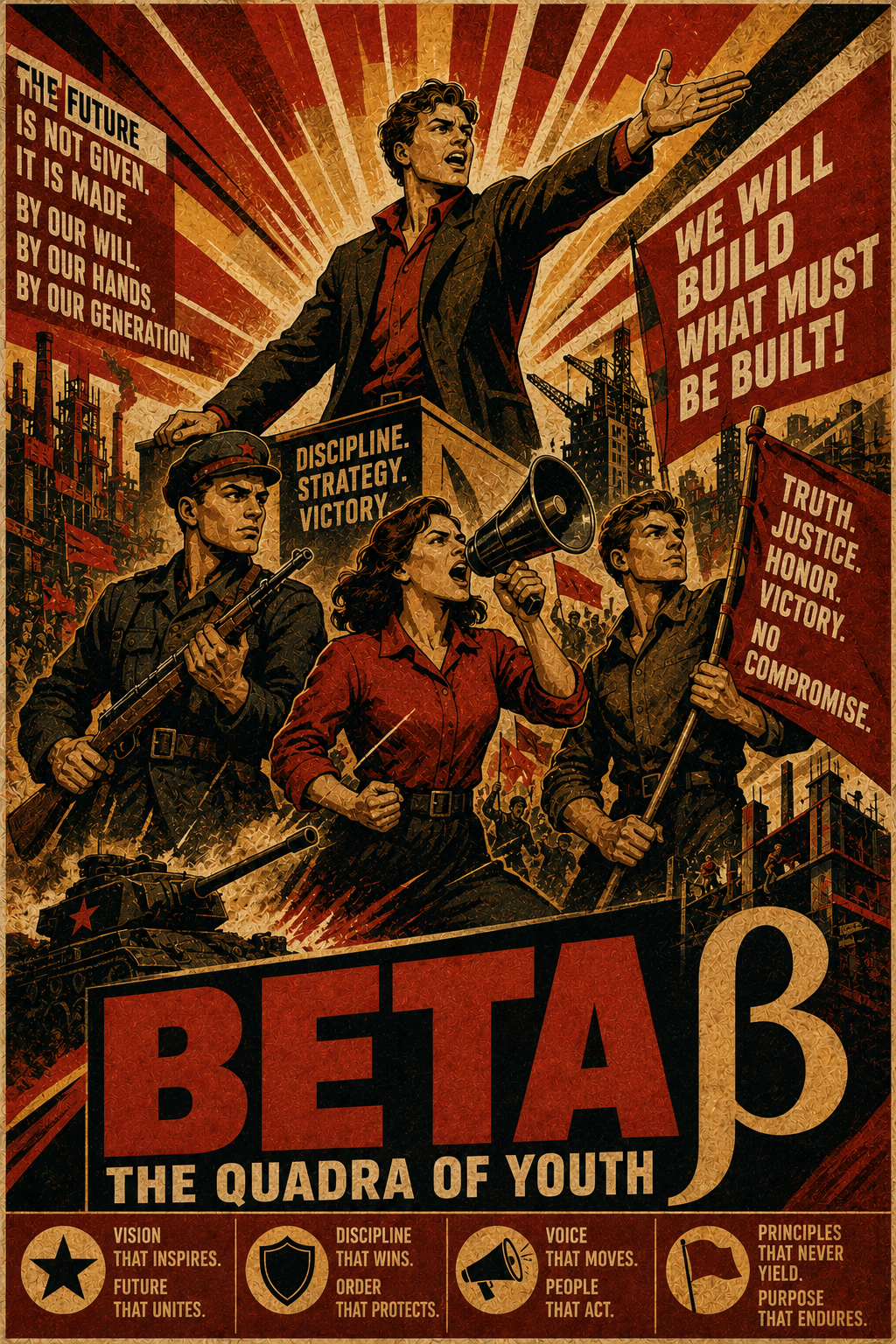
Beta Quadra · Sensory Logical Extravert
The Conqueror
Type code: SLE
The Conqueror
Model A · WSS
SLE leads with Se ? Force: direct action, pressure, terrain-reading, and the ability to seize or redirect momentum. Ti ? Laws serves as the Creative function, giving that force tactical structure, clear rules, and an ordered frame.
Valued elements: Se ? Ti ? Ni ? Fe
These are the Beta elements SLE finds most usable: decisive force, structural clarity, temporal meaning, and expressive charge.
Fi ? Relations sits at position 4, the Vulnerable. Pressure to define delicate personal obligations, stable affinities, or relational nuance can feel restrictive here, especially when action is needed.
Ni ? Telos sits at position 5, the Suggestive. SLE welcomes depth of timing, narrative direction, and a sense of where events are really going. This is what the IEI dual supplies naturally.

Model L · Kimani White
Model-L specifies each of SLE's sixteen element positions to the sub-variant level. The four capacity groups — A, B, C, D — organise these positions by the type's psychological relationship with each.
SLE's most natural region: regulated force, embodied structure, sensory observation, and practical method directed toward action.
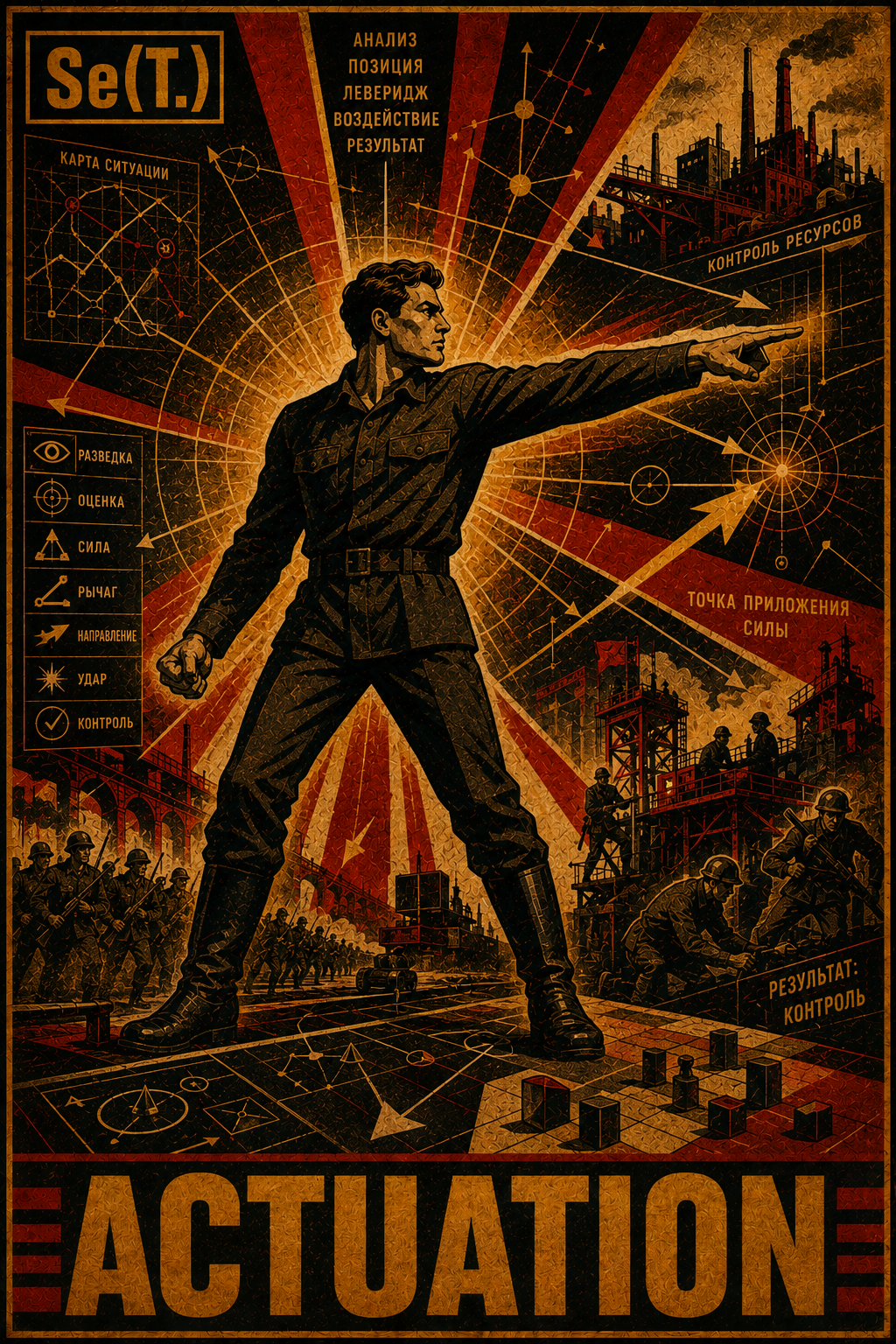
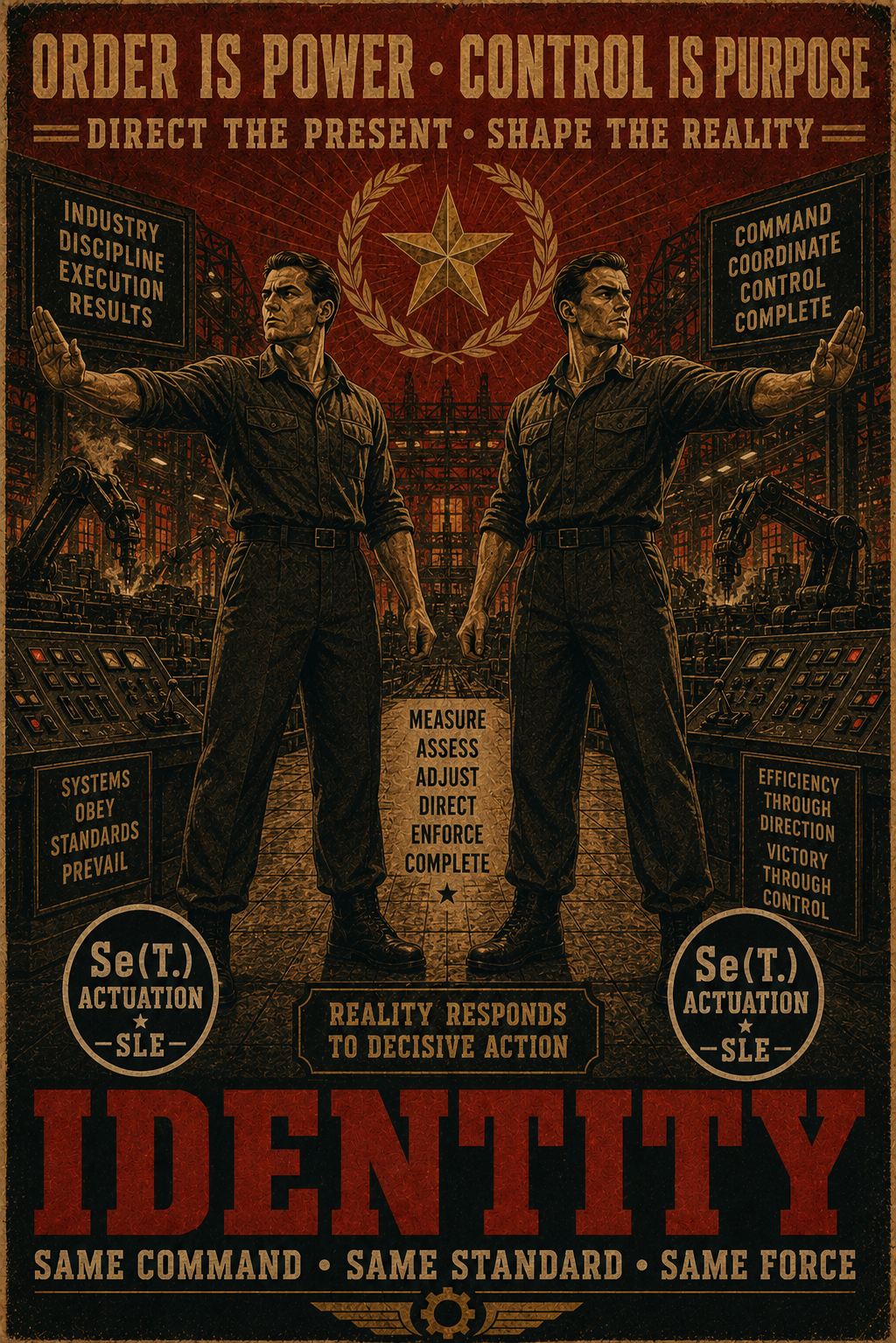
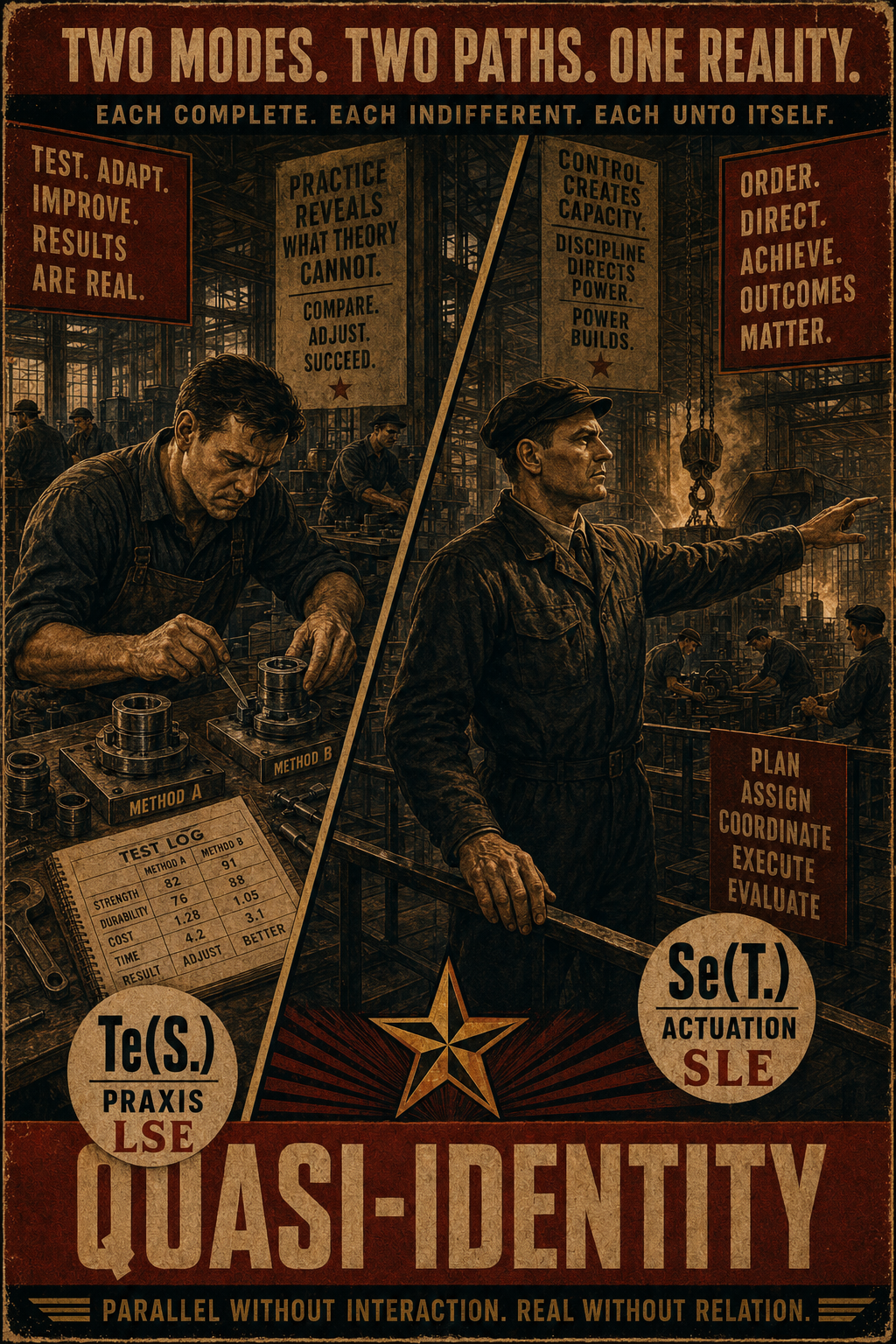
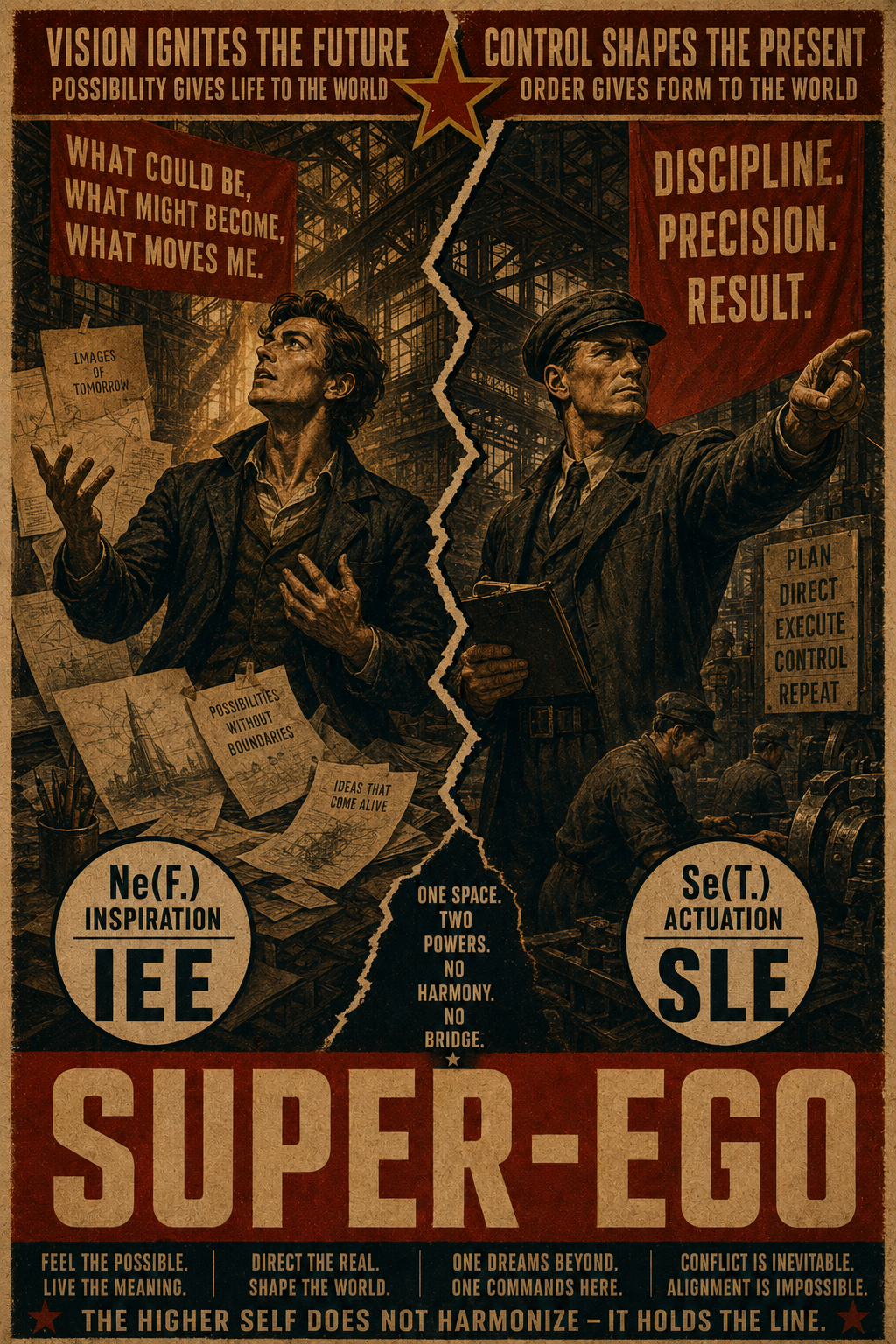
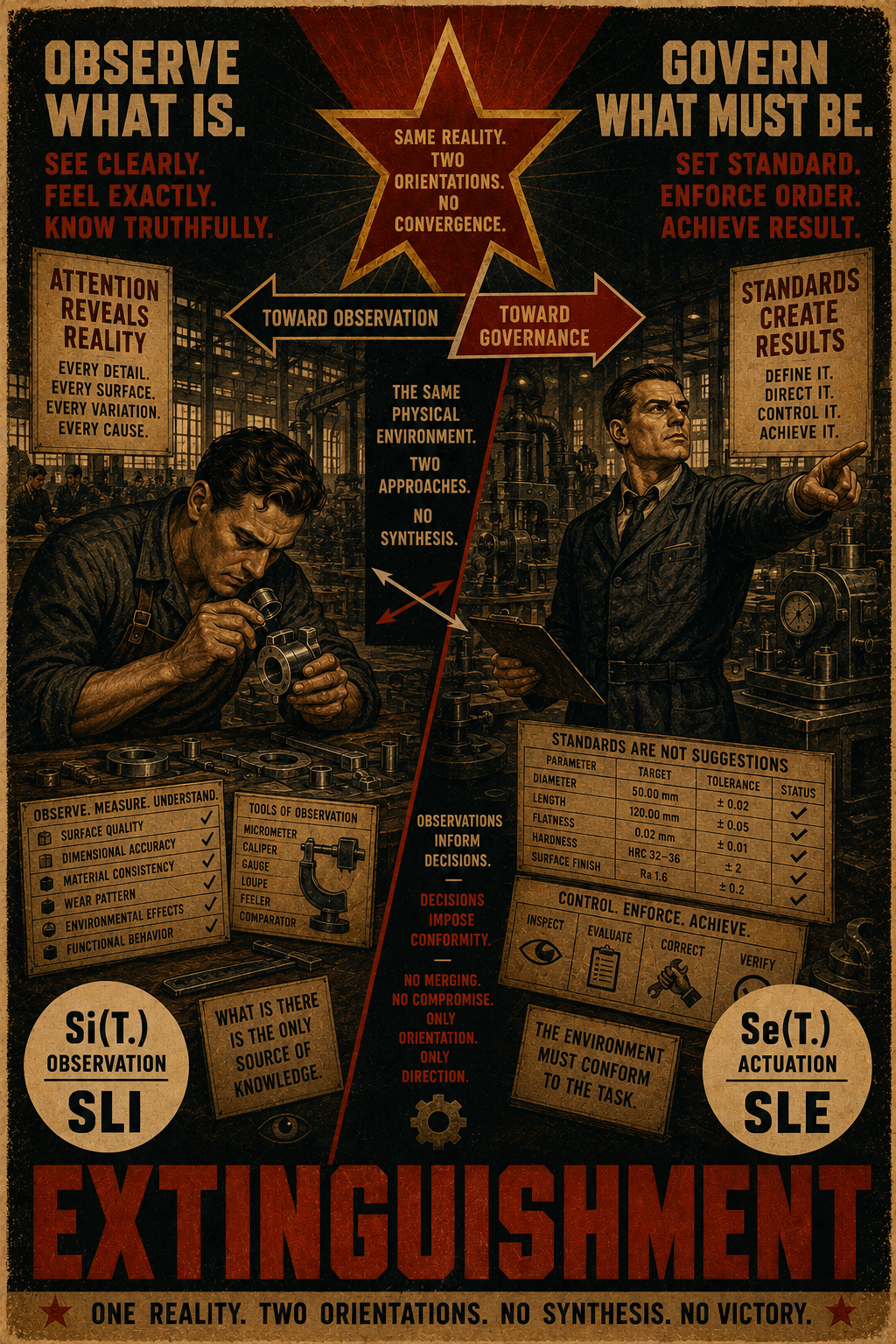
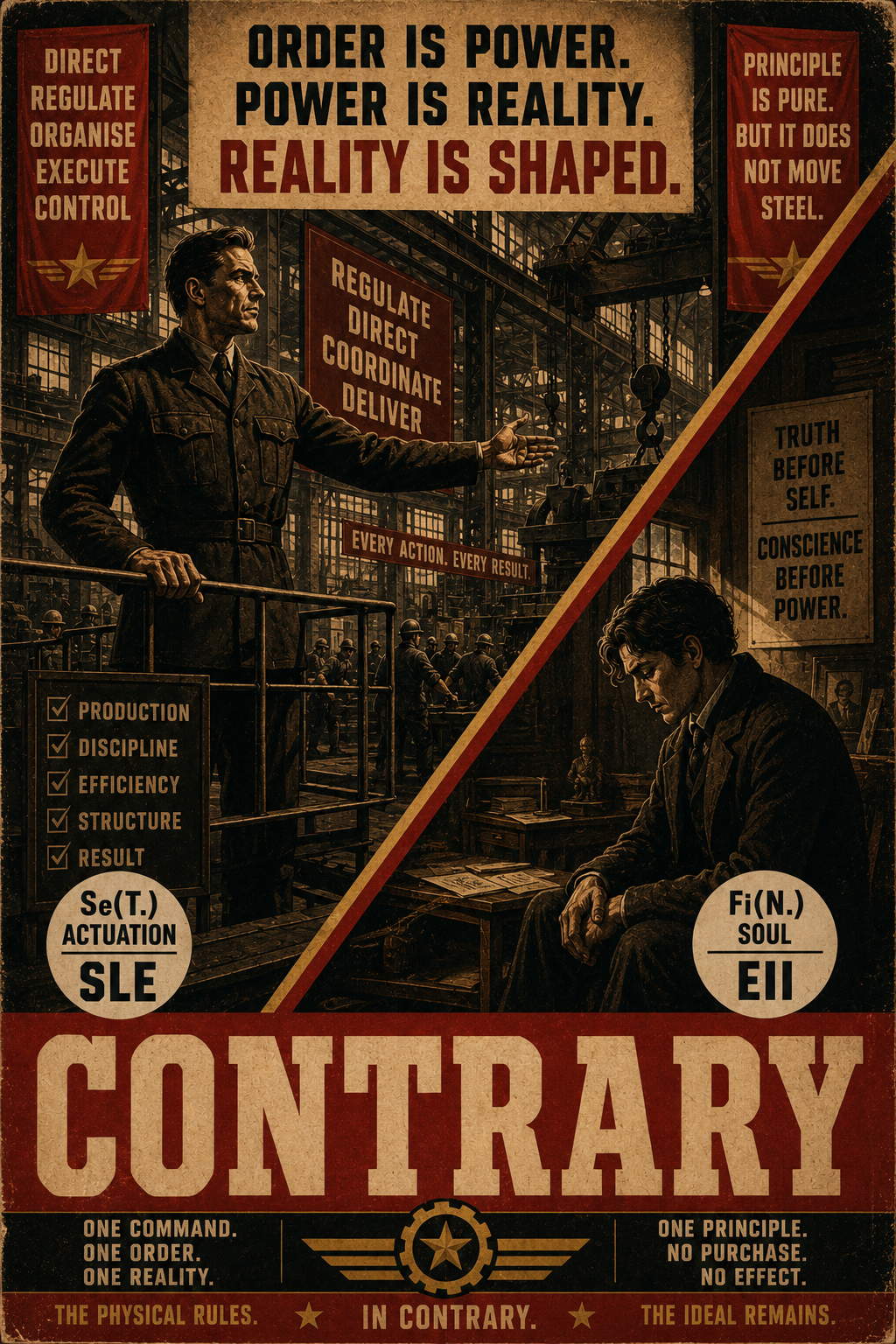
SLE Base: Se(T.) Actuation. Regulatory force applied to shape the physical environment within concrete parameters. This is the central point of the type's confidence.
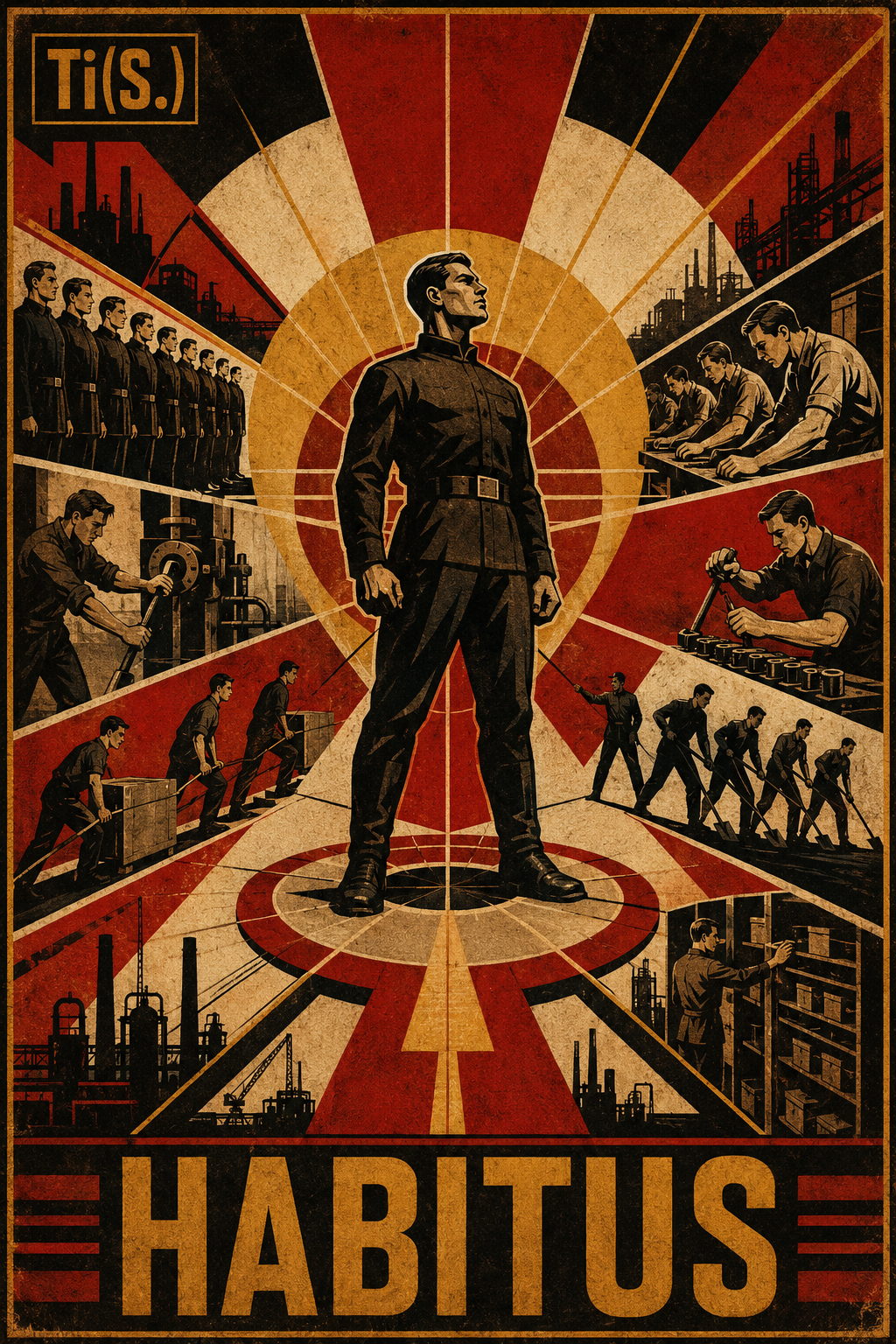
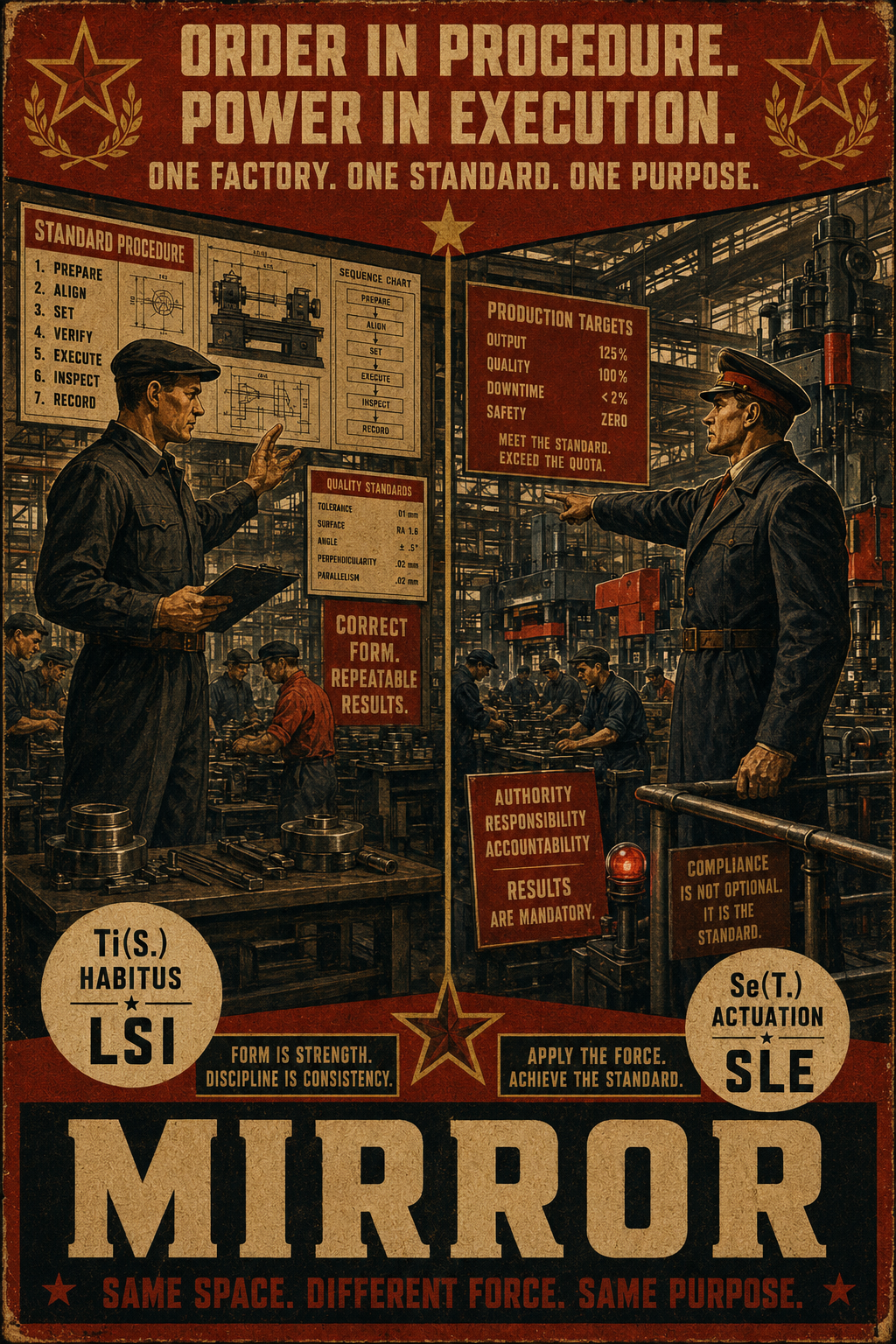
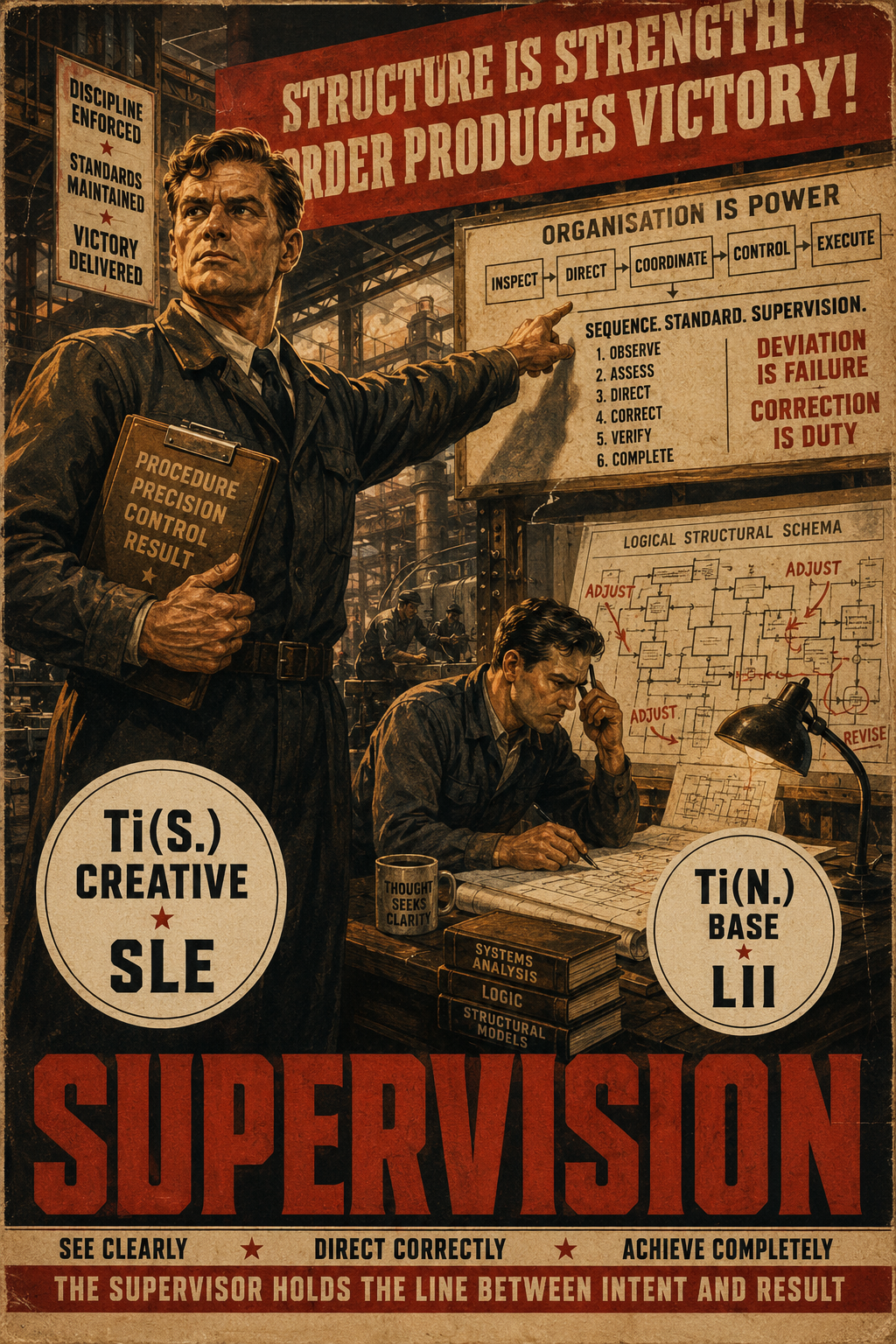
SLE Creative: Ti(S.) Habitus. Embodied forms, codified habits, and the tangible structure of subjects, groups, or systems. This is the tool the type uses to express and support the Base.
SLE Ignoring: Si(T.) Observation. Selective intake of external sensory data, attending to functional details in the physical field. Capable but not treated as the main point.
SLE Demonstrative: Te(S.) Praxis. Hands-on methods, practical experimentation, resources, and material workflow improvement. Strong and often automatic in the background.
Supported positions that help SLE frame action through conceptual possibility, detached structure, strategic timing, and workable reasoning.
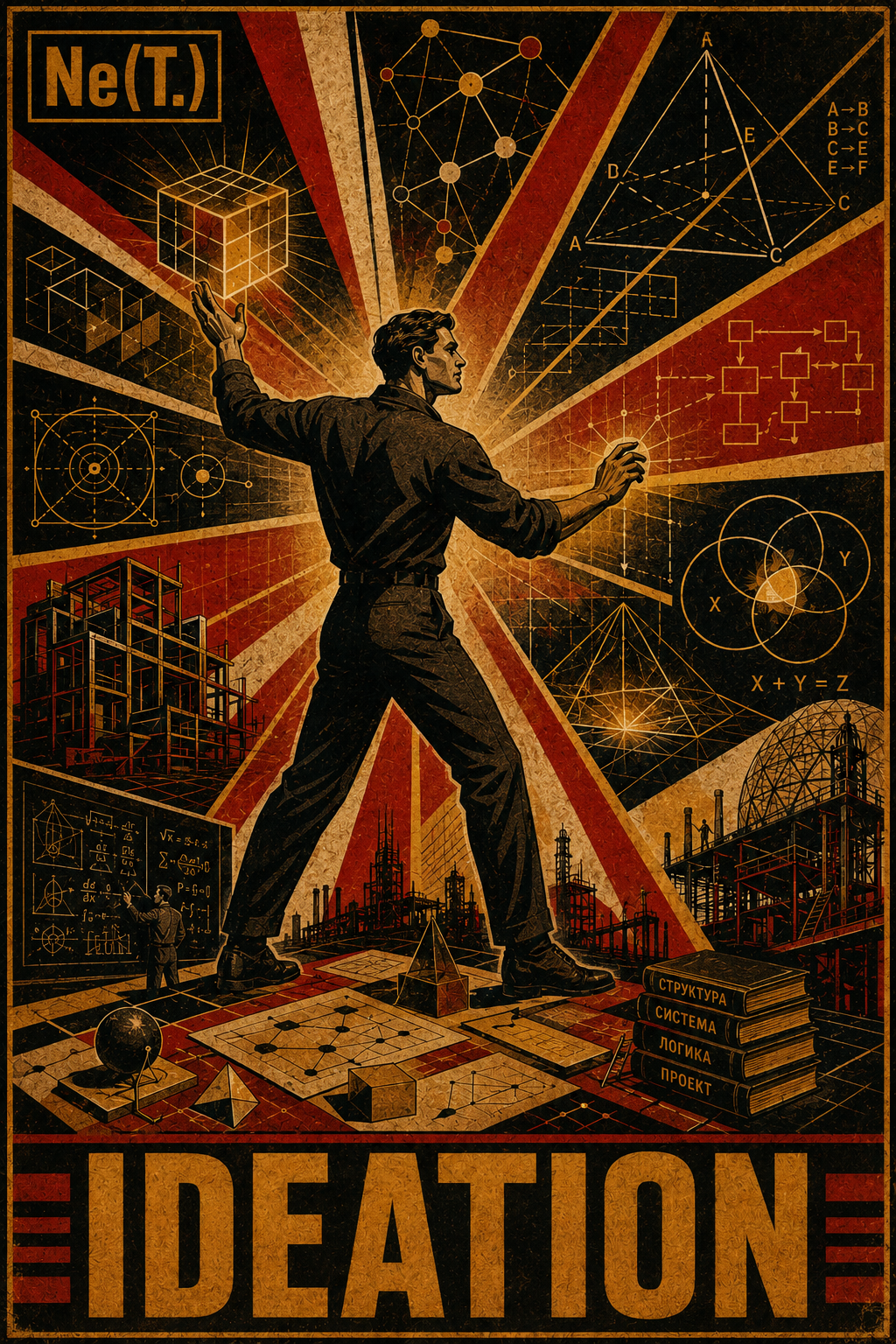
SLE Correspondent: Ne(T.) Ideation. Active conceptual generation, brainstorming, and manipulation of semantic possibilities. Available as a conscious support, but less central than the A positions.
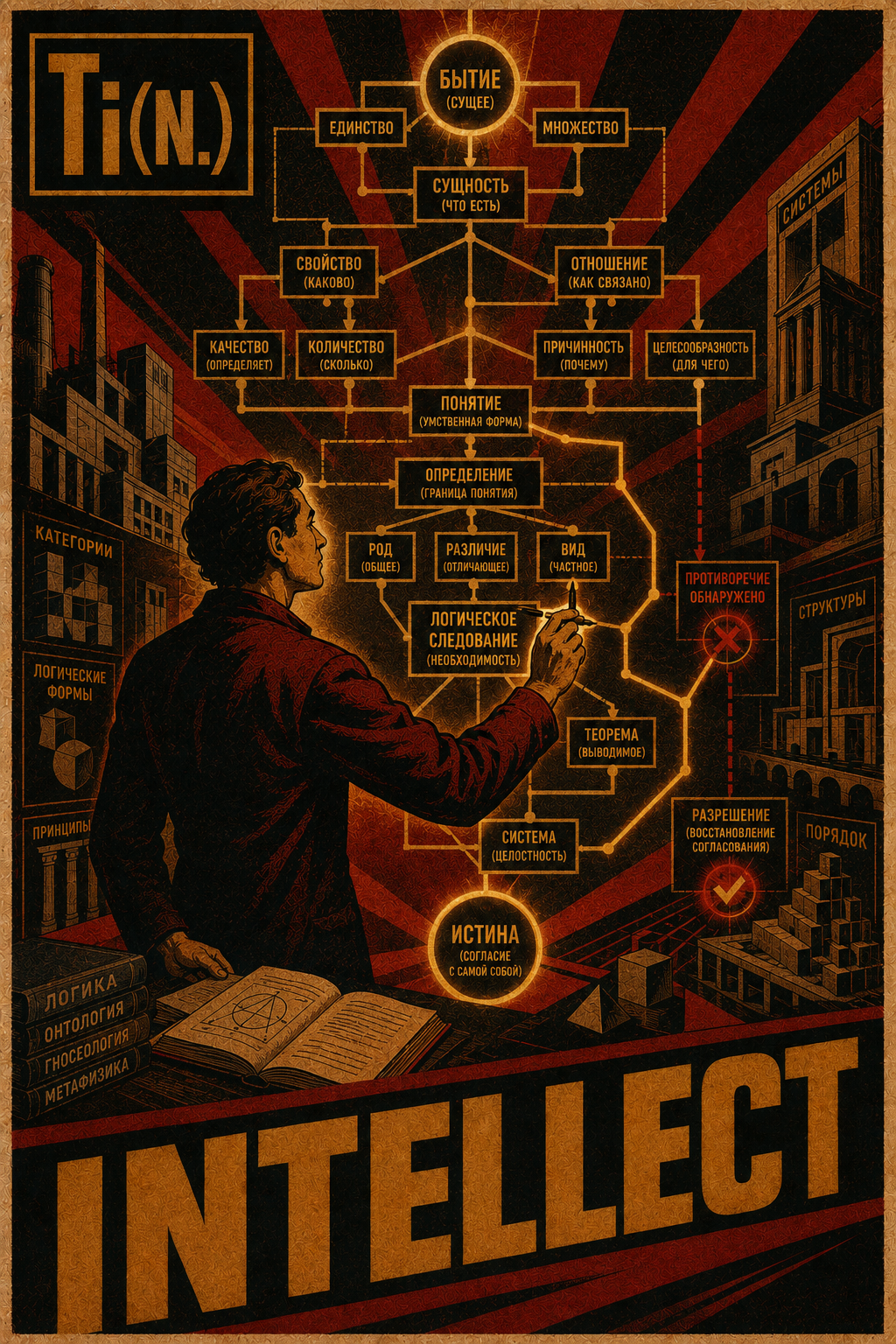
SLE Collaborative: Ti(N.) Intellect. Linguistic framing, interpretive schema, and coherent articulation of concepts. Works as a deliberate auxiliary route.
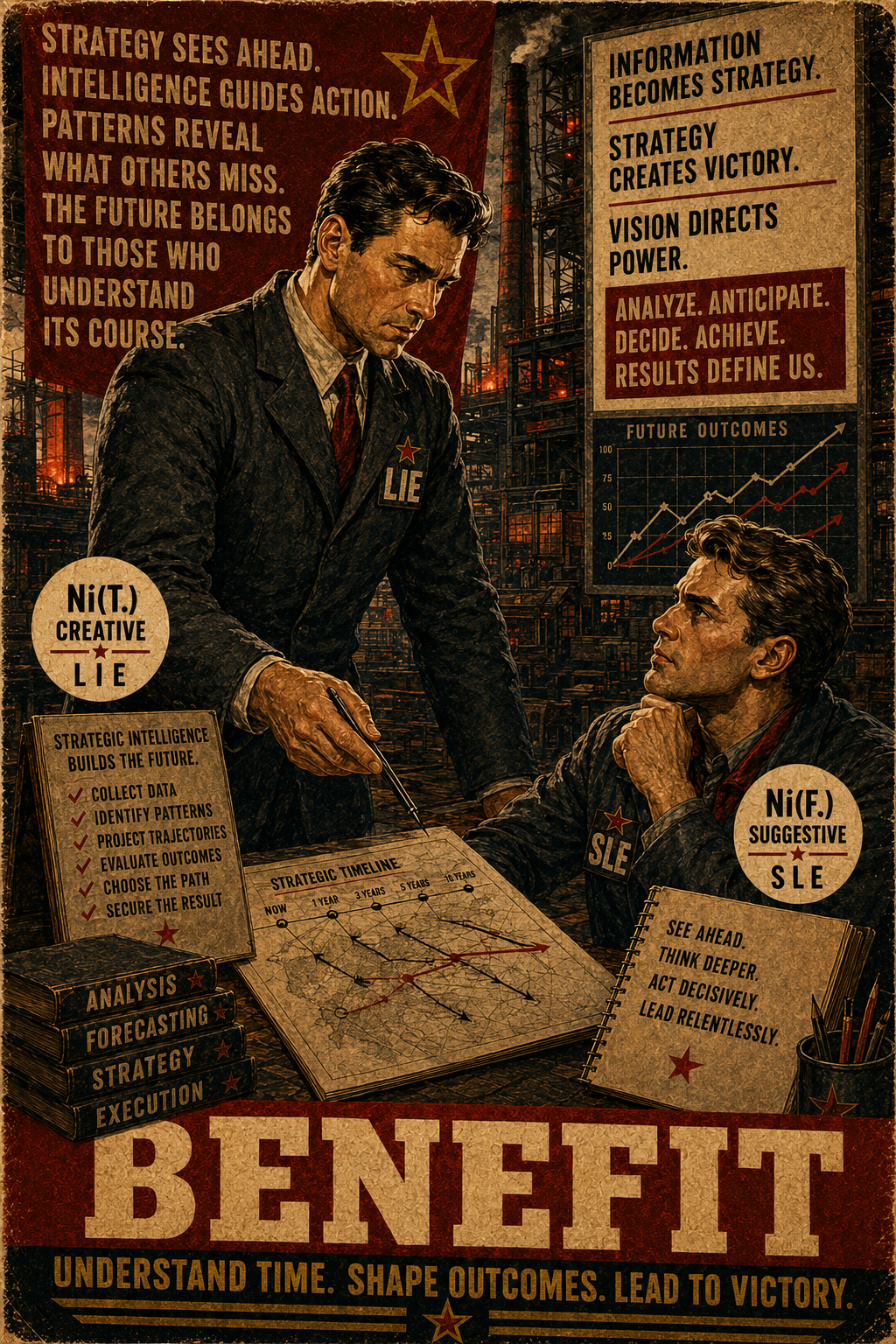
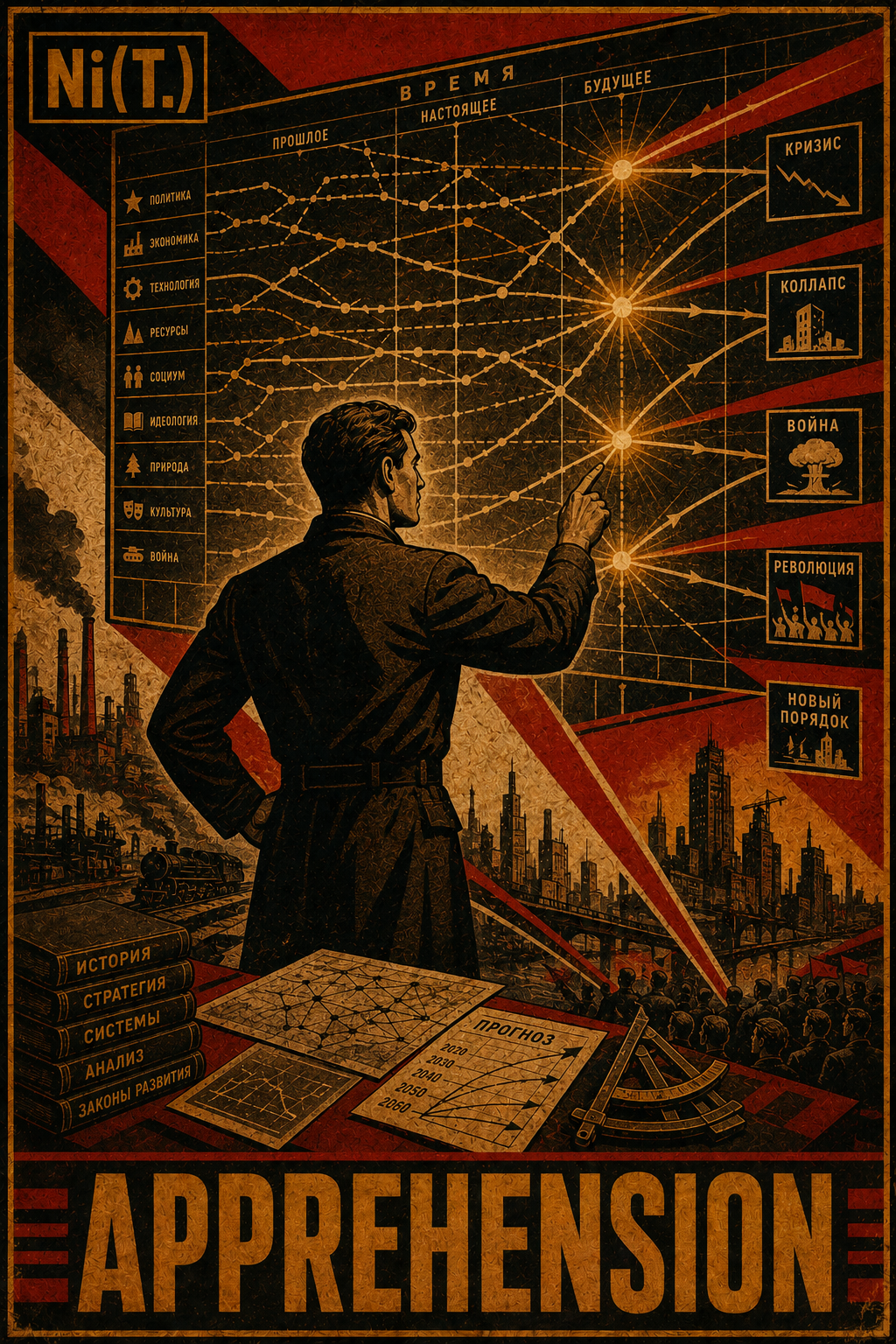
SLE Compensatory: Ni(T.) Apprehension. Strategic and temporal understanding of how events are likely to unfold over time. Helps cover practical or structural gaps when needed.
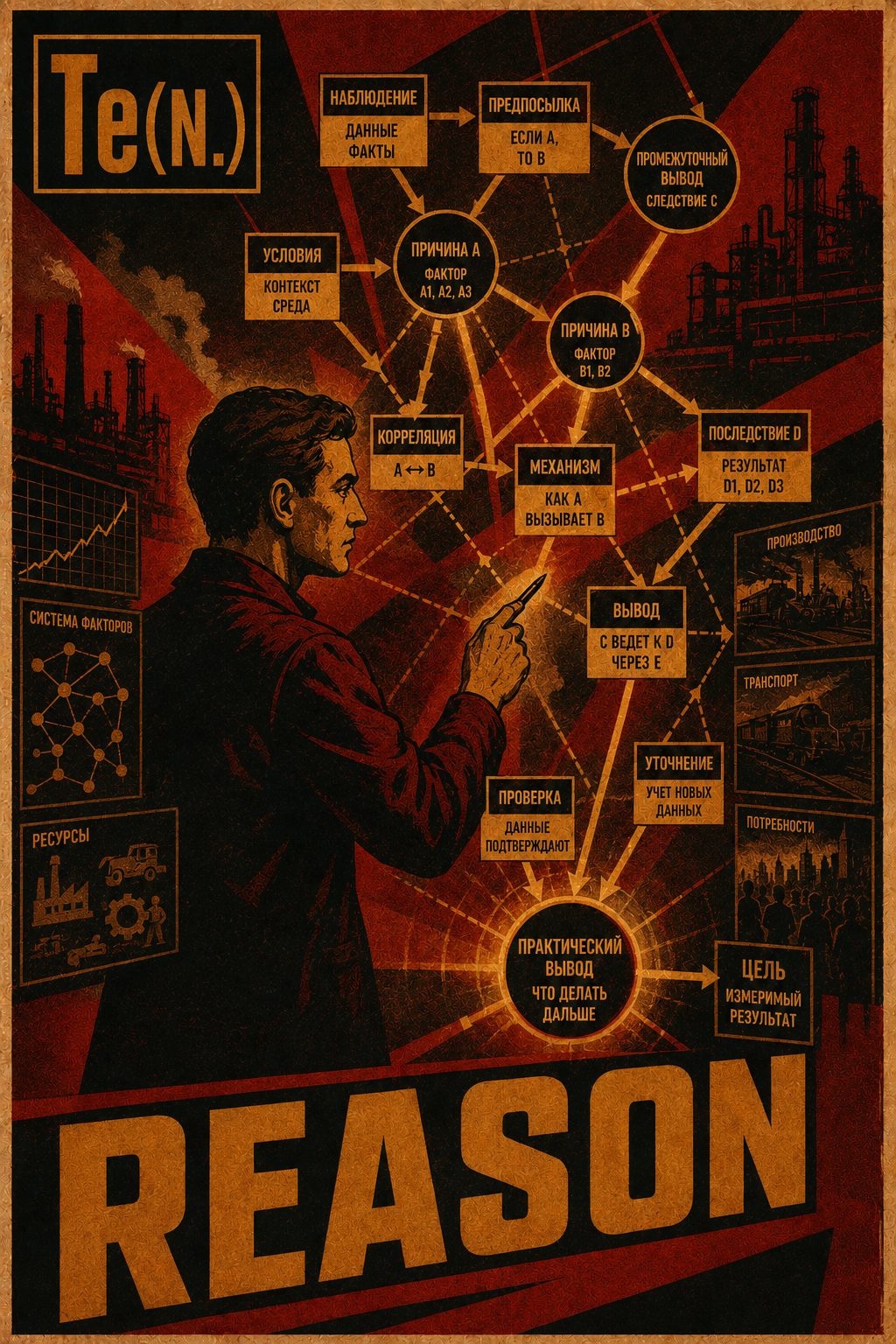
SLE Instrumental: Te(N.) Reason. Fact propositions, informal logic, productive aims, and workable strategic formulations. Useful and deployable, especially in service of stronger aims.
Contrasting positions that add visceral drive, personal affinity, bodily stimulus, and expressive mood to the force-oriented profile.
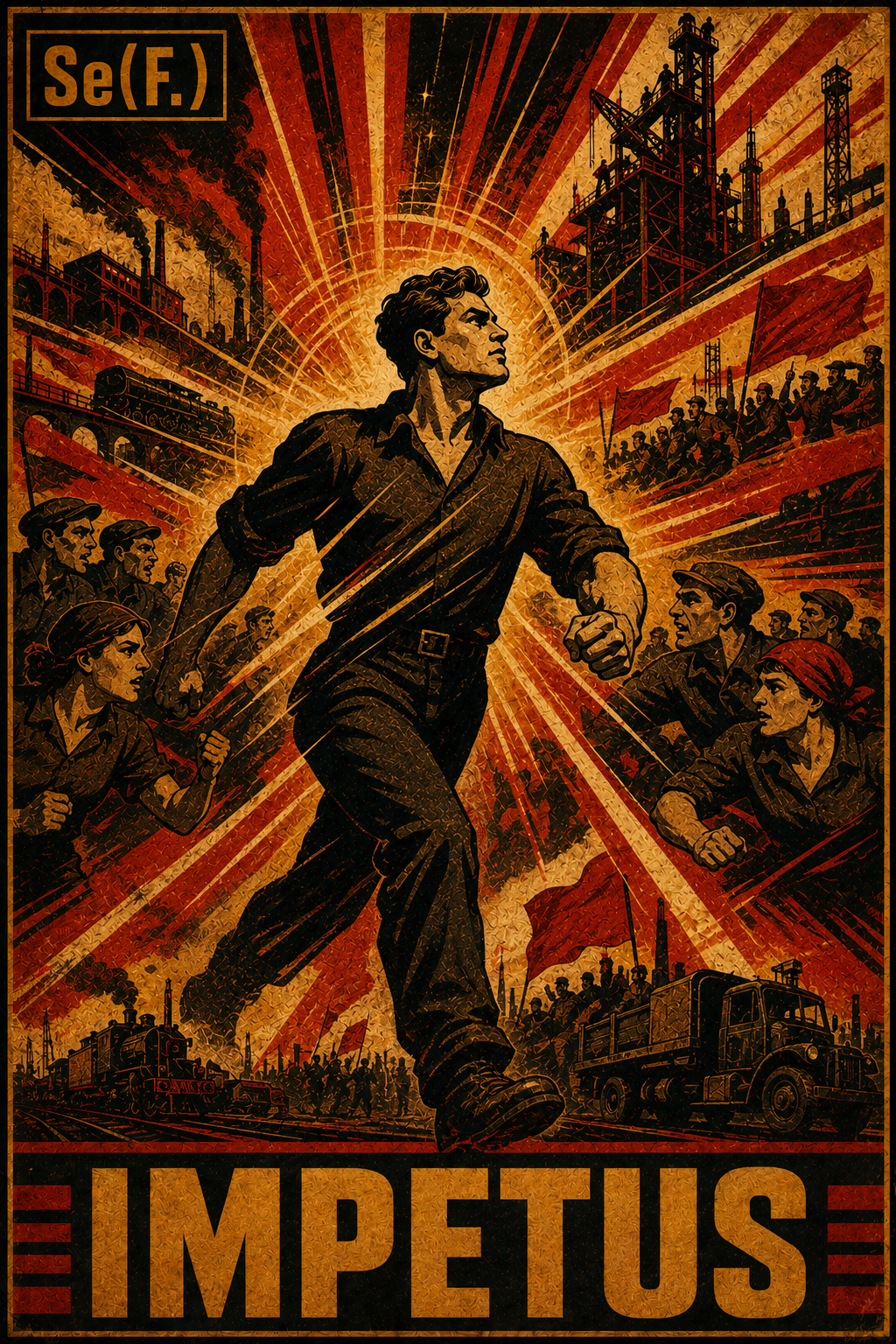
SLE Subsidiary: Se(F.) Impetus. Visceral mobilizing impulse, turning stored energy toward concrete aims and exertion. A secondary shading of the profile rather than the lead voice.
SLE Negligent: Fi(S.) Animus. Stable visceral attitudes of affinity or aversion toward people and concrete objects. Present but not normally prioritised.
SLE Prompting: Si(F.) Stimulation. Subjective bodily stimulus, vitality, comfort, and the felt charge of physical experience. Can be activated by context or by other people.
SLE Galvanizing: Fe(S.) Affect. Physiological mood, expressive atmosphere, aesthetic signals, and shared sensory feeling tone. A background primer that can energise the type indirectly.
The lower-capacity region: inner inspiration, values, symbolic time, and emotional meaning as the field of need and complementarity with IEI.
SLE Role: Ne(F.) Inspiration. Inner potentiality, spontaneous creative impulse, and imagined paths for growth or novelty. Performed consciously when the situation asks for it.
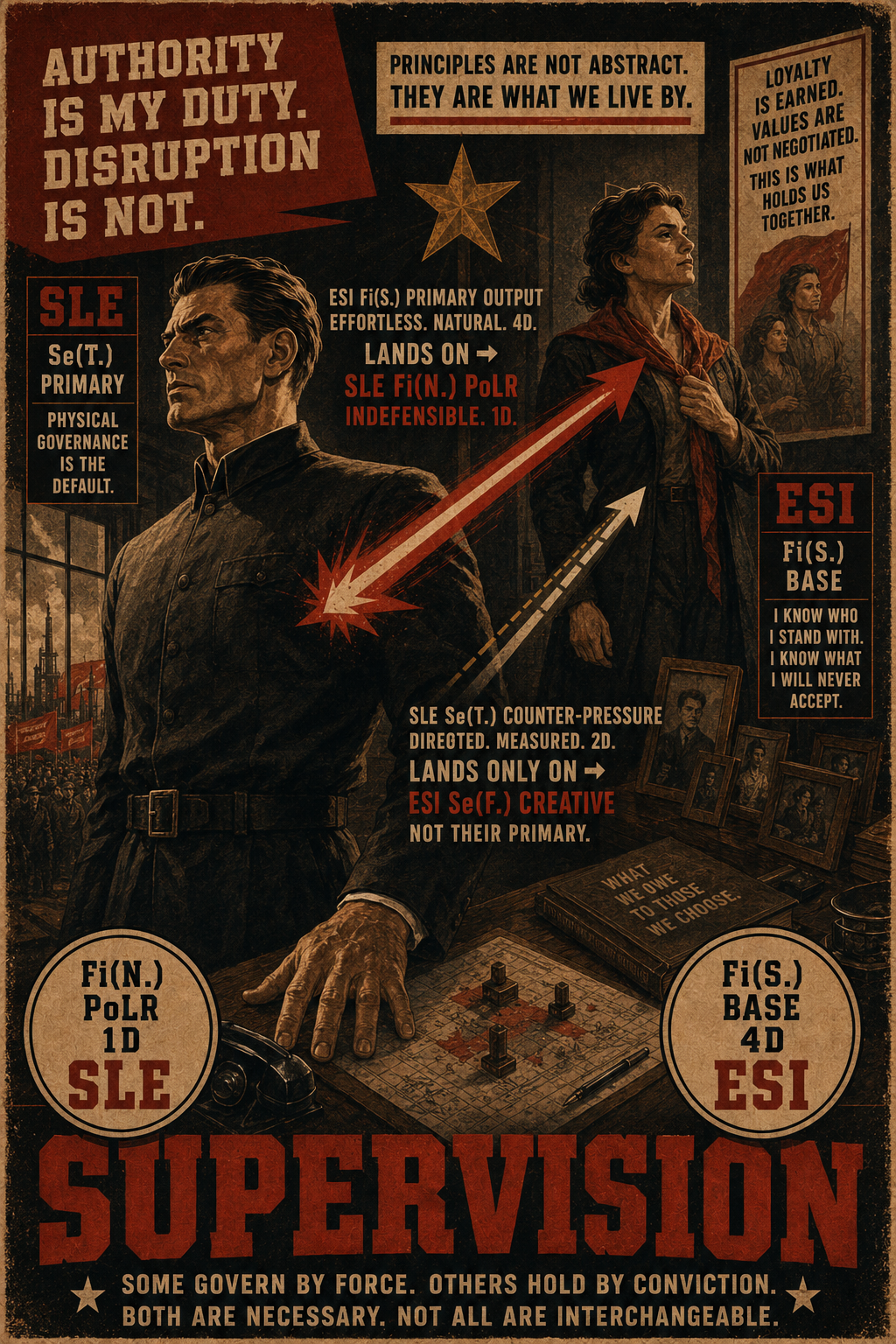
SLE Vulnerable: Fi(N.) Soul. Inner values, ideals, convictions, and abstract notions of what is inherently worthwhile. A sensitive point where pressure can land hard.
SLE Suggestive: Ni(F.) Reverie. Inner scenarios, narrative significance, symbolic subtext, and reflective imagination around events. A receptive point: what the type most welcomes from others.
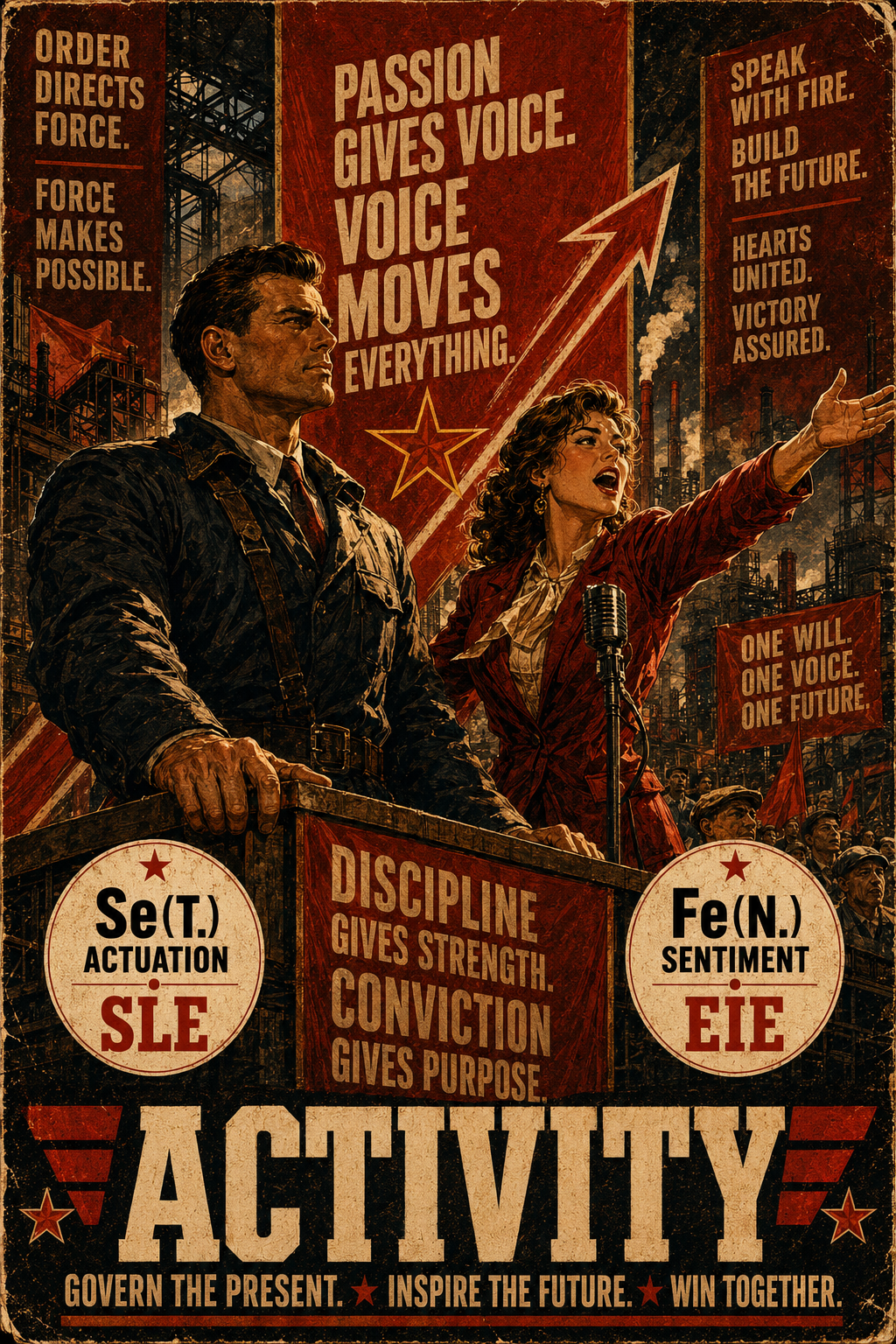
SLE Mobilizing: Fe(N.) Sentiment. Inner opinions and passions conveyed through dramatic rhetoric, symbolism, and emotional meaning. A low-capacity but energising point that responds to encouragement.
The Type In Life
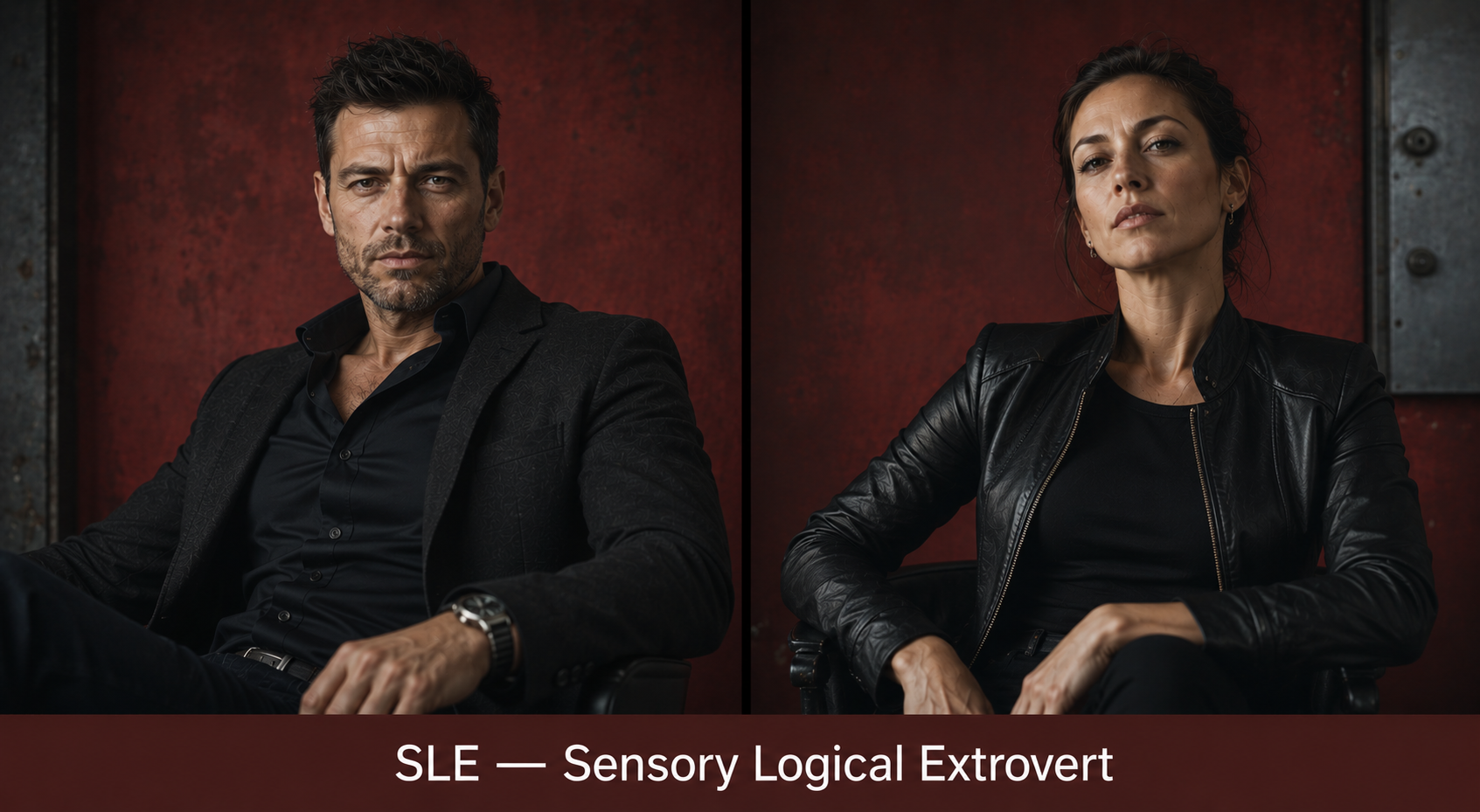
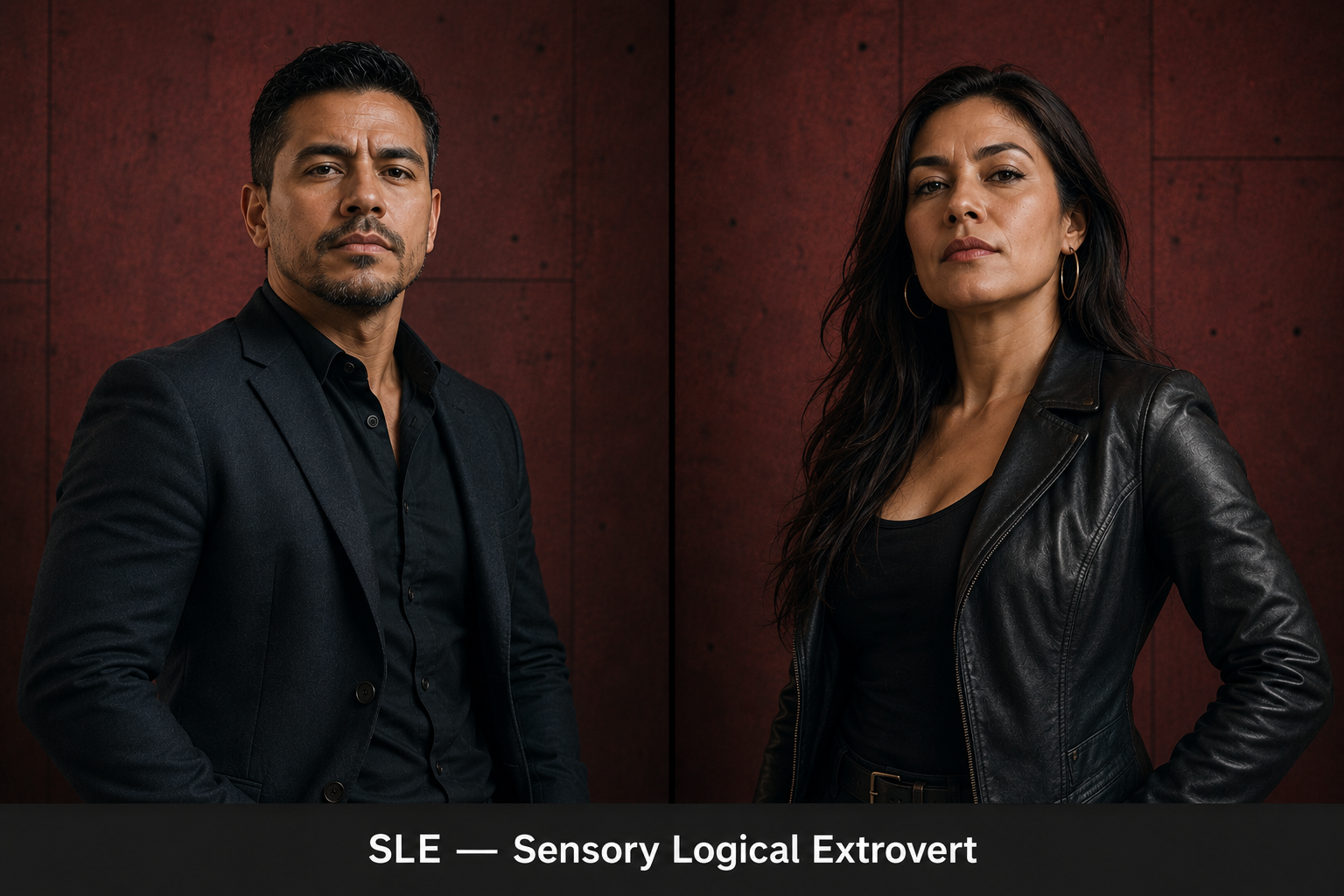
Andre moves fast and reads terrain well — physical terrain, social terrain, the terrain of a negotiation or a dispute. He is not reckless; he calculates quickly rather than carelessly, and the speed looks like confidence because it is confidence. He controls the pace of situations he is in. Not always visibly, but effectively: a word here, a shift there, and the frame changes. People either find this reassuring or destabilising, depending on whether they are on the same side of the objective. He is rarely unclear about the objective.
Vera does not wait to be given authority. She takes it, naturally, when the situation is unclear and someone has to move. She is direct without being blunt — she gives information the way it needs to arrive to produce the right result, calibrated to the person. In competition she comes alive in a specific way: focused, unhurried, certain. She does not trash-talk. She performs. In the aftermath she is not triumphant in the way people expect; she has already moved on to the next thing that needs executing. The win was the point. The win is done.
Dual Relationship
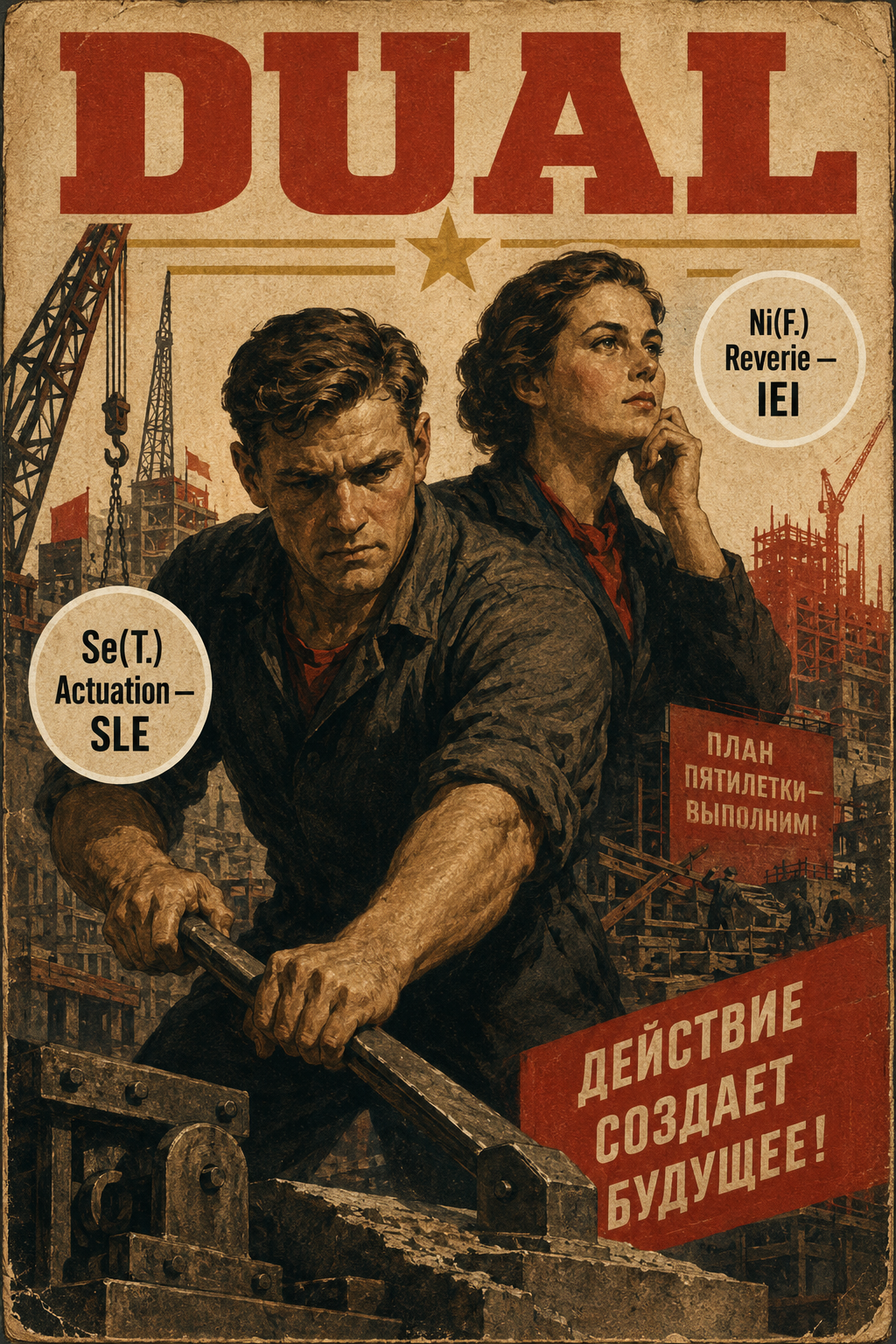
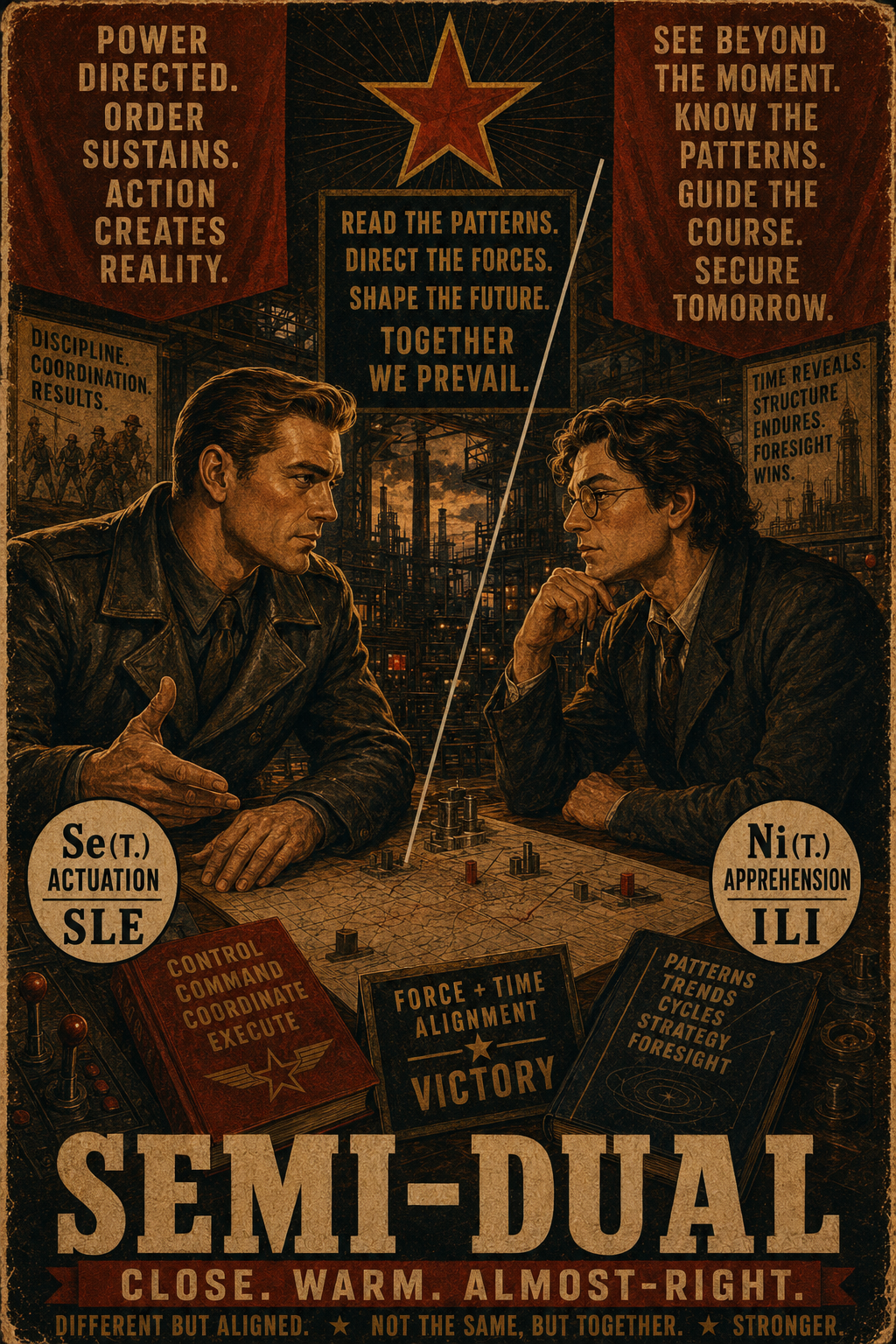
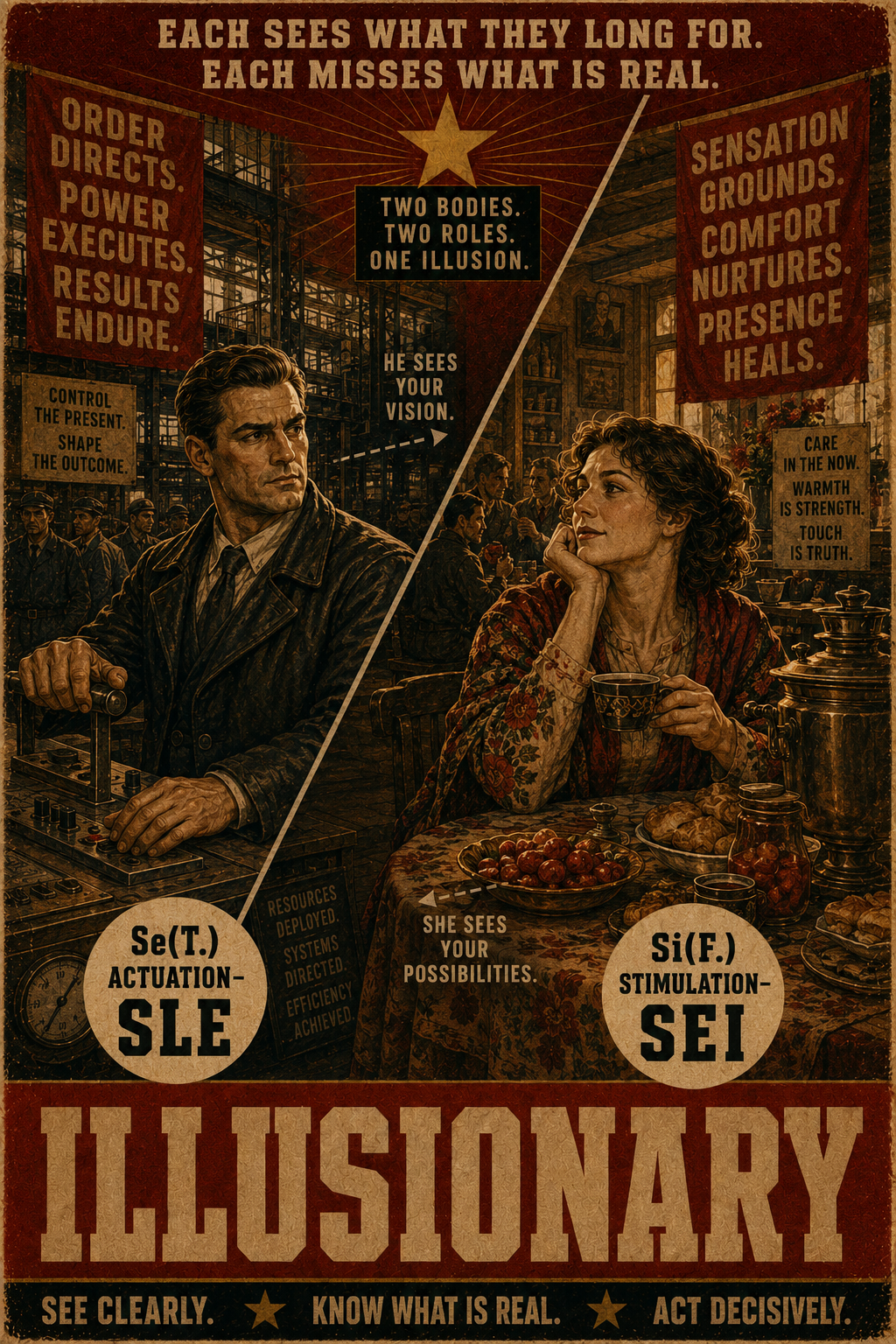
SLE's dual is IEI — The Mystic. SLE's Suggestive is Ni(F.) — Reverie: inner scenarios, symbolic timing, and reflective imagination around events. IEI leads with exactly this mode of insight.
IEI's Suggestive is Se(T.) — Actuation: regulated force, decisive action, and the shaping of concrete conditions. SLE leads with that mode effortlessly. One gives movement and protection; the other gives timing and meaning.
A Note on This Type
Model A identifies SLE as Se-leading with Ti Creative. Model-L specifies that this is Se(T.) — Actuation, the regulated mode of force that shapes concrete conditions, supported by Ti(S.) — Habitus.
This distinction matters when separating SLE from SEE. Both lead with Se in Model A terms, but SLE's Se(T.) is externally regulatory and tactical. SEE's Se(F.) is visceral, impelling, and personally charged.
For SLE, Model-L clarifies why decisive action so often comes with tactical structure: force is not merely exerted, but organised into a workable frame.
Attribution: Model-L is Kimani White's original framework. This interpretation is the author's own.