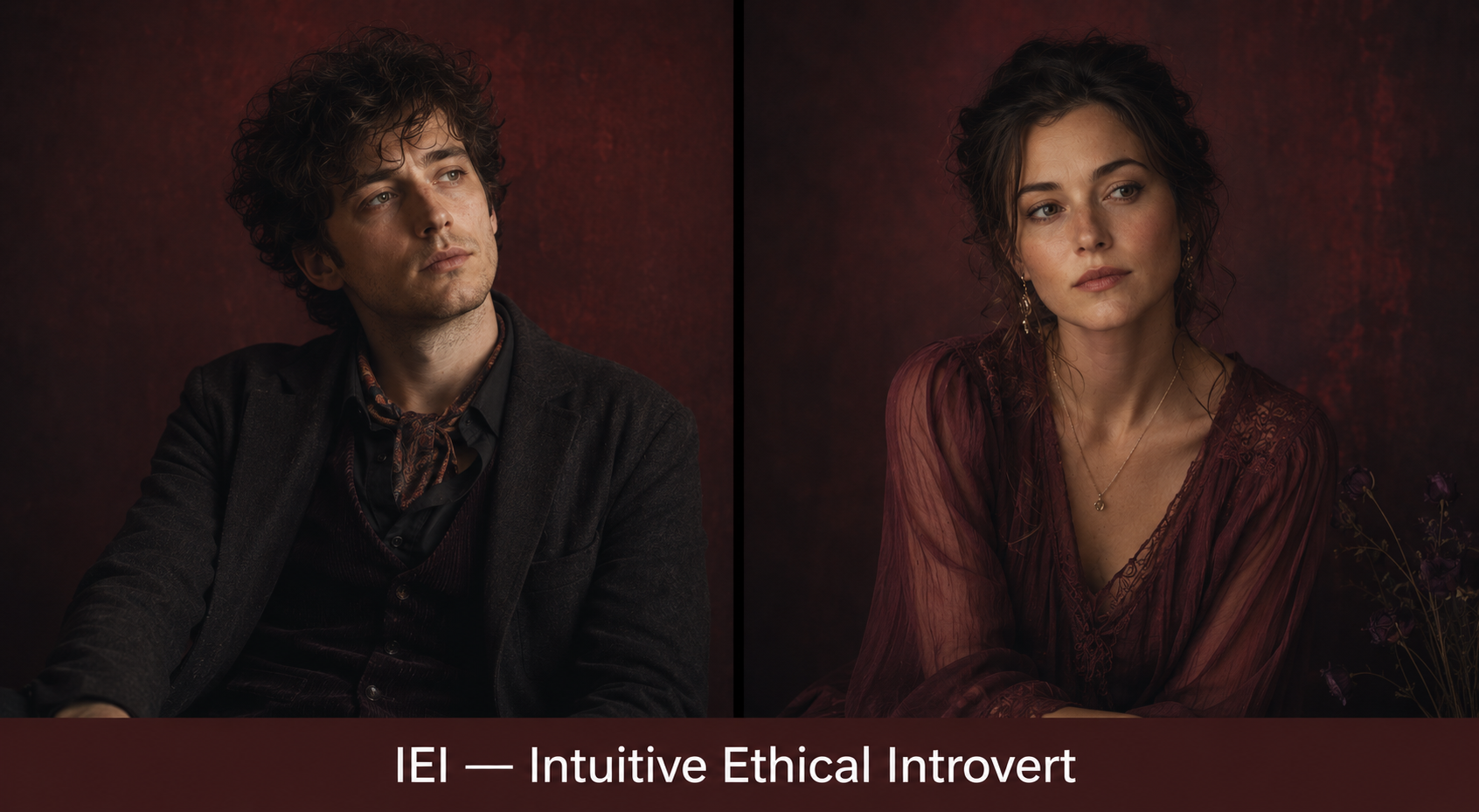
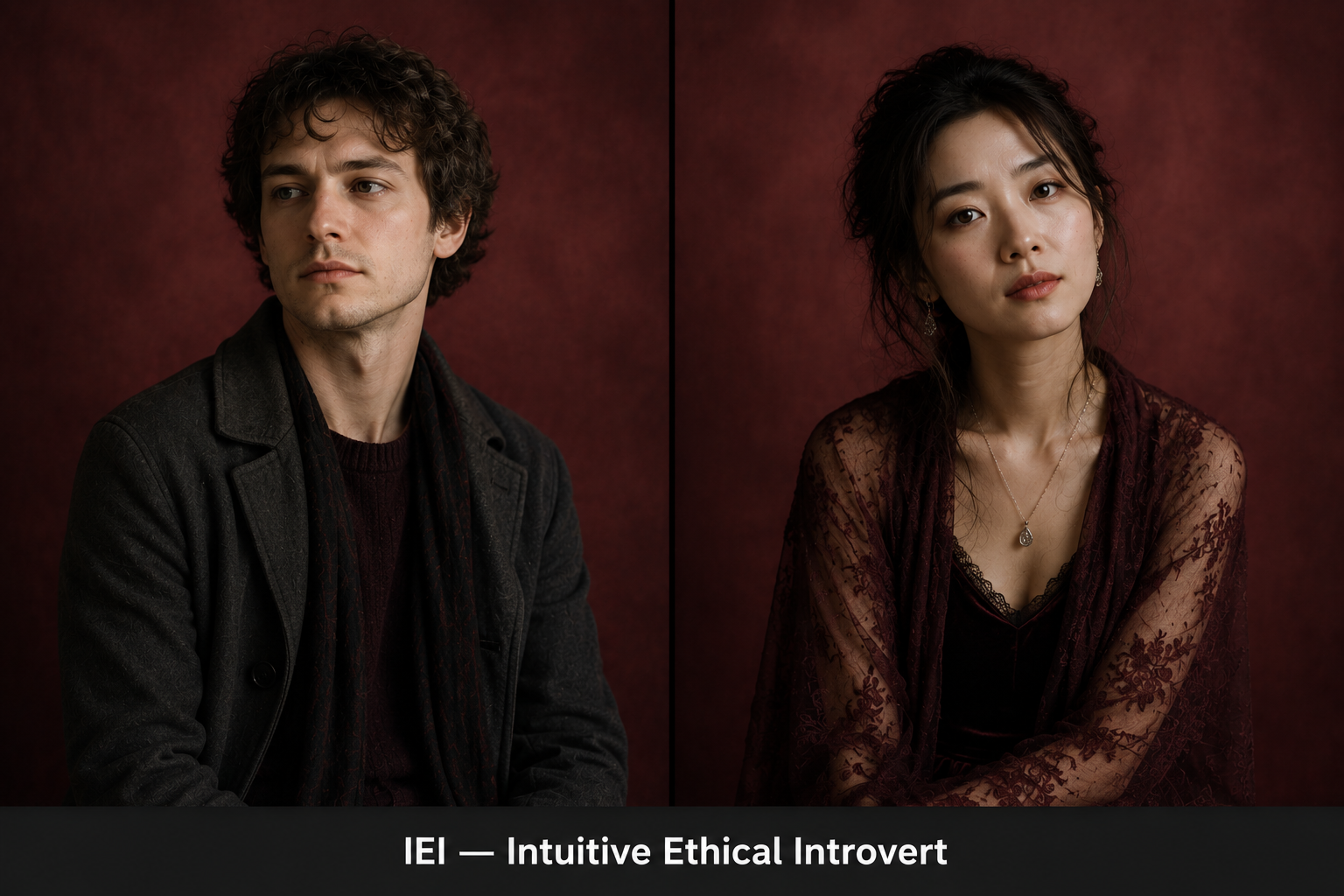
A fuller reading from the source profile, following the eight Model A positions and their Model L sub-variants.
Position 1 — Base — Ni(F.) Reverie
The IEI's fundamental mode of engaging with reality is through inner immersion in the flow of time — fantasising scenarios, reflecting on the narrative significance of events, reading the unfolding of experience in terms of its personal meaning and subtext. Ni(F.) is not the strategic detached apprehension of temporal trends that characterises Ni(T.) in the ILI but the felt, personal absorption in the stream of time as it carries significance and story. The IEI inhabits past, present and future as a continuous narrative in which they are personally implicated — what things mean, where they are heading, what they portend. Reverie is automatic and effortless — the IEI cannot help experiencing time as personally meaningful.
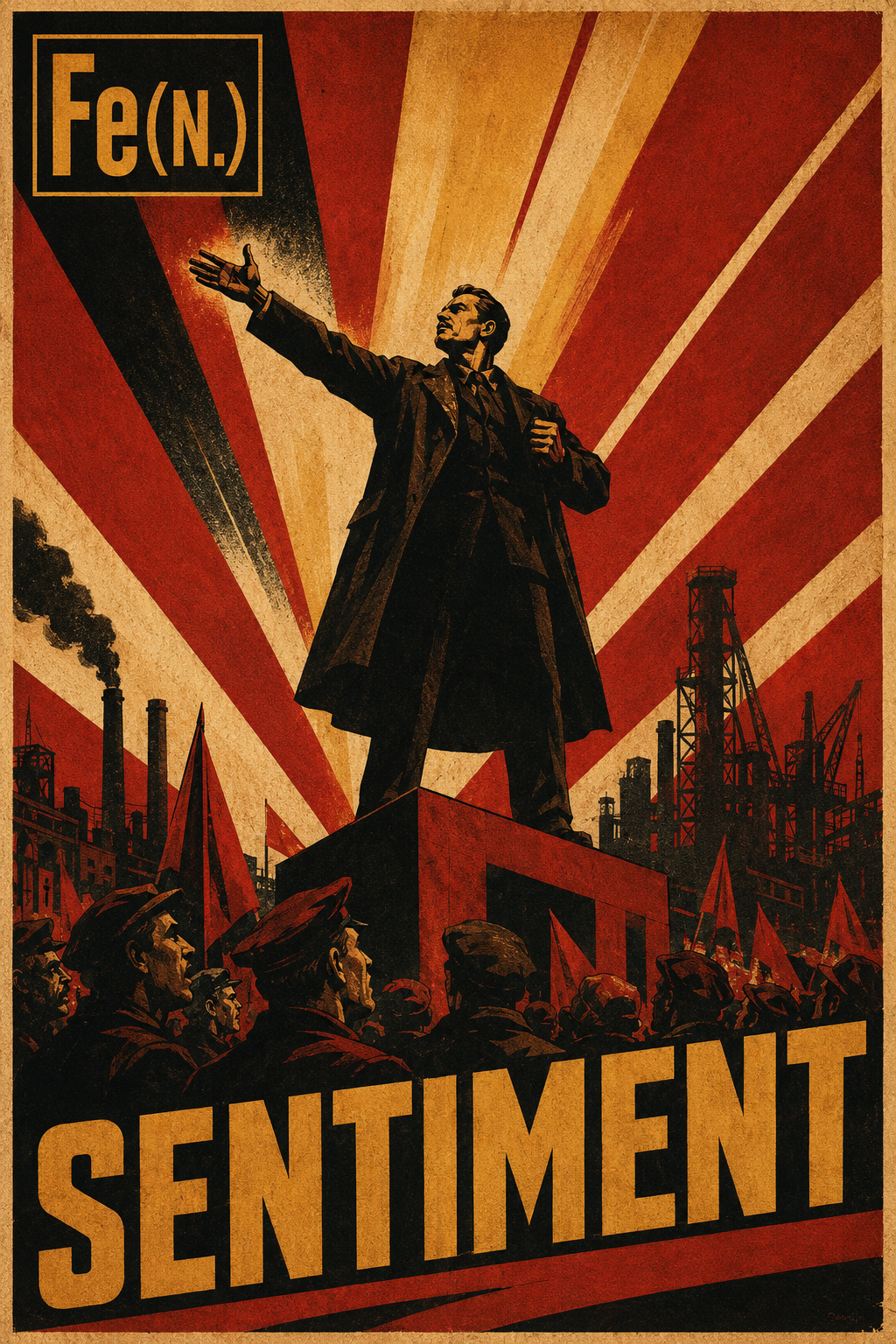
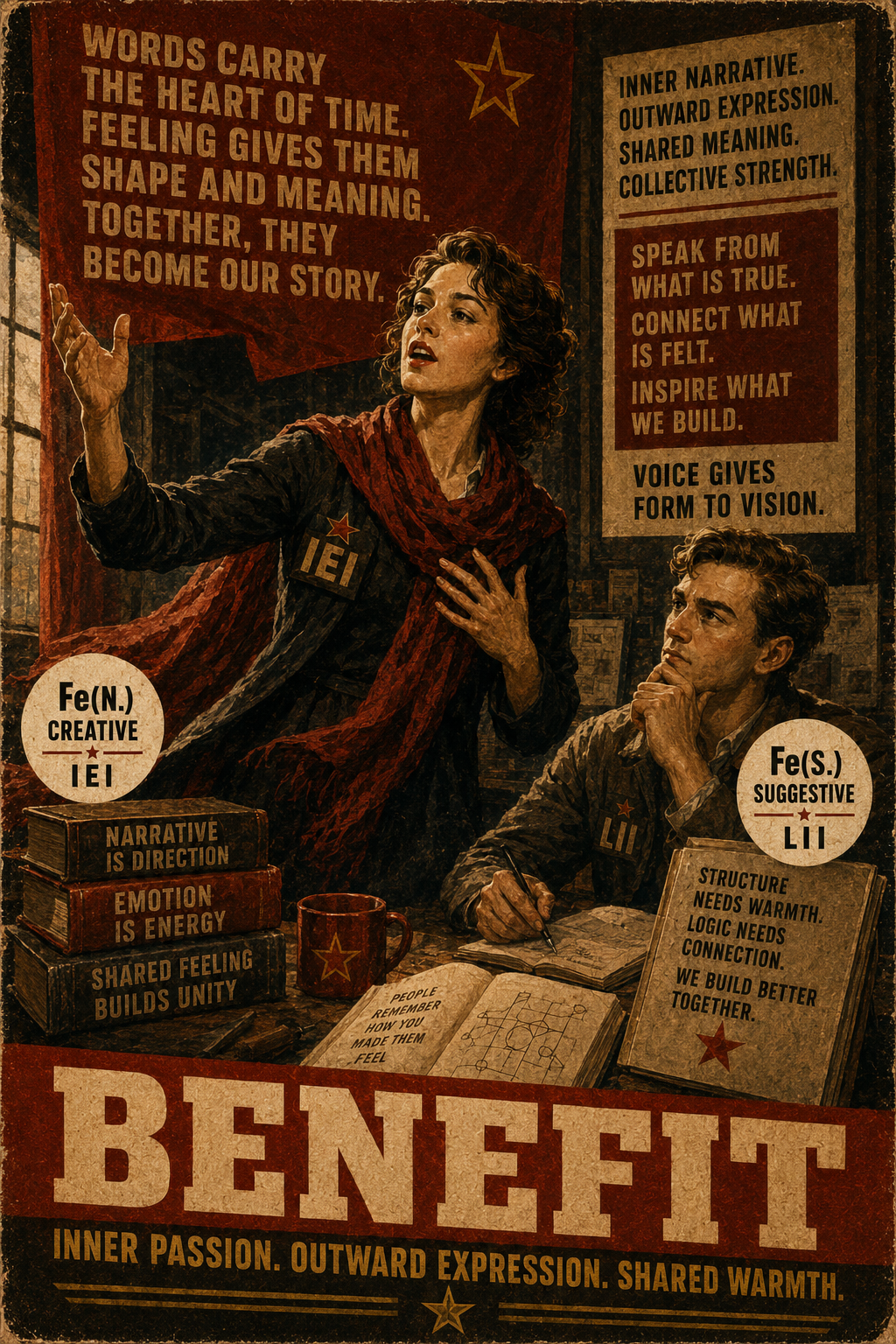
Position 2 — Creative — Fe(N.) Sentiment
In service of Reverie, the IEI deploys deeply felt emotion expressed through dramatic rhetoric and symbolic gesture — inner passion made outward, the felt significance of their inner world transmitted to others as an incitement to feel and act accordingly. Fe(N.) is more visible in behaviour than Ni(F.) — more externally expressed, more interpersonally charged — and IEIs are often experienced as emotionally intense, expressive and capable of moving others in ways that feel both personal and larger than personal. The Sentiment is not performed but genuinely inhabited: the IEI gives voice to what they have been living inside.
Position 4 — Vulnerable — Te(S.) Praxis
The IEI's point of greatest sensitivity. Te(S.) is the practical operational logic of hands-on technique and material efficiency — getting things done, managing workflows, making the physical environment function. This is the furthest territory from the IEI's natural register. Criticism of their practical competence lands hard; excessive demands for operational efficiency and material management produce stress and defensiveness. The IEI is not incapable of practical action but is not built for this kind of sustained operational effectiveness, and the gap between what is demanded and what they can reliably deliver here is a persistent source of vulnerability.
Position 3 — Role — Si(T.) Observation
The IEI's performance function — the careful discriminating attention to the actual physical condition of things that they are called upon to deploy in certain contexts but find tiring to sustain. Si(T.) sits uncomfortably against the IEI's naturally time-absorbed and atmospherically oriented register. They can attend to sensory detail and physical quality when the situation demands it but will not maintain this grounded present-focused attention a moment longer than necessary — the inner stream calls them back.
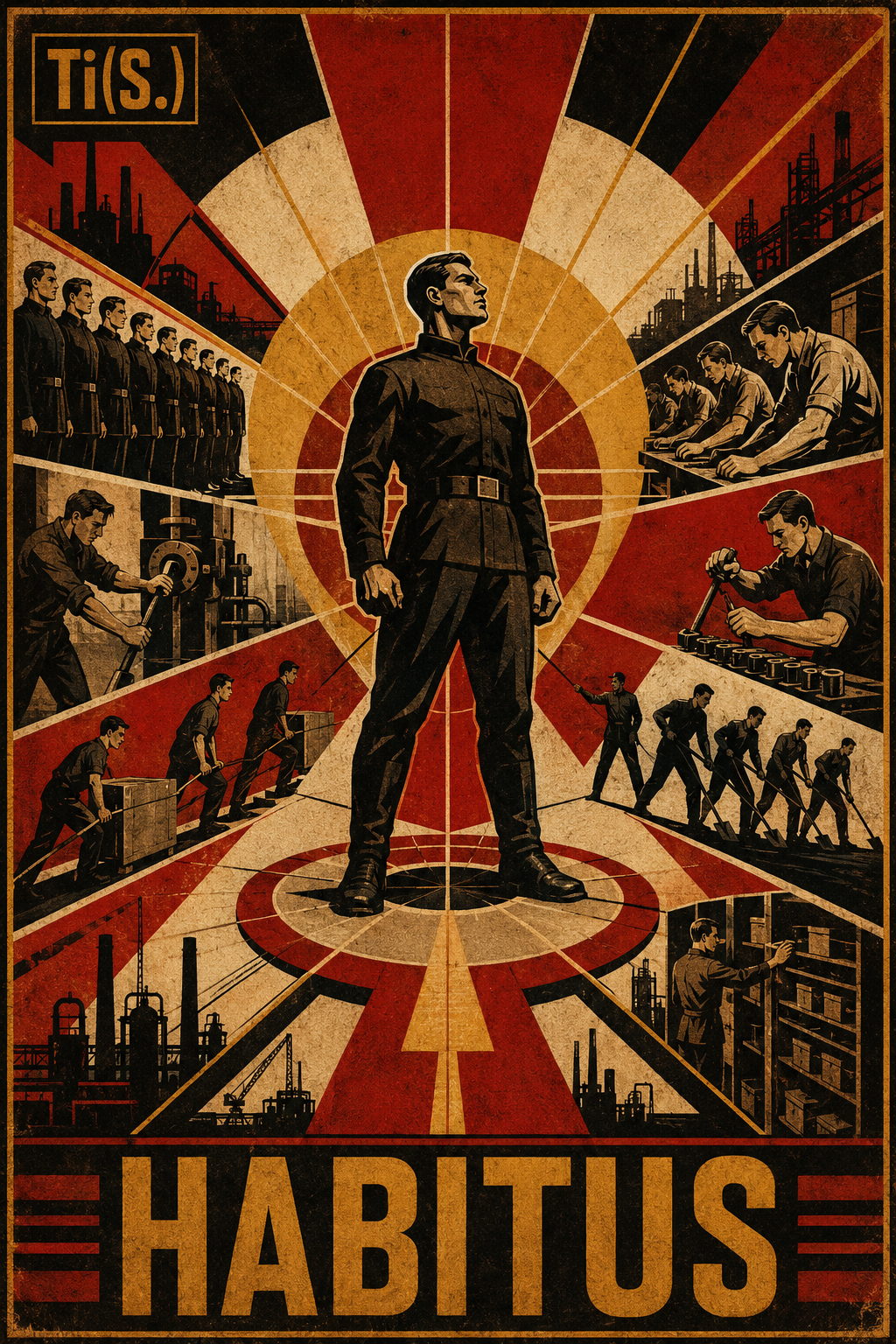
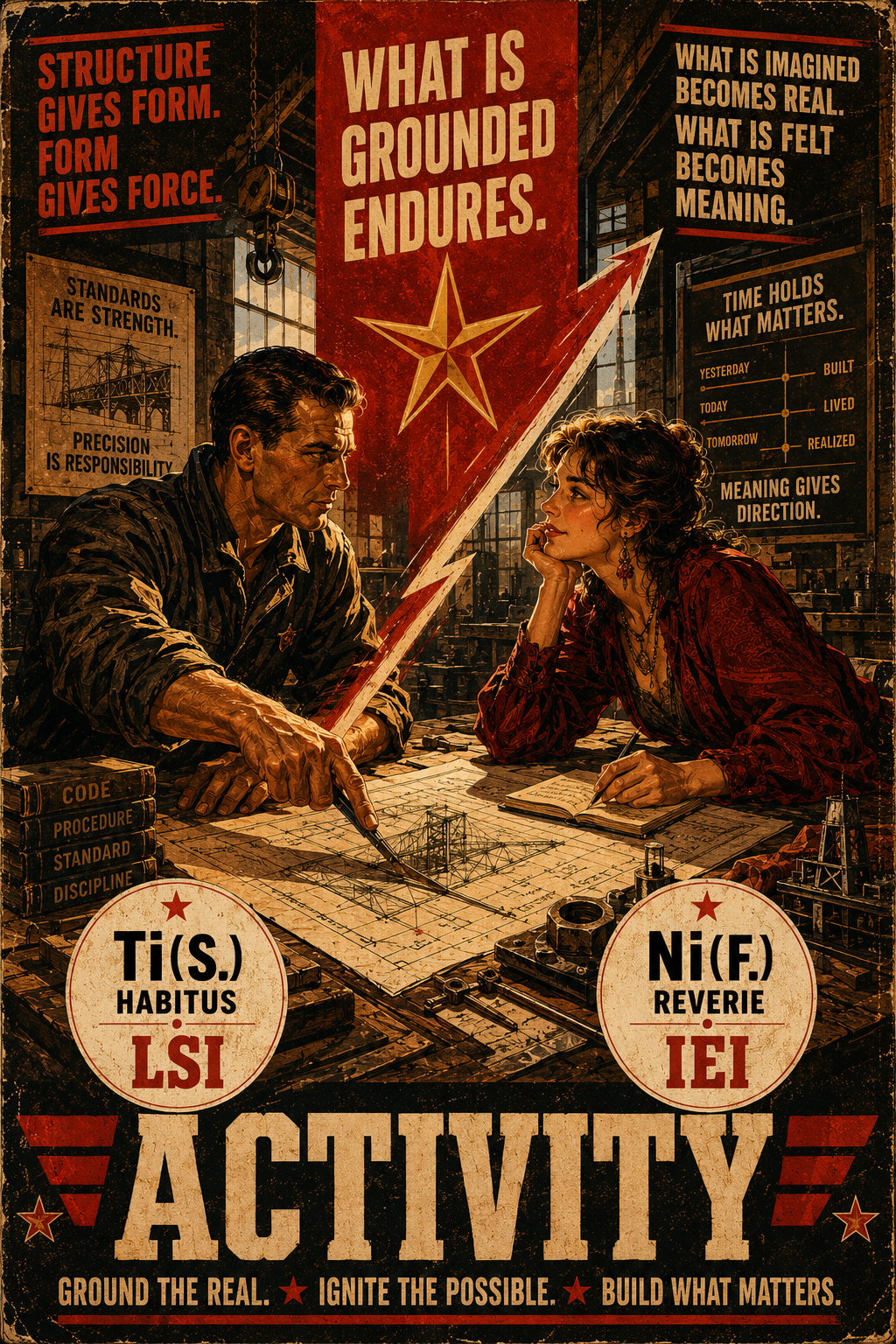
Position 6 — Mobilising — Ti(S.) Habitus
Energising and uplifting when present in others. Ti(S.) — Habitus — is the tangible defining form of organised systems and codified behavioural structures — the embodied physical logic of how things are properly arranged and conducted. The IEI cannot easily generate this themselves but responds with animation and energy when they encounter it — it gives their inner world an external structure and regularity it would not otherwise have. Together with the Suggestive it defines the IEI's interpersonal chemistry.
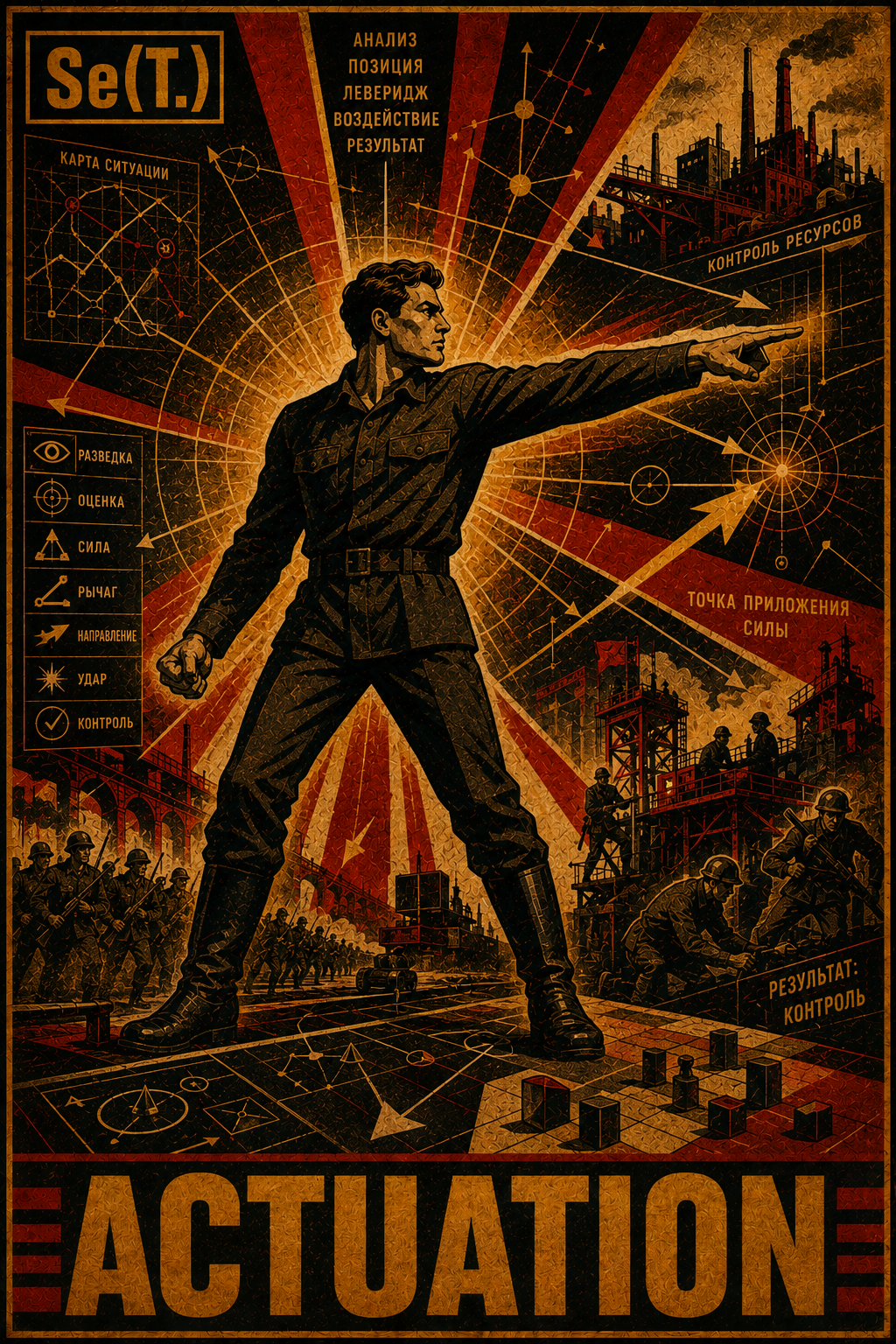
Position 5 — Suggestive — Se(T.) Actuation
What the IEI most wants and responds to most positively in others. Se(T.) — Actuation — is the regulatory deployment of force to control and shape the physical environment with disciplined strategic precision. The IEI cannot easily produce this themselves — their attention is absorbed in the inner stream of time rather than the external field of physical force — but they experience it as deeply compelling when it appears in others. Their dual SLE leads with exactly this element: the SLE's natural Actuation is precisely what the IEI's Reverie yearns to be grounded by. Where the IEI inhabits the significance of what is unfolding, the SLE shapes the physical reality in which it unfolds.
Position 7 — Ignoring — Ne(F.) Inspiration
Capable but uninteresting. Ne(F.) — the inner sense of personal potentiality and spontaneous creative impulse — is something the IEI can access but finds less compelling than the deeper temporal absorption of Ni(F.). Both are irrational internal functions but they move in different directions — Ni(F.) is immersed in the narrative flow of what is unfolding, Ne(F.) is excited by what could be explored. The IEI can generate inspiration when the base has genuine need of it but does not seek this territory as its own.
Position 8 — Demonstrative — Fi(N.) Soul
The IEI's strong background competence — deep inner values, abstract moral convictions and a foundational sense of what is inherently worthwhile operating quietly without the type fully registering them. Fi(N.) — Soul — runs in the background giving the IEI a quiet moral seriousness and inner ethical architecture that others may sense before the IEI articulates it themselves. Used to relax; returned to when confidence is low.
Overall Character
The IEI is the type most naturally oriented toward the felt significance of time — the narrative meaning of what has happened, what is happening and what is coming. They inhabit the inner stream of experience with an absorption that gives them unusual sensitivity to atmosphere, subtext, and the personal meaning of events. They are dreamers, visionaries and emotional dramatists — their inner world is rich with symbolic significance and their expression of it, through Fe(N.) Sentiment, is capable of genuine emotional force.
Their Beta quadra membership means they value passion, conviction, destiny and the willingness to hold an uncompromising position. The IEI is the Beta type least concerned with external power and most concerned with inner meaning — they bring the visionary and emotionally resonant dimension to a quadra otherwise characterised by force and decisiveness. Their IP temperament makes them receptive and adaptive — they absorb and respond rather than impose, the inner world processing what the outer world brings.
The IEI-SLE dual captures something essential about both types. The SLE provides the physical reality — the decisive force, the tactical control of the environment — that the IEI's inner narrative world would otherwise have no anchor in. The IEI provides the inner meaning — the significance, the feeling, the sense of what it all matters for — that the SLE's concrete operations would otherwise lack entirely. Each completes what the other can only partially inhabit.
Gamma Quadra
Valued elements: Te, Ni, Se, Fi
Dual Relationship
IEI and SLE
Se(T.) - Actuation
Suggestive element
Ni(F.) - Reverie
Suggestive element
IEI's dual is SLE — The Conqueror. IEI's Suggestive is Se(T.) — Actuation: regulated force, decisive action, and the shaping of concrete conditions. SLE leads with exactly this mode of force.
SLE's Suggestive is Ni(F.) — Reverie: inner scenarios, symbolic timing, and reflective imagination around events. IEI leads with that mode effortlessly. The result is a strong Beta complement: action gains meaning, and meaning gains force.
Intertype Relations
IEI In Relation
Each card uses the Model L relation image as a concrete scene: how IEI appears when its structure is doubled, completed, strained, supervised, benefited, or set beside another type.
Duality · with SLE — The Marshal
IEI and SLE
The SLE figure is doing Se(T.) — Actuation. The physical environment is being brought under controlled governance through the deliberate and calculated application of regulatory force. The SLE is not in explosive personal exertion — the force is an external instrument wielded with precise authority, the environment responding to the governance being applied to it. Every directive is measured and exact. The physical outcome is clear and specific. What the actuation itself cannot provide is any account of why this specific outcome matters in the larger flow of events — where this is all heading, what it means beyond the immediate physical transformation being executed with such precision.
Without that account the SLE's actuation is technically complete but humanly hollow — correct and effective but in service of nothing that carries felt significance beyond the immediate outcome. The force is real. The governance is exact. The meaning of it is absent.
Two IEI types encounter in each other a narrative depth that resonates completely. Every quality of inner temporal aspiration produced by one is immediately recognised by the other — the felt narrative deepens in both directions, each inhabiting the other's temporal story with the same quality of personal resonance.
What doubles: Ni(F.) inner narrative aspiration, felt temporal immersion, the personal resonance of how events unfold through imagined time. Fe(N.) rhetorical expression — the emotional voice that gives narrative its outward form — also doubles. Two instances of the same inwardly absorbed narrative mode occupying shared inner space.
Same structural rule. EIE leads with Fe(N.) and creates with Ni(F.). IEI leads with Ni(F.) and creates with Fe(N.). Same two functions, same N./F. sub-variant, reversed priority.
EIE leads with Fe(N.) Sentiment and creates with Ni(F.) Reverie. The EIE draws on inner narrative vision in service of rhetorical emotional incitement — felt temporal significance as the fuel that gives dramatic address its depth and charge. The Ni(F.) supplies the vision; the Fe(N.) shapes it into incitement aimed at an audience. Narrative is the instrument. Rhetoric is the point.
Same structural rule. LSI's Ego fills IEI's Super-Id with inverted priority; IEI's Ego fills LSI's Super-Id with inverted priority.
LSI leads with Ti(S.) Habitus and creates with Se(T.) Actuation. The IEI's Super-Id seeks Se(T.) as Suggestive — what IEI most deeply wants — and Ti(S.) as Activating. LSI's embodied procedural structure energises the IEI, giving the inner narrative felt weight and concrete grounding; the regulatory external force that flows from LSI's structural authority is what the IEI most wants — it gives the narrative vision physical reality and the capacity to act.
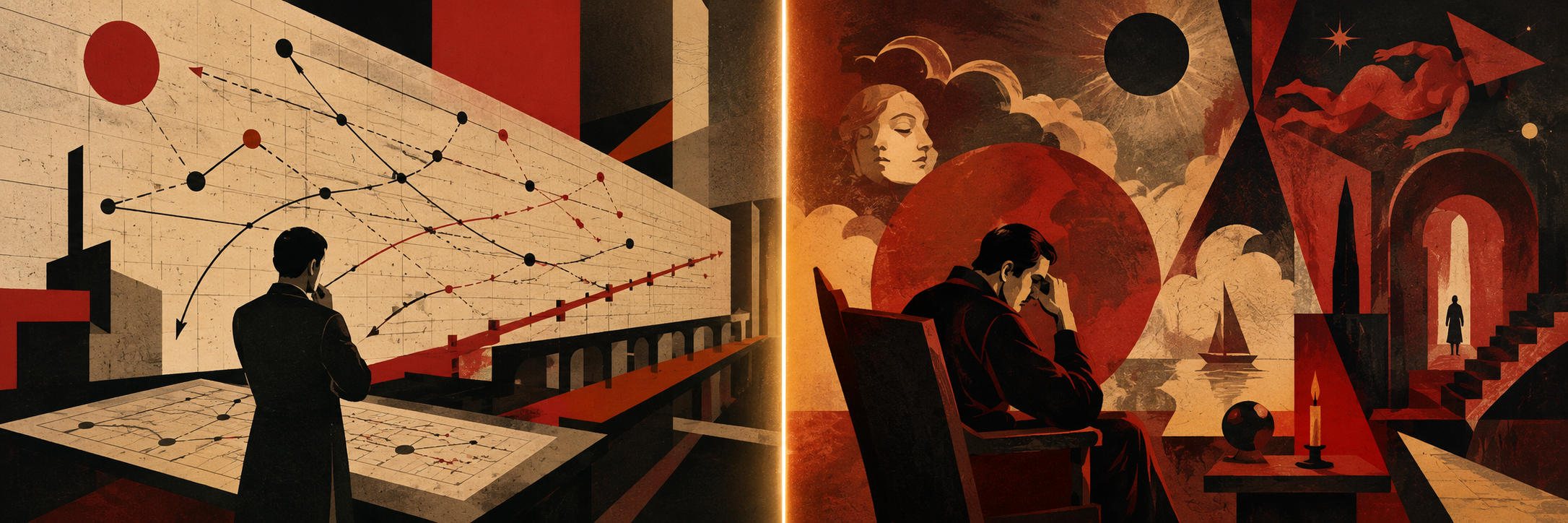
The ILI and IEI are both doing Ni. Both have a depth of temporal intuition that other types rarely match — both oriented toward what lies beyond the immediate present, both capable of inhabiting the domain of trajectory and consequence with genuine seriousness. The Kindred recognition between them is real and often felt as genuine relief — both know what it is to be seriously focused on the non-present in a world that mostly is not.
The ILI's Ni(T.) is the rational/detached deployment of an irrational element — intuition as nonverbal strategic comprehension of how real events are actually unfolding over time. The temporal flow is tracked from the outside as objective pattern: where is this trajectory actually heading, what are the strategic implications, how are things likely to play out. The ILI apprehends the flow of events as external reality to be read and understood.
Same structural rule. Each type's leading function provides the right element, wrong sub-variant for the other's Suggestive.
IEI leads with Ni(F.) Reverie — inner narrative aspiration, felt immersion in how events unfold with personal significance and subtext. The SEE's Suggestive is Ni(T.) — detached strategic apprehension of temporal patterns, nonverbal comprehension of how things are likely to unfold. IEI provides Ni(F.) instead: felt narrative vision, imagined scenarios followed with personal resonance through inner time. The element is right — the SEE genuinely values and seeks Ni — but the SEE most deeply wants the strategic temporal intelligence that gives visceral exertion direction and foresight, and what arrives is narrative vision that is vivid and felt but without the detached strategic clarity most deeply sought. Genuinely meaningful. Slightly too subjectively immersed and less strategically definite than most wanted.
The SEI and IEI can work alongside each other. Both are warm. Both are inwardly absorbed. Both are operating from genuine felt inner experience rather than from cool external analytical attention. Neither produces a detached objective account of anything — both are immersed in something felt from the inside, both attending to an inner world with genuine care and sensitivity. The shared F. sub-variant means both are in the involved register and that shared quality creates a genuine surface of mutual warmth and recognition. Both appear deeply present in their respective felt worlds. Both appear genuinely sensitive to qualities of experience that more detached types overlook entirely. This is what makes them Business/Lookalike in Model L — they can occupy the same warm interior space, recognise each other as genuinely felt and inwardly present types, and engage with each other's experience even while finding it consistently oriented in the wrong direction.
The SEI figure is doing Si(F.) — Stimulation. The somatic experience of the physical present is being attended to from the inside — the felt quality of bodily contact with the physical world, the vitality of immediate sensory engagement, the warmth and texture of what is actually here being inhabited through the body's own subjective felt experience. The SEI is not observing the physical environment with controlled selective precision from the outside. They are feeling it from within — absorbed in the somatic quality of what the body is undergoing right now. The physical present is the entire world of interest. What is not immediately felt in the body is simply not where the SEI's attention lives. The absorption is warm, inward and complete in the physical now.
ILE leads with Ne(T.) Ideation — detached conceptual imagination, architectural generation of concept space. In IEI's Model L stack, Ne(T.) sits at the A3 Ignoring position. IEI finds it uninteresting and unrewarding to engage directly.
Same structural rule. EII's Ni sits at position 8 — naturally used, present in background operation, not what EII orients toward as primary. IEI's Fi sits at position 8 — equally natural, equally present, equally not oriented toward.
Of the eight Quasi-identical pairings, this one produces perhaps the most convincing surface resemblance. Both types are quiet. Both are withdrawn from immediate physical and social reality. Both operate in an interior register, away from the concrete present. Both share a quality of felt inwardness — personally charged, non-broadcasting, self-contained. The mutual recognition can feel like genuine deep affinity, and in some respects it is.
Same structural rule. SLI's Si sits at IEI's Role position. IEI's Ni sits at SLI's Role position. Full strength on both sides, landing where the other strains most.
SLI leads with Si(T.) Observation — controlled selective external attention. The SLI directs receptive sensory focus onto functional physical detail: what is this material actually like, what does controlled attention reveal about its sensory qualities, what is present here that undirected perception would miss. The engagement is outward but governed — disciplined intake, not somatic immersion. The SLI is present to physical reality with precision.
Same structural rule. IEI's base Ni(F.) sits exactly at LSE's D2 Vulnerable. LSE's base Te(S.) sits exactly at IEI's D2 Vulnerable.
IEI leads with Ni(F.) Reverie — inner narrative aspiration, felt immersion in how events unfold through imagined time with personal resonance. In LSE's Model L stack, Ni(F.) sits at the Vulnerable position. LSE is genuinely inept with inner narrative aspiration, treats it with careless indifference. When IEI's felt temporal vision fills the shared space — scenarios followed with inner felt significance, the narrative thread of how things unfold attended to with personal absorption — LSE has no functional register to receive it. The narrative vision does not translate into anything the LSE's practical mode can test or apply.
IEI leads with Ni(F.) Reverie and creates with Fe(N.) Sentiment. The Fe(N.) creative flows naturally as the inner emotional expression that gives IEI's felt narrative its outward form — inner directed passion in service of narrative aspiration. The IEI is not trying to aim ESE's collective warmth into directed conviction. The emotional expression simply voices the narrative.
Supervision: Supervisee · with LIE — The Entrepreneur
IEI and LIE
IEI leads with Ni(F.) Reverie — 4d, 4p, felt narrative aspiration at maximum strength. Against LIE's Ni(T.) creative this lands on a 3d position. The IEI's narrative immersion genuinely adjusts LIE's strategic pattern reading. But this is the lesser pressure.
IEI leads with Ni(F.) Reverie — inner narrative aspiration as primary mode. The Fe(N.) Sentiment creative flows naturally as the inner emotional expression that gives that narrative its outward form: rhetorical feeling, directed inner passion, conviction shaped into address. The IEI is not trying to warm the LII. The emotional expression simply voices the narrative.
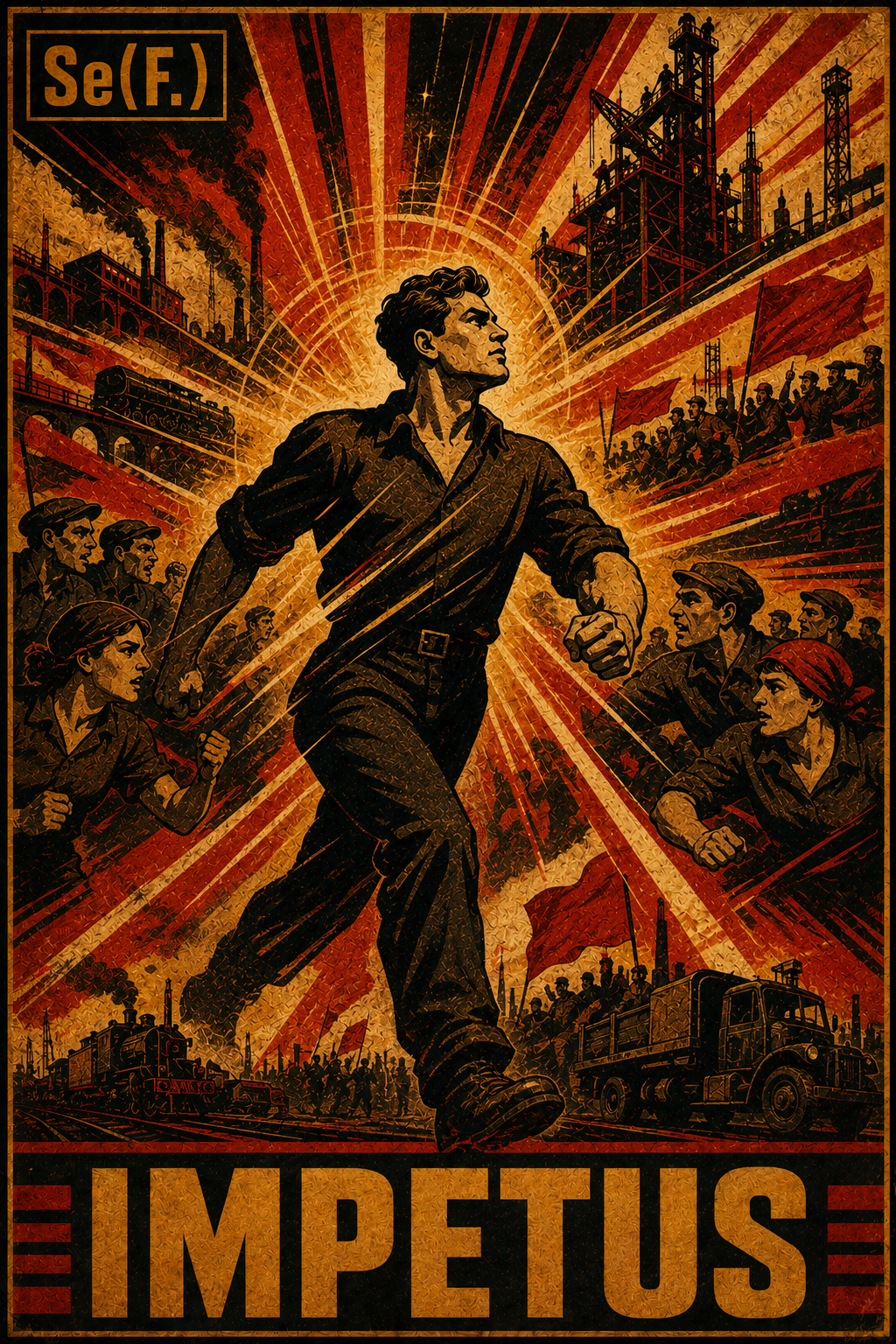
ESI leads with Fi(S.) Animus — visceral particular bonds as primary mode. The Se(F.) Impetus creative flows naturally as the visceral mobilising force that enforces and protects those bonds: explosive somatic exertion directed by particular relational conviction. The ESI is not trying to energise the IEI. The force simply flows in service of the particular bonds.
Model A identifies IEI as Ni-leading with Fe Creative. Model-L specifies that this is Ni(F.) — Reverie, the internal and symbolic mode of temporal imagination, supported by Fe(N.) — Sentiment.
This distinction matters when separating IEI from ILI. Both lead with Ni in Model A terms, but IEI's Ni(F.) is narrative, imaginal, and personally resonant. ILI's Ni(T.) is strategic, detached, and oriented toward likely unfolding.
For IEI, Model-L shows why atmosphere, symbolism, and timing are inseparable: the type perceives the story of events and then gives that story emotional tone.
Attribution: Model-L is Kimani White's original framework. This interpretation is the author's own.
B Radial Group
Supported Same-Club Positions
B positions share the A capacity's rational or irrational club orientation. They are radial, foreground, and resistant: available as conscious support, but not as effortless as the central A cross.
B1 — Correspondent
Si(F.) — Stimulation
Derivation: radial + foreground + resistant · 3D / 2P
Conscious support that can correspond with the A region. It is capable enough to be useful, but it asks for deliberate handling rather than automatic expression.
A visible support position that collaborates with the type's central orientation. It receives attention and can help the profile work outwardly, but it is less dimensionally equipped than the A positions.
A compensating support position. It helps cover less central areas of the cross while still requiring conscious effort and structural management.
B4 — Instrumental
Fi(S.) — Animus
Derivation: radial + foreground + resistant · 3D / 2P
A workable instrument. It can be applied when needed as practical support, without becoming the type's main orientation.
C Radial Group
Contrasting Opposite-Club Positions
C positions take the opposite club orientation from A. They are radial, background, and facile: indirect resources that complement the type's main cross from the contrasting axis.
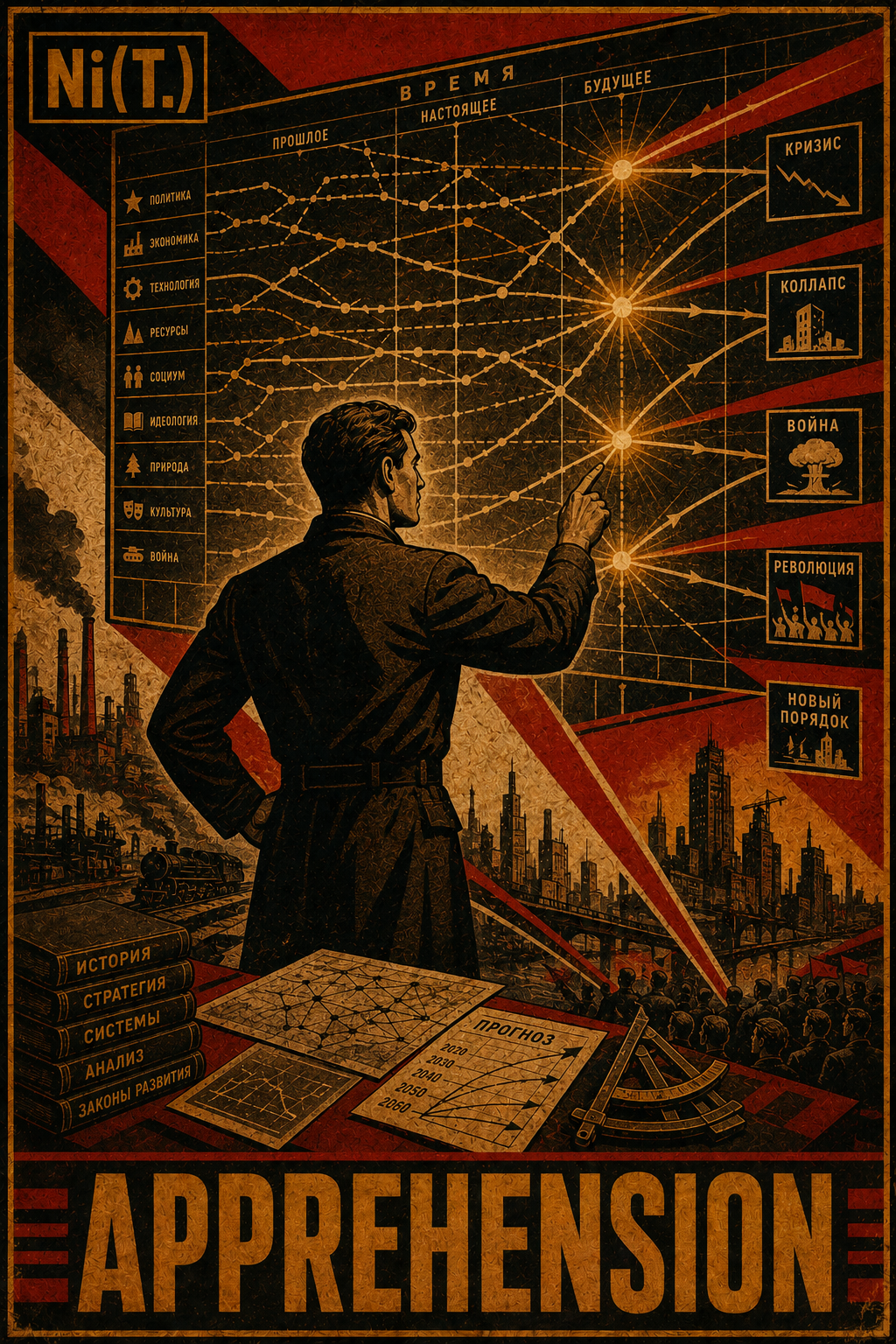
C1 — Subsidiary
Ni(T.) — Apprehension
Derivation: radial + background + facile · 3D / 2P
Quiet background support from the contrasting club orientation. It works as a subsidiary resource rather than a leading concern.
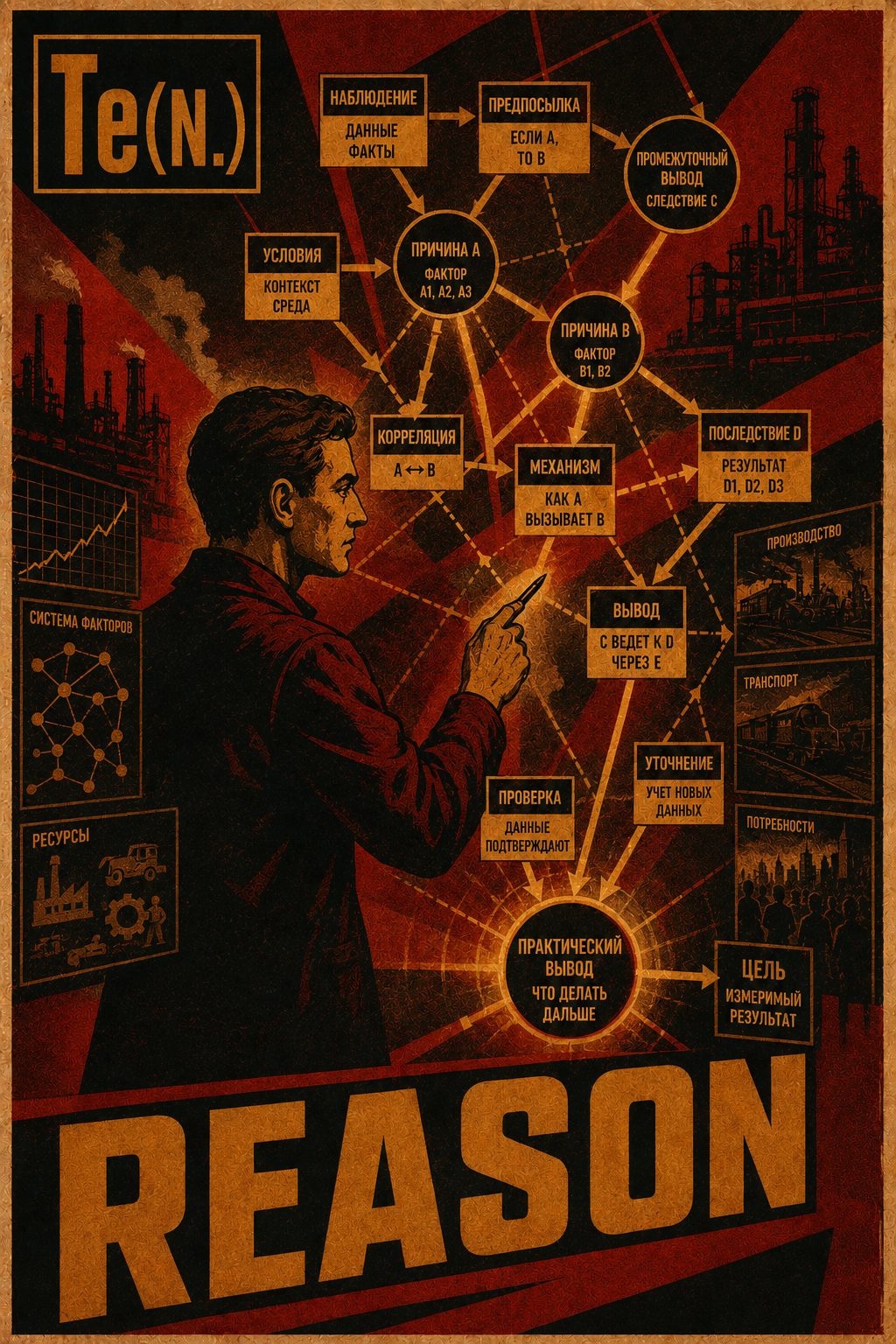
C2 — Negligent
Te(N.) — Reason
Derivation: radial + background + facile · 2D / 3P
Indirect background material that may be psychologically noticeable but is easy to neglect. It colours the profile without becoming a central task.
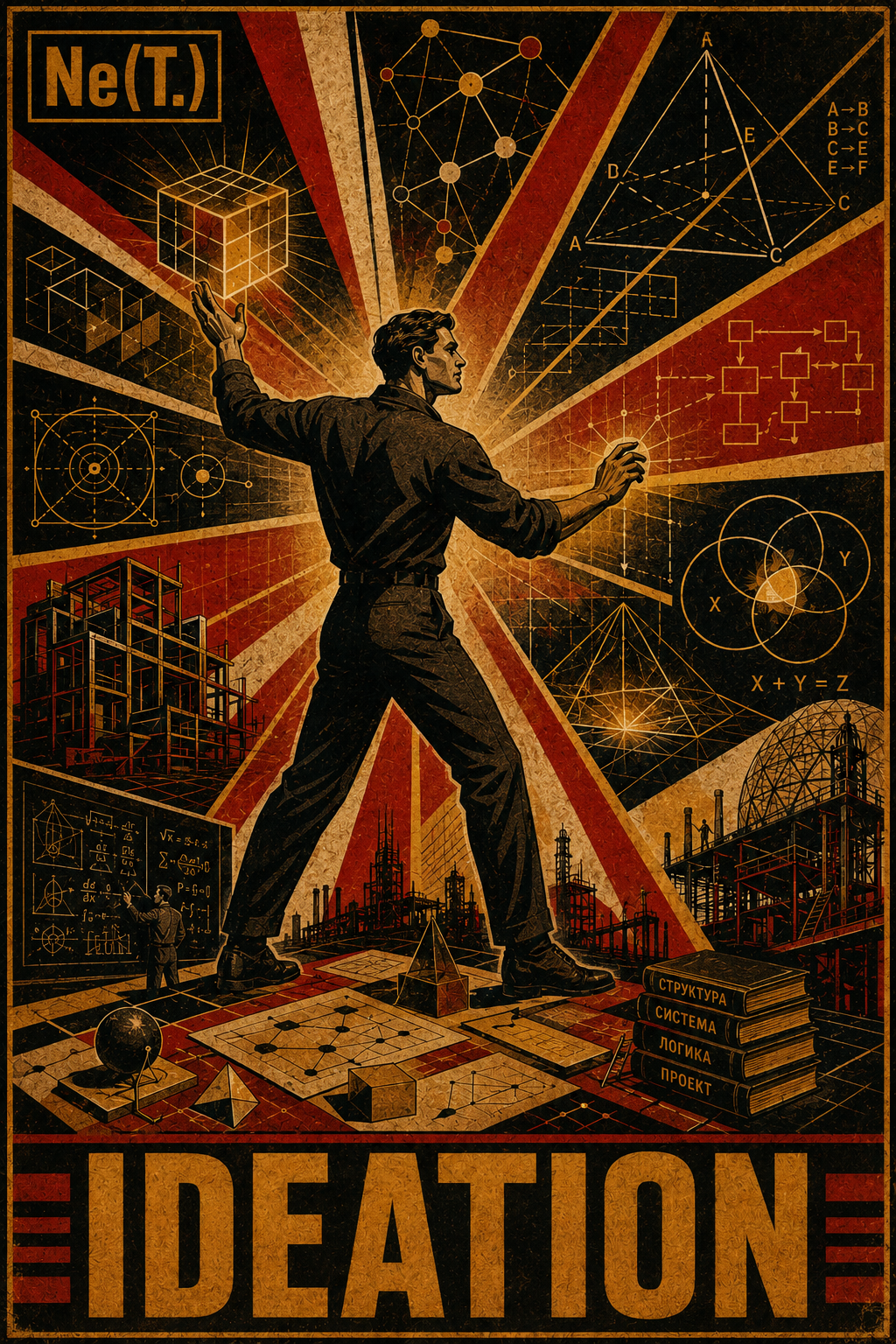
C3 — Prompting
Ne(T.) — Ideation
Derivation: radial + background + facile · 2D / 3P
A prompting support position. It nudges the type toward material that complements the A capacity from the opposing axis.
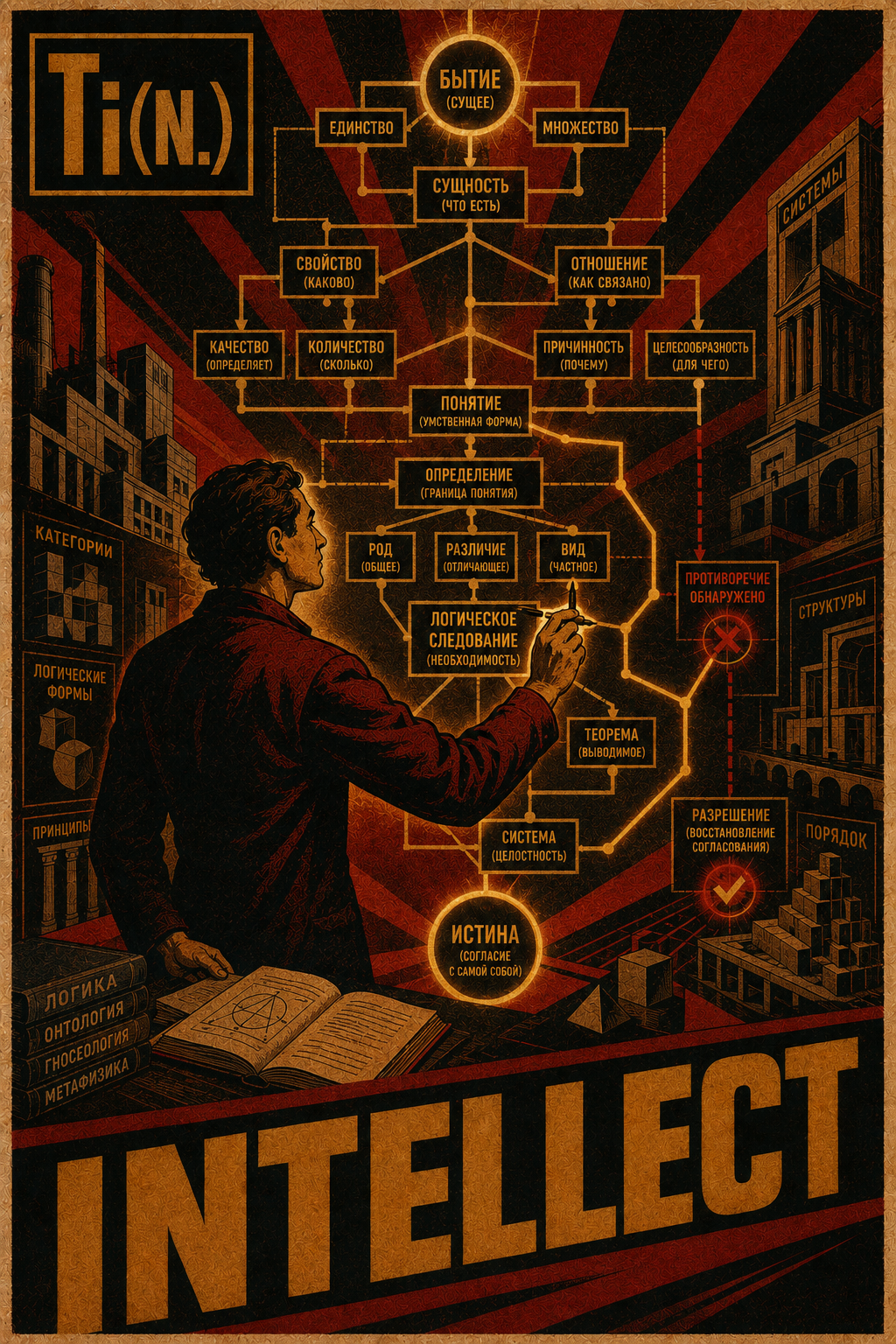
C4 — Galvanizing
Ti(N.) — Intellect
Derivation: radial + background + facile · 3D / 2P
A galvanizing support position. It shapes output from the contrasting axis, adding momentum without becoming a direct Model A anchor.
The Type In Life
The Mystic
Male story
Kenji
Kenji reads the last hundred pages of the novel in a single sitting, not because he lacks self-control but because the ending is already present in everything that precedes it and he wants to feel it arrive. He is quiet in company — not socially; he connects easily, warmly — but somewhere underneath he is always half elsewhere, following a thread that belongs only to him. He senses shifts in people before they are visible. He does not name what he senses; he adjusts around it gently, redirecting a conversation the other person didn't know was going somewhere difficult. He seems to arrive from a half-step outside the present, noticing the mood before it has words and the ending before others admit the story has begun. He is not passive; he is waiting for the exact moment when one image or sentence will change the direction of everything.
Female story
Irina
Irina has a journal she does not show anyone — not because the contents are private, though they are private, but because the writing is the thinking and the thinking is not for display. She carries a feeling of the future as narrative, already written, already implied, which gives her a certain stillness in moments other people find alarming. She believes it will work out. Not because of evidence, but because she can feel the shape of how it will go. She is often right. When she is wrong she grieves it like a story that ended badly, which is different from being wrong in the usual way. She keeps private calendars of meaning: anniversaries, omens, emotional seasons, the way a silence in March explains a decision in October. Her imagination is not escape but atmosphere, a way of sensing which future is already pressing against the present.
Male story
Jin-Ho
Jin-Ho is a film editor in Seoul who works alone, in a dim room, for hours that other people find unsustainable. He is comfortable with duration. He reads footage for its emotional arc the way a poet reads a draft for its internal logic, finding the cuts that let the feeling arrive in the right sequence. He is not technical first. He is narrative first, and then technical in service of the narrative. Directors trust him with things they can't articulate. He articulates them in the edit, and they watch the assembly and say yes, that, exactly that, and he nods and goes back to work. He can sit through a practical discussion saying very little, then name the hidden inevitability everyone else has been circling. His softness has strange gravity; people lower their voices around him because he makes the invisible stakes feel suddenly close.
Female story
Fatima
Fatima studies traditional textile patterns at a university in Fez, but her real subject — which she has not yet found the right words for — is the memory woven into the structure of made things. She reads objects, rugs, pottery, architecture, as a kind of long slow narrative, and she is patient with the reading. She does not rush to conclusions. She has a quality of stillness in group settings that people sometimes read as shyness, and is not shyness; she is listening to what has not been said yet, which requires a different kind of attention than most people are in the habit of paying. She understands longing as a form of knowledge. In art, friendship, and grief she follows the emotional contour beneath events, less interested in what happened than in what it is becoming inside the people who lived it.