TetraTypes Blog ·
Socionics and Phenomenology
A shared world, differently disclosed.
Starting Point
Experience Is Always Experience of Something
Socionics is usually introduced as a typology: sixteen types, eight information elements, Model A, intertype relations, quadras, functions, strengths, weak points, and an intimidating amount of terminology. This is useful, up to a point. But it can leave us with the wrong question.
The wrong question is: what kind of person is this? The more interesting question is: how does a world become present to a person at all?
That is where phenomenology becomes helpful. It does not give us Model A, prove the sixteen types, or supply a scientific basis for intertype predictions. It asks how things show up: as possible or settled, inviting or resistant, meaningful or irrelevant, near or distant, familiar or strange. Socionics can be read, cautiously, as a theory about patterned differences in that showing-up.
This is not the claim that sixteen types inhabit sixteen sealed private realities. The world is shared. It resists us, surprises us, contains other people, and exceeds every one of our interpretations. The claim is narrower: the same shared world does not become equally salient, equally articulate, or equally actionable to every mind.
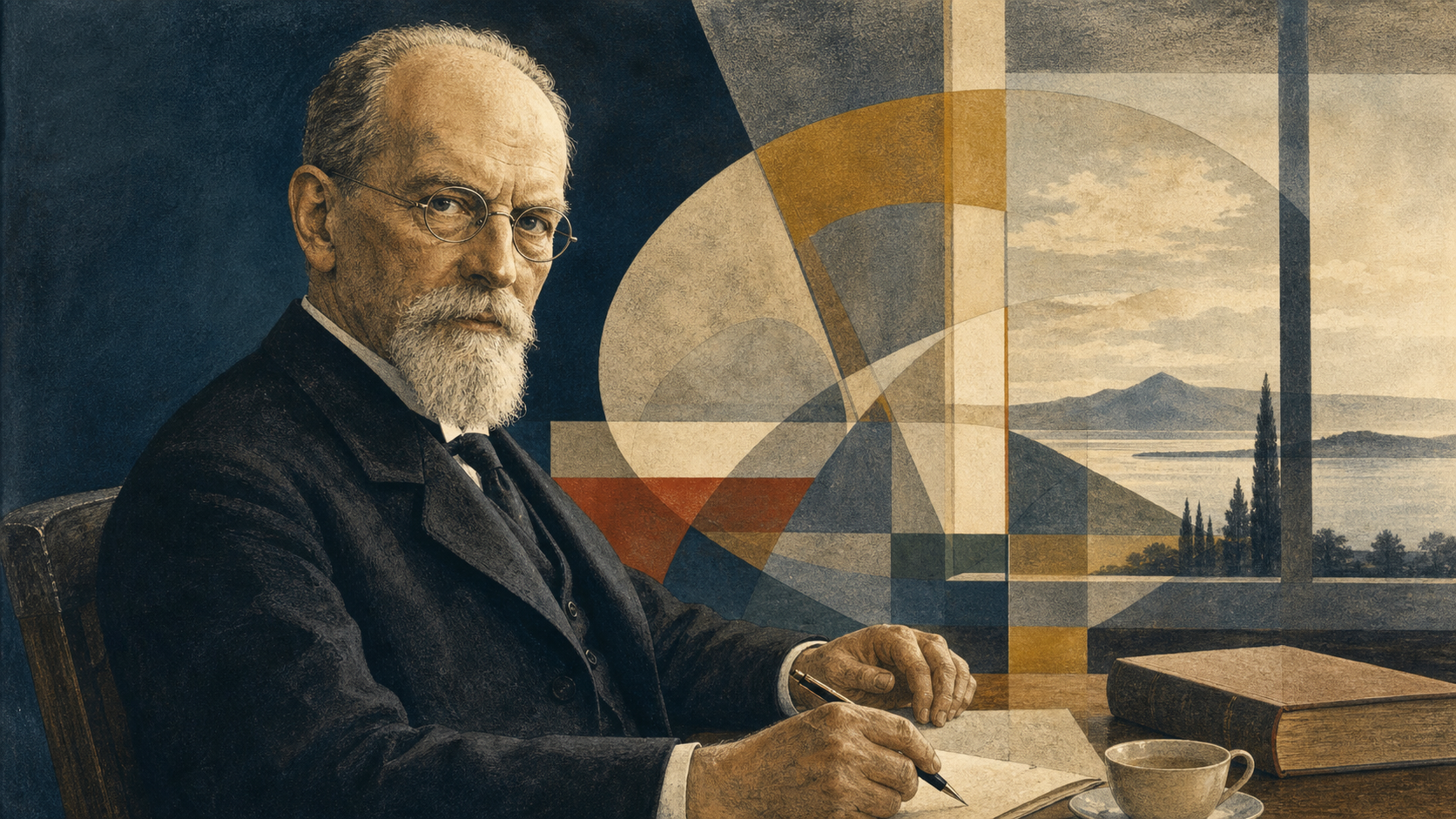
Edmund Husserl begins phenomenology with intentionality. Consciousness is not an empty container filled with impressions. It is always consciousness of something. I see a cup as usable, remember a conversation as awkward, anticipate a meeting as promising or dangerous, encounter a person as warm, difficult, impressive, or unreadable. Experience is directed. It has an object, a sense, and a horizon.
This is a useful starting point for Socionics because the information elements are often reduced to personality adjectives. Ne becomes "creative." Ti becomes "logical." Se becomes "assertive." Fe becomes "emotional." These descriptions can sometimes be suggestive, but they quickly become portraits of people rather than descriptions of what is being noticed.
The classical language is more ambitious. It proposes different aspects through which reality is reflected: potential, force, work, relation, time, space, and so on. In phenomenological terms, the elements might be understood as possible modes of intentional orientation. They are hypotheses about what an object, event, person, or situation can become for consciousness.
Phenomenology also supplies a discipline: begin neither with a stereotype nor with a type label. Ask what this person repeatedly experiences as obvious; what distinction they spontaneously make; what information changes the felt structure of a situation; and what leaves them uncertain, unconvinced, or overloaded. That is a better beginning for typing than a list of behaviours.
Dichotomies and Tetrachotomies
The World Does Not Arrive Undivided
Socionics has its own answer to the phenomenological question of differentiation. It proposes dichotomies and tetrachotomies: structured ways of distinguishing aspects of experience that otherwise arrive in a confused whole.
This is where the theory is more than a catalogue of sixteen profiles. A dichotomy separates two poles; a tetrachotomy crosses two polarities and generates a four-part field. The point is not that people can be neatly placed in four boxes. The point is that an apparently single phenomenon can disclose different internal orientations.
Take a function in the Model L reading. It can be considered through foreground or background, and through facility or resistance. When those polarities cross, four distinct modes appear: Preeminent, Auxiliary, Contributive, and Inferior. This is not a ranking of human worth. It is a way of saying that a capacity can be central and fluent, central and difficult, peripheral and fluent, or peripheral and difficult. The crossing preserves distinctions that a simple strong-versus-weak account loses.
Conscious life is not flat. Some things arrive in the foreground, already available for deliberate use. Some are quietly operative in the background. Some are familiar and easy. Some matter deeply but resist direct command. If Socionics has value, it lies partly in trying to make those different conditions describable.
This changes the meaning of a type. A type is not a costume attached to a person, nor a small machine hidden behind their actions. It is a proposed organisation of salience: a pattern in the relations between what is central and peripheral, facile and resistant, valued and neglected, articulate and tacit.
That formulation is deliberately cautious. It does not assume the organisation is biologically fixed, or that a person cannot learn, change, and act outside it. It says only that the theory is trying to name a stable pattern in the way experience is differentiated.
Embodied Perception
We Do Not Observe the World From Outside It

Husserl helps us describe directed consciousness. Maurice Merleau-Ponty prevents that consciousness from becoming a spectator sealed inside a mind.
For Merleau-Ponty, perception is embodied and situated. We do not first receive neutral sensory data and then construct a world in thought. We are already involved in a meaningful environment. The room is navigable or cramped. The chair invites sitting. A doorway permits passage. Another person's gesture carries a charge before we translate it into a proposition. The body is not merely an object among objects; it is our lived way of having a world.
This matters for Socionics because its language can become too diagrammatic. Model A is powerful because it separates distinctions that ordinary language compresses. But no one lives inside a Model A chart. People live in rooms, relationships, workplaces, conversations, projects, fatigue, appetite, danger, memory, expectation, and social atmosphere.
Merleau-Ponty gives us a way to say that the sensing elements are not simply "physical functions," nor the intuitive elements simply "abstract functions." Every orientation is embodied. Possibility is felt in a practical situation. Force is encountered through a body among bodies. Time is lived as anticipation, delay, rhythm, irreversibility, and opportunity. Relation is carried in voice, posture, proximity, and the sense that another person is welcome, hostile, familiar, or opaque.
The same caution applies to ethical and logical elements. A relation is not merely a private feeling, and a structure is not merely an internal concept. Both are ways in which the world takes shape in lived contact. Merleau-Ponty's importance is methodological, not typological: he is not a secret socionist. He reminds us that a theory of information metabolism must remain answerable to the thickness of experience: the lived body, the shared world, and the ambiguity of perception.
Intersubjectivity
From Private Orientation to a Social World
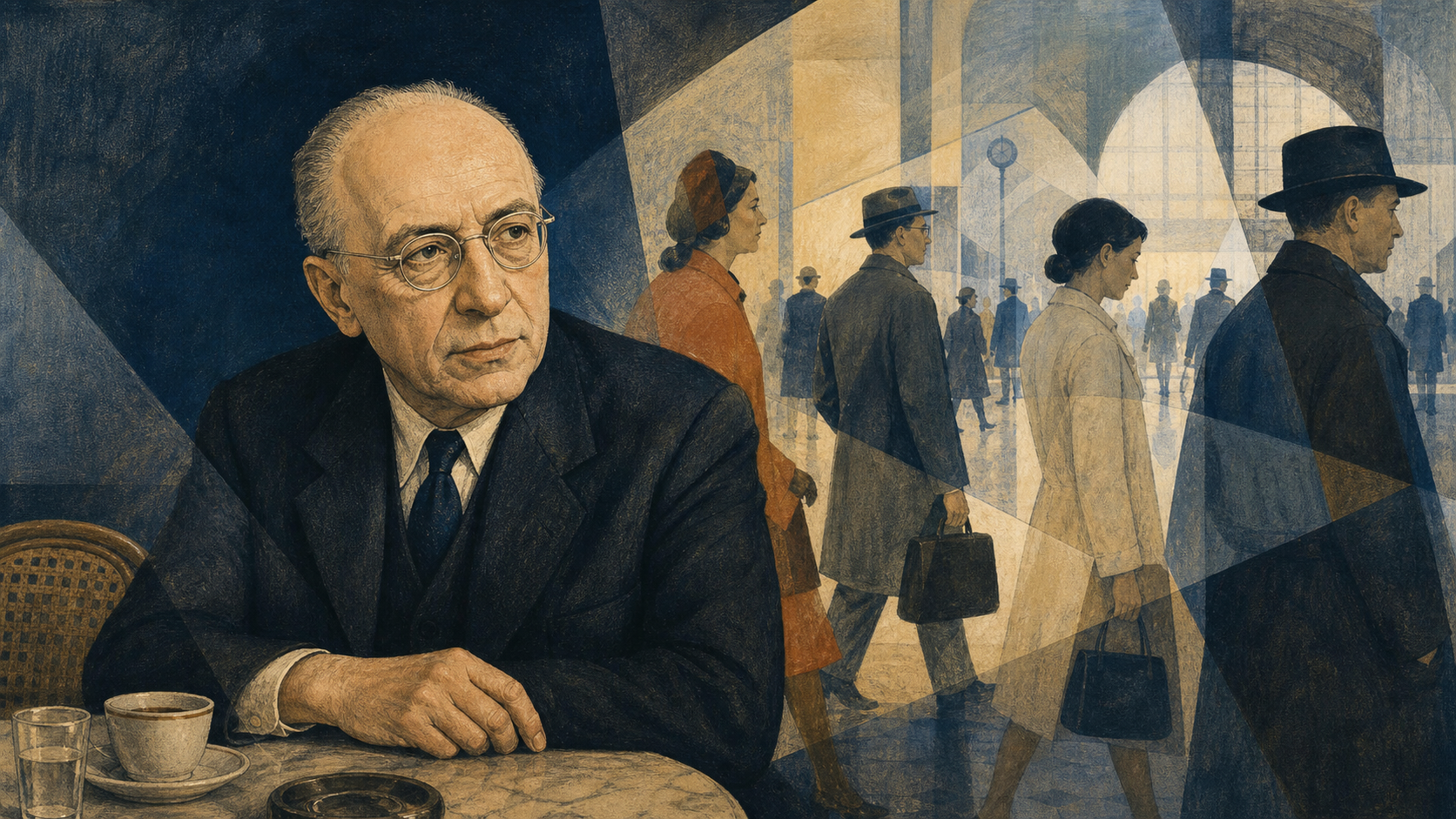
The move from phenomenology to Socionics becomes most interesting when another person enters the scene.
Alfred Schutz, who brought Husserlian ideas into social theory, is useful here. The social world is not merely a collection of private minds. It is a world of shared meanings, practical assumptions, reciprocal interpretation, and inevitable partial opacity. I can understand another person well enough to cooperate with them, love them, argue with them, or misread them. But I never simply possess their experience from within.
Intertype relations can be read as a bold attempt to give this problem a structural form. The traditional claim is that different information metabolisms meet one another in patterned ways: some interactions steady, activate, irritate, obscure, or expose. Taken too literally, that becomes a dangerous social horoscope. Taken as a philosophical hypothesis, it becomes more interesting. It asks whether recurring difficulties between people may arise not only from their beliefs or motives, but from differences in what their situations make salient.
An ILE and an SEI do not have to be ideal partners for the classical duality hypothesis to be philosophically suggestive. The underlying thought is that one person may naturally bring forward what another treats as needed but less readily self-generated. The relationship is not a merger of two halves. It is an encounter between two partial orientations to a shared world.
That language is closer to phenomenology than to matchmaking.
Methodological Limit
A Phenomenological Reading of Socionics
The best philosophical use of phenomenology is not to make Socionics sound more authoritative than it is. It is to make its claims more precise.
Phenomenology does not tell us that there are exactly sixteen types. It does not establish the positions of Model A, validate the dimensions of a function, or demonstrate that specific intertype relations must occur. Those are claims requiring their own evidence.
What phenomenology does offer is a way to read the theory without collapsing it into personality stereotypes. It suggests that the primary object of inquiry is neither behaviour alone nor an imagined essence inside the person. It is the organisation of lived orientation: how objects, events, bodies, ideas, obligations, feelings, and futures are disclosed as meaningful.
On this reading, Socionics is a conjecture about differentiated perspective. Its dichotomies and tetrachotomies are not just sorting devices. They are an attempted grammar of conscious life: a way of distinguishing the forms through which one shared reality becomes meaningful, inhabitable, and actionable.
That is a large claim. It should remain open to criticism. But it is also a more interesting claim than "there are sixteen kinds of people." The wider philosophy of TetraTypes makes the complementary case for holding the framework as a conjecture rather than a verdict.
Sources
- Edmund Husserl: Stanford Encyclopedia of Philosophy.
- Maurice Merleau-Ponty: Stanford Encyclopedia of Philosophy.
- Alfred Schutz: Stanford Encyclopedia of Philosophy.
- Aushra Augustinaviciute: The Dual Nature of Man and Socion, or The Foundations of Socionics, community English translations.
This essay uses phenomenology as an interpretive lens. It does not claim that Husserl, Merleau-Ponty, or Schutz endorsed Socionics, nor that phenomenology validates Socionics as an empirical theory.
Conversation
Responses
Loading comments...