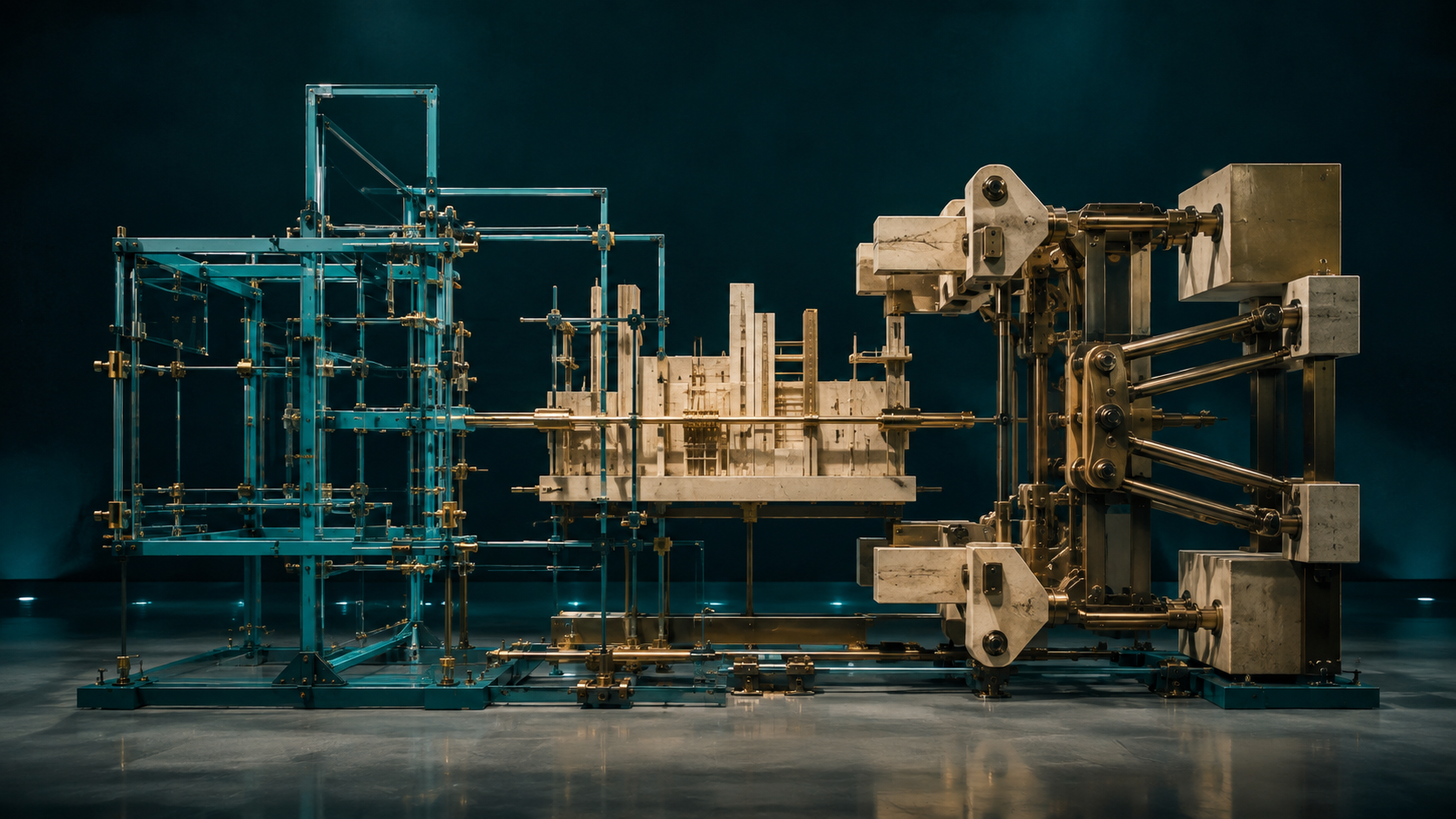
A public hall is about to be sold. The building has an archive, a neglected stage, several unsafe entrances, and a patchwork of groups who still use it. At the first meeting everyone appears to agree on the task: decide what ought to happen to the hall. Within twenty minutes, however, the meeting has divided around an argument nobody can state cleanly.
One participant keeps asking for a rule that can govern every proposal. If heritage value, public access and financial viability matter, how are they ordered? What would make the eventual decision consistent rather than convenient? Another keeps returning to the people and powers that already determine the outcome: who controls the freehold, which tenant can mobilise support, whose promise is credible, and what can be secured before the developer closes the offer?
They seem to disagree about the answer. More radically, they have not yet agreed about the problem. The first is trying to make the decision intellectually lawful. The second is trying to make the live field answerable to the people in it. That difference gives the Model A Conflict relation its characteristic depth. The collision can be under way before either person becomes angry, because each has brought a different reality into the room.
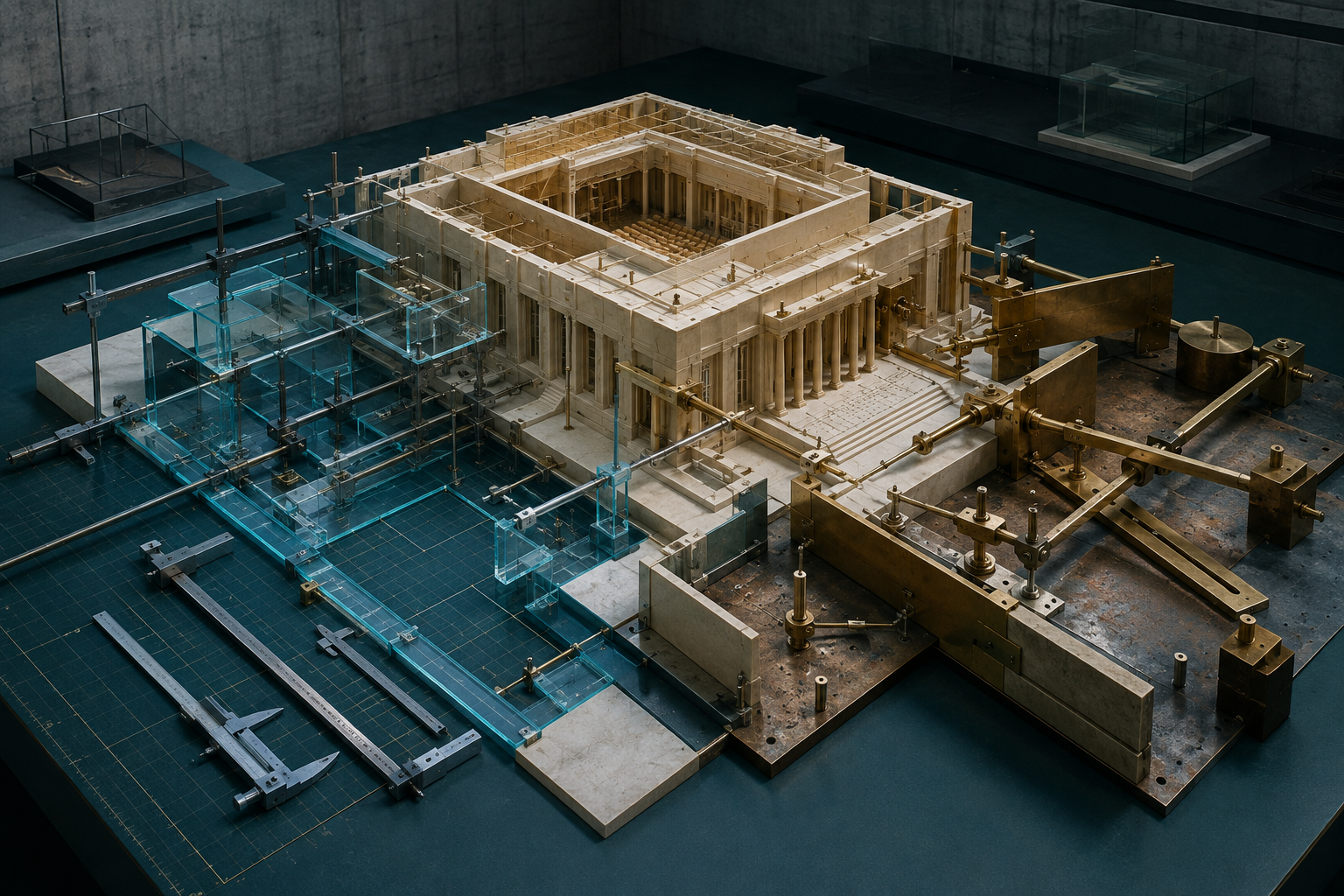
A relation theory born from failed goodwill
Aušra Augustinavičiūtė opens her 1980 Theory of Intertype Relationships with a remarkably direct question. People intend to be kind and reasonable; irritation still appears. Why should goodwill fail to produce understanding? Her answer was to look for stable differences in the structure of contact rather than another catalogue of personal defects. Jung supplied the typological differentiation. Model A supplied a map of what happens when the confident positions of one type meet the strained or receptive positions of another.
This historical starting point matters. Model A was not first conceived as a cabinet of traits sealed inside one person. Its architecture was built to describe exchanges. A Leading function matters socially because it broadcasts the information a person most readily treats as decisive. A Vulnerable function matters socially because some kinds of confident output arrive there as pressure without a usable method of reply. The theory becomes fully visible between people.
In classical Model A, Conflict is symmetrical. Each partner's Leading function falls on the other's Vulnerable position; each Creative function falls on the other's Role. The classical relation summary states the mapping as 1 to 4 and 2 to 3 in both directions. The local Model A relation selector verifies the pairings, while the type pages give the exact stacks used below.
The LII makes the decision an intelligible object
For the LII, Ti is Leading and Ne is Creative. In the site's Model L vocabulary these are Ti(N.) Intellect and Ne(T.) Ideation, but the relation mechanism here is the older Model A one: Ti occupies position 1 and Ne position 2.
At the hall meeting, Ti begins by asking what kind of decision this is. Is the committee judging a building, allocating a public resource, honouring a trust, or negotiating a sale? The distinction is not pedantry. Each description licenses different criteria. If the committee cannot say which criterion governs when two goods conflict, the LII sees a decision that can be captured by whichever interest speaks last.
Ne then works on that structure. Perhaps the archive could become a separate trust while the stage is leased. Perhaps access could be guaranteed by covenant rather than ownership. Perhaps the building's significance lies in a pattern of use that a new design can preserve without preserving every wall. These alternatives serve Ti: they test whether the proposed rule can hold across more than one arrangement.
The SEE hears something else. Ti is the SEE's Vulnerable function. The LII's demand for explicit precedence can therefore arrive as an attempt to suspend the live decision until every term has been purified. Each new distinction seems to remove agency from the people who must act now. Ne, meanwhile, is the SEE's Role. The multiplying alternatives can feel like a public requirement to perform openness after the field has already revealed which alliances and constraints are real.
The SEE makes the decision a contest of actual commitments
For the SEE, Se is Leading and Fi is Creative: Se(F.) Impetus and Fi(S.) Animus in the site's Model L names. Se reads the hall through occupancy, control, momentum and available force. The committee does not possess unlimited time. The developer has an option. One tenant has organised two hundred signatures. Another has quietly stopped attending. The council officer can release a repair grant, but only if a credible operator is named this month.
Fi gives that field a relational articulation. Which promise binds whom? Who has earned trust through years of keeping the hall open? Which alliance will survive a difficult vote? For the SEE, these are not regrettable contaminants in an otherwise abstract decision. They are the human material from which any real settlement must be made. A criterion with nobody able to carry it is not neutral; it is an empty possession.
The LII receives this confident Se through the Vulnerable position. The SEE's insistence on acting while leverage exists can feel like the substitution of pressure for justification. Every statement about who can deliver the votes seems to shrink the intellectual space in which the proposal could be judged. Fi then lands on the LII's Role: requests to recognise loyalty, read intention and declare where one stands personally call for exactly the public ethical performance the LII can attempt but does not inhabit with confidence.

Why more explanation can make less common ground
The usual repair for disagreement is explanation. Here explanation repeats the structure that produced the impasse. The LII clarifies the rule more exactly, bringing more Ti to the SEE's Vulnerable function. The SEE names the live stakes more forcefully, bringing more Se to the LII's Vulnerable function. Each person experiences the other's intensification as proof that the original problem has still not been heard.
This is the crucial positive insight. Conflict relations expose how much agreement normally depends on a tacitly shared object. Two people can use the same nouns—hall, public, fair, viable—while assembling them into different practical realities. The LII's hall is an institution whose decision must possess a coherent form. The SEE's hall is a field of persons, claims and powers whose configuration is already changing. Neither is simply offering a different opinion about one stable thing.
The eight classical Conflict pairs preserve the same positional contact while changing the information elements involved:
| Conflict pair | Leading functions | Reciprocal Vulnerable contact |
|---|---|---|
| LII / SEE | Ti / Se | Ti falls on SEE's Ti Vulnerable; Se falls on LII's Se Vulnerable |
| LSI / IEE | Ti / Ne | Ti falls on IEE's Ti Vulnerable; Ne falls on LSI's Ne Vulnerable |
| EII / SLE | Fi / Se | Fi falls on SLE's Fi Vulnerable; Se falls on EII's Se Vulnerable |
| ESI / ILE | Fi / Ne | Fi falls on ILE's Fi Vulnerable; Ne falls on ESI's Ne Vulnerable |
| ILI / ESE | Ni / Fe | Ni falls on ESE's Ni Vulnerable; Fe falls on ILI's Fe Vulnerable |
| LIE / SEI | Te / Si | Te falls on SEI's Te Vulnerable; Si falls on LIE's Si Vulnerable |
| IEI / LSE | Ni / Te | Ni falls on LSE's Ni Vulnerable; Te falls on IEI's Te Vulnerable |
| EIE / SLI | Fe / Si | Fe falls on SLI's Fe Vulnerable; Si falls on EIE's Si Vulnerable |
The table does not say that every pair quarrels in the same style. It identifies the repeated geometry: what one person treats as the most natural ground of action is the information the other is least equipped to make into a public method. The Creative-to-Role contact adds a second layer. Even the means by which each partner tries to become more responsive can resemble an awkward demand from the other's point of view.
One hall, two domains of authorship
The committee makes progress only when it stops asking both participants to author the same object. The LII is given responsibility for the decision architecture: the legal categories, precedence among criteria, covenant options and the test by which each proposal will be judged. The SEE is given responsibility for the field of commitment: the coalition, operator, council mandate, tenant agreements and sequence by which a viable bid can be assembled.
This is more than dividing chores. It preserves the integrity of two different problem definitions. The LII's framework cannot quietly overrule the people whose action gives it force. The SEE's coalition cannot quietly change the standard by which the public decision claims legitimacy. Their outputs meet at an explicit hinge: every proposed settlement must state both the rule it satisfies and the commitments that make it executable.
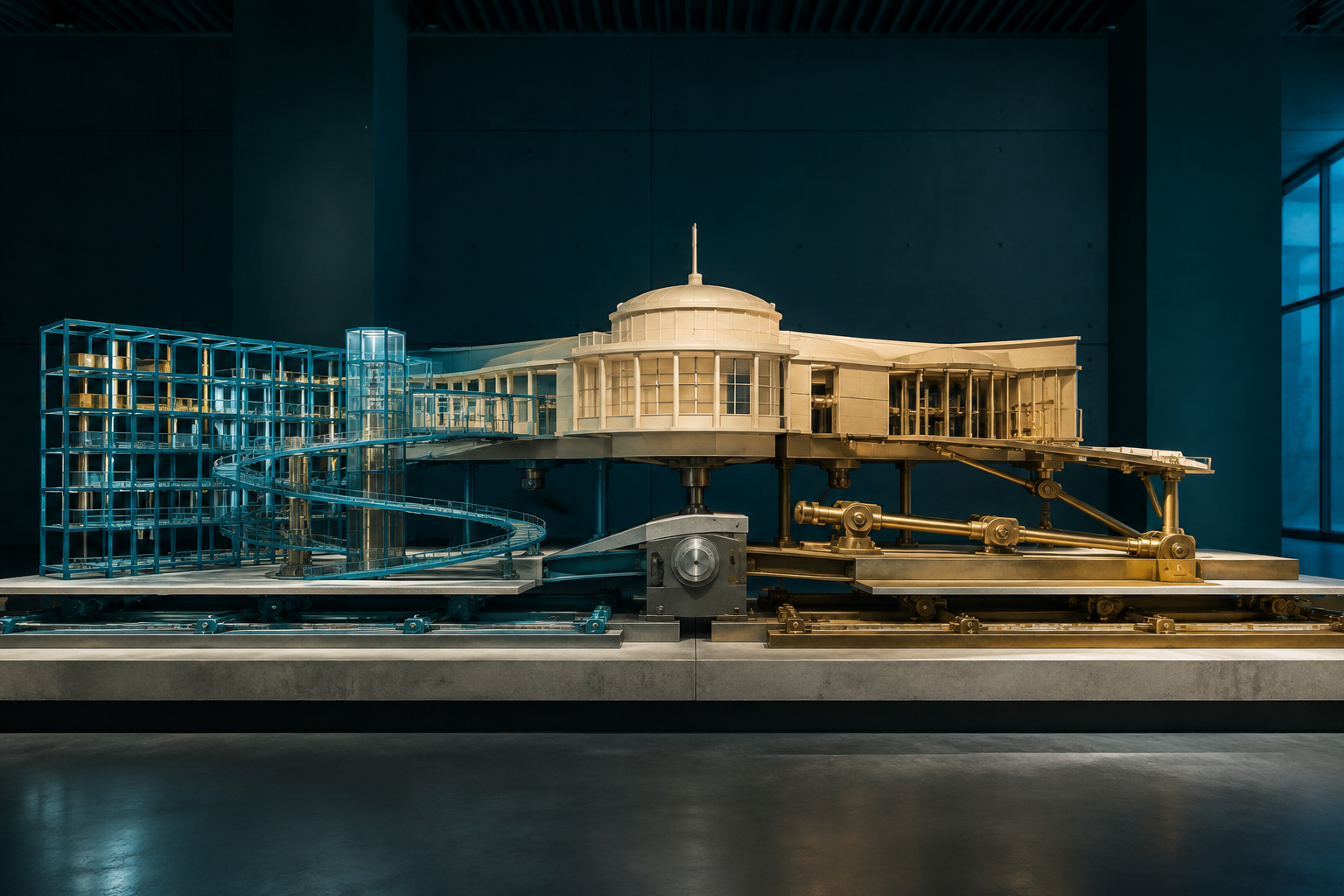
The final plan is neither a pure schema nor a victory of leverage. The archive becomes a protected trust with a clear access covenant. The stage and foyer move to a community operator backed by the coalition that can actually staff them. The sale proceeds only if the operator agreement and the covenant are executed together. The LII has made the settlement intelligible as a public decision. The SEE has made it inhabit the field where promises, powers and timing decide whether a public decision exists beyond paper.
The argument was already in the object
Augustinavičiūtė's founding question was not why some people enjoy quarrelling. It was why sincere intentions can fail to yield understanding. Conflict relations offer one severe answer: another person's most confident information may not feel like help, or even like a contribution to the same problem. It may alter the object so completely that one's own competence has nowhere to stand.
That is why Conflict begins before the argument. Tone comes later. The first event is ontological in the modest, practical sense: what is this situation made of, and what kind of act would count as answering it? LII and SEE reveal two answers with enough internal force to organise a room. Their collision becomes intelligible when we see that each answer arrives through the other's weakest public position. Their joint work becomes possible when the hall is allowed to contain two domains of authorship and a real joint between them.
Source layers: Augustinavičiūtė's 1980 relation theory supplies the historical problem and the intertype ambition; the classical Conflict summary, local relation selector, and LII/SEE pages supply the structural mapping. The civic-hall reading and its two-domain resolution are TetraTypes editorial inference.