This fictional composite shows one way to use the TetraTypes typing method: record the pattern, compare close alternatives, and keep the conclusion provisional.
Case
The Subject
A fictional composite, not a diagnosis of a real person.
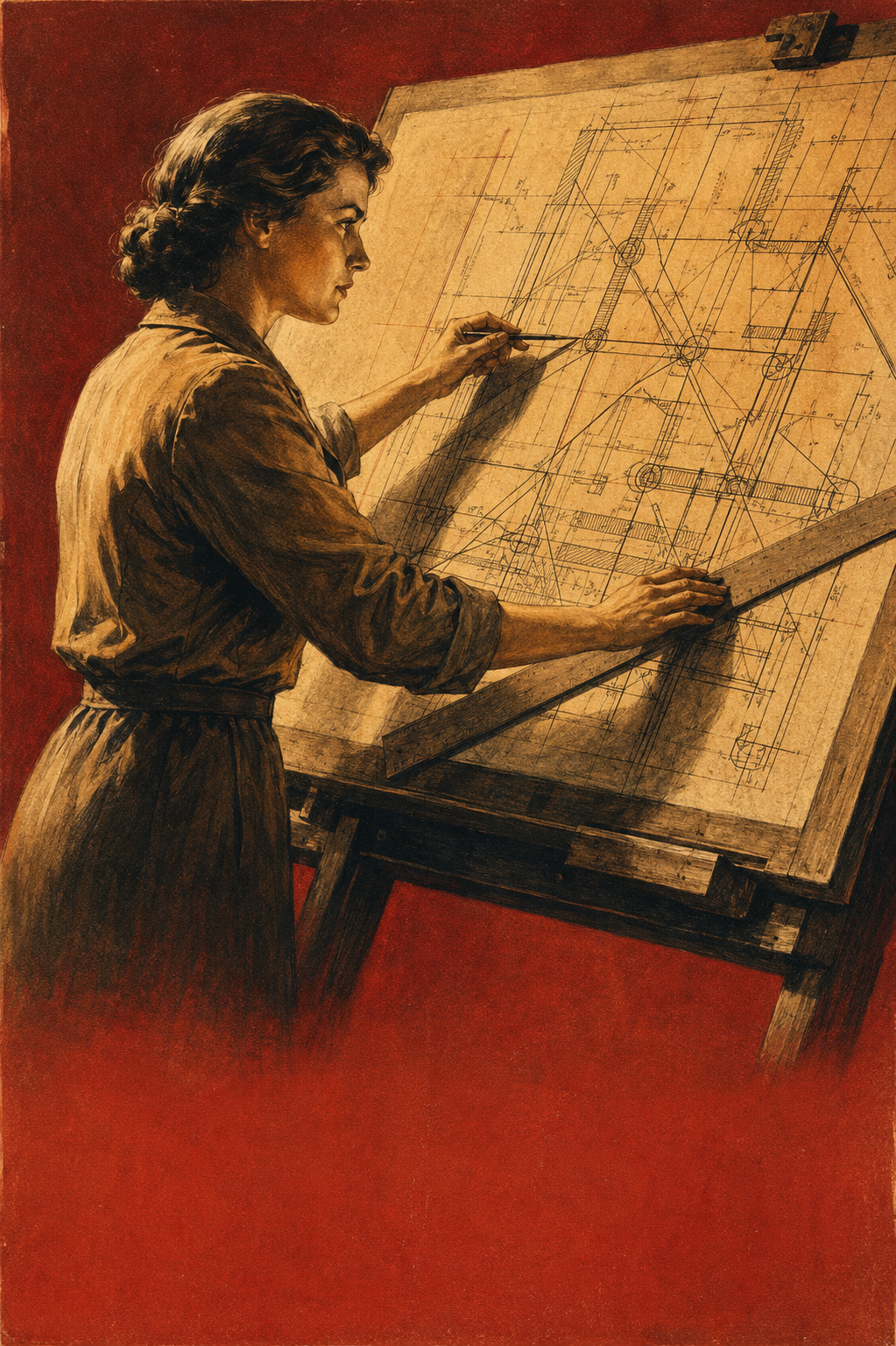
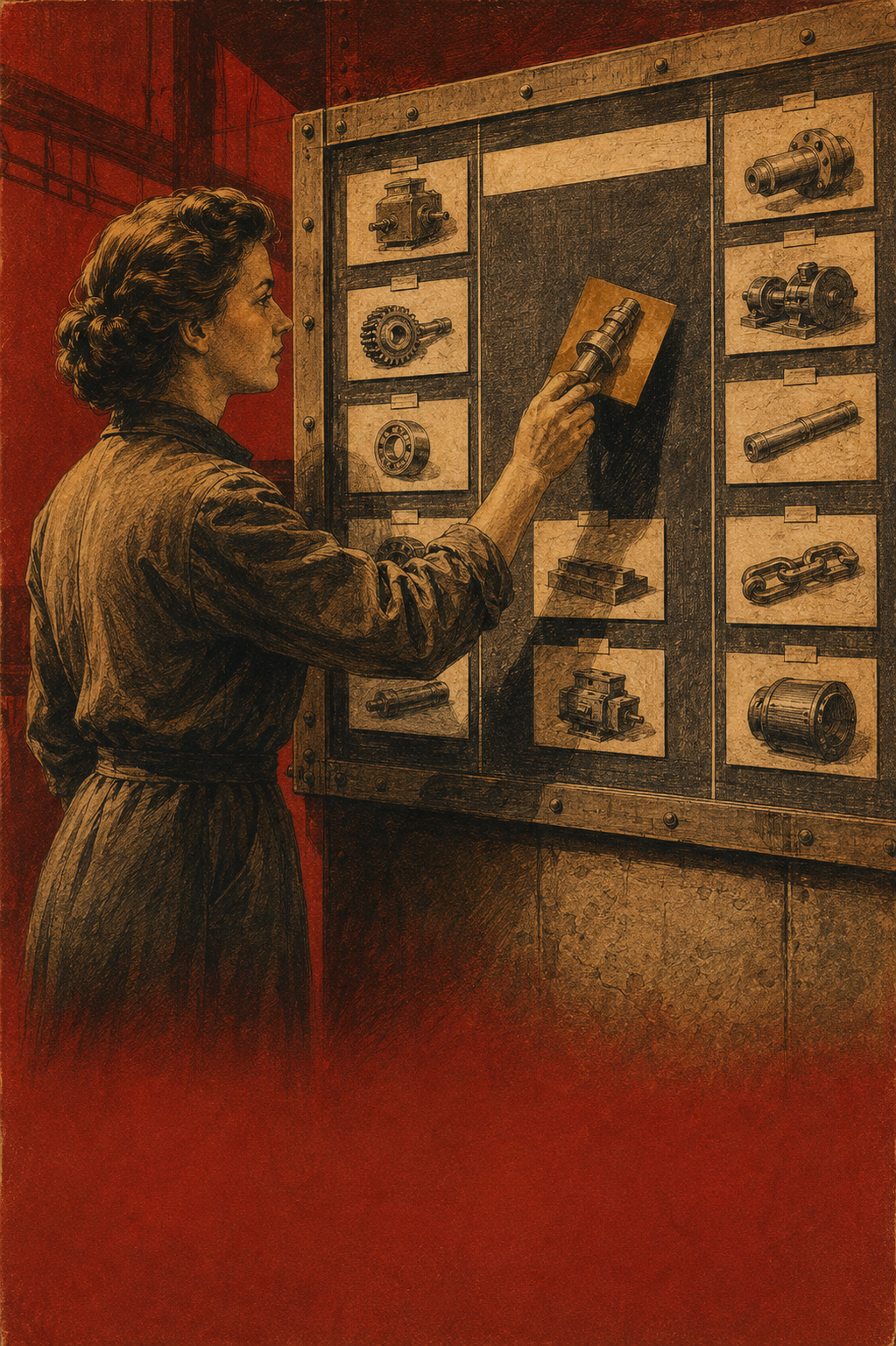
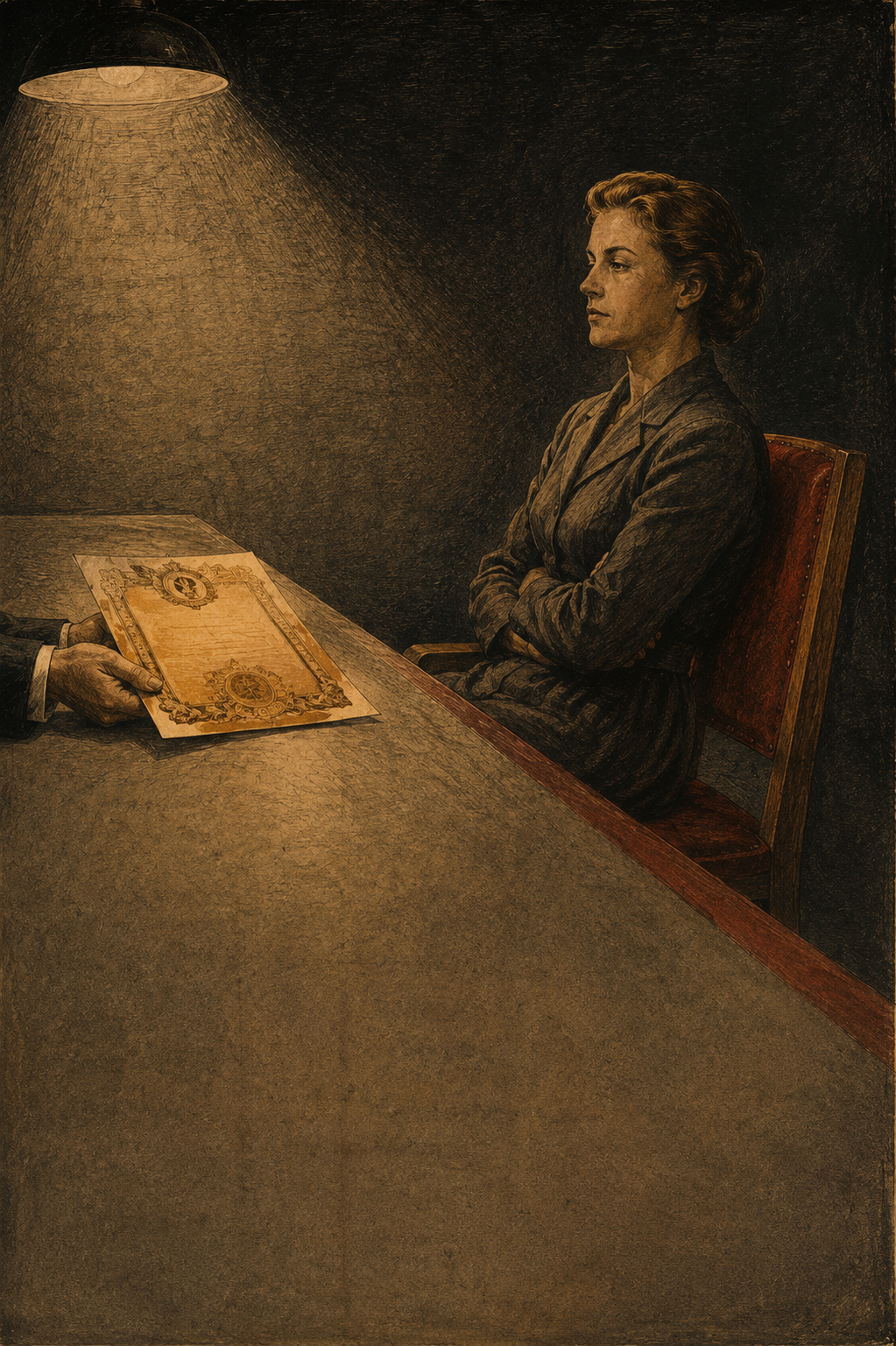
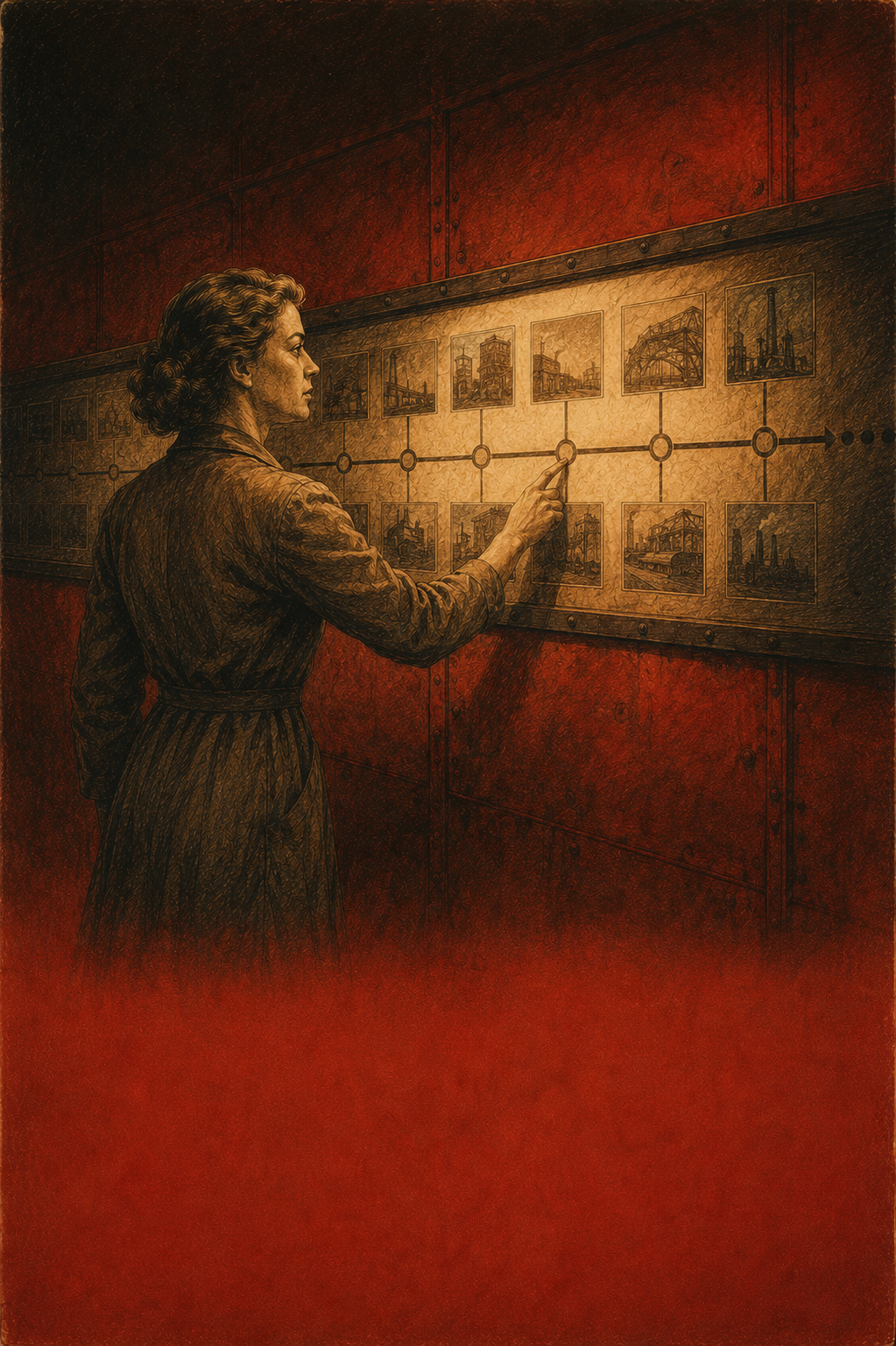
Image text translation: ИЗУЧЕНИЕ ФЕНОМЕНА — Study of the phenomenon. НАБЛЮДЕНИЕ • ФИКСАЦИЯ • АНАЛИЗ — Observation • Recording • Analysis. БЕСЕДЫ • СЕМИНАРЫ • НАБЛЮДЕНИЯ — Conversations • Seminars • Observations.
Call the subject Mara. Mara is a postgraduate researcher who is often described by friends as precise, quiet, principled, and difficult to move once she thinks a question has been formulated badly. She is not socially withdrawn in any dramatic sense, but she prefers conversations where the terms are clear and the subject has enough structure to be examined properly.
The evidence base is deliberately modest: several long conversations, written notes from a seminar group, and repeated observations across study, friendship, and disagreement. That is enough to form a working hypothesis, not enough to treat the typing as settled beyond challenge.
Working Rule
The example does not begin by asking which type Mara resembles. It begins by asking what kinds of information she repeatedly orients toward, what she treats as obvious, and what she struggles to produce on demand.
Raw Notes
What Was Observed
Before naming elements, preserve the observations in ordinary language.
Repeated Attention
Definitions And Relations
Mara keeps returning to whether the terms of a discussion are coherent. She asks whether two claims contradict, whether a category has been used consistently, and whether an argument actually follows from its premises.
Correction
Category Errors
She is most likely to interrupt when a distinction collapses. The correction is usually impersonal: not "I dislike this", but "that is not the same kind of claim".
Values
Integrity Of Thought
She respects intellectual honesty and becomes visibly colder when someone seems to be using language for persuasion while ignoring the actual structure of the issue.
Pressure
Awkward Physical Assertion
When direct confrontation or forceful self-assertion is needed, she tends to hesitate, overexplain, or retreat into justification rather than acting with immediate pressure.
Element Clues
First Classification
The observations point most strongly toward Ti, with weaker but important clues around Ne, Fe, and Se.
Strong Signal
Ti - Laws
Her default orientation is toward structure, definitions, internal consistency, and the relation between claims. This looks like a leading or otherwise highly valued Ti pattern.
Support Signal
Ne - Ideas
She enjoys alternative formulations and conceptual possibilities, but mainly when they help clarify the structure. Possibility is welcome when it serves analysis.
Strain Signal
Se - Force
Concrete pressure, territorial assertion, and direct contest seem costly. She can do them, but not smoothly, and not as a natural first response.
Function Pattern
A Possible Model A Shape
The early pattern suggests Alpha NT, but the exact type still needs testing.
Likely Leading
Ti
The Ti evidence is not just skill. It appears motivational. Mara returns to structural clarity even when the social advantage would be to let the point pass.
Likely Creative
Ne
Her use of possibilities is flexible and exploratory, but it tends to support the work of refinement rather than becoming the main engine of attention.
Likely Vulnerable
Se
The pattern around force and direct assertion fits a one-dimensional pressure point better than ordinary shyness or politeness, though that remains a hypothesis.
Likely Suggestive
Fe
She relaxes when others establish a warm, light emotional field, but she does not reliably generate that atmosphere herself under strain.
Rivals
Types That Must Be Tested
A plausible typing should beat its nearest competitors, not merely sound convincing by itself.
Rival One
ILE
ILE would explain the conceptual range and interest in possibilities. But in Mara, possibility appears subordinate to structural judgement. She closes around a framework more often than she expands into open ideation.
ILI would explain quietness, abstraction, and strategic distance. But the observed emphasis is not temporal implication or trajectory. It is explicit structure, definition, and logical relation.
EII would explain principled reserve and ethical seriousness. But Mara's corrections are usually structural before moral. The felt ethical verdict is less central than the coherence of the claim.
The strongest current hypothesis is LII, with moderate confidence.
LII explains the repeated Ti orientation, the flexible but secondary Ne support, the apparent strain around Se pressure, and the receptive relation to Fe atmosphere. It also explains why Mara can seem morally serious without ethical judgement being the primary organising principle of her attention.
The typing is not "proved". It is simply the explanation that currently accounts for the evidence with the fewest special adjustments. The point of the method is not to become invulnerable to correction. It is to make the reasoning visible enough that correction becomes possible.
A useful typing should make itself vulnerable to better evidence.
Against LII
Primary Ideation
If longer evidence showed that Mara's real centre of gravity is open-ended possibility generation, with structure used mainly to support invention, ILE would become stronger.
Against LII
Temporal Tracking
If her apparent logic turned out to be secondary to nonverbal tracking of implications over time, ILI would need to be reconsidered seriously.
Against LII
Ethical Conviction
If the structural corrections were mainly a surface expression of deeper principled moral judgement, EII would become a better rival.
Method Check
Do Not Protect The Typing
Once a type has been named, the temptation is to reinterpret every new observation in its favour. The discipline is to let new evidence actually matter.