We often speak as if attention had only one public form. A person cares about a subject, so we look for the cause in their first and strongest function. They return to an issue, so we call it their priority. The inference has a certain elegance. It is also too thin. A question may command somebody’s public work; another may keep returning under the floorboards of that work, altering its standards, its irritations, and the point at which it no longer feels finished.
Model L’s seventh derived group, Occupation, gives that second fact a name. It asks neither what an element is about nor how forcefully a type announces it. It asks how a position inhabits attention across time: consistently or variably, immersively or cursorily. Its four results are Engrossing, Peripheral, Collateral, and Attendant. The distinction matters because a lived preoccupation is not the same thing as an agenda.
John Dewey made a comparable distinction in a different vocabulary. In Art as Experience, an experience is not a passive reception of a finished object. It is a movement of doing and undergoing, in which one part changes the bearing of the next. A carpenter knows this before a theorist does: the plan begins the job, but the wood, the join, the resistance of a room and the use it will receive keep working on the plan. The point is not that every activity becomes art. It is that attention acquires shape by remaining answerable to a material that answers back.
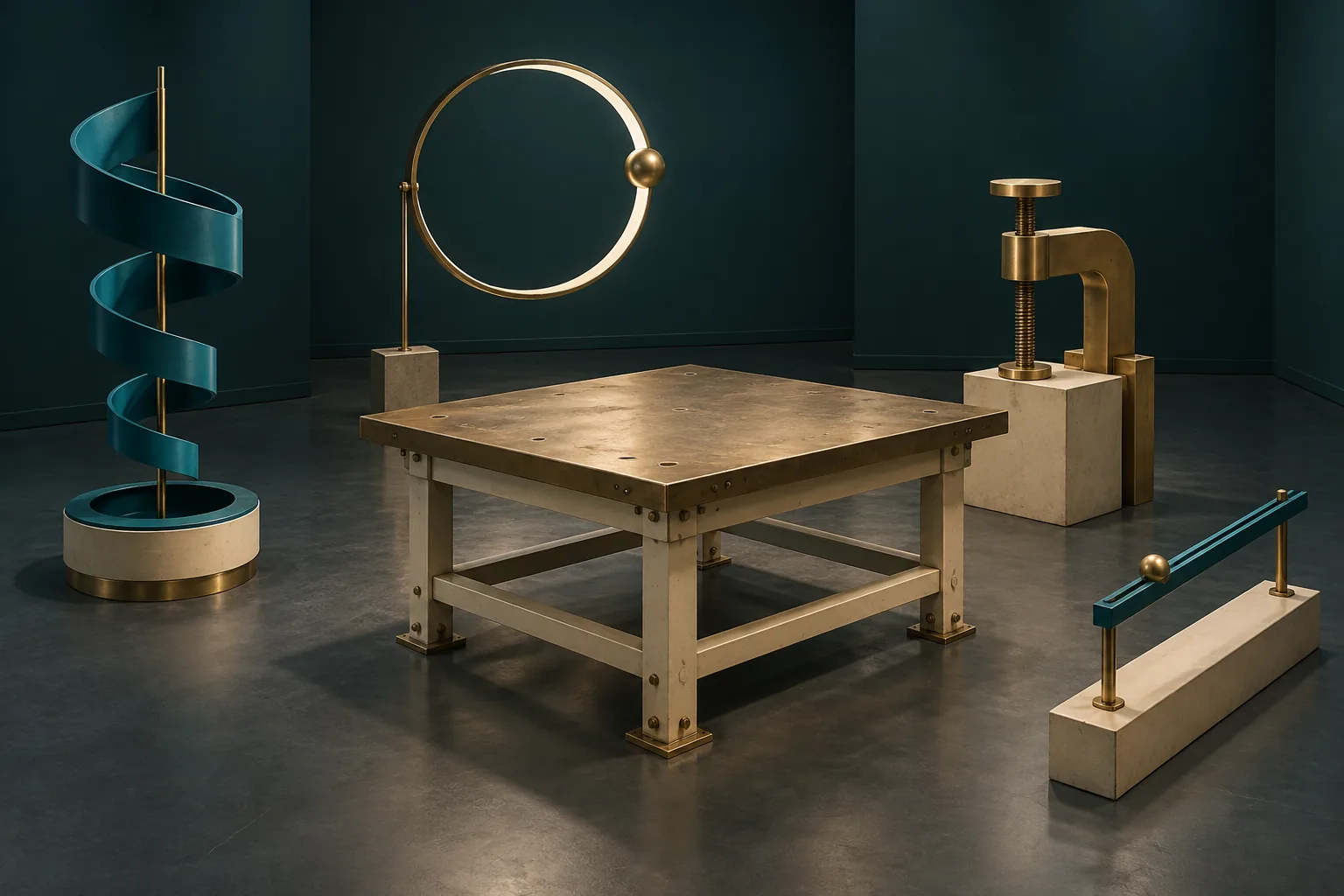
Four ways a concern can stay with you
The Model L cross makes the group exact. Engrossing means Consistent plus Immersive: the position is a recurring site of deep absorption. Peripheral means Consistent plus Cursory: it is reliably present, yet remains on the surface. Collateral means Variable plus Immersive: a circumstance can draw it into depth, but it does not always do so. Attendant means Variable plus Cursory: it accompanies the work when required without becoming an abiding occupation.
Those words do not replace Capacity, Priority, Vergence or Interest. They cut across them. Capacity concerns the structural family of a position; Priority concerns the weight an element has in the type’s ordering of concern; Vergence concerns how it surfaces in awareness; Interest concerns focus and relevance. Occupation asks a different question: once this sort of information enters the work, does it remain a world that the person can inhabit?
That is why the Engrossing set is more surprising than a flattering synonym for “strength.” In the fixed Model L table, it comprises A1, A4, D2 and D3. The Base and Demonstrative positions sit beside the Vulnerable and Suggestive positions. One pair can be highly capable; another can be resistant or dependent on what arrives from outside. Yet all four are Consistent and Immersive. Model L is not claiming that they are equally easy, valuable or authoritative. It is showing that very different kinds of contact can become hard to leave alone.
The other three quarters make the contrast visible. A2, A3, D1 and D4 are Attendant; B1, B4, C2 and C3 are Peripheral; B2, B3, C1 and C4 are Collateral. The taxonomy does not make a moral ladder. It gives a vocabulary for the difference between a subject that remains in the workshop, a routine check at its edge, a situation that suddenly absorbs the room, and a task that enters briefly with an appointment.
LSI and IEE: the same architecture, different worlds
The LSI and IEE are a clean worked case because their Model L arrangements make the group visible without making the elements interchangeable. The LSI page gives Ti(S.) Habitus at A1: embodied procedure, the lived integrity of a form. Its A4 is Si(T.) Observation: the quiet, exact notice of material condition. The LSI’s D2 is Ne(F.) Inspiration, and D3 is Fe(N.) Sentiment. These four positions are all Engrossing, though they do not carry the same ease or place in the type’s public work.
The IEE page reverses the elements through the complementary arrangement. At A1 it has Ne(F.) Inspiration, while Fe(N.) Sentiment is at A4. Its D2 is Ti(S.) Habitus, and its D3 is Si(T.) Observation. Here too the four positions are Engrossing. The fixed positions do not say that a particular LSI or IEE will have the same interests, profession or style. They show a more useful formal fact: both configurations contain four domains capable of holding attention deeply and recurrently, but the first point of entry and the cost of entry are profoundly different.
Imagine the pair converting an abandoned neighbourhood shop into a small public workshop. The LSI begins with the problem that gives the work its body: which procedures keep the tools safe, which sequence prevents a visitor from crossing a dangerous path, what physical habit will let an inexperienced user learn without a lecture each time? Ti(S.) Habitus is not a slogan about order. It is the insistence that a shared place has to carry its rules in the arrangement of benches, locks, routes and repeated actions. Si(T.) Observation quietly keeps asking whether the handrail is loose, the light too cold, the labelled drawer actually reachable. The public aim and the background discernment do not compete; together they make a room that can be used.
The IEE enters through another engrossing centre. Ne(F.) Inspiration sees an untested possibility as personally alive: the old shop could be a place where the retired machinist, the teenager with a damaged bicycle and the woman repairing a chair all become more than isolated customers. Fe(N.) Sentiment, running more quietly in A4, keeps registering whether the invitation gives that possibility a felt public existence. A flyer may contain all the needed facts and still leave the room without an occasion. The IEE does not replace the workshop’s procedures with vague enthusiasm. The IEE makes the possibility socially legible enough that somebody crosses the threshold.
The deeper complication appears when the pair meet the other two Engrossing positions. For the LSI, Ne(F.) at D2 is not an easy mastery of new possibilities; it is an absorbing pressure at the point of Vulnerability. The proposal to leave every rule open for invention may not feel liberating. It can seize the workshop’s attention precisely because an endless field of alternatives threatens the hard-won integrity of the room. Fe(N.) at D3 is Suggestive: the LSI can be deeply drawn to a public sense that the work matters, without being the person who begins by manufacturing that charge.
The IEE meets the same materials on the other sides of the cross. Ti(S.) at D2 makes the bare demand for stable procedure a difficult, absorbing challenge; Si(T.) at D3 makes concrete conditions and fine physical adjustment something the type can welcome as a sustaining provision. In the shop project, this does not produce a comic opposition between the visionary and the inspector. It produces the real drama of any public construction. One person notices that possibility needs a form it can inhabit. The other notices that form needs an invitation, an occasion and a future it can serve. Each is repeatedly caught by the other’s central material, but not in the same mode.
What the room teaches the model
Dewey’s account of art is helpful here because it refuses to treat a finished object as the whole event. The built platform is not the experience by itself. Its users, friction, revisions and continuations belong to what it becomes. A theory of position can be read with the same seriousness. The Base is not a label stamped on a person’s forehead. It is one anchor in a living order of engagements. The Demonstrative may never be advertised as a vocation, yet its quiet immersion can prevent the whole project becoming artificial. The Vulnerable can be a recurrent site of attention precisely because it matters and is hard. The Suggestive can draw a person into a form of life they do not reliably generate alone.
Occupation adds a needed temporal grain to Model L. It stops us confusing the subject that begins an undertaking with every material that will continue to shape it. The LSI does not need to become an IEE to see why a workshop without a living possibility becomes a sealed procedure. The IEE does not need to become an LSI to see why a vivid possibility without durable conditions becomes another occasion that could not hold its people. Their four Engrossing positions make the contact consequential, while the exact coordinates explain why it is never a simple exchange of competencies.
That is the positive use of Occupation. It lets a type reading describe not merely what someone says they care about, but the several domains in which their attention has to keep earning its form. Some will be declared centres. Some will remain quiet conditions. Some will arrive as pressure, some as nourishment. The work becomes more intelligible once we stop mistaking its first voice for its whole attention.
Source layers: Kimani White’s Model L master document supplies the derived-group framework; the local Explorer supplies the fixed r4/i4 derivation and position sets; the LSI and IEE type pages supply the sixteen-element placements. Dewey’s Art as Experience, alongside the Stanford Encyclopedia account, supplies the account of experience as doing and undergoing. The workshop scene and the reading of Engrossing positions as distinct modes of recurrent contact are TetraTypes editorial synthesis.