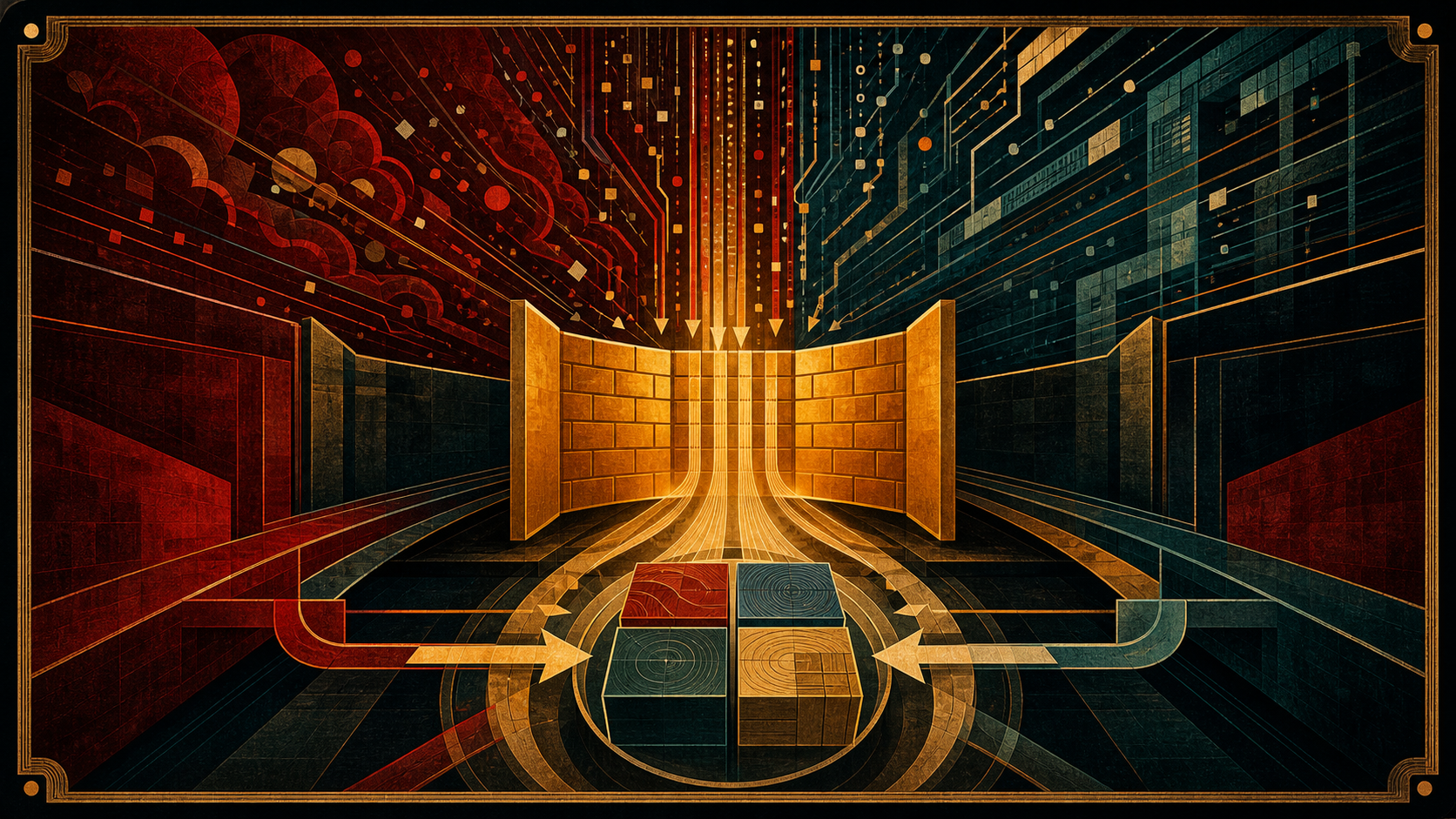
The Super-Ego block is often described as a region of anxiety, awkwardness, or weakness. That is not wrong, but it is incomplete. Structurally, the Super-Ego also works as a boundary system: it limits how much attention the psyche gives to information it cannot process fluently and does not especially value.
Socionics can easily become a catalogue of strengths. The Lead function is strong. The Creative function is flexible. The valued functions feel meaningful. The weak functions, by contrast, are often described as defects: sore spots, blind spots, wounds, embarrassments, places where the person fails to keep up.
There is truth in that description. Super-Ego pressure can feel unpleasant. Role demands can feel stiff and performative. Vulnerable-function demands can feel intrusive, humiliating, or simply beside the point. But if we stop there, we miss the structural elegance of Model A. The Super-Ego is not merely where the psyche breaks down. It is also where the psyche refuses to spend too much of itself.
A useful metaphor is the firewall. Not a literal neurological firewall, and not a claim that the mind runs like a computer, but a structural analogy. A firewall does not understand every packet deeply. It decides what should be admitted, what should be handled minimally, and what should be blocked before it consumes the system. The Super-Ego does something similar at the level of information metabolism. It marks certain kinds of information as low-priority, high-cost, or unsafe to treat as central.
The Ego cannot process everything
The Ego block is expensive. The Lead function has the greatest dimensional reach and sets the basic orientation of the type. The Creative function gives that orientation movement, application, and situational expression. Together they form the most confident part of the psyche: the region where a person is most likely to trust their own perception and act from it.
But that confidence depends on selectivity. No psyche can treat every information element as if it deserves Lead-function depth. If every signal had to be processed with the same nuance, the system would stall. Attention would scatter. The person would become unable to maintain a stable orientation.
The Super-Ego helps prevent that. It does not make the unvalued information disappear. It does not mean the person never notices it. It means the system has limited, defensive, and often uncomfortable ways of handling it. The Role function can perform a minimum compliance check. The Vulnerable function can reject, avoid, or shut down the demand before it becomes too costly.
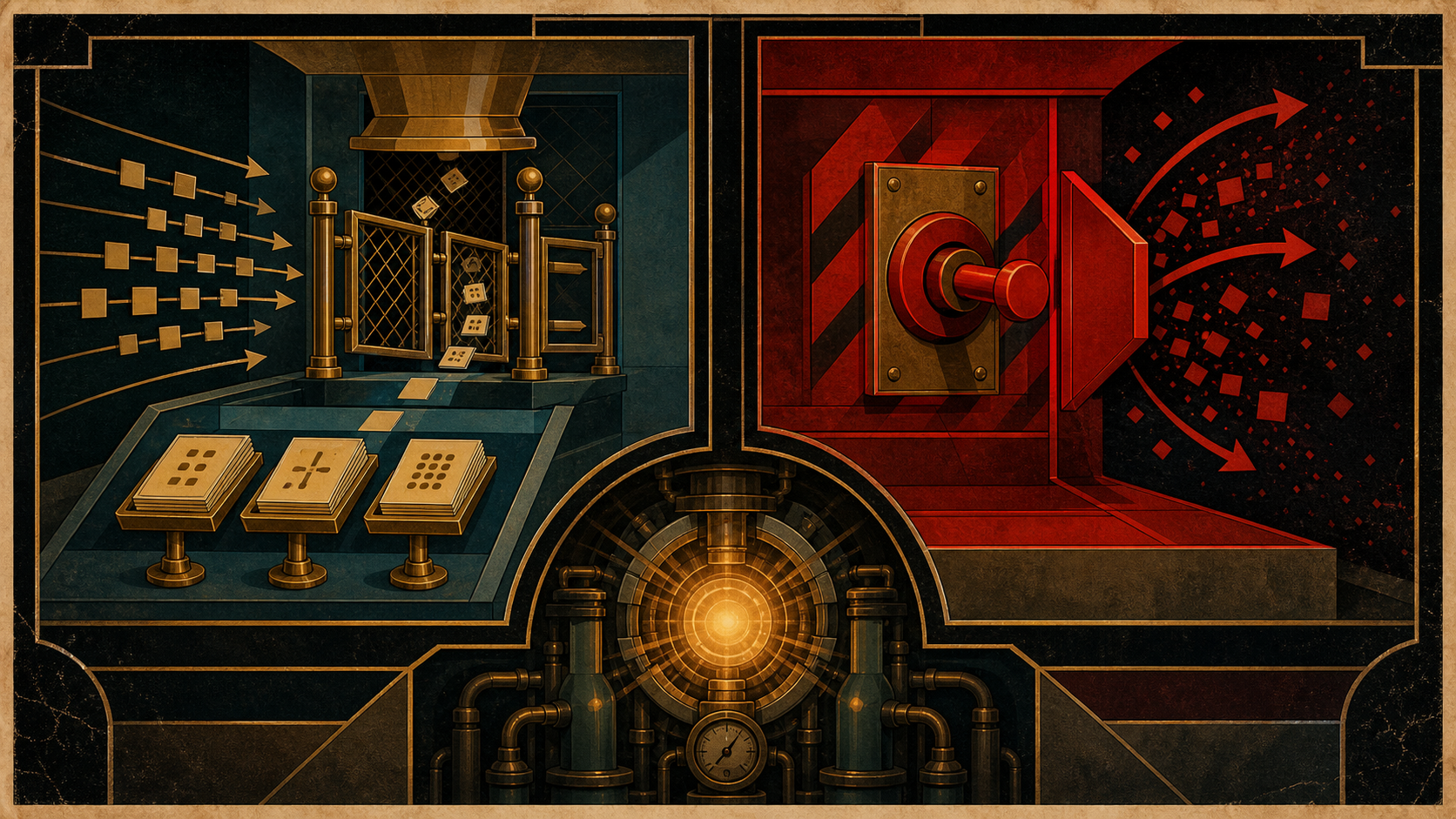
The Role function: a minimum viable interface
The Role function is not useless. It is two-dimensional, which means it can draw on experience and norms. It can learn the socially expected shape of a domain. It can perform competence when the environment requires it. But it rarely wants to stay there.
That is why the Role often feels formal. It asks: what is the acceptable procedure here? What does this situation require at minimum? What rule, etiquette, standard, or template will let me pass through without making this domain central?
In that sense, the Role is a minimum viable interface. It lets the person meet the world without surrendering the whole psyche to a non-valued domain. It can be polished, even impressive, especially when the situation is familiar. But its success is usually measured by exit: do what is required, satisfy the demand, and return to the preferred metabolism.
This is why Role performance can look better from the outside than it feels from the inside. Others may see competence. The person may feel strain. The activity is possible, but it is not home.
The Vulnerable function: a hard boundary
The Vulnerable function is more severe. It is one-dimensional and unvalued. It has personal experience, but little tolerance for complex shifting demands in that domain. When too much information arrives there, the person may not simply feel unskilled. They may feel that the demand itself is illegitimate.
This is the “hard interrupt” part of the firewall metaphor. The Vulnerable function often protects the system by refusing the task, narrowing the issue, dismissing the relevance of the information, or leaving the field altogether. From outside, this can look defensive. From inside, it may feel like the only sane response to a demand that would otherwise consume disproportionate energy.
That does not make the Vulnerable function wise in every case. Firewalls can block useful signals. A person may reject necessary feedback because it arrives through the least tolerable channel. The point is not that the Super-Ego is always right. The point is that its resistance has a structural function. It protects attention, even when it also produces blind spots.
What each quadra tends to filter
Quadras are not personality clubs. They are shared value-orientations: each quadra values a particular set of four information elements and devalues the opposite set. This does not mean every type in a quadra has the same Super-Ego arrangement. The exact Role and Vulnerable positions differ by type. But quadras do share a broad pattern of what tends to feel costly, alien, or beside the point.
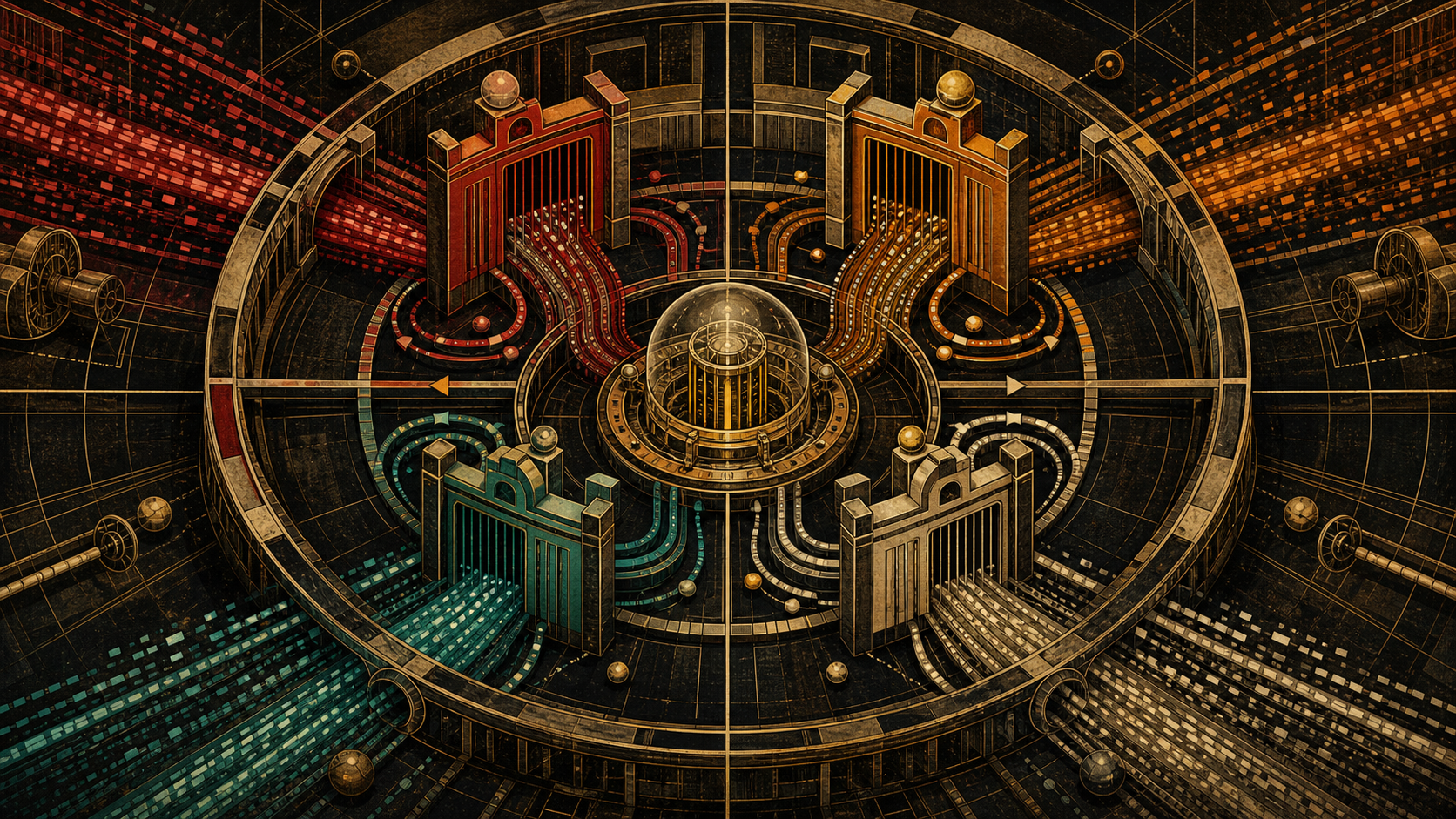
Alpha: filtering Gamma pressure
Alpha values Ne, Ti, Si, and Fe. Its preferred world is one of conceptual play, structural clarity, local enjoyment, and shared atmosphere. The harshest pressure often comes from Gamma-coloured demands: raw leverage, private loyalty tests, commercial urgency, and fatalistic strategic consequence.
For Alpha NT types, Se and Fi pressure can feel like being dragged into status contests and relational debts that do not belong to the question. For Alpha SF types, Te and Ni pressure can feel like life has been reduced to metrics, forecasts, and grim efficiency. The firewall response is often disengagement: return to the idea, the local atmosphere, the immediate human scene, or the internally coherent explanation.
Beta: filtering Delta diffusion
Beta values Fe, Ni, Ti, and Se. Its preferred world is charged, directional, symbolically coherent, and structurally forceful. Delta-coloured information can feel dispersive: too many individual variations, too much private moral nuance, too much mundane comfort, too much procedural practicality.
For Beta ST types, Ne and Fi pressure may look like paralysing hesitation or overly delicate boundary talk. For Beta NF types, Te and Si pressure may feel like bureaucratic deadening or a collapse into small domestic concerns. The firewall response is often intensification: sharpen the structure, raise the emotional charge, restore direction, or force the situation back into a meaningful line.
Gamma: filtering Alpha softness
Gamma values Se, Fi, Te, and Ni. Its preferred world is consequential, pragmatic, personally bonded, and strategically aware. Alpha-coloured information can feel expensive and undercommitted: too much social brightness, too much theoretical sorting, too much speculative play, too little decision.
For Gamma NT types, Fe and Si pressure may feel like forced conviviality or a demand to relax before the work is done. For Gamma SF types, Ti and Ne pressure may feel like abstract taxonomy and endless alternatives standing in the way of action. The firewall response is often compression: reduce the options, identify the leverage, focus on the bond, the result, or the long-term consequence.
Delta: filtering Beta drama
Delta values Te, Si, Ne, and Fi. Its preferred world is steady, useful, humane, and open to individual development. Beta-coloured information can feel coercive or theatrical: too much group emotion, too much destiny-talk, too much hierarchy, too much force.
For Delta ST types, Fe and Ni pressure may look like manipulative drama or speculative grandiosity. For Delta NF types, Ti and Se pressure may feel like rigid systems backed by coercive force. The firewall response is often decentralisation: return to practical improvement, local quality, personal conscience, or alternative paths around the blockage.
The firewall can protect and distort
The danger of this metaphor is that it can make every avoidance look healthy. That would be too easy. A firewall protects the system, but it can also block information the system genuinely needs. The Role function may hide behind correctness instead of learning. The Vulnerable function may reject an entire domain because the first contact was painful, clumsy, or humiliating.
The healthier conclusion is more balanced: the Super-Ego is neither a villain nor a secret superpower. It is a low-capacity, low-value boundary zone. Its job is not to provide the psyche with its deepest truth. Its job is to stop the person from being flooded by demands that would pull attention away from the type’s central metabolism.
This changes how we read weakness in Model A. A weak function is not merely an absence of ability. It is also a pattern of allocation. The psyche is saying: not here, not for long, not at full depth. Sometimes that refusal is protective. Sometimes it is costly. Usually it is both.
That is why the Super-Ego matters. It shows that a type is defined not only by what it metabolises fluently, but by what it refuses to metabolise deeply. Every type has an architecture of attention. The Super-Ego is one of the places where that architecture becomes visible.