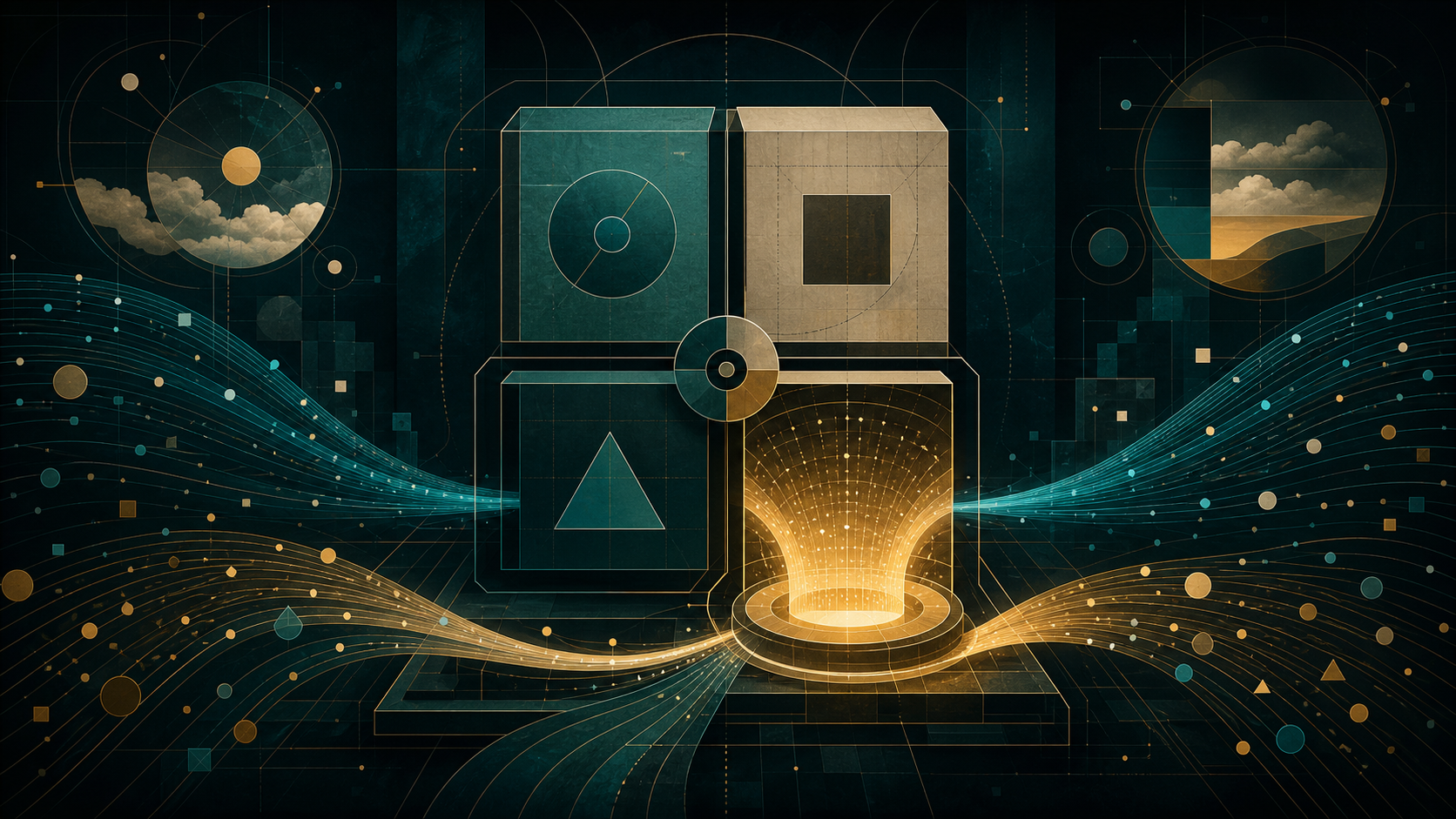
In the previous article, we looked at the Super-Ego block as an information firewall. But if the psyche has a system for keeping certain information out, it also needs a system for letting the right information in.
The point of the firewall metaphor was not that the Super-Ego is simply bad or defective. It is weak and unvalued, yes, but it also performs a protective role. It helps the psyche reject or drop information that would otherwise create overload, paralysis, resentment, or pointless over-processing.
But a system cannot live on refusal alone. The Ego block spends energy: it acts, interprets, creates, structures, persuades, builds, or tracks the world through the type's strongest and most valued functions. If there is output, there also has to be renewal.
That is where the Super-Id comes in.
In Model A, the Super-Id block consists of the Suggestive function and the Mobilising function: functions 5 and 6. These are weak functions, but unlike the Super-Ego, they are valued. They are not areas we simply want to avoid. They are areas we crave, seek, and respond to with unusual relief when they are supplied well.
If the Super-Ego is an information firewall, the Super-Id is an information sink: a receptive intake zone where the psyche absorbs the kind of information it cannot easily generate for itself.
The core shift
The Super-Ego protects the psyche by rejecting weak, unvalued information. The Super-Id restores the psyche by absorbing weak, valued information.
This distinction matters. Both blocks are low-dimensional. Neither has the confident, flexible, high-resolution processing of the Ego block. But their emotional meaning is completely different.
The Super-Ego often feels like pressure, criticism, exposure, or irritation. The Super-Id often feels like relief.
It is the place where another person's strength can arrive not as domination, but as nourishment.
Weak does not mean unwanted
A common mistake in Socionics is to treat weak functions as if they are all simply deficiencies. Model A is subtler than that.
The Super-Id functions are weak, but they are wanted. They are low-dimensional, meaning they do not handle complexity or ambiguity especially well on their own. Yet they are also valued, meaning the person experiences information in these areas as meaningful, desirable, and psychologically supportive.
This creates a peculiar tension. The person wants this kind of information, but does not want to have to manufacture it from scratch.
They may admire it in others. They may relax when it is provided naturally. They may seek environments where it is available. But if forced to produce it alone, under pressure, or with no support, the same area can become tiring or unstable.
That is why the Super-Id is so central to duality. The dual's Ego block supplies precisely the kind of information the Super-Id most wants to receive.
Not because the dual fixes the person. Not because one person becomes dependent in a simplistic way. But because the dual's natural strength lands in the other person's psyche as usable energy.

The Suggestive function: the open door
The Suggestive function, or fifth function, is one-dimensional. It is the most receptive and least self-sufficient part of the Super-Id.
It does not want debate, pressure, or technical correction. It wants a clear, confident supply of the right kind of information.
When the Suggestive function receives this information well, the effect can be disproportionately calming. The person may feel reassured, steadied, or quietly reoriented. Something that was previously tense becomes easier to bear.
For example, ILE and IEE have Si Suggestive. Physical ease, gentle pacing, bodily comfort, and a sense that the immediate environment is pleasant rather than demanding can soften the strain of possibility-first cognition.
LII and LSI have Fe Suggestive. Warmth, shared humour, encouragement, and expressive human responsiveness can bring relief to types whose Ego work is often private, detached, or structurally absorbed.
ESE and EIE have Ti Suggestive. Clear principles, clean categories, and calm structural explanation can steady types whose Ego output is emotionally expressive and atmospherically active.
SEI and SLI have Ne Suggestive. Fresh possibilities, alternative readings, and a light opening of options can loosen the settled weight of sensory-practical orientation without forcing the person into abstraction alone.
The Suggestive function is not trying to become an expert. It is not asking to take over the system. It simply wants enough trustworthy information to stop wasting energy on absence.
It is the psyche saying: please provide this, so I do not have to build it alone.

The Mobilising function: the ignition point
The Mobilising function, or sixth function, is different. It is still weak, but it is two-dimensional rather than one-dimensional. It has more active potential. It can learn norms, imitate patterns, and develop some competence through experience.
Where the Suggestive function soothes, the Mobilising function often energises.
It is aspirational. It wants to grow. It wants encouragement. It wants to become more capable, but it is highly sensitive to tone. Support here can create enthusiasm and momentum; criticism can easily produce defensiveness or collapse.
The Mobilising function often acts like an ignition point. When it receives the right kind of external support, the person may suddenly become more alive, more motivated, and more able to use their Ego block effectively.
ILE and SLE have Fe Mobilising. Encouragement, shared mood, and expressive responsiveness can give extra momentum to types whose Ego output is bold, external, and often more structurally or tactically focused than emotionally self-sustaining.
LII and EII have Si Mobilising. A better rhythm, calmer environment, or more comfortable bodily state can make their reflective work more sustainable.
SEI and IEI have Ti Mobilising. A clear framework or sharper conceptual structure can help their subtle perceptual and interpersonal intelligence become more confident.
EIE and LIE have Se Mobilising. Clear challenge, decisiveness, and permission to push can activate their capacity to enact vision rather than merely imagine or explain it.
This is why Super-Id support can feel so powerful. It does not merely add information. It changes the energy state of the person receiving it.

Super-Id and duality
The Super-Id is one of the reasons duality matters so much in Socionics.
In duality, one person's Ego block naturally supplies the other person's Super-Id. What one person produces confidently and almost casually, the other receives as deeply useful.
This does not mean duality is always easy, romantic, or automatically harmonious. Real relationships involve biography, maturity, trauma, values, culture, and choice. Socionics does not erase any of that.
But structurally, duality describes a powerful exchange: the effortless output of one psyche becomes the missing input of another.
The dual does not usually need to lecture, perform, or force the matter. In fact, Super-Id support works best when it is not heavy-handed. The more naturally it is supplied, the more restorative it tends to feel.
Too much pressure turns support into demand. But the right amount of confident, relaxed supply can make the other person feel more capable, more settled, and more themselves.
Not a quadra block, but a type-specific intake
It is tempting to say that each quadra has one shared Super-Id. That would be too simple.
A quadra shares valued information elements, but the exact Super-Id depends on the type. The order is positional: function 5 is the Suggestive, and function 6 is the Mobilising.
| Type | Ego block | Super-Id block |
|---|---|---|
| ILE | Ne + Ti | Si + Fe |
| LII | Ti + Ne | Fe + Si |
| SEI | Si + Fe | Ne + Ti |
| ESE | Fe + Si | Ti + Ne |
| EIE | Fe + Ni | Ti + Se |
| LSI | Ti + Se | Fe + Ni |
| SLE | Se + Ti | Ni + Fe |
| IEI | Ni + Fe | Se + Ti |
| SEE | Se + Fi | Ni + Te |
| ILI | Ni + Te | Se + Fi |
| LIE | Te + Ni | Fi + Se |
| ESI | Fi + Se | Te + Ni |
| LSE | Te + Si | Fi + Ne |
| EII | Fi + Ne | Te + Si |
| IEE | Ne + Fi | Si + Te |
| SLI | Si + Te | Ne + Fi |
So the Super-Id is not simply the quadra's weak spot. It is the specific weak-valued complement to a type's Ego.
This matters because two people in the same quadra may value the same broad world, but need different kinds of support from it.
One Alpha type may need emotional warmth first and comfort second. Another may need conceptual clarity first and possibility second. The valued elements are shared, but their positions are not interchangeable.
Model A is positional. The order matters.
The Super-Id as recharge
The Super-Id can be understood as a recharge system because it receives information that the psyche finds valuable but cannot produce efficiently by itself.
When the right information arrives, the person often experiences a release of tension. Their Ego block becomes easier to use. Their mood improves. Their confidence returns. Their sense of possibility widens.
This is not weakness in the ordinary moral sense. It is interdependence.
No type is designed to be complete in isolation. Each type has areas of confident production, areas of defensive rejection, areas of private strain, and areas of receptive need.
The Super-Id is where need becomes intelligence.
It shows us that growth is not always about forcing the weakest parts of ourselves to become strong. Sometimes growth means learning what kinds of support allow our strengths to function cleanly.
The full loop
Placed beside the Super-Ego firewall, the Super-Id information sink gives us a more complete picture of Model A.
The Ego block produces. It acts, thinks, creates, structures, expresses, or shapes the world from its strongest and most valued functions.
The Super-Ego blocks or resists information that is weak, unvalued, and energetically costly.
The Super-Id receives information that is weak, valued, and restorative.
The Id quietly handles strong but unvalued background processing.
Together, these blocks form a living economy of attention and energy. The psyche is not trying to process everything equally. It is selecting, rejecting, absorbing, and producing according to a very specific architecture.
That architecture is not a prison. But it does suggest that people thrive best when their environments respect the shape of their information metabolism.
Conclusion
The Super-Id is not merely a childish or dependent part of the psyche. It is the place where valued support enters.
It reveals one of Socionics' most humane insights: people are not meant to be equally strong in every domain. A well-functioning psyche does not eliminate need. It learns which needs are structurally meaningful, and how to meet them without shame.
If the Super-Ego is the firewall that prevents overload, the Super-Id is the open port that allows renewal.
One protects the system by saying no.
The other restores the system by knowing what kind of yes it needs.