The most famous thing Henry David Thoreau built at Walden Pond was a small house. In Walden's opening chapter, he gives its dimensions, describes the second-hand boards and windows, and itemises nails down to the cent. The account can look like an argument for cheap housing. Its deeper unit, however, is a day of life. A costly house demands years of work to pay for it; his cheaper one releases hours in which he can notice what a place is doing. The accounts at the beginning of the book make possible the attention that fills the rest.
That order makes Thoreau an unusually revealing SLI reading. In Model A, SLI leads with Si, Senses, and creates with Te, Pragmatics. The local Model L terms are Si(T.) Observation and Te(S.) Praxis. Practical ingenuity serves a selective, sustained grasp of the physical present. Thoreau builds, budgets, plants, repairs and measures with real competence; the work is arranged so that his senses are available to the pond, the weather, the changing ground. He is a maker whose most consequential product is room to look.
The price of a dwelling
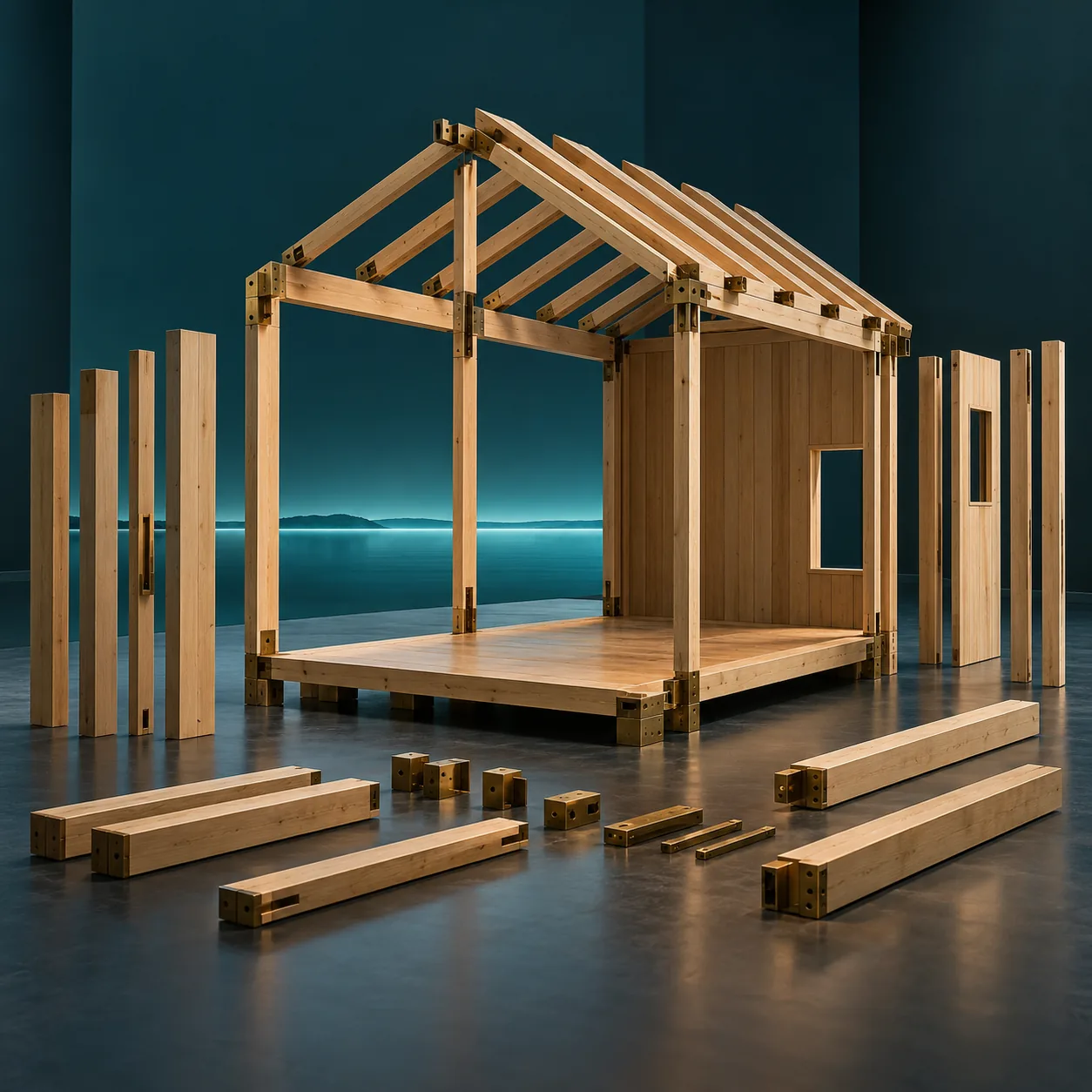
Thoreau begins by describing Concord's inherited farms as burdens that consume the people meant to enjoy them. He translates shelter into the labour needed to acquire it. This is a startling change of scale: the question ceases to be whether a larger house is desirable and becomes how much of a life it requires. He then makes the alternative by hand. In March he borrows an axe, cuts pine, and works the timbers beside a pond still partly iced over. He buys the boards of a railway worker's shanty and reuses them. The finished shelter is ten feet by fifteen feet, with two windows, a fireplace, a garret and a closet. Its listed materials come to $28.12½.
The decimals matter because they show the reader what went into the shelter, rather than turning simplicity into an attitude. Boards, shingles, bricks, lime, nails and transport all have their price. Thoreau also tells us what the list leaves out: his own labour, timber, stones and sand; later, the wider household account excludes some washing and mending charges not yet received. He is making a practical comparison in public. The borrowed axe belongs in that comparison. He returns it sharper than he received it. Resourcefulness here includes knowing what can be borrowed, reused, carried, shaped and repaid.
His famous arithmetic of freedom is equally specific. He writes that roughly six weeks' work in a year met his expenses, leaving winters and much of the summers for study. A reader could mistake that for a wish to avoid work. Yet the building chapter lingers over exact joints, a repaired axe head, the scent of pine on lunch bread and the sound of spring birds along the railway. Manual work is one of the ways he comes into contact with the place. What he refuses is an arrangement in which keeping the house demands so much paid labour that there is little life left to inhabit it.
Read through SLI's Si(T.) Observation, the cost table is an instrument for choosing the conditions of attention. Te(S.) Praxis knows how to make the shelter serviceable with second-hand materials and measured effort. Si(T.) asks what the resulting day can hold. The functional order matters. The LSE page gives the same pair in reverse: Te(S.) Praxis leads and Si(T.) Observation supports the improvement of a working arrangement. The recent Nightingale reading followed that LSE priority as care continued through precise practical routines. Thoreau's cabin is a different undertaking. Its sound construction protects a life in which watching and listening can remain the point.
Work that leaves the senses awake
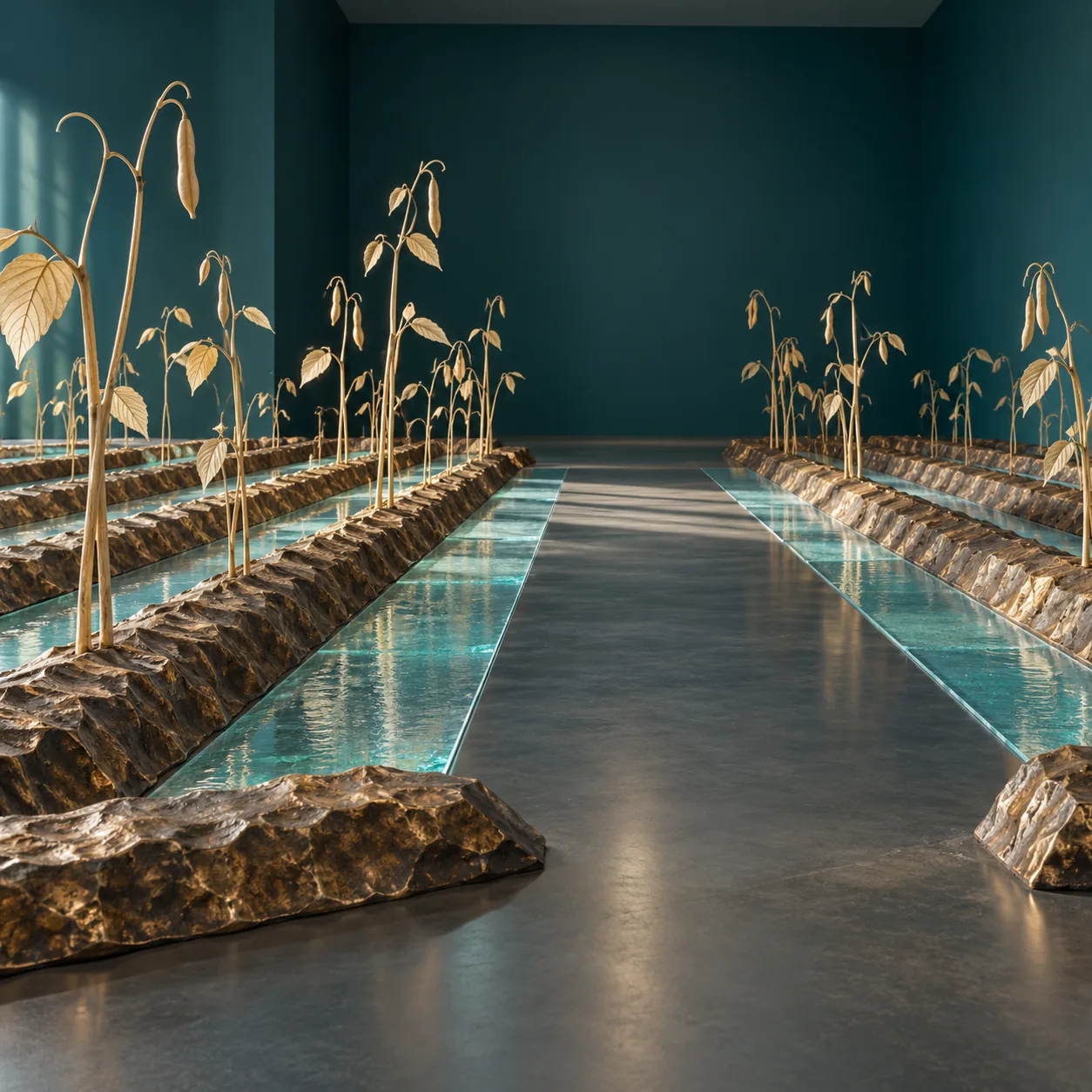
In “The Bean-Field”, the practical economy meets its apparent exception. Thoreau plants more beans than he needs. He calculates the field's produce and costs, but he also spends slow mornings hoeing rows while dew is still on the ground. The crop is both an agricultural experiment and a way of being there. A salamander turns up beneath a stump. Hawks circle overhead; distant music and gunfire arrive softened by space. The row of beans becomes a place from which the world can be heard.
The physical detail prevents the field from dissolving into a symbol of moral purity. Thoreau's feet blister after the dew goes. Weeds return. The sandy ground is lean. Without hired hands or improved implements he works more slowly, and that slowness gives him an intimacy with the plants that a faster system would erase. He can ask what the crop yields in money, then ask what he learns from the beans and what they learn from him. The second question is odd on purpose. His daily work has made a living process answerable to his observation without reducing it to a balance sheet.
In “Sounds”, the same discipline needs almost no instrument. The railway whistle enters the woods; bells change with distance; birds and animals give the hours a texture. Thoreau does not require an untouched wilderness to pay attention. The train's noise belongs to what can be heard from this site, just as the bean field's sounds include the town. His practical withdrawal creates an interval from Concord's work schedule, while his ears remain open to Concord's presence. The cabin is porous. Its usefulness lies partly in what reaches it.
There is an exactness here that distinguishes Observation from a vague love of nature. He attends to the condition under which a sound or object appears: distance, season, temperature, the surface beneath it. A bell moving across water differs from a bell heard between buildings. Frost alters the path; daylight changes the visible bottom of the pond. The account records these differences because the present is never a generic “now”. It is this ice, this row, this morning, under conditions that can change.
A pond with a bottom
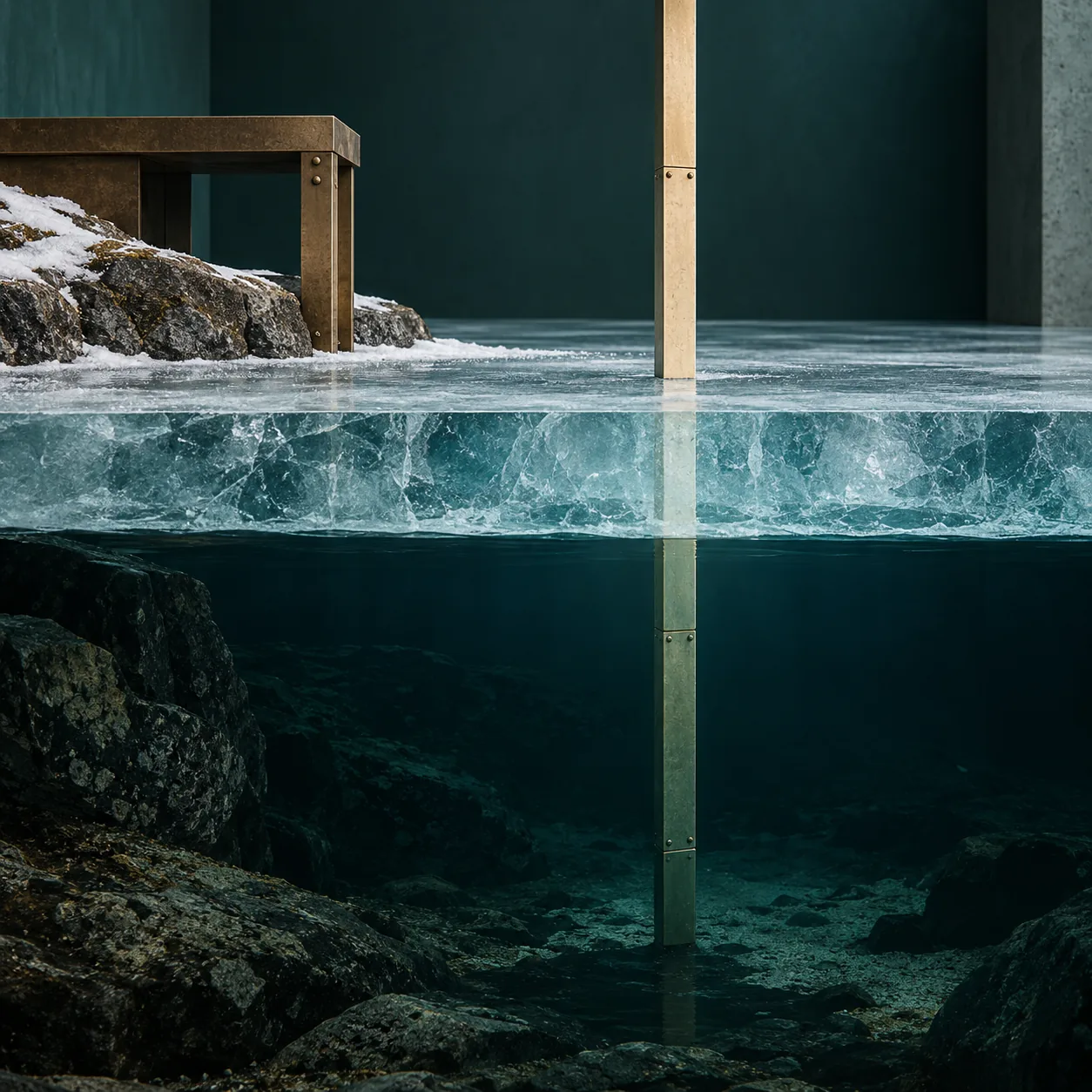
The winter chapters bring this orientation to its sharpest test. Walden Pond had acquired local legends about its depth. In “The Pond in Winter”, Thoreau sounds it. He cuts through the ice, lowers a weighted line, and draws a map of the bottom. The experiment does not make the pond less strange. It replaces an easy infinitude with a particular depth, shape and floor. He can wonder at it more rigorously because he has taken the trouble to find out what is there.
Here Praxis is unmistakable: the line, the hole in the ice, the measurements, the plotted form. Yet none of those methods becomes an end in itself. Their work is to correct and sharpen perception. The pond returns as a place one can know without exhausting it. Near the shore, new ice can be clear enough for him to inspect air bubbles and tiny tracks beneath it. A later seam tells him how much additional ice formed over forty-eight hours. This is knowledge gained by waiting, returning and comparing the same surface at a new moment.
The same hand that counted nails now sounds water. In an LSE reading, that hand might take the measurements onward into a maintained service or improved operation. Thoreau's SLI pattern carries them back to the encounter itself. He has built enough, worked enough and measured enough to give a physical fact its full weight. His account of the pond has authority because the line actually met the bottom. It also has delight because the measured pond remains a changing companion.
Knowing when to go
The conclusion makes one final practical decision: Thoreau leaves Walden. He says he had other lives to live and had worn a path between his door and the pond almost as soon as he arrived. The path remains visible years later. That detail changes the meaning of the experiment. The cabin did its work; it could also become a settled route followed without fresh notice. The man who simplified his circumstances in order to attend to them can recognise when the simplicity itself has become habit.
He does not renounce the house, the field or the pond. He finishes a particular use of them. This is the strongest reason to read the cost table and departure together. The table asked how much of a life a dwelling should claim. The departure answers that even an inexpensive dwelling may claim too much if its familiar path begins to organise every day. An SLI orientation is visible in both decisions: make the conditions of life workable, then observe honestly what those conditions now do.
Walden begins with boards, hinges and borrowed tools, and ends with a track pressed into the earth. Between them lie beans, railway bells, ice bubbles and a sounding line. Thoreau's practical ingenuity gives those things time to appear in their own detail. The cost of the house is therefore neither its final price nor its lasting lesson. Its achievement is the life it made available while it was needed, and the clear-eyed freedom to walk away when attention required another place.