

Model L · Intertype Relations

Identity Relations — Model L

Complete recognition, zero complementarity.Every Model L position matches exactly: strengths double, gaps remain identical.

Model A To Model L

Where Identity Mirrors Exactly

In Model L, the Identity relationship is structurally the simplest in the system and phenomenologically the most extreme: every functional position is an exact match. A1 Base carries the same element and the same sub-variant. A2 Creative matches precisely. D3 Suggestive — what each type most deeply seeks — is identical. D2 Vulnerable — the blind spot — is identical. All sixteen positions across the full Model L layout mirror exactly. There is no displacement, no register gap, no structural difference of any kind.

The result is not harmony in the complementary sense. Dual is also a relationship of maximum comprehension — each type's primary output landing exactly where the other most needs it. But Dual achieves comprehension through complementarity: different elements, different sub-variants, each providing what the other lacks. Identity achieves comprehension through identity: the same elements, the same sub-variants, each perfectly understanding what the other produces because they produce it too.

What each type most deeply seeks — the D3 Suggestive — is equally absent in both. What each type finds most alien — the D2 Vulnerable — is equally indefensible in both. The strengths amplify; the gaps remain. Nothing produced by one Identity partner provides anything the other lacks, because what one lacks, the other lacks identically.

The phenomenological quality is precise: full comprehension alongside zero complementarity. The recognition is immediate and complete. The relationship is resonant without being nourishing, transparent without being transformative. Two instances of the same mode occupying the same space, each perfectly visible to the other, neither providing what the other most needs.

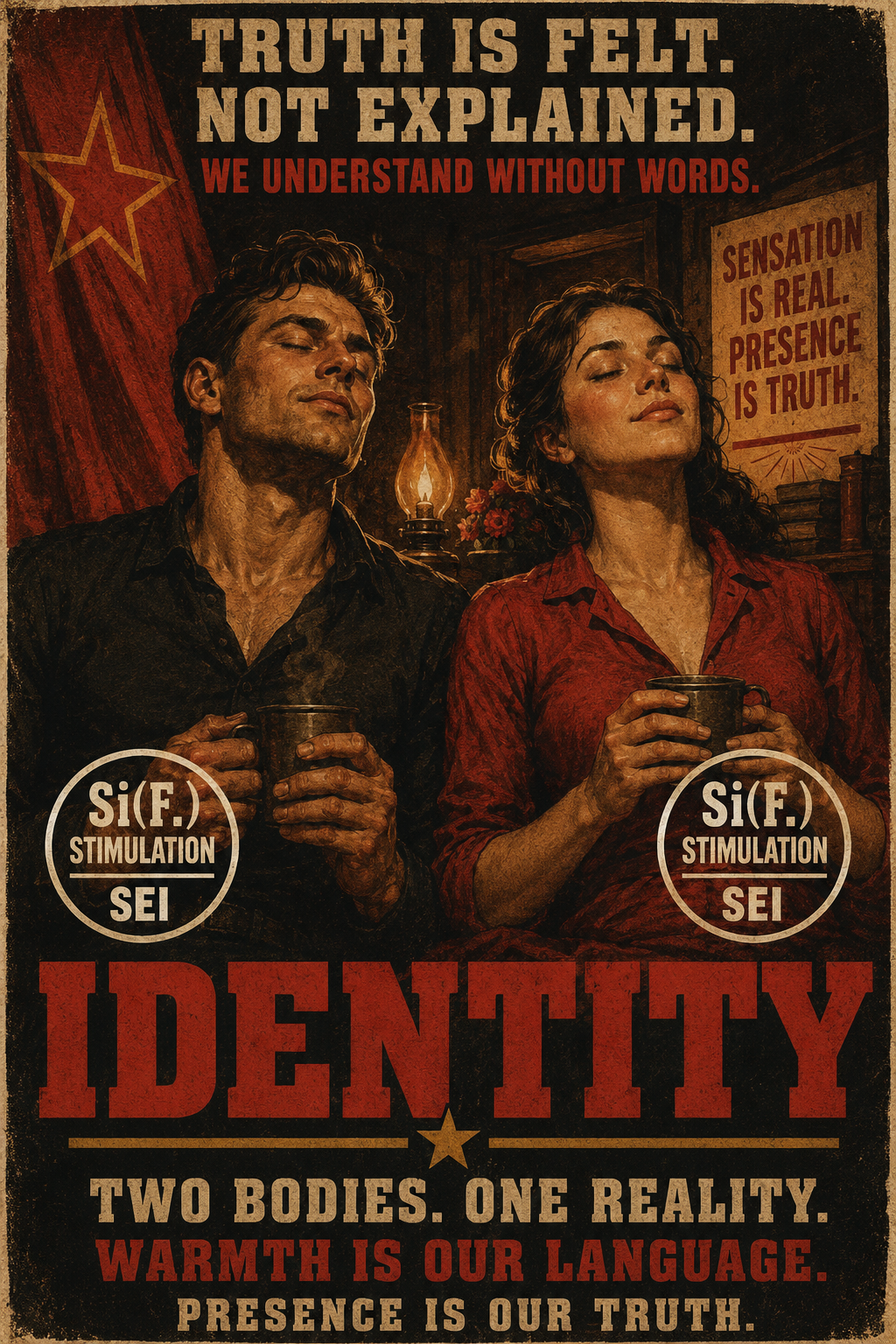
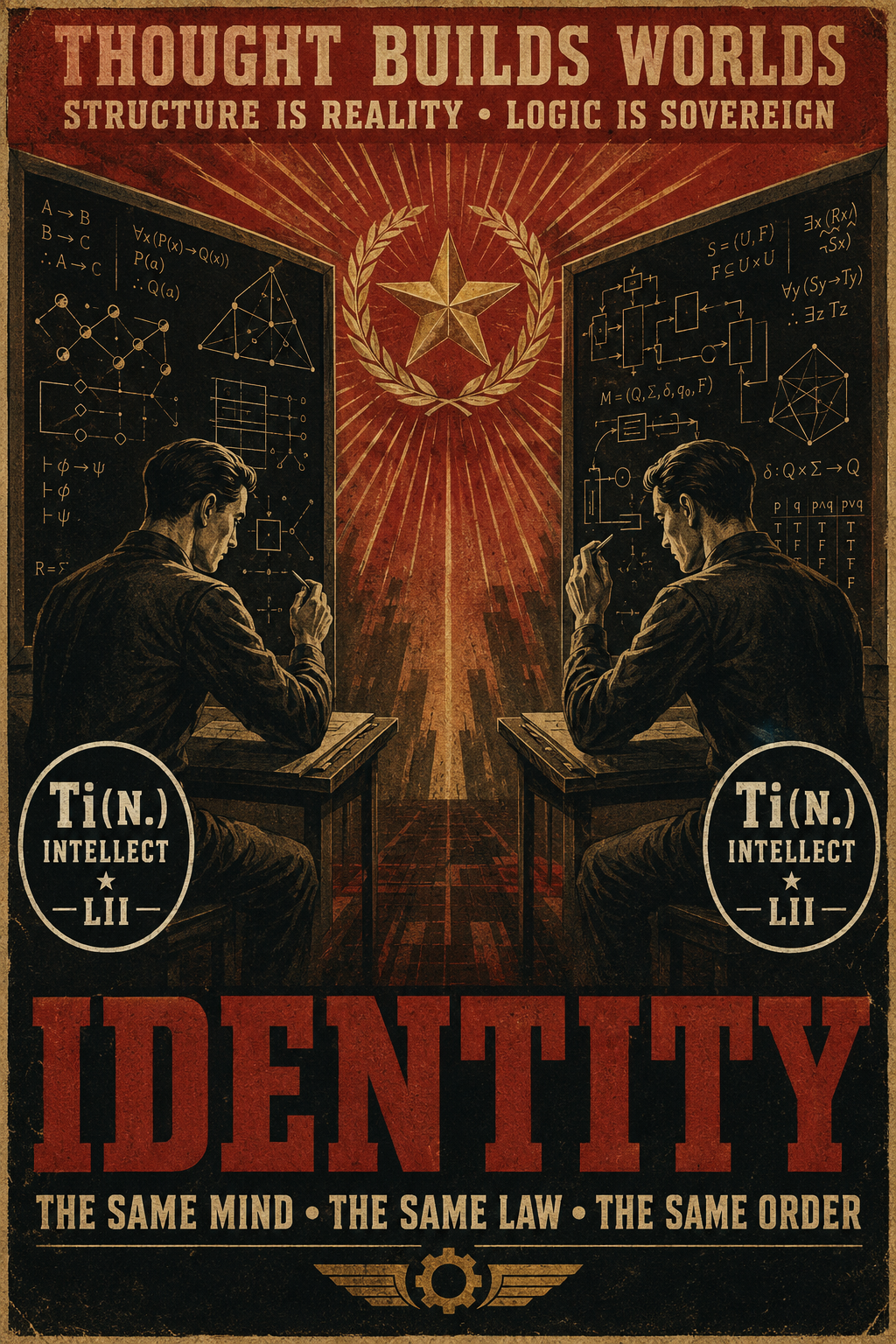
Identity relation poster

Alpha Quadra

Alpha Identity Types

Intellect element illustration
Ti(N.) Intellect · doubled Base
Affect element illustration
Fe(S.) Affect · equally absent

LII — Ti(N.) Intellect

Two LII types encounter in each other the most complete recognition available in the socion. Every structural schema produced by one is immediately comprehensible to the other — not merely understood but redundant. The abstract logical architecture each builds, the conceptual frameworks each articulates, the structural resolutions each arrives at: all of this flows in both directions with zero friction and zero new information.

What doubles: Ti(N.) precision, abstract communicable structural logic, the capacity to build and evaluate formal conceptual schema. Ne(T.) generativity — the conceptual exploration that serves structural resolution — also doubles. Two instances of the same analytical mode operating in full resonance.

What remains equally absent: Fe(S.) — somatic collective atmospheric warmth. Both LII types most deeply seek ambient collective feeling, the somatic charge of shared human presence. Neither can provide it for the other. The logical architecture is flawless. The warmth that would make it feel inhabited by living people is equally missing in both.

The identity interaction: productive in the short term — frameworks refined at speed, errors caught immediately, the quality of structural work elevated by the absence of communicative friction. Limited over time — no new register enters the field. The frameworks grow more precise and more isolated simultaneously.
Identity relation illustration for LII
Ideation element illustration
Ne(T.) Ideation · doubled Base
Stimulation element illustration
Si(F.) Stimulation · equally absent

ILE — Ne(T.) Ideation

Two ILE types encounter in each other a concept space that doubles without limit. Every connection traced by one is immediately comprehensible to the other — and immediately extended. The branching architecture expands in both directions with complete mutual intelligibility, each recognising in the other the same quality of detached exploratory conceptual energy.

What doubles: Ne(T.) generativity, architectural concept production, semantic possibility mapping. Ti(N.) structural resolution — the framework-building that serves conceptual exploration — also doubles. Two instances of the same expansive analytical mode producing in parallel.

What remains equally absent: Si(F.) — subjective somatic bodily ease. Both ILE types most deeply seek warm somatic comfort, the felt quality of immediate bodily presence that grounds abstraction in physical reality. Neither can provide it for the other. The concept space proliferates. The ground beneath it is equally absent in both.

The identity interaction: intellectually exhilarating and structurally unanchored in equal measure. The concepts expand into increasingly elaborate architecture with no somatic grounding arriving from anywhere in the field. The conversation is effortlessly generative and progressively untethered.

Identity relation illustration for ILE
Stimulation element illustration
Si(F.) Stimulation · doubled Base
Ideation element illustration
Ne(T.) Ideation · equally absent

SEI — Si(F.) Stimulation

Two SEI types encounter in each other a somatic warmth that simply resonates. Every quality of immediate bodily ease produced by one is immediately inhabited by the other — the sensory comfort deepens in both directions without friction, each recognising in the other the same quality of absorbed somatic presence.

What doubles: Si(F.) somatic ease, subjective bodily warmth, immediate sensory pleasure. Fe(S.) atmospheric warmth — the collective mood generation that serves bodily ease — also doubles. Two instances of the same warmly somatic mode occupying shared space.

What remains equally absent: Ne(T.) — detached conceptual architecture. Both SEI types most deeply seek precise analytical concept structure, the clear intellectual framework that gives somatic ease a larger navigable mental space to inhabit. Neither can provide it for the other. The warmth is complete. The structural clarity that would give it intellectual form is equally absent in both.

The identity interaction: deeply comfortable and intellectually undirected in equal measure. The somatic ease is genuine and mutual. The conceptual architecture that would give the shared space intellectual range and navigational clarity does not arrive from anywhere in the field.

Identity relation illustration for SEI
Affect element illustration
Fe(S.) Affect · doubled Base
Intellect element illustration
Ti(N.) Intellect · equally absent

ESE — Fe(S.) Affect

Two ESE types encounter in each other an atmospheric warmth that amplifies. Every quality of collective somatic mood produced by one is immediately inhabited and amplified by the other — the shared atmosphere intensifies in both directions, each recognising and generating the same quality of collective emotional warmth.

What doubles: Fe(S.) collective atmospheric generation, somatic mood broadcast, the physical conveyance of felt warmth into shared space. Si(F.) somatic ease — the bodily comfort that sustains atmospheric generation — also doubles. Two instances of the same warm atmospheric mode filling shared space.

What remains equally absent: Ti(N.) — abstract communicable logical structure. Both ESE types most deeply seek clear analytical framework, the logical schema that gives collective warmth a conceptual coherence and communicable form. Neither can provide it for the other. The atmosphere is vivid and mutual. The logical structure that would give it intellectual grounding is equally absent in both.

The identity interaction: collectively warm and intellectually structureless. The atmospheric quality of the shared space is genuine and amplified. Nothing arrives to provide the conceptual clarity that would give the warmth a lasting framework.

Identity relation illustration for ESE

Beta Quadra

Beta Identity Types

Habitus element illustration
Ti(S.) Habitus · doubled Base
Sentiment element illustration
Fe(N.) Sentiment · equally absent

LSI — Ti(S.) Habitus

Two LSI types encounter in each other a procedural authority that mirrors completely. Every codified physical sequence enacted by one is immediately recognised by the other as correct — the established form is flawless in both directions, each confirming the other's procedural precision without friction or new information.

What doubles: Ti(S.) embodied procedural authority, codified physical structure, the trained enactment of correct form through the body. Se(T.) regulatory force — the physical governance that enforces procedure — also doubles. Two instances of the same physically precise procedural mode operating in parallel.

What remains equally absent: Fe(N.) — inner rhetorical passion. Both LSI types most deeply seek directed inner conviction that gives structural procedural authority emotional fire and felt purpose. Neither can provide it for the other. The procedure is impeccably enacted. The passionate conviction that would give it felt significance is equally absent in both.

The identity interaction: structurally precise and emotionally evacuated. The procedure is maintained at the highest level. Nothing arrives to provide the inner conviction that would make the structural authority feel morally purposeful rather than merely formally correct.

Identity relation illustration for LSI
Actuation element illustration
Se(T.) Actuation · doubled Base
Reverie element illustration
Ni(F.) Reverie · equally absent

SLE — Se(T.) Actuation

Two SLE types encounter in each other a regulatory authority that recognises itself completely. Every application of measured circumscribed force by one is immediately comprehensible to the other — the governance is flawless in both directions, each understanding precisely the parameters and precision of the other's authority.

What doubles: Se(T.) regulatory force, circumscribed physical governance, the measured shaping of the physical environment to conform to defined parameters. Ti(S.) structural procedure — the codified form that gives governance its organisational coherence — also doubles. Two instances of the same commanding physical authority operating in parallel.

What remains equally absent: Ni(F.) — felt narrative vision. Both SLE types most deeply seek inner narrative aspiration that gives regulatory governance temporal direction and personal depth. Neither can provide it for the other. The governance is precise and commanding. The narrative vision that would give it direction over time is equally absent in both.

The identity interaction: physically authoritative and temporally undirected. The environmental governance is complete. Nothing arrives to provide the felt narrative depth that would give the authority a sense of meaningful temporal trajectory.

Identity relation illustration for SLE
Reverie element illustration
Ni(F.) Reverie · doubled Base
Actuation element illustration
Se(T.) Actuation · equally absent

IEI — Ni(F.) Reverie

Two IEI types encounter in each other a narrative depth that resonates completely. Every quality of inner temporal aspiration produced by one is immediately recognised by the other — the felt narrative deepens in both directions, each inhabiting the other's temporal story with the same quality of personal resonance.

What doubles: Ni(F.) inner narrative aspiration, felt temporal immersion, the personal resonance of how events unfold through imagined time. Fe(N.) rhetorical expression — the emotional voice that gives narrative its outward form — also doubles. Two instances of the same inwardly absorbed narrative mode occupying shared inner space.

What remains equally absent: Se(T.) — regulatory controlled force. Both IEI types most deeply seek measured physical governance that gives inner narrative vision concrete consequence and implementable form. Neither can provide it for the other. The narrative vision is vivid and mutually resonant. The physical governance that would give it real-world consequence is equally absent in both.

The identity interaction: narratively rich and practically ungrounded. The inner temporal vision deepens. Nothing arrives to provide the regulatory physical authority that would translate the narrative aspiration into implemented reality.

Identity relation illustration for IEI
Sentiment element illustration
Fe(N.) Sentiment · doubled Base
Habitus element illustration
Ti(S.) Habitus · equally absent

EIE — Fe(N.) Sentiment

Two EIE types encounter in each other a rhetorical passion that amplifies. Every quality of inner conviction shaped into dramatic address by one is immediately recognised and matched by the other — the rhetorical charge builds in both directions, each inciting and being incited by the same quality of directed emotional conviction.

What doubles: Fe(N.) inner rhetorical passion, dramatic symbolic address, deeply felt conviction conveyed through gesture and charged language. Ni(F.) narrative vision — the temporal aspiration that fuels the rhetoric — also doubles. Two instances of the same dramatically passionate mode generating mutual incitement.

What remains equally absent: Ti(S.) — embodied procedural authority. Both EIE types most deeply seek physical structural grounding that gives their rhetorical passion procedural legitimacy and embodied form. Neither can provide it for the other. The passion is genuine and mutually amplified. The structural authority that would give it physical grounding is equally absent in both.

The identity interaction: emotionally intense and structurally unanchored. The rhetorical charge reaches extraordinary heights. Nothing arrives to provide the embodied procedural authority that would give the passion a structural form that can be enacted and maintained.

Identity relation illustration for EIE

Gamma Quadra

Gamma Identity Types

Animus element illustration
Fi(S.) Animus · doubled Base
Reason element illustration
Te(N.) Reason · equally absent

ESI — Fi(S.) Animus

Two ESI types encounter in each other a particular relational conviction that mirrors completely. Every visceral verdict about specific persons and objects produced by one is immediately recognised by the other — each understands the other's particular bonds and aversions with immediate constitutive precision, the relational certainty resonating without friction.

What doubles: Fi(S.) visceral particular bonds, settled felt verdicts about specific persons and objects, constitutive relational affinities and aversions. Se(F.) mobilising force — the somatic exertion that enforces those bonds — also doubles. Two instances of the same viscerally particular relational mode operating in parallel.

What remains equally absent: Te(N.) — detached applied strategic reasoning. Both ESI types most deeply seek abstract strategic inference that gives particular relational conviction wider actionable reach and productive strategic direction. Neither can provide it for the other. The relational certainty is absolute and mutually understood. The strategic reasoning that would give it wider reach is equally absent in both.

The identity interaction: relationally certain and strategically limited. The particular bonds are deeply understood between both types. Nothing arrives to provide the applied strategic intelligence that would give those bonds productive actionable direction.

Identity relation illustration for ESI
Impetus element illustration
Se(F.) Impetus · doubled Base
Apprehension element illustration
Ni(T.) Apprehension · equally absent

SEE — Se(F.) Impetus

Two SEE types encounter in each other a visceral force that recognises itself completely. Every conversion of vital reserves into explosive somatic exertion by one is immediately matched by the other — the physical commitment is full in both directions, each generating the same quality of visceral mobilising force with the same whole-body engagement.

What doubles: Se(F.) visceral mobilising impetus, full-body somatic exertion, the conversion of vital reserves into explosive directed action. Fi(S.) particular conviction — the relational certainty that gives force its specific target — also doubles. Two instances of the same physically committed mobilising mode operating in parallel.

What remains equally absent: Ni(T.) — detached strategic temporal apprehension. Both SEE types most deeply seek temporal pattern intelligence that gives visceral force foresight and strategic direction over time. Neither can provide it for the other. The force is maximum and mutually recognised. The strategic temporal intelligence that would give it direction and foresight is equally absent in both.

The identity interaction: physically committed and temporally undirected. The visceral force is fully present and doubled. Nothing arrives to provide the strategic apprehension that would give the force a longer temporal trajectory and anticipatory intelligence.

Identity relation illustration for SEE
Apprehension element illustration
Ni(T.) Apprehension · doubled Base
Impetus element illustration
Se(F.) Impetus · equally absent

ILI — Ni(T.) Apprehension

Two ILI types encounter in each other a strategic temporal intelligence that mirrors completely. Every pattern read by one is immediately comprehensible to the other — the temporal apprehension deepens in both directions, each tracking the same patterns with the same quality of quiet nonverbal strategic precision.

What doubles: Ni(T.) detached strategic apprehension, nonverbal temporal pattern reading, the quiet comprehension of how things are likely to unfold. Te(N.) strategic reasoning — the applied inference that makes apprehension actionable — also doubles. Two instances of the same quietly strategic temporal mode tracking in parallel.

What remains equally absent: Se(F.) — visceral mobilising force. Both ILI types most deeply seek explosive somatic force that gives strategic temporal apprehension physical consequence and urgent reality. Neither can provide it for the other. The pattern reading is precise and mutually comprehensible. The physical force that would give it concrete consequence is equally absent in both.

The identity interaction: strategically precise and physically inert. The temporal patterns are comprehended at the highest level. Nothing arrives to provide the visceral force that would make the strategic apprehension physically consequential.

Identity relation illustration for ILI
Reason element illustration
Te(N.) Reason · doubled Base
Animus element illustration
Fi(S.) Animus · equally absent

LIE — Te(N.) Reason

Two LIE types encounter in each other an applied strategic intelligence that resonates completely. Every convergent inference toward productive outcome produced by one is immediately comprehensible to the other — the reasoning builds in both directions, each following the same quality of applied analytical drive toward the same kind of workable conclusions.

What doubles: Te(N.) applied strategic reasoning, evidential inference toward productive ends, workable strategy assembled from available data. Ni(T.) temporal apprehension — the pattern tracking that informs the strategy — also doubles. Two instances of the same applied strategic analytical mode operating in parallel convergence.

What remains equally absent: Fi(S.) — visceral particular relational conviction. Both LIE types most deeply seek particular relational grounding that gives applied strategy a felt human purpose and specific directional conviction. Neither can provide it for the other. The strategy is clear and mutually comprehensible. The particular felt conviction that would give it human direction is equally absent in both.

The identity interaction: strategically sharp and relationally ungrounded. The applied reasoning reaches its highest quality. Nothing arrives to provide the visceral particular conviction that would give the strategy a felt human purpose beyond productive efficiency.

Identity relation illustration for LIE

Delta Quadra

Delta Identity Types

Soul element illustration
Fi(N.) Soul · doubled Base
Praxis element illustration
Te(S.) Praxis · equally absent

EII — Fi(N.) Soul

Two EII types encounter in each other a principled conviction that resonates without remainder. Every expression of abstract foundational moral idealism by one is immediately recognised by the other — the principled certainty resonates in both directions, each holding the same quality of free-floating foundational conviction with the same quality of quiet inner seriousness.

What doubles: Fi(N.) abstract principled conviction, foundational moral idealism, the totality of inner values held independently of any particular person. Ne(F.) imaginative inspiration — the felt possibility that serves and deepens conviction — also doubles. Two instances of the same quietly principled inward mode operating in full resonance.

What remains equally absent: Te(S.) — concrete hands-on practical effectiveness. Both EII types most deeply seek material practical competence that gives principled moral conviction tangible real-world form and demonstrable impact. Neither can provide it for the other. The principled idealism is complete and mutually recognised. The practical hands-on effectiveness that would give it real-world form is equally absent in both.

The identity interaction: morally serious and practically ungrounded. The principled conviction deepens. Nothing arrives to provide the concrete practical effectiveness that would translate the idealism into tangible outcomes.

Identity relation illustration for EII
Inspiration element illustration
Ne(F.) Inspiration · doubled Base
Observation element illustration
Si(T.) Observation · equally absent

IEE — Ne(F.) Inspiration

Two IEE types encounter in each other a felt imaginative aliveness that amplifies. Every expression of personally-charged felt possibility by one is immediately recognised and matched by the other — the inspiration resonates in both directions, each radiating the same quality of inner personal charge toward what could be.

What doubles: Ne(F.) felt imaginative inspiration, personal aliveness to possibility, the inner sense of what could be charged with personal significance. Fi(N.) principled conviction — the moral grounding that gives inspiration its felt significance — also doubles. Two instances of the same personally-charged imaginative mode generating mutual inspiration.

What remains equally absent: Si(T.) — controlled selective external sensory precision. Both IEE types most deeply seek disciplined sensory observation that gives felt inspiration definite physical form and precise material grounding. Neither can provide it for the other. The inspiration is vivid and mutually amplified. The precise sensory grounding that would give it definite physical form is equally absent in both.

The identity interaction: imaginatively alive and materially ungrounded. The inspired aliveness to possibility reaches full resonance. Nothing arrives to provide the precise sensory observation that would give the inspiration concrete physical form.

Identity relation illustration for IEE
Observation element illustration
Si(T.) Observation · doubled Base
Inspiration element illustration
Ne(F.) Inspiration · equally absent

SLI — Si(T.) Observation

Two SLI types encounter in each other a sensory precision that mirrors completely. Every instance of controlled selective attention on functional physical detail by one is immediately recognised by the other — the observation deepens in both directions, each attending to the same physical material with the same quality of disciplined receptive precision.

What doubles: Si(T.) controlled external sensory observation, disciplined receptive focus on functional physical detail, the careful attention to what is actually present in the physical environment. Te(S.) practical method — the applied technique that makes observation actionable — also doubles. Two instances of the same precisely observant physical mode attending in parallel.

What remains equally absent: Ne(F.) — felt personal inspiration. Both SLI types most deeply seek personally-charged imaginative inspiration that gives precise sensory observation a felt sense of larger possibility and personal significance. Neither can provide it for the other. The sensory precision is complete and mutually recognised. The felt personal inspiration that would give it imaginative range is equally absent in both.

The identity interaction: sensorially precise and imaginatively limited. The observation is the finest possible. Nothing arrives to provide the felt personal inspiration that would give the careful sensory attention a sense of larger meaning and imaginative possibility.

Identity relation illustration for SLI
Praxis element illustration
Te(S.) Praxis · doubled Base
Soul element illustration
Fi(N.) Soul · equally absent

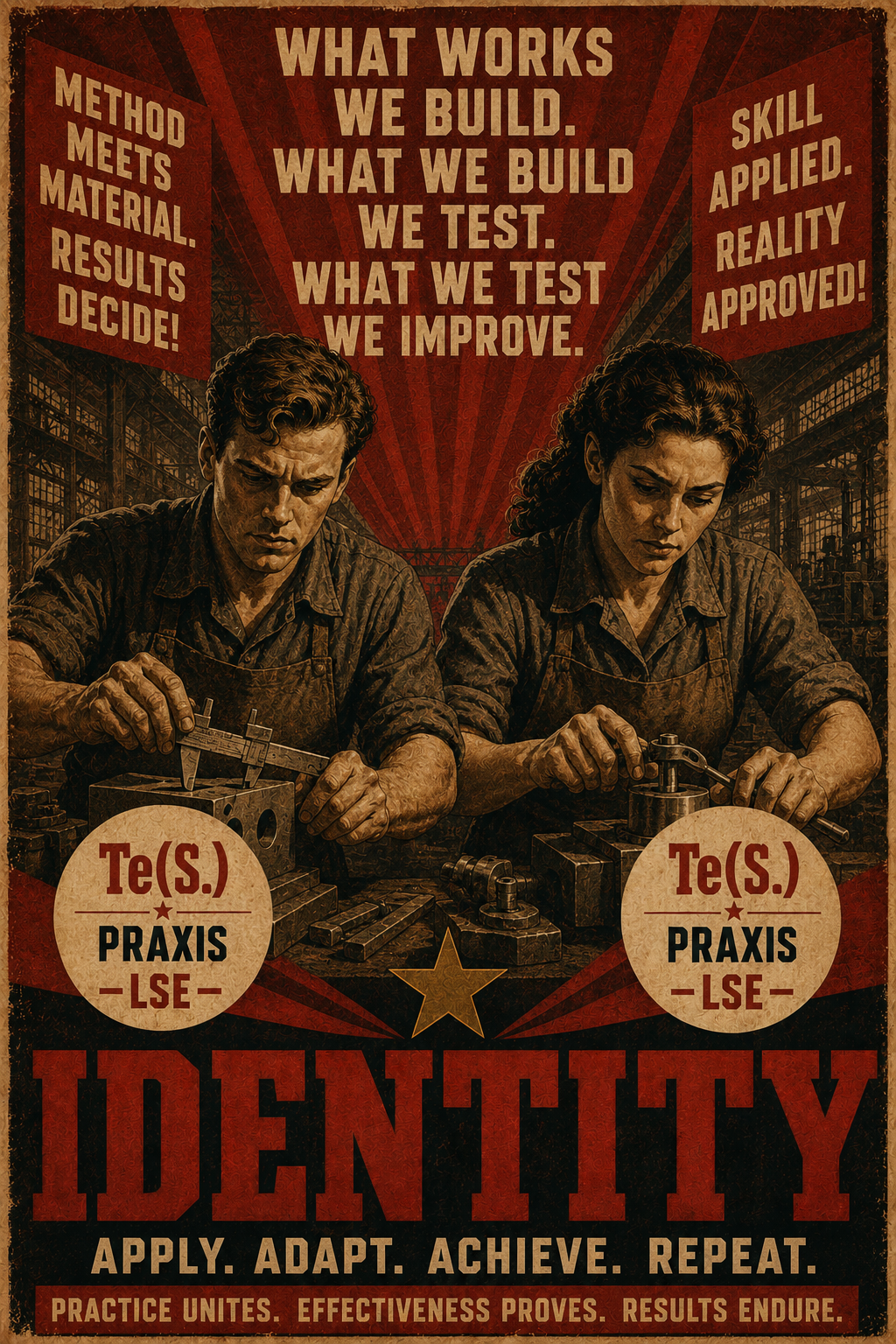
LSE — Te(S.) Praxis

Two LSE types encounter in each other a practical intelligence that recognises itself completely. Every application of hands-on experimental method by one is immediately comprehensible to the other — the practical competence mirrors in both directions, each finding the same quality of effective technique through the same quality of direct material engagement.

What doubles: Te(S.) hands-on practical effectiveness, experimental method, the flexible use of physical technique and material resources to improve workflow. Si(T.) sensory observation — the precise sensory evaluation that serves practical method-finding — also doubles. Two instances of the same practically competent physically-engaged mode operating in parallel.

What remains equally absent: Fi(N.) — abstract foundational moral conviction. Both LSE types most deeply seek principled moral grounding that gives practical effectiveness a foundational sense of purpose and a clear sense of what the work is ultimately for. Neither can provide it for the other. The practical competence is complete and mutually recognised. The principled conviction that would give it lasting moral purpose is equally absent in both.

The identity interaction: practically effective and morally ungrounded. The technique is refined to its highest quality. Nothing arrives to provide the foundational principled conviction that would give the practical work a sense of deeper human purpose.

Identity relation illustration for LSE

Identity Summary

Doubled Strength, Shared Absence

File nameTypeBaseDoubled strengthEqually absent
identity-liiLIITi(N.)Abstract structural logicFe(S.) collective warmth
identity-lsiLSITi(S.)Embodied procedural authorityFe(N.) inner passion
identity-eiiEIIFi(N.)Principled moral convictionTe(S.) practical method
identity-esiESIFi(S.)Visceral particular bondsTe(N.) strategic reasoning
identity-ileILENe(T.)Conceptual architectureSi(F.) somatic ease
identity-ieeIEENe(F.)Felt imaginative inspirationSi(T.) sensory precision
identity-sleSLESe(T.)Regulatory physical governanceNi(F.) narrative vision
identity-seeSEESe(F.)Visceral mobilising forceNi(T.) strategic apprehension
identity-ieiIEINi(F.)Inner narrative aspirationSe(T.) regulatory force
identity-eieEIEFe(N.)Rhetorical passionate addressTi(S.) embodied procedure
identity-sliSLISi(T.)Controlled sensory observationNe(F.) personal inspiration
identity-lseLSETe(S.)Practical hands-on effectivenessFi(N.) principled conviction
identity-seiSEISi(F.)Somatic bodily easeNe(T.) conceptual structure
identity-iliILINi(T.)Strategic temporal apprehensionSe(F.) visceral force
identity-eseESEFe(S.)Collective atmospheric warmthTi(N.) logical structure
identity-lieLIETe(N.)Applied strategic reasoningFi(S.) particular conviction

Identity is the last and structurally simplest relation in the Model L intertype system — and in some respects the most instructive. Every other relation involves some form of displacement, register gap, complementarity, or radial mediation. Identity involves none of these. It offers the purest possible mutual comprehension and the purest possible mutual limitation.

The gap between Identity and Dual captures something essential about what makes relationships generative. Dual provides what is most needed from the position of greatest strength; Identity provides what is already present from a position of equal strength. The recognition in Dual is recognition of what one lacks. The recognition in Identity is recognition of what one is. Both are forms of being seen completely. Only one is a form of being completed.