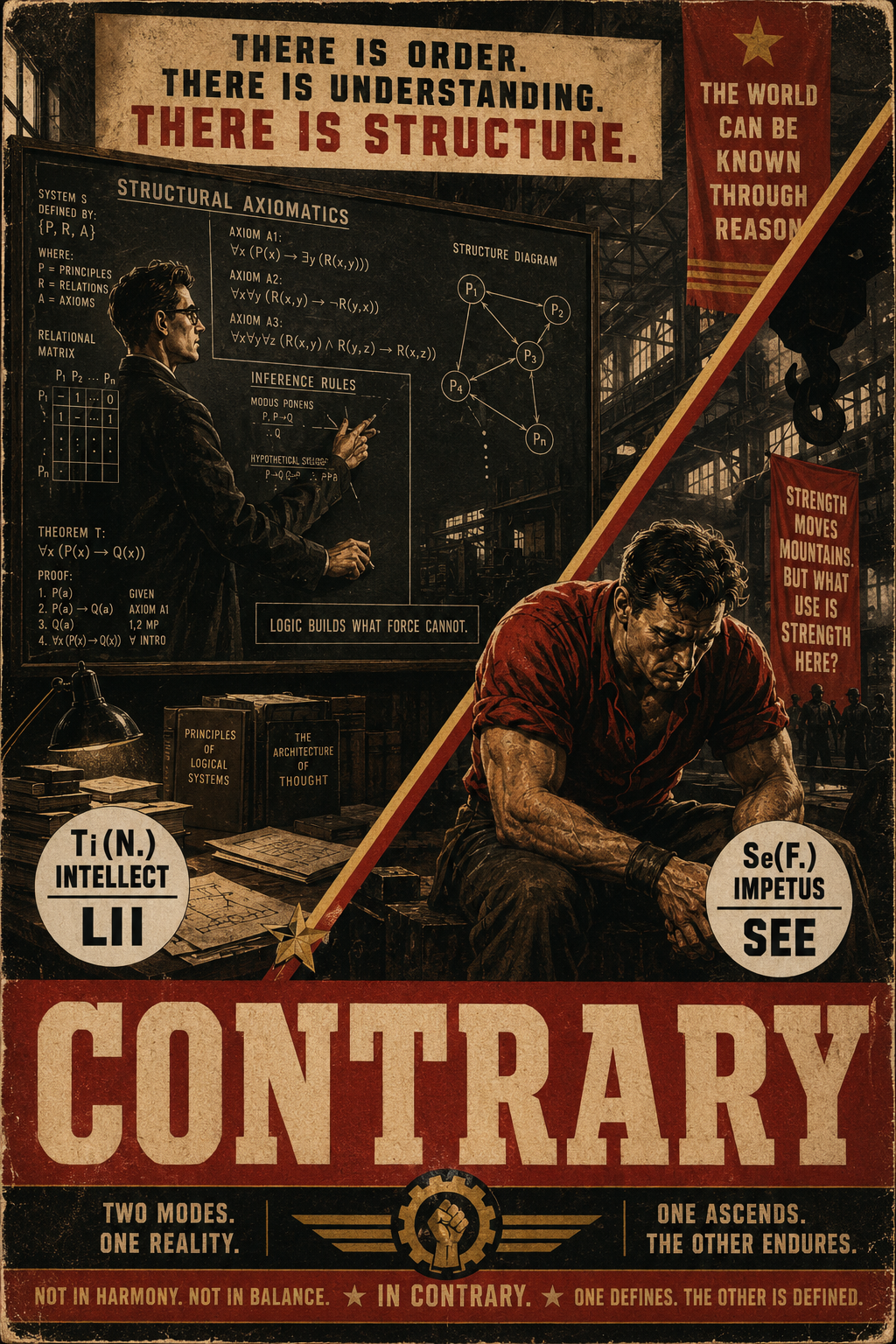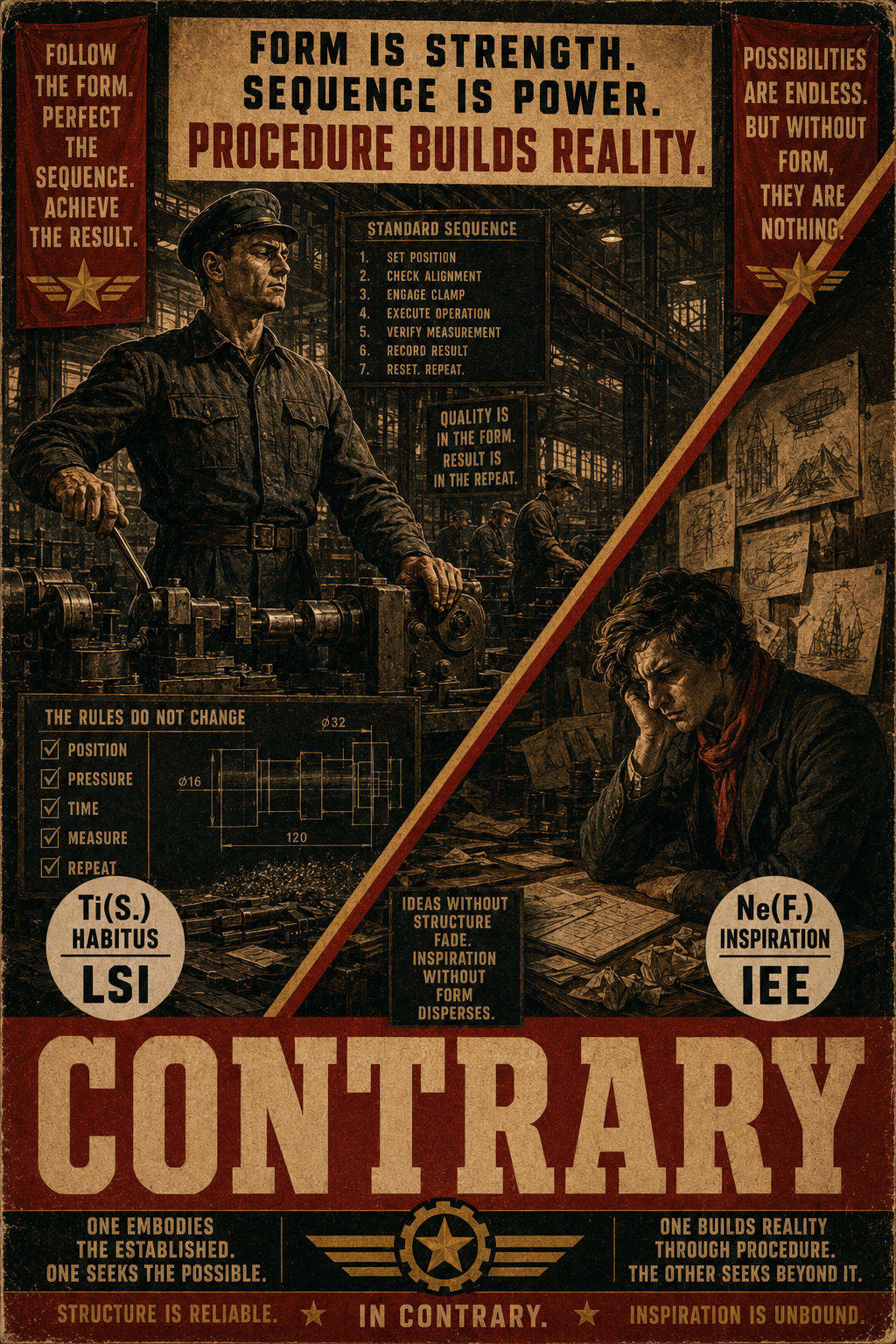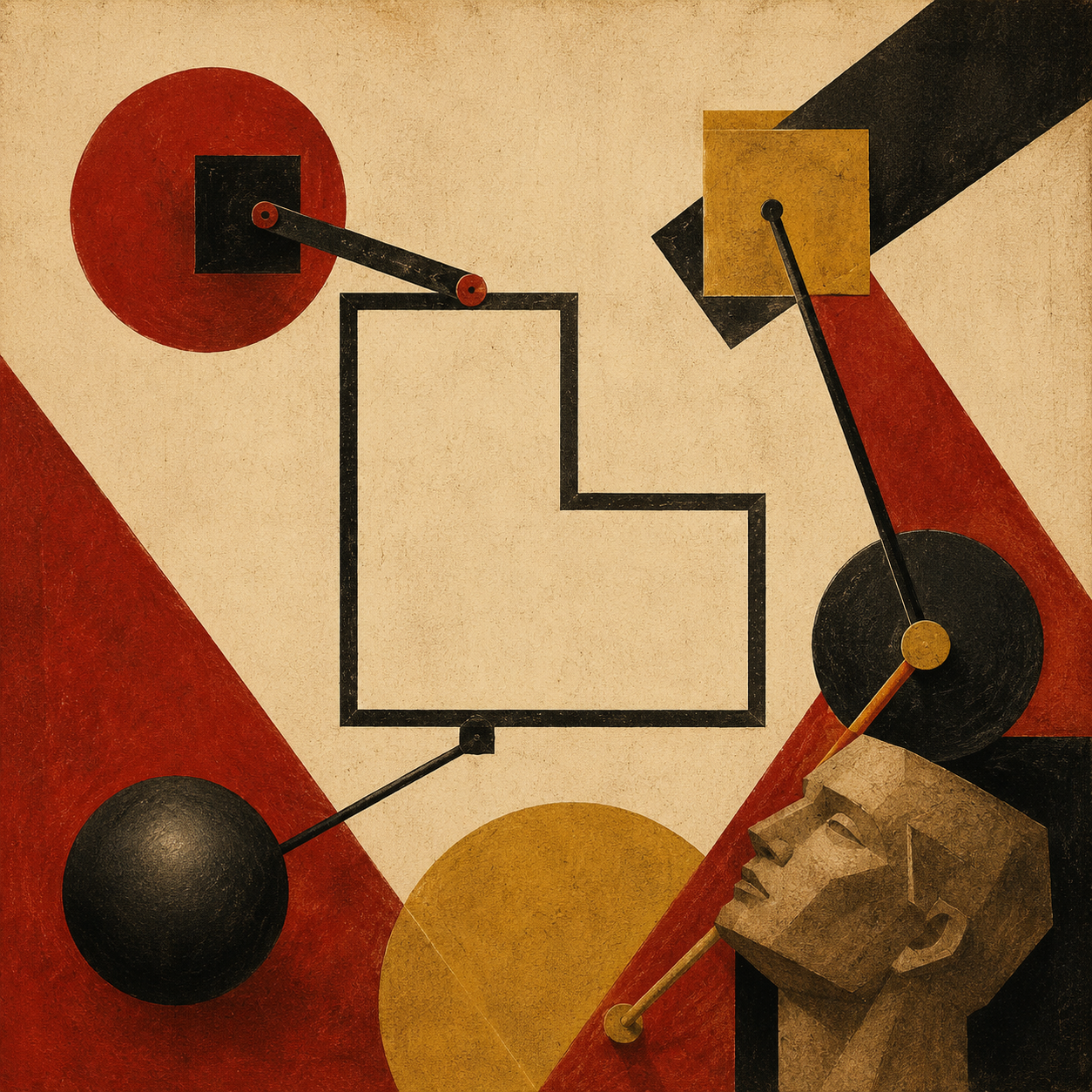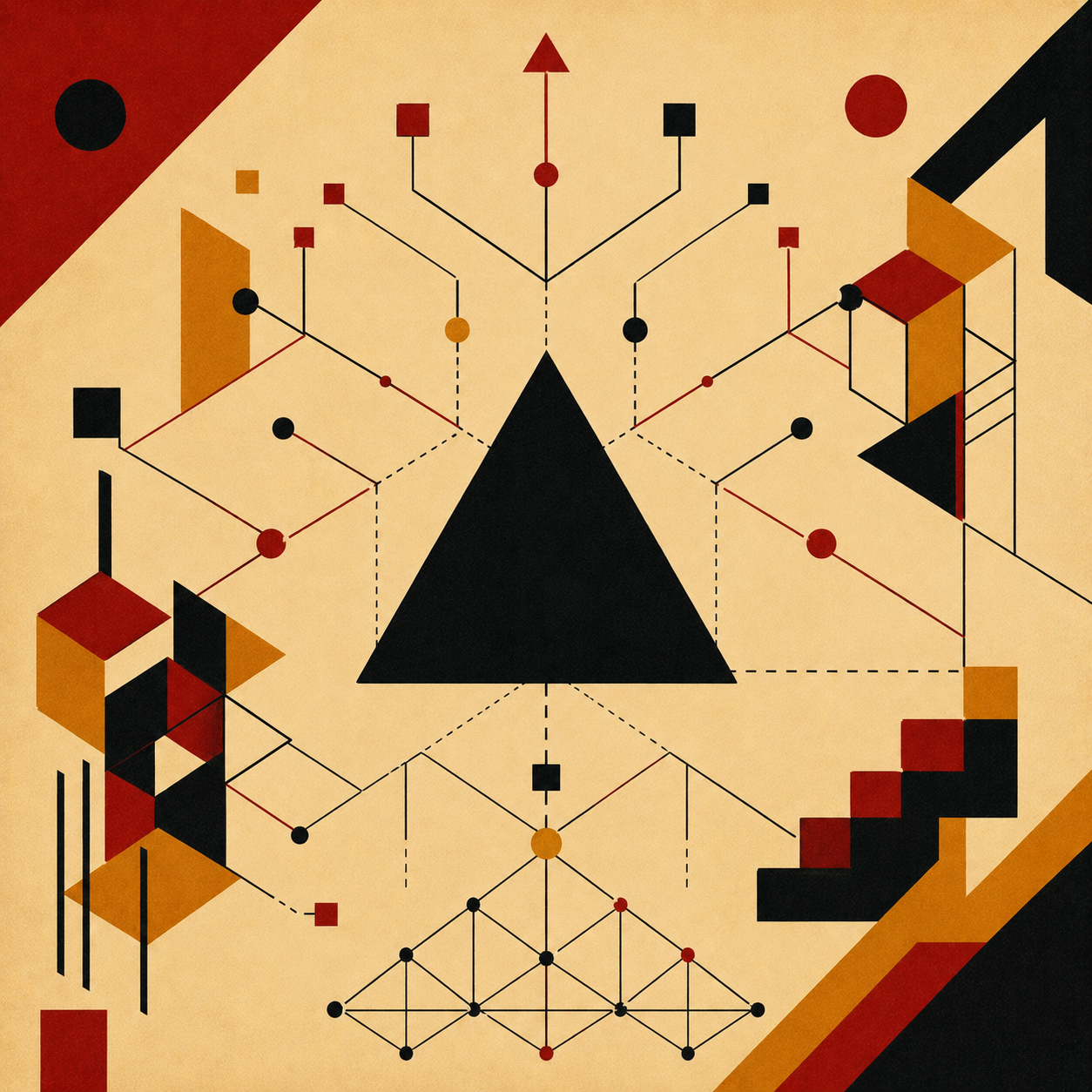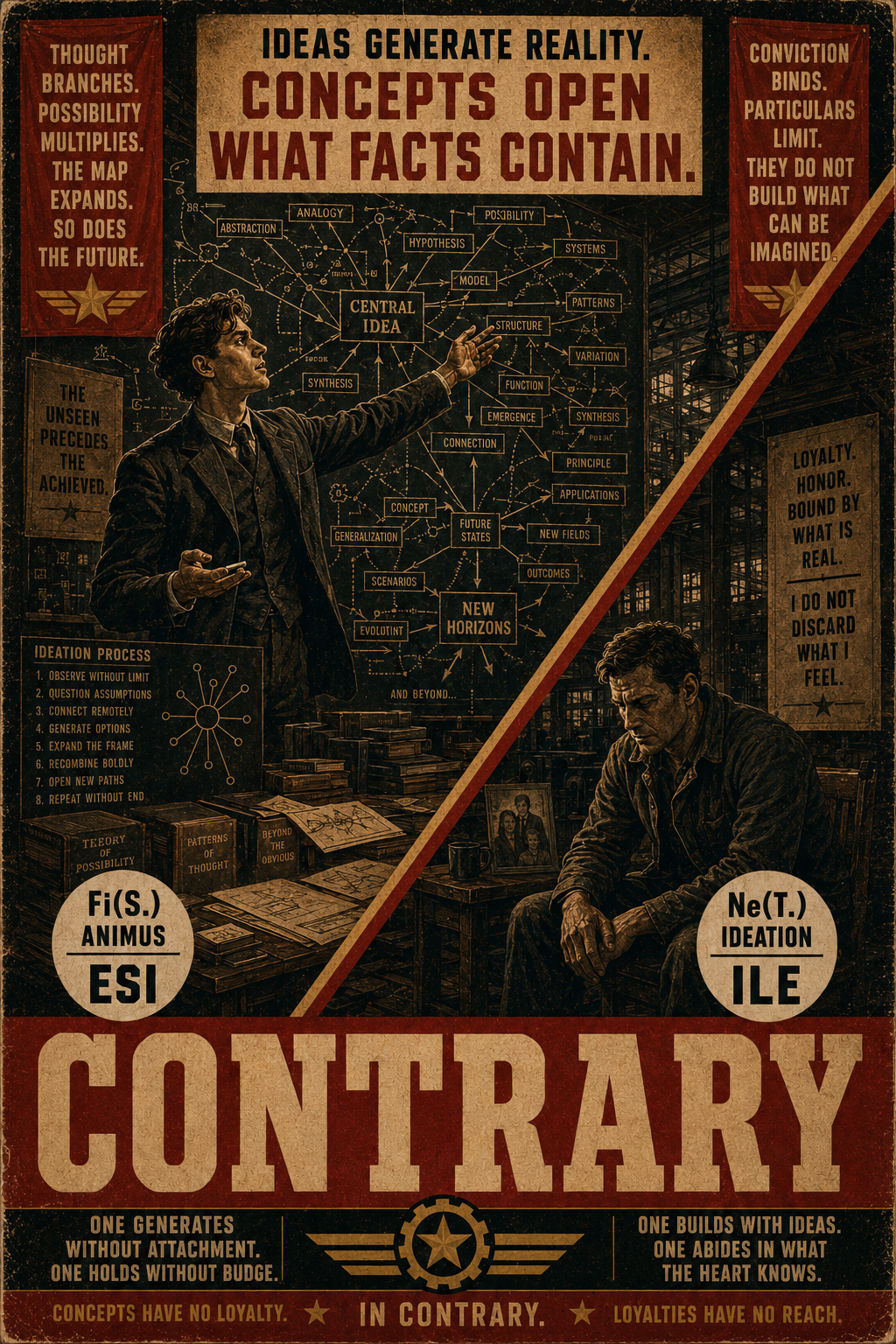



Ti(N.) Intellect / Se(F.) Impetus — LII and SEE
In Model L, the Conflict relationship has a precise structural definition: each type's base function sits exactly at the other's D2 Vulnerable position — the PoLR, Point of Least Resistance. Not the Role (2d, aspirational, strained), not the Ignoring (3d, competent but unrewarding), but the absolute weakest position in the functional stack: 1d, 1p, treated with careless indifference, the position where a type is genuinely inept and finds direct engagement both draining and largely irrelevant to their natural operation.
The match is exact. Same element, same sub-variant. Each type's most natural, most effortless primary output strikes the other's blind spot with full force — not out of intent, not through incompatibility of domain alone, but because what flows most naturally from each is precisely what the other has the least capacity to process.
LII leads with Ti(N.) Intellect — detached abstract structural logic. In SEE's Model L stack, Ti(N.) sits at the D2 Vulnerable position. SEE is genuinely inept with it, finds it careless to engage, treats it as largely irrelevant to their natural operation. When LII's abstract logical architecture fills the space — schemas articulated, concepts mapped, frameworks built into communicable form — SEE has no functional register to receive it. The precision of the structure is not alien to SEE in the way an opposed domain might be; it is more fundamentally inaccessible than that. It lands with nowhere to go.
SEE leads with Se(F.) Impetus — visceral mobilising drive, full-body somatic exertion toward concrete aims. In LII's Model L stack, Se(F.) sits at the D2 Vulnerable position. LII is genuinely inept with it, finds direct engagement with it draining and largely irrelevant. When SEE's visceral physical force fills the space — mobilising, urgent, converting vital reserves into explosive directed action — LII has no functional register to receive it. The force is not merely foreign; it activates LII's most undefended position.
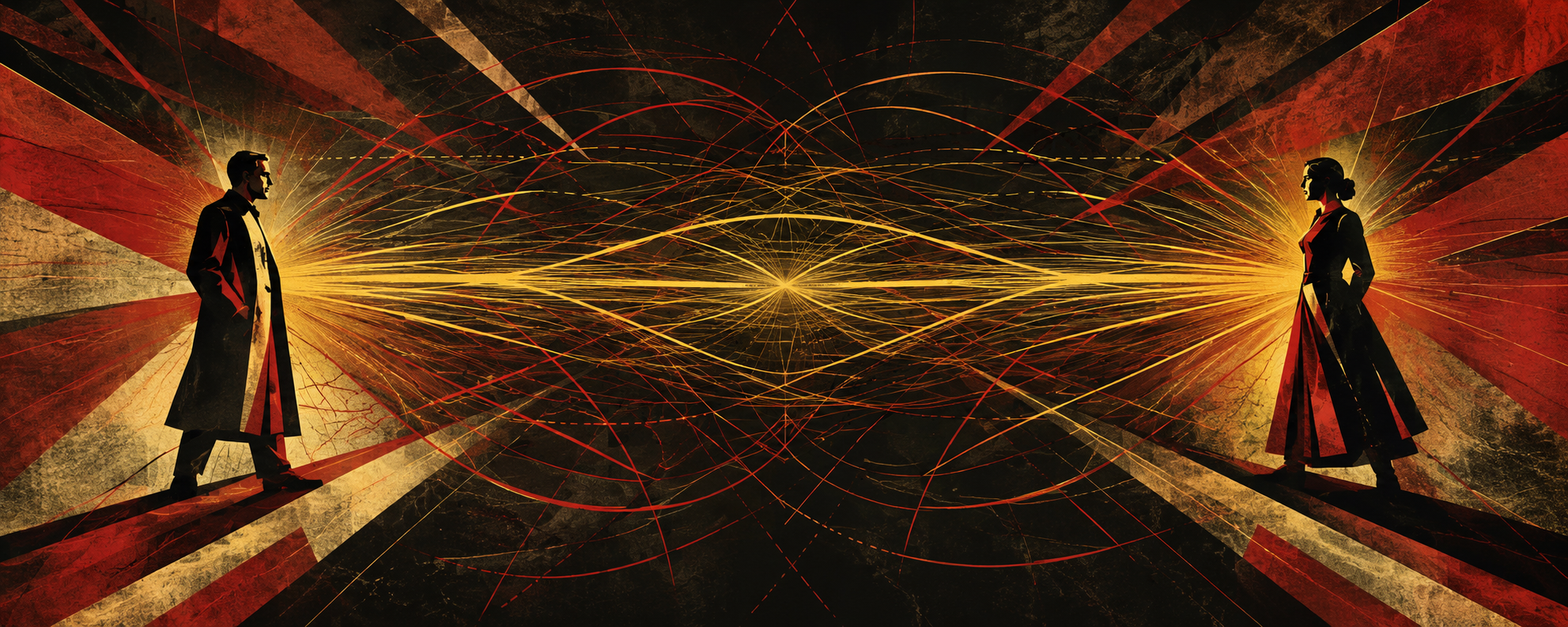
Neither type is attacking the other. Both are simply operating from their most natural, most effortless mode. The damage is structural and default.
The dynamic is not symmetric in any given interaction. Whichever mode asserts itself first tends to dominate the shared space, because what it produces lands directly on the other type's blind spot — which, being treated with careless indifference, offers no defence. The LII's structural logic fills the space and SEE cannot find purchase; SEE's visceral force fills the space and LII cannot find purchase. The dominant/backgrounded quality reverses when the context shifts, but the underlying structural collision remains.
Model L makes the specific collision visible. It is not Ti against Se in general — it is Ti(N.) against the exact sub-variant of Se sitting at the PoLR, and Se(F.) against the exact sub-variant of Ti sitting at LII's PoLR. The precision of the strike is sub-variant specific. A different Se against the same Ti, or the same Se against a different Ti, would produce a different relation. This pairing finds exact register match at the most vulnerable point on both sides.