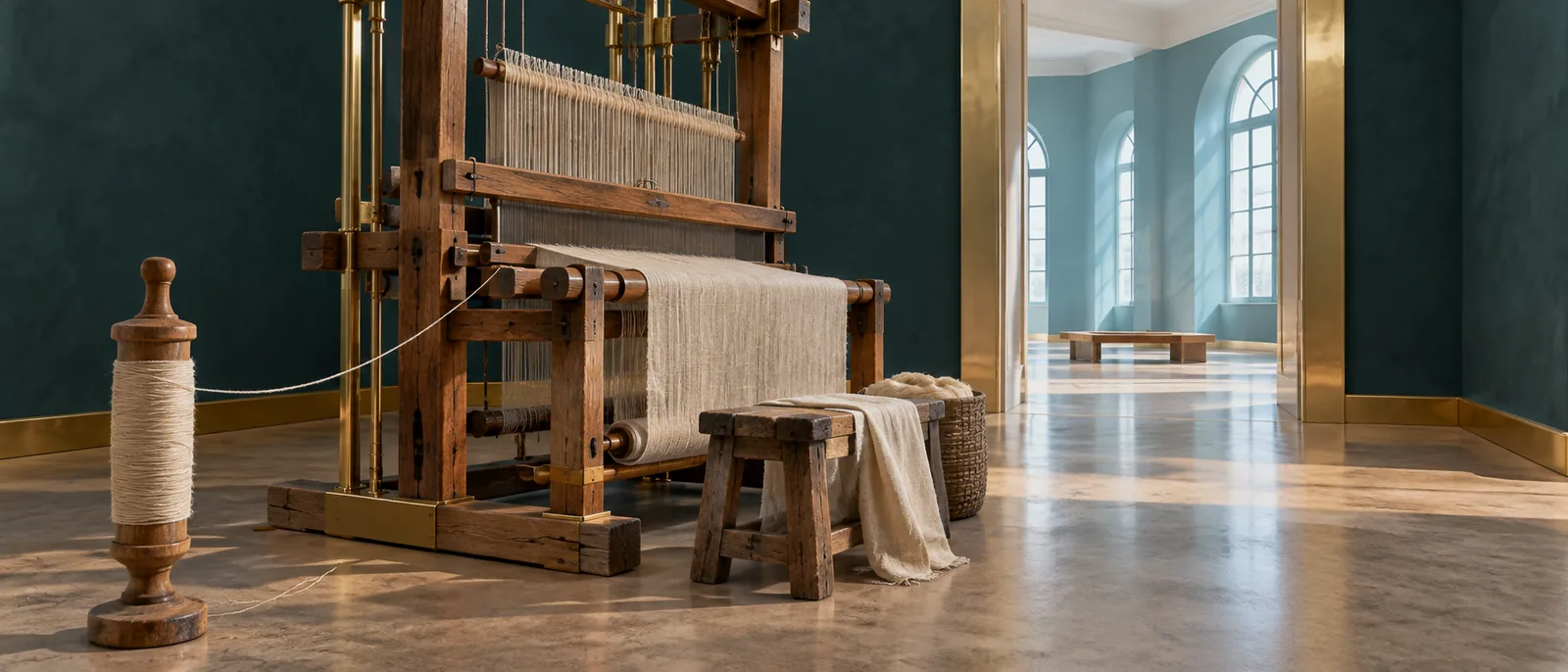
Jane Addams was walking along Polk Street when she saw an older Italian woman spinning on a tenement step. The woman's distaff, her homesick expression and the thread passing through her hands caught Addams at a moment of frustration. She had been trying to find a way for the immigrant mothers of the neighborhood and their American-born children to meet across an expanding difference of language, work and esteem. The spindle suggested an answer. In Twenty Years at Hull-House, the woman raises it and promises to knit stockings for her goddaughter. A skill that seemed to have lost its place in Chicago still had a relation to someone. Addams began to imagine a room in which it could be seen.
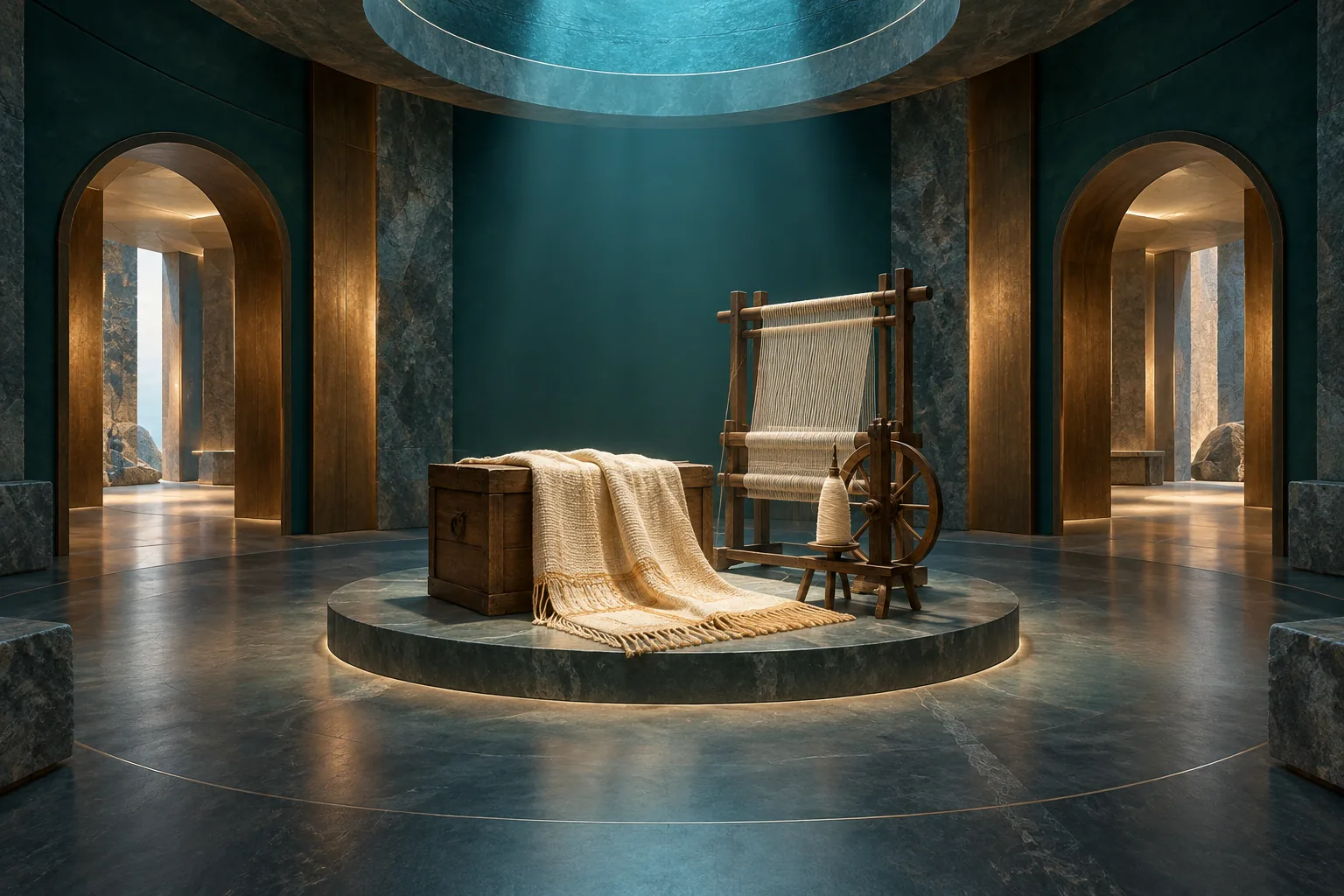
The Hull-House Labor Museum was that room. Its point was not simply to preserve old tools. Children who handled manufactured cloth in Chicago shops could watch their mothers spin, weave and explain how thread became fabric. The parents who seemed awkward in English and unfamiliar with American schools could speak through work they knew intimately. A public audience could alter the quality of a family encounter. My reading of Addams here is ESE: Fe Base, developed in Model L as Fe(S.) Affect, gives priority to the feeling of a shared social scene; Si Creative, specified as Si(F.) Stimulation, helps make that scene physically inhabitable and compelling. Addams's materials are tools, cloth, movement, a Saturday evening and a room. Her central achievement is the changed relation among the people gathered around them.
A room with a different kind of authority
The museum's first report, published in 1902, gives the scheme its sharp social purpose. Young people were inclined to look down on older Italians who seemed unschooled and un-American. Hull-House wanted to give those older people a chance to use their knowledge before the neighborhood, so that they could be seen with the history of their work behind them. The report deliberately chose the word “museum” over “school”. Adults might resist being made pupils in a new country; an exhibition could draw them in and place them among the demonstrators. Addams understood that the name of the room would help determine the part a visitor was allowed to play.
The work had to happen there, in front of others. A spindle in a case would testify to an earlier life. A woman spinning could answer a question, correct a description and show a child what her hands knew. The 1902 report describes distinct methods: an Italian woman using a weighted stick, a Syrian woman making an exceptionally fine thread with a lighter disc, and a Russian woman working from a frame that freed an arm. Such differences matter because they give the demonstrators something particular to teach. “Immigrant craft” would have been another flattening label. The museum let a visitor encounter several practiced ways of making thread, with the worker present to explain them.
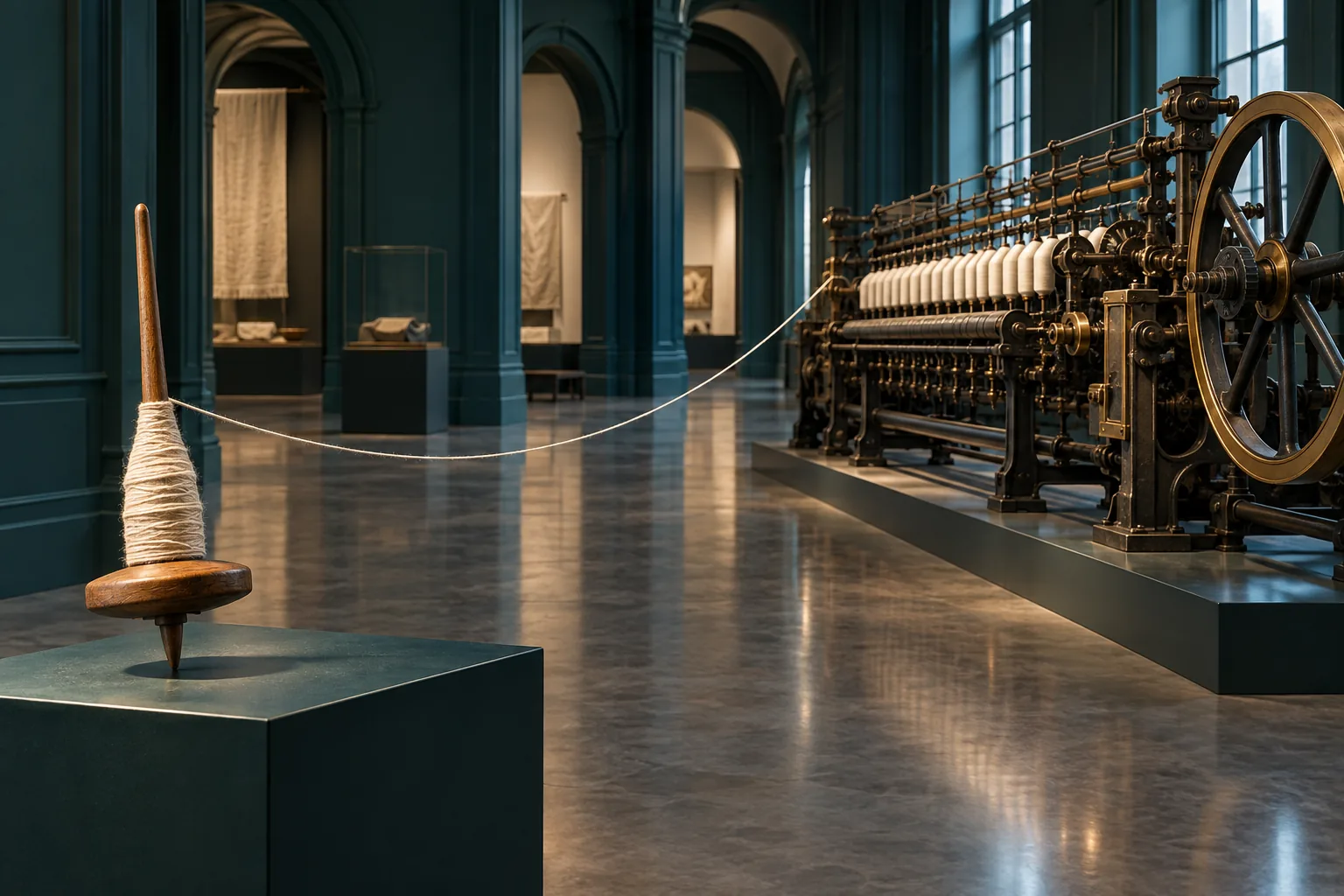
Addams also connected these demonstrations to the children's industrial present. In her 1911 address on the museum, she recalls young workers treating the cloth they sewed as something delivered by a store or a factory. Its history stopped at the place where they received it. A mother with a spindle could extend that history backward. The point was not that hand spinning should replace the factory. The child could see that the material and the method of production had a past, and that someone at home knew part of it. Addams had found a way to make a relation visible through a process.
This is where the ESE reading has force. The fixed type page describes Fe(S.) Affect as a collective atmosphere conveyed through physical presence and Si(F.) Stimulation as the sensory ease that serves it. The museum did not change the family's standing by issuing a declaration that mothers deserved respect. It made a room in which respect could be felt as a response to something happening before one's eyes. The tools, the pacing of a demonstration, the cloth and the gathering supplied a bodily scene in which another person's value became hard to ignore. Si(F.) does not name the worker's technical skill; it describes the tangible medium through which Addams made a new shared response possible. Fe(S.) names the priority she gave to that response.
When the guests became the hosts
A visit by Russian sewing workers provides the clearest test of this interpretation. Addams tells the story in her memoir. The women arrived expecting a Christmas party, but had come on the wrong afternoon. The Hull-House residents tried music and refreshments. The guests remained disappointed. Someone then suggested the Labor Museum. There the women recognised spindles, tried the looms, showed their homespun petticoats and explained the difficulty of patterns. Addams's telling turns on a change in who could entertain whom: the visitors began to instruct the residents.
The refreshments were an attempt to make people comfortable, and they failed. The museum's warmth emerged when the room gave the women something of their own to do and others a reason to attend. Addams did not produce the change by increasing the cheerfulness of the party. She changed the roles available in it. A woman tired by paid sewing in Chicago could stand beside a loom and become a knowledgeable host to the people who had invited her in. The craft did more than decorate the social occasion. It reorganised the occasion around her competence.
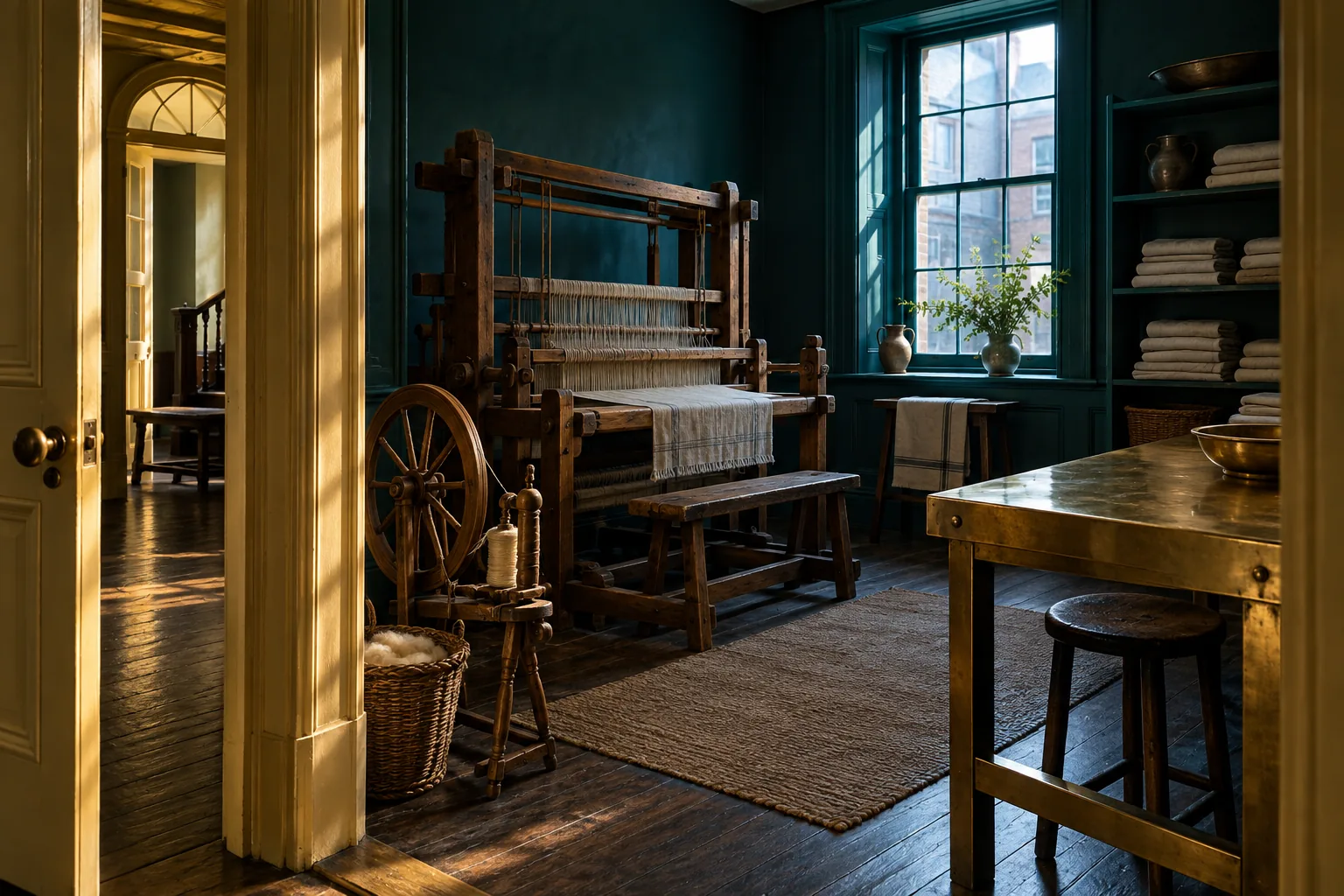
That change distinguishes Addams's case from yesterday's Nightingale reading. Both women attend to material surroundings. In Nightingale's LSE pattern, Te Base and Si Creative make a practical arrangement dependable for a patient when the nurse is absent. Addams's museum is also organised with care, but its decisive outcome is a shift in the shared social field while people are present together. A spinning frame matters because the woman beside it can suddenly be heard as a teacher. The physical arrangement serves a different leading concern. The contrast is a way to see why naming Si alone would miss the order of the work.
Angelina enters by the same door
Addams gives the museum's effect a smaller, more difficult scale in the story of Angelina. The girl came every Saturday to a cooking class in the building where her mother spun. She left her mother at the front door, then went round to a side entrance herself. Addams interprets the detour as embarrassment at being seen with a woman in a kerchief, heavy boots and short petticoats. The distance between mother and daughter had become architectural: two routes into the same building.
When Angelina heard others admire her mother's skill, she began to see her with a background beyond the tenement. At home she allowed the older woman to take out beautiful homespun garments that had been kept under a bed. Eventually she entered the Labor Museum through the same door as her mother. The route is almost too neat a literary image, except that Addams gives the awkward first arrangement in such plain detail. The change was neither instant affection nor a lecture about loyalty. It passed through cloth brought out of hiding and through the public recognition of a particular skill.
Fe(S.) Affect is easy to reduce to amiability. Angelina's story gives it a more demanding content. The feeling in a room can assign dignity or shame; children learn from other people's faces what is respectable to bring in through the front door. Addams arranged a scene in which the mother's work drew admiration from visitors and educators. In her 1911 speech, she says that the children saw university women paying serious attention to the spinners, and then looked differently themselves. Prestige travelled through the audience. Addams used that passage of public feeling to change what the daughter could acknowledge at home.
The record also keeps this reading from turning every old tool into an emblem of harmony. In the same 1911 speech, Addams recounts a young Greek man who watched a stick spindle and remembered that his mother had beaten him with one. Addams laughed at the reply, but left it in the account. The object could summon tenderness or resentment; the exhibition did not dictate its meaning. More sharply, the 1902 report arranged techniques in a supposedly orderly progression from “primitive” tools to complex machinery. That scheme gave visitors a way to connect home work to factories, while also placing living workers inside a hierarchy of development. A later study of the museum's textile crafts notes that reformers' accounts leave much of the immigrant participants' own meaning out of view. The tension belongs to this historical project: Addams created a stage on which older women could teach, and she still helped write the museum's script.
The public life of a skill
The three scenes form one line. The woman on Polk Street offers the clue: an action dismissed as old-fashioned can still carry knowledge and attachment. The Russian sewing workers show what happens when the room lets that knowledge lead the encounter. Angelina shows how an audience's response can pass back into an intimate relation. The museum's strongest work lies in that passage from a practiced hand, to a visible demonstration, to a changed social position. It made no one competent by decree. It arranged for competence already present to be seen.
This adds a historical case to TetraTypes' account of Fe finding form. Addams's form was a place of work, open on Saturday, where cloth and tools could carry a family's past into a room shared with its American present. Read as ESE, she gives the physical scene to a leading concern with collective regard. The spindle mattered because it made a woman who had been treated as a remnant of another world legible as someone from whom the new one could learn.
Sources and reading: Addams's memoir supplies the Polk Street, Russian workers and Angelina scenes; the 1902 report gives the museum's stated design and textile demonstrations; her 1911 address returns to the parent-child gap and the audience's response. The ESE and LSE pages fix the Socionics positions. Reading the museum's movement from material display to public recognition as Fe(S.) supported by Si(F.) is the TetraTypes interpretation.