Te vs Fe
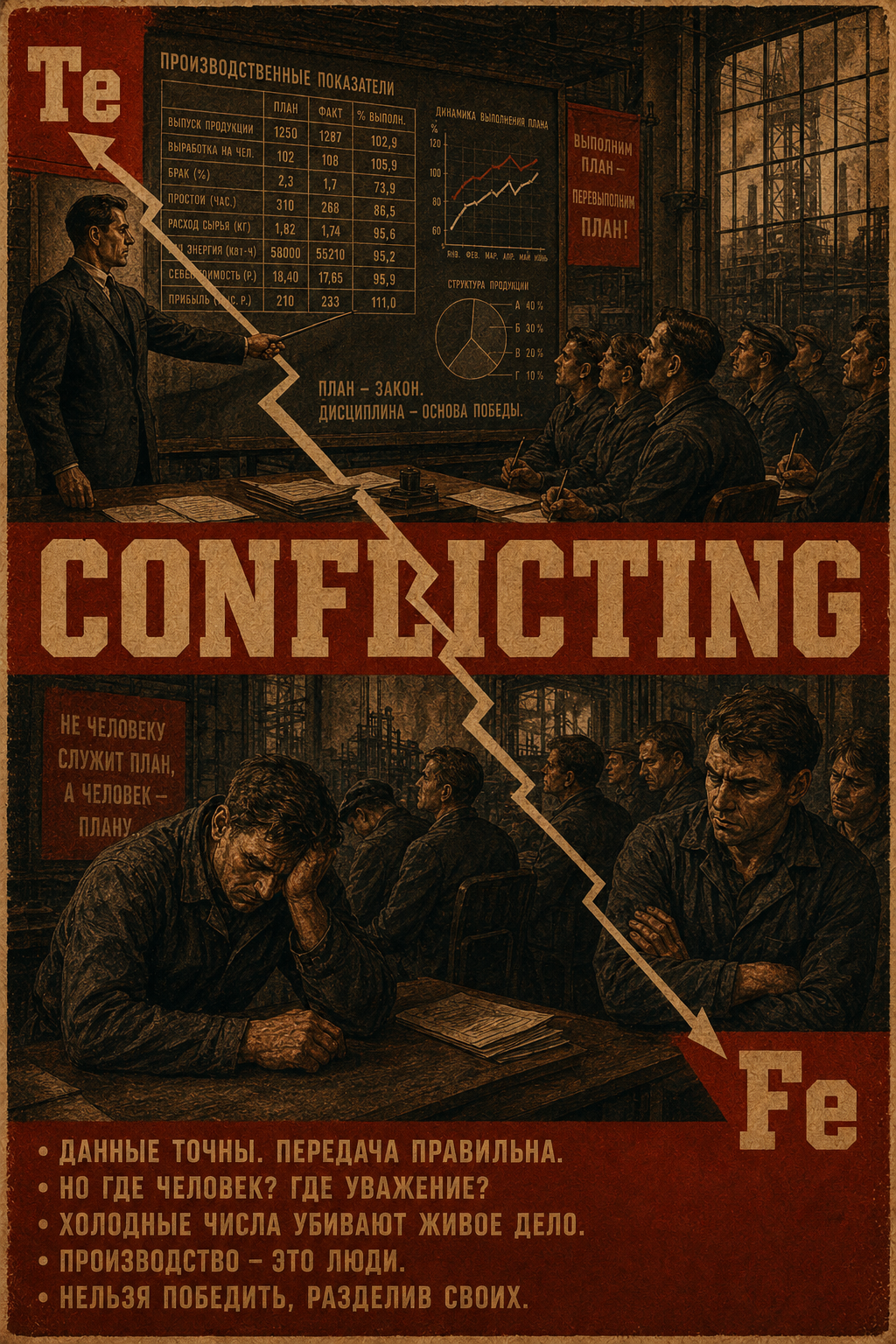
The image shows a factory meeting room. A single communication moment. The same people, the same space, two incompatible outcomes happening simultaneously in real time.
The figure at the board has the numbers right. Arm extended toward the production charts, posture clinical and precise, the data transmission is accurate and efficient. Te is doing exactly what it is supposed to do — getting correct information across as directly as possible, no atmospheric management, no mood calibration, just the facts as they stand. Half the room is receiving it. Pencils up, leaning forward, the information landing cleanly in those who came ready to process it.
The other half of the same room is deflating. One figure slumped, another turned slightly away, the emotional temperature dropping with every additional piece of dry accurate data. Fe is not being irrational. The atmosphere of a room is a real variable — it determines what people are capable of receiving, how willing they are to engage, whether the information being transmitted will actually change anything after the meeting ends. A room that has been emotionally evacuated by the time the key information arrives is a room where the information does not land regardless of its accuracy.
Te is not wrong to inform accurately. Fe is not wrong to notice the room dying. The problem is structural — accurate information delivered without atmospheric awareness often fails to reach the people it was meant to reach, and atmospheric management without informational accuracy produces a good mood and nothing useful to show for it. Both are extroverted judgments operating in the same room with the same people, and each one, pursued fully, produces the conditions in which the other fails.